
Market Report · July 22, 2026

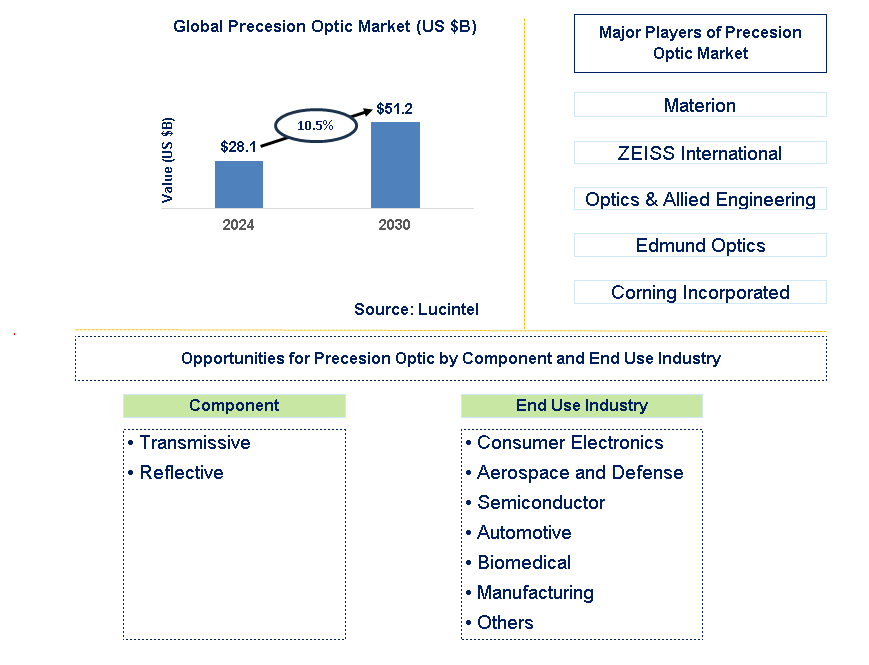
Key data points: The market size in 2030 = $51.2 billion, growth forecasts = 10.5% annually for the next 6 years. Scroll below to get more insights. This market report covers trends, opportunities, and forecasts in the global precision optic market to 2030 by component (transmissive and reflective), end use industry (consumer electronics, aerospace and defense, semiconductor, automotive, biomedical, manufacturing, and others), and region (North America, Europe, Asia Pacific, and the Rest of the World)
We'll send your sample report shortly.
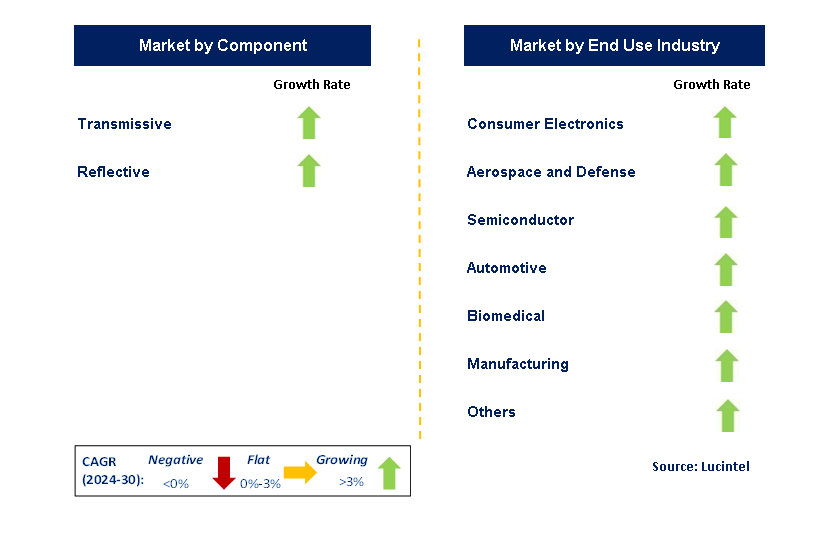
• Lucintel forecasts that, within the component category, transmissive is expected to witness higher growth over the forecast period.
• Within the end-use category, consumer electronics is expected to witness the highest growth over the forecast period.
• In terms of regions, APAC is expected to witness the highest growth over the forecast period. Gain Valuable insights for your business decisions with our comprehensive 150+ page report.
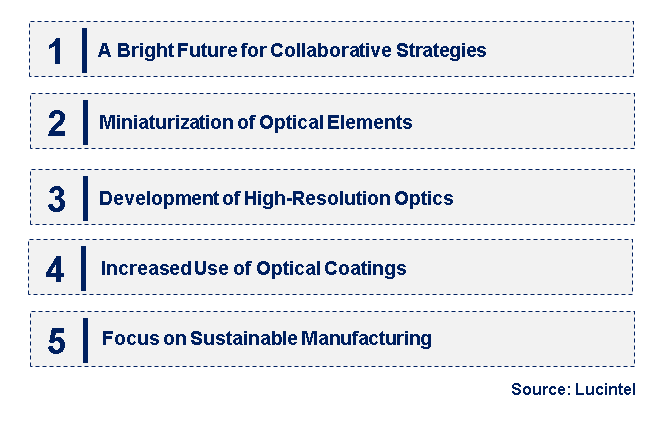
• A Bright Future for Collaborative Strategies: Adaptive optics technology is adopted in imaging systems where real-time correction of optical imaging parameter distortions is required. This movement finds application in astronomy, medical imaging, and even telecommunications. The quality of optical data is vastly improved through the use of adaptive optics technology, hence improving most products and their subsequent demand in the market.
• Miniaturization of Optical Elements: It is clear that the miniaturization of optical components is one of the most dominant trends and drivers for the overall efficiency and performance of device structures. This trend is prominent in consumer electronics, medical devices, and portable instrumentation. Miniaturization makes it possible to design more compact and multifunctional products by incorporating more optical elements (Glaunsinger et al., 1999).
• Development of High-Resolution Optics: The development of high-resolution optics is enhancing imaging capabilities in industries such as healthcare and industrial inspection. Ingenious designs of high-resolution lenses and sensors make it easier to focus on accurate optical systems, resulting in superior diagnostic devices, accurate measurements, and better images produced in different applications.
• Increased Use of Optical Coatings: Optical coatings are employed increasingly to improve the performance of optical elements regarding light transmission and to minimize reflection. This and other trends result from demands for better performance and lifespan of optical systems. High-performance coatings enable better functioning of elements such as lenses, mirrors, and other optical components, making the development of various sectors of the economy easier.
• Focus on Sustainable Manufacturing: The morale concerning sustainable manufacturing in relation to the precision optics market is increasing. Corporations are using environmentally friendly materials and processes within their setups. This shift is a result of consumer and government pressures for sustainable products, leading to changes in how and what materials are used for production to promote environmentally friendly manufacturing methods. New actors, including dedicated adaptive optics, miniaturization, high-resolution optics, and green manufacturing practices, are changing the dynamics of the precision optics market. These trends are driven by technological improvements and enhancements in precision and efficiency, thereby creating growth in the sector.
• Improved Optical Coatings: There has also been the development of advanced optical coatings, which have improved the performance of precision optical elements in terms of increased light transmission and decreased light reflection. As new coatings technology develops, improvements in the effectiveness and lifespan of optical elements, including lenses and mirrors, create better efficiency in optical systems.
• Development of Adaptive Optics: The developed technology of adaptive optics has been a breakthrough due to its ability to compensate for optical aberrations in real time. The principal benefit of this development is enhanced image quality in areas like medicine, astronomy, and telecommunications, where accurate data is required, along with improved performance of optical systems.
• Increase in High-Resolution Imaging: The advancement of imaging solutions capable of producing high-resolution images has significantly enhanced the performance of optics, with a special focus on medical imaging practices and industrial inspection fields. More advanced capabilities in high-resolution lenses and sensors allow for more accurate measurements and superior images, facilitating innovations in different sectors and boosting the market.
• Growth of the Production of Optical Elements: The growth of the production of optical elements has been observed, especially in emerging markets like China and India, leading to the ready availability of high-quality precision optics. This development is beneficial for market expansion, as it presents a variety of optical component structures useful in different applications, enhancing the market’s competitiveness.
• Globalization of Ecological Principles: Companies focusing on implementing green manufacturing technologies in precision optics demonstrate their readiness to cater to high market demand without harming the ecosystem. Companies are adopting biocompatible materials and processes that respond to governmental and customer trends toward sustainable products for welfare while changing how things are made green. Some factors, including the development of enhanced optical coatings, adaptive optics, the application of advanced imaging techniques, increased manufacturing capabilities, and the adoption of green strategies, have been shaping the precision optics industry. These improvements are enhancing effectiveness and environmental impacts across various applications and regions.
• Creating New Advanced Imaging Systems: The market for developing new advanced imaging systems has high growth potential due to factors like the demand for such systems in medical diagnostics, aerospace, and industrial inspection. New trends in imaging technologies, such as higher-resolution sensors and adaptive optics, improve diagnostic and inspection precision, presenting new opportunities in these markets.
• Getting Involved in Expanding Markets: Involvement in the expansion of emerging markets, such as the Asia-Pacific and Latin American markets, presents growth opportunities due to increasing investments in infrastructure and technology. These regions offer opportunities for precision optics as industrialization and the development of effective healthcare systems and electronics progress.
• Strategy of Miniaturization and Integration: The high demand for miniaturization and integration of optical components presents opportunities in consumer electronics, medical devices, and portable instrumentation. The demand for miniaturized optics has led to the production of more compact and multifunctional products, meeting space reduction demands and adding functionality across various applications.
• Investment in R&D of New Optical Technologies: Investment in the research and development of new optical technologies is a promising direction for growth, stimulating advancements in imaging, sensors, and coating technologies. Companies prioritizing R&D will make significant strides in developing next-generation products, increasing capabilities, and capturing market share in precision optics.
• Practices of Sustainable Manufacturing: Sustainable manufacturing practices create growth opportunities due to compliance with market and legal requirements for environmental protection. Companies that utilize green materials and processes can enhance their reputation, thereby attracting eco-conscious customers and boosting sales in the precision optics market. A close look at current and future trends in the precision optics industry highlights growth opportunities, including but not limited to strategic growth in advanced imaging systems, new geographical markets, miniaturization, investments in R&D, and sustainable practices. Companies should capitalize on these opportunities to introduce new products, grow their market share, and advance the industry.
• Advancement in Technology: Optics is growing due to advances in imaging equipment and lenses. Medical, industrial, and consumer applications are advancing thanks to developments in adaptive optics and high-resolution sensors that mimic how the human eye perceives detail.
• Rising Demand for High-Precision Instruments: The growth of sectors such as healthcare, aerospace, and manufacturing that require high-precision instruments encourages expansion in the precision optic market. Increasing precision and performance for various applications necessitate further development of optical technologies, creating additional market opportunities.
• Increasing Usage: The growing applications of precision optics in devices such as robots, communication devices, and automotive technologies enhance market growth. The application of optics in various markets improves functionality and efficiency, leading to new markets and innovations in precision optics. Challenges in the precision optics market include:
• High Production Costs: High production costs pose a hurdle due to the various types of materials and respective manufacturing processes involved in precision optical components. Controlling these costs is essential to remain competitive in the market, which requires the utilization of productive methods and alternatives.
• Stringent Regulatory Requirements: There are certain design, safety, and performance requirements for optical products that can serve as barriers to market entry and operations. Companies operating in the precision optics market must implement stringent testing of their products to adhere to required standards, which can translate to increased operational costs.
• Supply Chain Disruptions: Supply chain disruptions often include a lack of raw materials and delivery service issues affecting the availability and pricing of precision optical components. Companies must consider how to avoid supply chain-related problems and ensure material availability for manufacturing processes. Key drivers behind market growth include technological breakthroughs, rising demand, growing applications, the upswing of consumer electronics, and increased R&D expenditures. Conversely, production costs, regulatory challenges, and supply chain issues pose significant challenges that must be managed. Addressing these factors is essential for ensuring success and navigating the complexities of the precision optic market.
• Materion
• ZEISS International
• Optics & Allied Engineering
• Edmund Optics
• Corning Incorporated
• Transmissive
• Reflective
• Consumer Electronics
• Aerospace and Defense
• Semiconductor
• Automotive
• Biomedical
• Manufacturing
• Others
• North America
• Europe
• Asia Pacific
• The Rest of the World
• United States: Recent developments in the precision optics market in the USA include further technological advancements in adaptive optics and optical coherence tomography (OCT). These innovations are improving imaging accuracy in medical diagnostics, aerospace, and other industries. Growth is also being witnessed in high-precision optics used in military and telecommunications systems, as financial and technological incentives enable more R&D in these areas.
• China: The precision optics market in China is growing rapidly, focusing on improving optical production methods and increasing output. Recent advancements include the use of higher numerical aperture optics and cassettes in concierge enrollments, and enhancing health facilities that prioritize high care rather than just on-demand deliveries. Technological evolution and investment in research have fostered significant progress in manufacturing fine optical components for consumer and industrial electronics.
• Germany: Germany has carved a niche for itself in the precision optics market, emphasizing the manufacture of advanced optical sensors and precision lenses. It is known for achievements in optical engineering and manufacturing, recently focusing on developing advanced coatings and materials to improve optical device functionality. Germany continues to promote industrial automation and the automotive industry regarding precision optical devices.
• India: The precision optic market in India is growing as demand for telecommunications, medical devices, and the manufacturing of optical components expands. Recent developments include advancements in lens fabrication technology and optical testing capabilities. The increasing interest in developing new capacities and enhancing quality control in optical manufacturing is leading to a more competitive environment and higher domestic production of precision optical parts.
• Japan: The development of Japan’s precision optic market has been supported by further advancements in high-precision optics and miniaturization technologies. Recent developments include innovations in optical lenses and imaging systems for various sectors, such as robotics, consumer electronics, and healthcare. Japan remains a leader in developing and utilizing advanced optical technologies, thanks to its focus on precision engineering and cutting-edge technology.


• Materion
• ZEISS International
• Optics & Allied Engineering
• Edmund Optics
• Corning Incorporated Q6. Which precision optic market segment will be the largest in future? Answer: Lucintel forecasts that transmissive is expected to witness higher growth over the forecast period. Q7. In precision optic market, which region is expected to be the largest in next 5 years? Answer: APAC is expected to witness the highest growth over the forecast period. Q.8 Do we receive customization in this report? Answer: Yes, Lucintel provides 10% customization without any additional cost.


Choose a license that fits your team. Instant PDF delivery.
Prices exclude taxes. Instant delivery. Custom licensing available on request.
Market Report · July 22, 2026
Market Report · July 22, 2026
Market Report · July 22, 2026
Trusted partner for strategic intelligence and business growth


Receive a complimentary market analysis tailored to your industry. Our analysts will identify key growth opportunities and competitive dynamics specific to your business.

Market size, growth rate, and key trend analysis for your specific sector.

Top competitor positioning and market share analysis.

Strategic recommendations backed by data-driven insights.
Get curated market intelligence and competitive moves straight to your inbox.
By subscribing, you agree to receive our monthly insights. Unsubscribe anytime.
Receive a complimentary market analysis tailored to your industry. Our analysts will identify key growth opportunities and competitive dynamics specific to your business.
Market size, growth rate, and key trend analysis for your specific sector.
Top competitor positioning and market share analysis.
Strategic recommendations backed by data-driven insights.
Get curated market intelligence, emerging trends, and competitive moves straight to your inbox each month.
By subscribing, you agree to receive our monthly insights. Unsubscribe anytime.
We'll send your sample report shortly.