Polyethylene Terephthalate Fiber Market Report: Trends, Forecast and Competitive Analysis to 2035

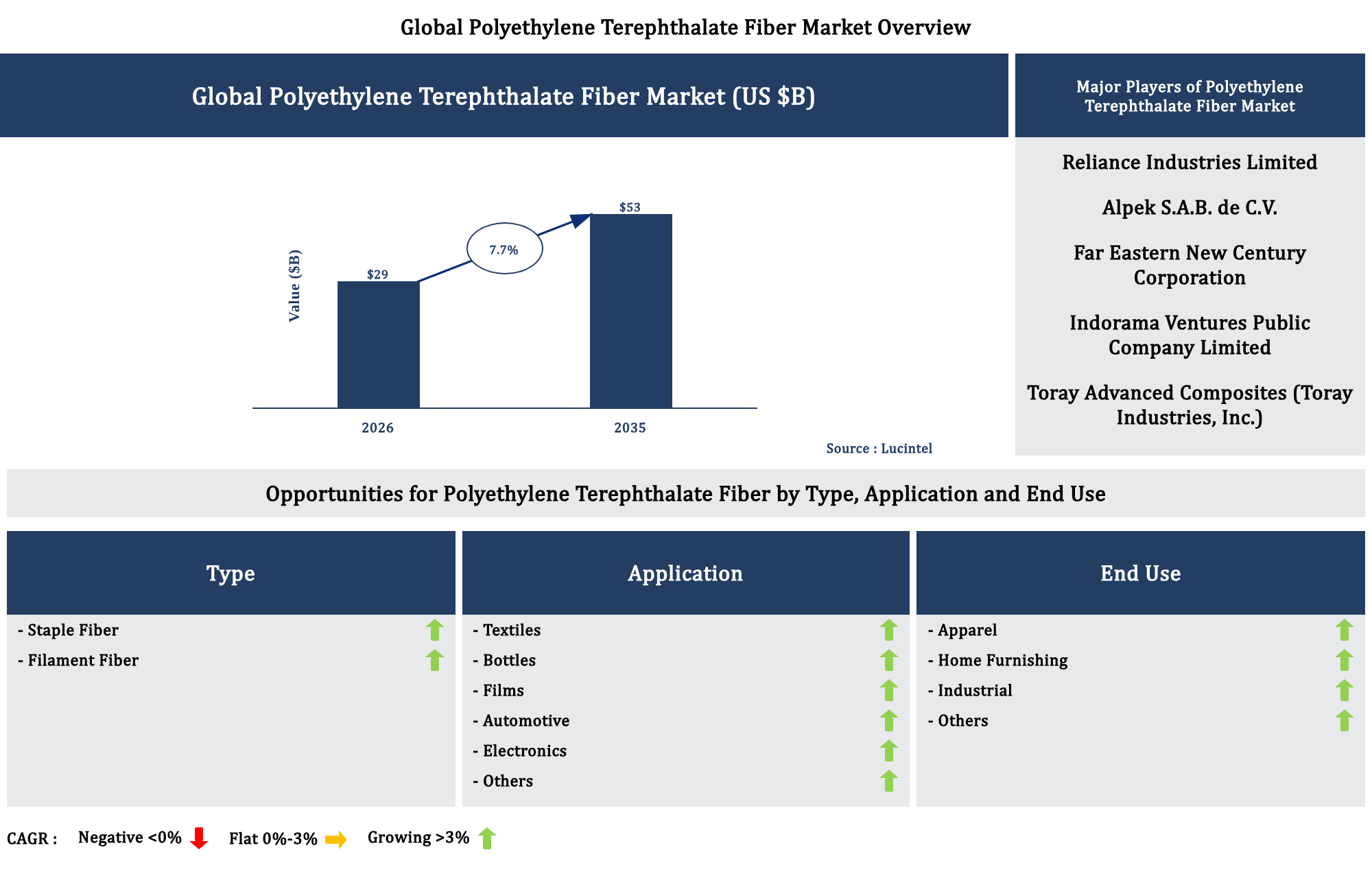
Key data points: The market size in 2035 = $53 billion, growth forecast = 7.7% annually for the next 9 years. Scroll below to get more insights. This market report covers trends, opportunities, and forecasts in the global polyethylene terephthalate fiber market to 2035 by type (staple fiber and filament fiber), application (textiles, bottles, films, automotive, electronics and others), end use (apparel, home furnishing, industrial and others), and region (North America, Europe, Asia Pacific, and the Rest of the World)

Publisher: Lucintel Last Updated: July 2026
See Pricing

Download Sample Report

| ✨ New Download Sample report — Get instant insights! | ✨ New Download Sample report — Get instant insights!

Polyethylene Terephthalate Fiber Market Report: Trends, Forecast and Competitive Analysis to 2035

Polyethylene Terephthalate Fiber Market


The future of the global polyethylene terephthalate fiber market looks promising with opportunities in the apparel, home furnishing and industrial markets. The global polyethylene terephthalate fiber market is expected to reach an estimated $53 billion by 2035 with a CAGR of 7.7% from 2026 to 2035. The major drivers for this market are the increasing demand for polyester textile fibers, the rising adoption of recycled pet fibers and the growing apparel manufacturing activities expansion.

• Lucintel forecasts that, within the type category, staple fiber will remain the largest segment over the forecast period as the rising demand for textile fiber applications.

• Within the end use category, apparel will remain the largest segment due to the the rising demand for textile and apparel production.

• In terms of regions, APAC will remain the largest region over the forecast period due to the the increasing demand in textile production.

Gain valuable insights for your business decisions with our comprehensive 150+ page report.
Polyethylene Terephthalate Fiber Market

Emerging Trends in the Polyethylene Terephthalate Fiber Market

The polyethylene terephthalate fiber market is evolving quickly as brands, regulators, and consumers push for more sustainable, high‑performance textiles and industrial materials. Producers are investing in advanced recycling technologies, bio-based feedstocks, and modified fiber chemistries to align with circular economy goals and stricter environmental standards. At the same time, digitalization of manufacturing and rising demand from technical applications such as automotive, filtration, and geotextiles are reshaping product portfolios. These shifts are encouraging collaboration across the value chain, from resin suppliers to apparel brands, and are redefining how polyester fibers are designed, produced, and used across global end markets.
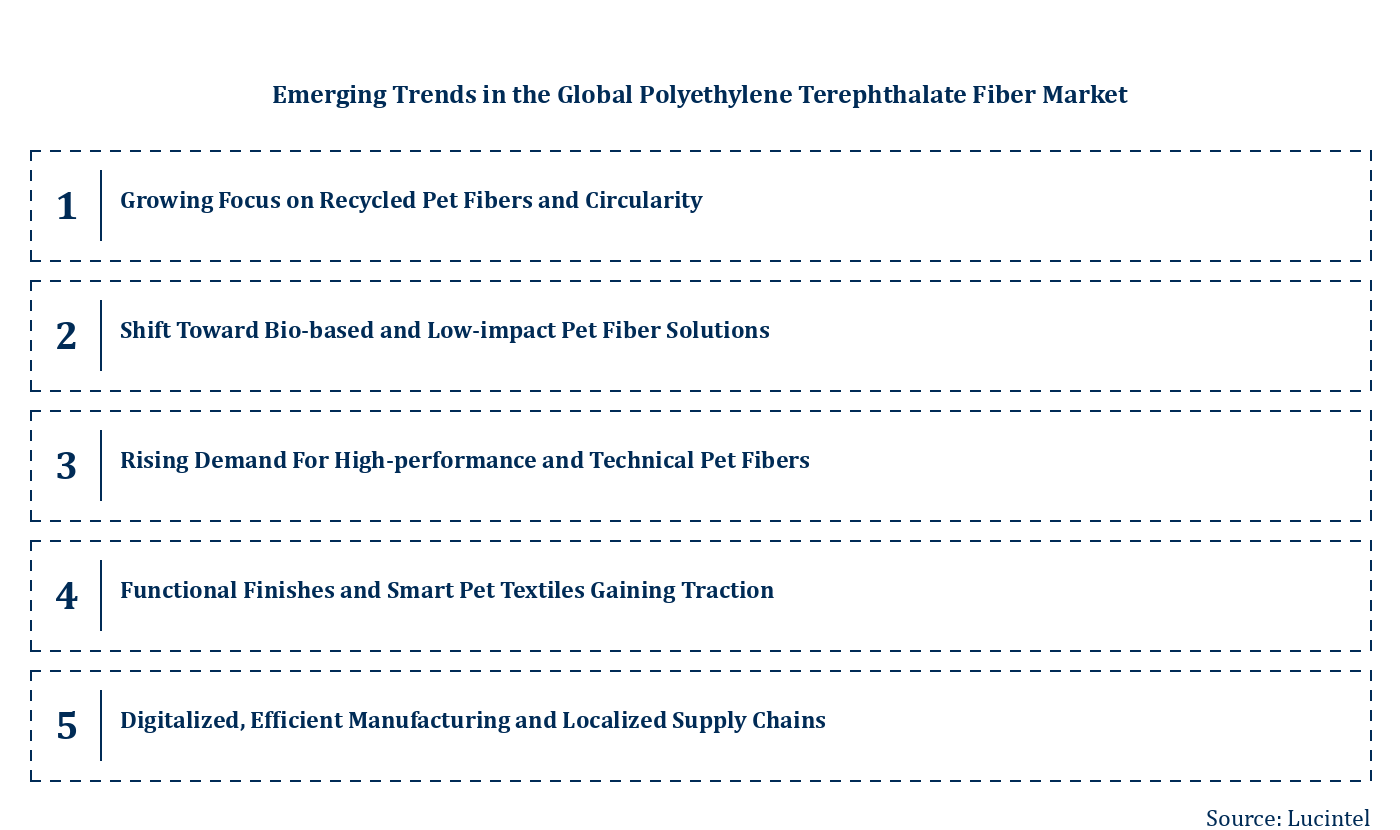
  • Growing Focus on Recycled PET Fibers and Circularity: The polyethylene terephthalate fiber market is seeing rapid adoption of recycled PET (rPET) sourced from post-consumer bottles and textile waste to reduce landfill use and carbon footprints. Brands are setting aggressive recycled content targets, prompting investment in mechanical and chemical recycling, depolymerization, and closed-loop systems. This trend is reshaping sourcing strategies, enabling traceable supply chains, and supporting Eco-label certifications demanded by retailers. However, quality consistency, contamination, and scalable collection infrastructure remain challenges, driving innovation in sorting technologies and partnerships between fiber producers, waste managers, and consumer brands.
  • Shift Toward Bio-based and Low-impact PET Fiber Solutions: Manufacturers in the polyethylene terephthalate fiber market are developing bio-based PET grades using partially renewable feedstocks, such as bio-MEG and bio-PTA, to lower lifecycle emissions and dependence on fossil resources. These innovations aim to keep the performance, dyeability, and durability of conventional PET while improving sustainability credentials. Life-cycle assessments and environmental product declarations are being used to quantify benefits and support green marketing claims. While costs remain higher than traditional PET, early adoption by premium apparel, sportswear, and eco-conscious brands is helping to scale production and drive process efficiencies over time.
  • Rising Demand for High-performance and Technical PET Fibers: The polyethylene terephthalate fiber market is expanding beyond apparel into technical applications requiring high strength, dimensional stability, and resistance to chemicals and heat. Engineered PET fibers are increasingly used in automotive interiors, tire reinforcement, filtration media, geotextiles, industrial hoses, and safety belts. Producers are tailoring denier, cross-section, and surface treatments to deliver improved abrasion resistance, low shrinkage, and enhanced bonding with other materials. This trend is boosting margins, diversifying revenue away from commodity textiles, and encouraging co-development projects with automotive OEMs, construction companies, and filtration system manufacturers.
  • Functional Finishes and Smart PET Textiles Gaining Traction: Within the polyethylene terephthalate fiber market, there is growing emphasis on functionalized fibers that deliver moisture management, antimicrobial properties, UV protection, flame retardancy, and stain resistance. Advances in nano-coatings, plasma treatments, and inherent additive technologies are enabling durable, wash-resistant performance while reducing reliance on harmful chemicals. At the same time, early-stage smart textiles integrate sensors, conductive yarns, and electronic components into PET-based fabrics for wearables, health monitoring, and sports performance tracking. These developments support product differentiation, premium pricing, and new use cases in medical, defense, and consumer electronics segments.
  • Digitalized, Efficient Manufacturing and Localized Supply Chains: Producers in the polyethylene terephthalate fiber market are adopting Industry 4.0 tools such as real-time process monitoring, advanced analytics, and automated quality control to enhance yield, energy efficiency, and consistency. Investments in modern spinning lines, dope-dyeing, and low-liquor-ratio dyeing technologies are reducing water and chemical consumption. In response to supply chain disruptions and nearshoring trends, companies are also building or expanding regional hubs closer to key textile and automotive clusters. This localization strategy shortens lead times, improves inventory management, reduces logistics emissions, and allows faster response to fashion cycles and customer-specific requirements.

Polyethylene Terephthalate Fiber Market by country

Recent Developments in the Polyethylene Terephthalate Fiber Market

The polyethylene terephthalate fiber market is undergoing notable change as producers, brands, and regulators respond to sustainability pressures, shifting consumer expectations, and technological advances. Rising demand from apparel, home textiles, and industrial applications continues to support growth, yet concerns around microplastics, carbon footprints, and waste management are reshaping strategic priorities. Companies are investing in recycling infrastructure, bio-based feedstocks, and process innovations to enhance performance and reduce environmental impact. At the same time, mergers, capacity expansions, and digitalization in manufacturing are redefining competitive dynamics. These recent developments collectively indicate a transition toward a more circular, resource-efficient polyethylene terephthalate fiber market.

  • Shift To High-content Recycled PET Fibers: Producers are rapidly scaling fibers made with higher fractions of post-consumer and post-industrial rPET, driven by brand commitments and regulatory pressure for recycled content. New mechanical and chemical recycling capacities enable more stable quality, allowing rPET fibers to penetrate performance apparel, automotive, and technical textiles. This development reduces dependence on virgin petrochemical feedstocks, lowers lifecycle emissions, and enhances supply resilience, while prompting value chain collaboration on feedstock collection, sorting efficiency, and traceability to credibly substantiate recycled-content claims.
  • Advances in Chemical Recycling Technologies: Emerging depolymerization technologies, including glycolysis, methanolysis, and enzymatic recycling, are being commercialized to convert mixed or contaminated PET waste into near-virgin monomers. These processes can tolerate colored, multilayer, and textile-grade PET waste, which are difficult to recycle mechanically. As demonstration plants scale toward commercial capacity, the polyethylene terephthalate fiber market gains access to high-quality recycled feedstock that supports closed-loop fiber-to-fiber systems, improves circularity metrics, and helps brands meet stringent sustainability targets without sacrificing mechanical performance or dyeability.
  • Development of Bio-based and Low-carbon PET Feedstocks: Companies are investing in bio-based ethylene glycol and emerging bio- or CO₂-based paraxylene routes to reduce the carbon footprint of PET fibers. Pilot and early commercial projects aim to integrate renewable feedstocks into existing PTA and PET value chains, enabling partially or fully bio-based PET fibers compatible with current spinning and processing assets. This development offers a pragmatic decarbonization pathway that maintains established performance, processing, and cost structures, while supporting science-based emissions targets and differentiating product portfolios in sustainability-focused customer segments.
  • Performance and Functionalization Innovations in PET Fibers: Fiber producers are introducing PET fibers with enhanced functionality, including moisture management, flame retardancy, antimicrobial effects, and improved durability for high-wear applications. Nanomodification, bicomponent structures, and advanced additives are being deployed to tailor fiber morphology and surface properties without significantly increasing weight or altering existing manufacturing lines. These innovations expand PET’s role in technical textiles, automotive interiors, filtration media, and protective clothing, enabling higher value capture and reducing substitution risk from alternative fibers with specialized performance attributes.
  • Strategic Capacity Expansions, Consolidation, and Regional Diversification: Leading producers are expanding capacity and optimizing plant locations to balance cost efficiency with supply security, particularly across Asia, the Middle East, and emerging textile hubs. At the same time, mergers, acquisitions, and strategic alliances are reshaping competitive structures, allowing integrated players to control upstream feedstocks, recycling assets, and downstream textile capabilities. This development enhances economies of scale, supports investment in advanced technologies, and redistributes bargaining power across the value chain, while also heightening competitive pressure on smaller, non-integrated polyethylene terephthalate fiber manufacturers.

Strategic Growth Opportunities in the Polyethylene Terephthalate Fiber Market

The polyethylene terephthalate fiber market is evolving rapidly as sustainability, performance, and cost efficiency reshape demand across end-use segments. As brands decarbonize supply chains and consumers seek durable, recyclable products, polyethylene terephthalate fibers offer a compelling balance of strength, versatility, and recyclability. Growth opportunities are emerging in apparel, home textiles, automotive, industrial reinforcement, and nonwovens, driven by innovations in recycling technologies, fiber engineering, and functional finishes. Companies that align product development with circular economy principles, regulatory shifts, and shifting consumer preferences can unlock premium margins, deepen customer relationships, and secure long-term advantage in this increasingly competitive global market.

  • Apparel and Sportswear: Expanding use of recycled polyethylene terephthalate fibers in performance apparel and athleisure enables moisture management, stretch, and comfort while meeting brand sustainability targets and recycled content mandates, creating opportunities for differentiated, higher value yarns and long term supply agreements with global fashion and sports brands.
  • Home Textiles and Furnishings: Rising demand for stain resistant, colorfast, and easy care home textiles is driving adoption of polyethylene terephthalate fibers in bedding, upholstery, and curtains, where engineered fibers and blends can deliver softness plus durability and allow manufacturers to market hypoallergenic, sustainable, and long lasting interior solutions.
  • Automotive Interiors: Lightweighting and stricter emission norms are boosting polyethylene terephthalate fiber usage in car seat fabrics, headliners, carpets, and door trims, where low volatile emissions, recyclability, and design flexibility support circular interior concepts and long term supply programs with original equipment manufacturers and tier 1 suppliers.
  • Industrial and Technical Textiles: Growth in infrastructure, filtration, geotextiles, and protective workwear is increasing demand for high tenacity polyethylene terephthalate fibers that offer chemical resistance, dimensional stability, and long service life, enabling suppliers to capture value through specialty grades tailored to demanding industrial and construction applications.
  • Hygiene and Nonwoven Applications: Expanding use of polyethylene terephthalate fibers in nonwoven wipes, medical fabrics, and hygiene products is driven by the need for softness, strength, and consistent performance, with opportunities arising from bicomponent fibers, microfibers, and recyclable nonwoven structures that support both regulatory compliance and brand sustainability claims.

Polyethylene Terephthalate Fiber Market Drivers and Challenges

The global Polyethylene Terephthalate (PET) Fiber Market is shaped by a combination of technological innovations, shifting consumer preferences, cost dynamics, and evolving regulatory expectations. PET fiber’s versatility in textiles, packaging, automotive, and industrial applications positions it as a critical material in modern manufacturing. At the same time, concerns around sustainability, raw material volatility, and circularity requirements are redefining strategic priorities for producers and end users. Understanding how demand for performance fibers, recycling technologies, and environmental regulations interact with structural challenges such as competition from alternative materials is essential for stakeholders seeking resilient growth in the PET fiber value chain.

The factors responsible for driving the polyethylene terephthalate fiber market include:

  • Rising Demand from Apparel and Home Textiles: Strong growth in apparel, sportswear, and home furnishings is a primary driver for the PET fiber market, as brands favor PET for its durability, wrinkle resistance, and cost efficiency compared with natural fibers. Expanding middle-class populations and urbanization in emerging economies are boosting consumption of ready-to-wear garments, bedding, and upholstery, which increasingly incorporate PET blends for performance and easy care. Fast-fashion and athleisure trends further stimulate volumes, as retailers look for fibers that enable rapid product turnover, consistent quality, and flexible design options across large-scale, globalized supply chains.
  • Expansion of Technical and Industrial Applications: Beyond apparel, PET fiber demand is being propelled by its growing use in automotive interiors, geotextiles, filtration media, nonwovens, and industrial reinforcement applications. PET offers high tensile strength, chemical resistance, and dimensional stability, making it suitable for seat fabrics, airbags, seatbelts, roofing membranes, and road stabilization materials. Infrastructure investment and construction projects, particularly in developing markets, are increasing the need for geotextiles and industrial fabrics made from PET. This diversification into high-performance and value-added segments reduces dependence on cyclical fashion demand and supports more stable, long-term market growth.
  • Advances in Recycling and Circular Economy Models: Technological progress in mechanical and chemical recycling is a key growth engine for the PET fiber market, enabling higher-quality recycled PET (rPET) that can be spun into fibers for textiles and industrial uses. Brands and manufacturers are incorporating rPET to meet sustainability commitments, reduce carbon footprints, and respond to consumer expectations for eco-friendly products. Investment in collection systems, sorting technologies, and depolymerization processes is expanding the availability of recycled feedstock, creating new business models and premium segments around recycled-content fibers. As circular economy initiatives gain momentum, rPET fibers are positioned as a credible alternative to virgin polymers.
  • Cost Competitiveness and Supply Chain Scalability: PET fiber benefits from a mature, globally scaled petrochemical and textile supply chain that supports competitive pricing and reliable availability. Large production capacities, standardized processes, and established logistics networks help maintain cost advantages over many natural and specialty synthetic fibers. Producers can quickly adjust volumes and grades to meet shifting demand from apparel, industrial, and packaging-related fiber applications. In periods of cotton price volatility or supply disruption, PET fiber often gains share as manufacturers seek predictable input costs and consistent performance, reinforcing its role as a workhorse material in global textile manufacturing.
  • Regulatory and Brand-Led Sustainability Commitments: Stricter regulations on waste, emissions, and resource efficiency, alongside ambitious sustainability targets from global brands, are indirectly driving innovation and demand in the PET fiber ecosystem. Policies that encourage recycling infrastructure, extended producer responsibility, and reduced landfill use are facilitating higher recovery rates of PET waste, which can be converted into fibers. At the same time, major apparel, footwear, and consumer goods companies are committing to increased recycled content and lower environmental impact across their portfolios, stimulating demand for certified, traceable PET and rPET fibers. These policy and brand commitments are accelerating product differentiation and investment in cleaner production technologies.

The challenges facing this polyethylene terephthalate fiber market include:

  • Environmental Concerns and Microplastic Pollution: Despite its recyclability, PET fiber faces mounting scrutiny due to microplastic shedding from textiles during washing and wear, which contributes to marine and terrestrial pollution. Environmental organizations, regulators, and consumers increasingly question the long-term ecological impact of synthetic fibers, creating reputational and regulatory risk for PET. This pressure is prompting calls for stricter controls, improved wastewater filtration, and alternative materials, all of which can increase compliance costs for manufacturers. If stakeholders fail to demonstrate credible mitigation strategies, demand could shift toward lower-impact fibers, constraining growth and prompting tighter operational standards across the industry.
  • Volatility in Raw Material Prices and Supply: PET fiber production depends heavily on petrochemical feedstocks such as purified terephthalic acid (PTA) and monoethylene glycol (MEG), which are subject to fluctuations in crude oil prices and geopolitical dynamics. Sudden increases in feedstock costs can compress margins for fiber producers and raise prices for downstream manufacturers, reducing competitiveness against other fibers. Supply disruptions from plant outages, trade restrictions, or logistics bottlenecks can further destabilize planning and inventory management. This volatility complicates long-term contracting and investment decisions, encouraging some buyers to diversify fiber sources or explore alternative materials with more predictable cost structures.
  • Intensifying Competition and Substitution Risk: The PET fiber market is highly competitive, with numerous global and regional players, as well as competing materials such as cotton, viscose, nylon, and emerging bio-based polymers. Overcapacity in some regions can lead to aggressive pricing and margin pressure, while product differentiation is often limited to modest performance or sustainability enhancements. As consumers and brands show greater interest in natural, bio-based, or low-impact fibers, PET risks losing share in premium segments unless it can convincingly demonstrate environmental and performance advantages. This substitution threat compels producers to invest in innovation, branding, and certifications, increasing costs and raising the performance bar for market participation.

The global polyethylene terephthalate fiber market is being reshaped by the tension between strong structural demand and increasing sustainability and cost pressures. Expanding use in apparel, technical applications, and circular economy models provides significant growth momentum, while cost competitiveness and regulatory incentives support continued investment. At the same time, environmental concerns, raw material volatility, and competition from alternative fibers force producers to innovate in recycling, eco-design, and process efficiency. Stakeholders that proactively address these challenges through technology upgrades, partnerships, and transparent sustainability strategies are best positioned to capture long-term opportunities and maintain relevance in a rapidly evolving fiber landscape.

List of Polyethylene Terephthalate Fiber Market Companies

Companies in the market compete on the basis of product quality offered. Major players in this market focus on expanding their manufacturing facilities, R&D investments, infrastructural development, and leverage integration opportunities across the value chain. Through these strategies polyethylene terephthalate fiber market companies cater increasing demand, ensure competitive effectiveness, develop innovative products & technologies, reduce production costs, and expand their customer base. Some of the polyethylene terephthalate fiber market companies profiled in this report include-

  • Reliance Industries Limited
  • Alpek S.A.B. de C.V.
  • Far Eastern New Century Corporation
  • Indorama Ventures Public Company Limited
  • Toray Advanced Composites (Toray Industries, Inc.)
  • Lotte Chemical Corporation
  • TEIJIN LIMITED.

Polyethylene Terephthalate Fiber Market by Segment

The study includes a forecast for the global polyethylene terephthalate fiber market by type, application, end use, and region.

  • Polyethylene Terephthalate Fiber Market by Type [Value ($B) from 2019 to 2035]:
    • Staple Fiber
    • Filament Fiber
  • Polyethylene Terephthalate Fiber Market by Application [Value ($B) from 2019 to 2035]:
    • Textiles
    • Bottles
    • Films
    • Automotive
    • Electronics
    • Others
  • Polyethylene Terephthalate Fiber Market by End Use [Value ($B) from 2019 to 2035]:
    • Apparel
    • Home Furnishing
    • Industrial
    • Others
  • Polyethylene Terephthalate Fiber Market by Region [Value ($B) from 2019 to 2035]:
    • North America
    • Europe
    • Asia Pacific
    • The Rest of the World

Country Wise Outlook for the Polyethylene Terephthalate Fiber Market

The global polyethylene terephthalate (PET) fiber market is undergoing structural change as sustainability, circularity, and advanced performance requirements reshape demand. Producers and downstream users in apparel, automotive, home textiles, and packaging are investing in recycled PET (rPET), bio-based feedstocks, and process innovations that reduce carbon intensity and improve resource efficiency. At the same time, regulatory pressures on plastics waste and evolving consumer preferences are accelerating the shift toward higher-value, specialty PET fibers with better durability, comfort, and recyclability. Recent developments in the United States, China, Germany, India, and Japan underscore diverse but interconnected strategies to upgrade capacity and transition to greener PET fiber value chains.

  • United States: In the United States, PET fiber developments center on expanding rPET integration, onshoring capacity, and enhancing performance for technical textiles. Fiber and resin producers are partnering with beverage and packaging companies to secure post-consumer bottles as feedstock and to invest in advanced recycling technologies such as chemical depolymerization. There is growing focus on high-tenacity PET fibers for automotive, geotextiles, and industrial filtration, alongside low-pilling and moisture-management fibers for apparel. Sustainability commitments from major brands are driving traceability platforms, certifications, and life cycle assessments, while federal and state incentives support modernization of recycling infrastructure and energy-efficient production.
  • China: China remains the largest PET fiber producer and continues to upgrade from commodity staple fiber toward differentiated and functional products. Major Chinese players are adding large-scale continuous polymerization lines coupled with bottle-to-fiber rPET facilities to improve cost efficiency and reduce emissions. There is strong momentum in hollow conjugate fibers for bedding, flame-retardant and low-shrink fibers for industry, and dope-dyed PET fibers that cut water and chemical use in dyeing. Policy support for a circular economy is encouraging higher recycling rates, investments in sorting technology, and regional PET recycling hubs. Chinese manufacturers are also increasing exports of specialty fibers as Western brands seek diversified sourcing.
  • Germany: In Germany, developments in the PET fiber market are closely linked to high-end technical textiles, automotive components, and sustainability leadership. Producers and research institutes are working on PET fibers with enhanced mechanical strength, thermal stability, and low weight for use in composites, seat fabrics, airbags, and reinforcement materials. Strong regulatory pressure on plastics waste and carbon footprints is accelerating the use of rPET and bio-based PET precursors, along with closed-loop models for industrial textiles. German companies are pioneering process optimization for lower energy consumption, while EU-funded projects support chemical recycling pilots, transparency on material flows, and advanced additive technologies that improve recyclability without sacrificing performance.
  • India: India’s PET fiber sector is expanding rapidly, driven by rising domestic consumption in apparel, home furnishings, and nonwovens, along with competitive export-oriented manufacturing. Recent investments focus on capacity additions for polyester staple fiber and filament yarn, integration with PTA and MEG feedstocks, and scaling rPET-based fiber from collected PET bottles. Indian producers are introducing value-added fibers such as anti-microbial, moisture-wicking, and low-pilling variants targeted at sportswear and school uniforms. Government initiatives promoting recycling, textile parks, and production-linked incentives are supporting modernization, while local recyclers are improving collection systems and quality control to meet international brand standards on recycled content and sustainability.
  • Japan: In Japan, PET fiber developments emphasize high precision, functionality, and eco-design, aligned with the country’s advanced manufacturing and sustainability goals. Japanese companies are innovating ultra-fine and microdenier PET fibers for high-performance apparel, filtration, and wipes, while investing heavily in bio-based and partially bio-derived PET to cut dependence on fossil feedstocks. There is a strong push toward high-purity bottle-to-bottle and bottle-to-fiber recycling, with sophisticated sorting and chemical recycling technologies enabling closed-loop solutions. Collaborative projects between fiber producers, fashion brands, and municipalities are creating traceable recycling schemes, and specialty PET fibers are being engineered for easy recyclability and reduced microplastic shedding during use and washing.

Features of the Polyethylene Terephthalate Fiber Market

  • Market Size Estimates: Polyethylene terephthalate fiber market size estimation in terms of value ($B).
  • Trend and Forecast Analysis: Market trends (2019 to 2025) and forecast (2026 to 2035) by various segments and regions.
  • Segmentation Analysis: Polyethylene terephthalate fiber market size by various segments, such as by type, application, end use and region in terms of value ($B).
  • Regional Analysis: Polyethylene terephthalate fiber market breakdown by North America, Europe, Asia Pacific, and the Rest of the World.
  • Growth Opportunities: Analysis of growth opportunities in different type, application, end use and regions for the polyethylene terephthalate fiber market.
  • Strategic Analysis: This includes M&A, new product development, and competitive landscape of the polyethylene terephthalate fiber market.
  • Analysis of competitive intensity of the industry based on Porter's Five Forces model.

Article

Polyethylene Terephthalate Fiber Market: Are Next‑Generation Materials Rewriting the Rules of Performance?

Dallas, July 2, 2026 – The polyethylene terephthalate fiber market is entering a pivotal phase as sustainability mandates, high-performance applications, and digital manufacturing technologies converge. What was once a cost-efficient workhorse material for apparel and packaging is now at the center of strategic decisions in automotive, electronics, construction, and advanced textiles. Investors, OEMs, and technology providers are reevaluating how PET fiber innovations can unlock new value pools, particularly where durability, recyclability, and functional performance intersect.

The narrative is shifting from commodity pricing to capability differentiation. Brands are scrutinizing lifecycle impacts, regulators are tightening standards on plastics, and end users are demanding performance parity with more expensive specialty fibers. Against this backdrop, the polyethylene terephthalate fiber market is poised for disruption across mobility, smart devices, infrastructure, and digital manufacturing value chains.

Which Strategic Trends Are Reshaping the polyethylene terephthalate fiber market?

Across the value chain, several powerful themes are redefining how PET fibers are specified, produced, and integrated into end-use systems. Each trend carries implications for pricing models, supply security, and technology partnerships.

  • A key trend is the rapid scale-up of recycled and bio-based PET fibers as brands pursue circularity targets and prepare for more stringent extended producer responsibility regulations.
  • Another trend centers on high-tenacity and engineered PET fibers designed to replace heavier, less sustainable materials in automotive, industrial, and infrastructure applications.
  • A growing emphasis on functionalized PET fibers is opening new opportunities in technical textiles, including flame-retardant, antimicrobial, conductive, and low-shrink variants.
  • Digitalization of manufacturing and supply chains, from AI-enabled quality control to traceability platforms, is beginning to differentiate PET fiber suppliers on reliability and transparency rather than on price alone.
  • A shift toward regionalized production and nearshoring is emerging as manufacturers seek resilience against logistics shocks and geopolitical risk, reshaping where value is created in the market.

How Is the Sustainability Push Recasting PET Fiber Economics and Market Positioning?

Sustainability is no longer a branding exercise for PET fiber producers; it is a structural requirement that is influencing capital allocation, technology licensing, and procurement policies. The growth of mechanically recycled PET fibers from post-consumer bottles and textile waste is now being complemented by chemical recycling routes that promise near-virgin quality.

  • Mechanically recycled PET fibers are seeing rising demand from apparel, home textiles, and nonwoven hygiene products, where brand commitments to use high recycled content are transitioning from voluntary targets to procurement mandates.
  • Chemically recycled PET fibers derived from depolymerization technologies are gaining momentum in sectors that cannot compromise on performance or aesthetics, such as premium fashion, high-end automotive interiors, and high-clarity technical textiles.
  • Bio-based PET fibers using renewable feedstocks, including bio-PTA and bio-MEG, are being trialed to reduce fossil dependence, although cost and scale remain key barriers to widespread adoption.
  • Life cycle assessment data is increasingly being embedded into sourcing decisions, meaning PET fibers that can demonstrate lower carbon footprints, traceable inputs, and recyclability advantages are better positioned for long-term contracts.

Which End Markets Stand to Gain Most from High-Performance and Engineered PET Fibers?

While apparel and packaging remain large-volume consumers, the most significant growth impulses are emerging in industrial and technology-adjacent segments where PET’s balance of performance, cost, and processability creates substitution opportunities.

  • Automotive and transportation will see strong impact as high-tenacity PET fibers displace metal reinforcements and heavier synthetic fibers in seatbelts, airbags, tire cords, interior fabrics, and acoustic insulation, enabling weight reduction and improved fuel economy or EV range.
  • Construction and infrastructure applications, such as geotextiles, roofing membranes, and reinforcement grids, are benefiting from PET fibers’ dimensional stability, resistance to moisture, and corrosion-free performance compared to steel and natural fibers.
  • Consumer electronics and home appliances are increasingly using PET-based technical textiles in cable sheathing, speaker cloths, filtration media, and insulation layers that must withstand thermal cycling and mechanical stress.
  • Filtration and HVAC markets are turning to PET fibers for fine particulate filtration in cleanrooms, data centers, and industrial facilities, where dimensional stability and chemical resistance are critical.
  • Healthcare and hygiene segments are adopting PET nonwovens and spunbond materials for medical gowns, wipes, and barrier fabrics, with an eye toward both performance and recyclability.

Where Do Technology-Driven Use Cases Create New Demand for PET Fibers?

Technology industries are moving beyond traditional plastics to engineered fibers that can deliver precise thermal, electrical, and mechanical properties. PET’s tunability is making it an appealing platform for hybrid and composite solutions in electronics, IT hardware, and advanced manufacturing.

  • In data centers and networking equipment, PET fibers are used in cable management systems, insulation layers, and filtration units, where they contribute to airflow management, dust control, and fire performance.
  • Wearable electronics and smart textiles increasingly incorporate PET-based yarns as the structural backbone into which conductive threads, sensors, and flexible circuitry are integrated for applications such as fitness apparel, health monitoring, and industrial safety gear.
  • 3D printing ecosystems are exploring PET fiber-reinforced filaments and pellets to enhance the mechanical strength and thermal stability of printed parts used in robotics casings, fixtures, and functional prototypes.
  • Consumer electronics packaging and device protection solutions are relying on PET fiber-based nonwovens and molded fiber parts for impact absorption, scratch resistance, and lightweight structural support.
  • Cleanroom environments serving semiconductor and display manufacturing deploy PET fiber wipes, garments, and filtration media that must exhibit ultra-low linting, high cleanliness, and chemical compatibility.

Which Recent Developments Signal an Inflection Point in PET Fiber Innovation?

Over the past 18 to 24 months, a series of technology and market moves have indicated that incumbents and challengers see PET fibers as a strategic lever in decarbonization and performance upgrading.

  • Major chemical producers and fiber spinners have announced joint ventures around chemical recycling plants, aiming to convert mixed or contaminated PET waste into feedstocks for high-specification fibers used in automotive, electronics, and technical textiles.
  • Several global apparel and sportswear brands have signed long-term offtake agreements specifically for recycled PET fibers with verified traceability, creating more predictable demand signals for capacity expansion.
  • Material science startups have launched PET-based composite fibers that combine PET with aramid, carbon, or glass to create hybrid yarns for protective gear, industrial hoses, and high-pressure lines.
  • Digital quality monitoring using machine vision and AI has been deployed in fiber spinning and texturizing lines, improving defect detection, yield, and consistency, which is critical for demanding automotive and electronics uses.
  • Regulatory bodies in multiple regions are consulting on minimum recycled content requirements for certain textile categories, and this is prompting PET fiber suppliers to fast-track investments in recycling infrastructure and product redesign.

How Will These Innovations Disrupt Competitive Dynamics across the Market?

Disruption will manifest less through sudden product displacement and more through gradual repricing of risk and performance. Buyers that once sourced primarily on cost now face trade-offs tied to regulatory compliance, ESG reporting, and supply chain resilience. This is creating room for differentiated, higher-margin PET fiber offerings.

  • Commoditized producers that rely heavily on virgin PET and lack recycling or functionalization capabilities are at risk of margin compression as customers pivot toward integrated, solution-oriented suppliers.
  • Integrated players that combine polymer production, recycling, and downstream fiber technologies are positioned to capture premium contracts in automotive, technology, and performance apparel markets.
  • Technology collaborations between fiber manufacturers, electronics firms, and mobility OEMs are likely to generate proprietary specifications that lock in supplier relationships and make substitution more difficult for competitors.
  • Trading and distribution models will be challenged as buyers demand full lifecycle visibility, including origin of feedstock, carbon footprint, and end-of-life pathways for PET fiber-based components.

What Key Challenges Could Slow the Adoption of Advanced PET Fiber Solutions?

Despite strong momentum, the polyethylene terephthalate fiber market faces structural constraints that could delay the realization of its full potential in both traditional and technology-intensive sectors.

  • Feedstock volatility and competition for high-quality PET waste threaten the economics of recycled and chemically recycled fibers, particularly in regions with underdeveloped collection and sorting systems.
  • Capital intensity associated with advanced recycling plants, high-tenacity fiber lines, and digital traceability platforms may deter smaller players and concentrate innovation among a limited set of large incumbents.
  • Performance perception remains a challenge in certain high-end applications, where designers and engineers are more familiar with nylon, aramid, or specialty polymers and may underestimate PET’s engineered capabilities.
  • Regulatory uncertainty related to plastics, microfibre shedding, and waste management can complicate long-term investment planning and hinder cross-border standardization of PET fiber grades.
  • End-of-life infrastructure for textile and technical fiber recycling is still fragmented, limiting the actual circularity achieved even for products labeled as recyclable.

Where Do the Most Attractive Opportunities Emerge for Stakeholders?

For investors, OEMs, and technology providers, opportunities lie in aligning PET fiber capabilities with macro trends in electrification, digital infrastructure, and sustainable construction. The value will concentrate where fiber properties are tied directly to system-level performance outcomes.

  • Strategic investment in chemical recycling and advanced sorting can unlock a stable stream of high-quality feedstock for premium PET fibers, commanding price premiums over conventional grades.
  • Co-development programs with automotive, electronics, and industrial OEMs can generate proprietary PET fiber solutions that integrate seamlessly into composite parts, thermal management systems, and smart textiles.
  • Development of low-shedding PET fibers and finishes offers a route to mitigate microfibre-related regulatory risks and differentiate products in environmentally sensitive applications.
  • Digital traceability platforms that link PET fiber batches to certified sources and recycling routes can become a competitive advantage for winning sustainability-driven tenders and long-term contracts.
  • Expansion into high-growth regions with escalating infrastructure and industrial investments can position PET fibers as a preferred alternative to metal and less durable materials in geotextiles and reinforcement applications.

How Should Market Participants Recalibrate Their Strategies in the Coming Cycle?

The polyethylene terephthalate fiber market is moving beyond its traditional role as a volume-driven commodity and evolving into a portfolio of specialized, high-value solutions. Participants that combine sustainability credentials, engineered performance, and digital transparency are likely to lead the next growth phase. For technology-centric industries in particular, PET fibers are becoming an enabling material for lighter, smarter, and more sustainable systems. Strategic partnerships, disciplined capital deployment into recycling and digitalization, and early engagement with regulators and OEMs will define which companies capture the upside as this transition accelerates.

Top 5 Companies

1. Reliance Industries Limited

  • Headquarters: Mumbai, Maharashtra, India
  • Website: https.www.ril.com
  • Total Revenue: $111.40 Billion (2024)
  • Establishment Year: 1966

Reliance Industries Limited (RIL) is a diversified conglomerate headquartered in Mumbai and founded in 1966. The company employs well over 300,000 people across energy, petrochemicals, retail, digital services, and advanced materials, with a strong presence in India and growing operations and partnerships across Asia, the Middle East, Europe, and North America. In the context of the Polyethylene Terephthalate (PET) fiber market, Reliance is one of the leading integrated polyester producers, leveraging its large-scale petrochemical complexes for PTA, MEG, and PET resin as well as downstream polyester staple fiber (PSF), filament yarns, and specialty PET-based fibers for textiles, apparel, home furnishings, industrial applications, and technical textiles. The company provides differentiated PET and polyester fiber products featuring higher strength, dyeability, recyclability, and performance characteristics that enable applications in sportswear, automotive interiors, and nonwovens. Reliance has been expanding its PET and polyester value chain capacity within India and selectively overseas through brownfield debottlenecking, logistics enhancements, and long-term supply agreements that support export growth to key markets such as Southeast Asia, Africa, and Europe. It also promotes recycled PET (rPET) and circular polyester solutions through collection, bottle-to-fiber facilities, and branded sustainability initiatives aimed at global brands and retailers. Mergers and acquisitions related to the PET and polyester sector have historically focused on integrating upstream feedstock assets and consolidating polyester capacities to strengthen cost competitiveness and secure raw materials for its PET fiber portfolio.

2. Alpek S.A.B. de C.V.

  • Headquarters: San Pedro Garza García, Nuevo León, Mexico
  • Website: https.www.alpek.com
  • Total Revenue: $8.89 Billion (2023)
  • Establishment Year: 1975

Alpek S.A.B. de C.V., headquartered in San Pedro Garza García, Mexico and established in 1975, is a leading petrochemical company in the Americas with more than 6,000 employees and operations in Mexico, the United States, Canada, Brazil, Argentina, and several other countries. Alpek is one of the largest producers of PTA, PET resin, and polyester fibers in the region, providing critical raw materials and intermediate products for the global Polyethylene Terephthalate fiber market. Through its Polyester segment, Alpek manufactures PET resin used for fibers and packaging, polyester staple fibers, and filament products that serve apparel, home textiles, industrial textiles, and nonwoven markets. The company’s broad geographic footprint, including strategically located plants in North America and Latin America, allows it to supply PET-related products efficiently to both regional and export customers. In recent years, Alpek has expanded its PET and polyester platform via acquisitions and joint ventures, including the purchase of multiple PET and PTA assets in North America and Brazil, which strengthened its scale and integration from feedstocks to PET resin that ultimately feeds the PET fiber value chain. Alpek is also increasing its involvement in recycling and circular PET solutions, investing in food-grade recycled PET (rPET) capacity and partnerships with technology providers to support bottle-to-bottle and bottle-to-fiber applications. These moves position Alpek as an important supplier for brands seeking sustainable PET fiber and resin solutions globally and enhance its role across the PET fiber supply network.

3. Far Eastern New Century Corporation

  • Headquarters: Taipei, Taiwan
  • Website: https.www.fenc.com
  • Total Revenue: $7.55 Billion (2023)
  • Establishment Year: 1949

Far Eastern New Century Corporation (FENC), founded in 1949 and headquartered in Taipei, Taiwan, is a major global player in the polyester and textile value chain, with tens of thousands of employees and manufacturing bases in Taiwan, China, Japan, Vietnam, Malaysia, the United States, and other regions. FENC is highly integrated across the Polyethylene Terephthalate fiber market, producing PTA, PET resins, polyester staple fibers, filament yarns, and a wide portfolio of PET-based functional and specialty fibers. Its PET fiber products serve apparel, performance sportswear, outdoor gear, home textiles, automotive interiors, industrial fabrics, and nonwovens. The company is especially well known for its leadership in recycled PET (rPET) fibers made from post-consumer bottles, supplying many global sportswear and fashion brands with eco-friendly polyester fibers and yarns. FENC has expanded geographically by adding and upgrading PET resin and polyester fiber plants in Southeast Asia and the US, positioning itself close to major customer bases and logistics hubs. Its investments include bottle-to-resin and bottle-to-fiber recycling facilities that underpin its circular economy strategy and support premium recycled polyester offerings. Over the years, FENC has executed selected mergers, asset purchases, and joint ventures in PET resin and polyester fiber to strengthen its capacity, secure raw materials, and broaden its downstream product portfolio. These moves enhance its competitiveness and deepen its role as a key partner to global brands in the PET fiber supply chain. The company’s integrated model and sustainability focus make it one of the most influential players in the PET fiber landscape worldwide.

4. Indorama Ventures Public Company Limited

  • Headquarters: Bangkok, Thailand
  • Website: https.www.indoramaventures.com
  • Total Revenue: $14.62 Billion (2023)
  • Establishment Year: 1994

Indorama Ventures Public Company Limited (IVL), headquartered in Bangkok and established in 1994, is one of the world’s largest producers in the Polyethylene Terephthalate value chain, with more than 26,000 employees and operations spanning over 30 countries across the Americas, Europe, Africa, and Asia Pacific. IVL operates an extensive global network of PTA, PET resin, polyester fibers, and yarn plants, positioning it as a critical supplier to the global PET fiber market. Its portfolio includes polyester staple fiber, filament yarns, industrial fibers, and nonwovens used in apparel, home textiles, hygiene products, automotive, tire cord, and industrial applications. Indorama Ventures has executed a long-term growth strategy built around acquisitions of PET and polyester assets worldwide, integrating upstream feedstocks and downstream fiber operations to achieve scale and geographic reach. Notable transactions include acquisitions of PET resin and polyester fiber businesses in North America, Europe, Brazil, India, and other regions, significantly expanding its PET fiber capacity and customer base. The company has also invested heavily in PET recycling, developing one of the largest global recycled PET and recycled polyester platforms that convert post-consumer bottles into rPET resin and fibers for textiles and nonwovens. Recent expansions include new recycling and PET fiber-related facilities in Europe and the US, developed in partnership with leading consumer brands to support circular packaging and textile initiatives. Through its diversified footprint, strong logistics network, and emphasis on sustainability, IVL plays a central role in supplying conventional and recycled PET fibers to global textile, industrial, and consumer goods manufacturers.

5. Toray Advanced Composites (Toray Industries, Inc.)

  • Headquarters: Tokyo, Japan
  • Website: https.www.toray.com
  • Total Revenue: $21.86 Billion (2023)
  • Establishment Year: 1926

Toray Industries, Inc., headquartered in Tokyo and founded in 1926, is a diversified materials and chemical company with more than 48,000 employees and a broad global presence across Japan, Asia, Europe, and the Americas. Toray’s core expertise lies in synthetic fibers, textiles, resins, films, and advanced composite materials. Within the Polyethylene Terephthalate fiber market, Toray is a major producer of polyester fibers and yarns derived from PET, offering staple fibers, filament yarns, and a wide spectrum of functional polyester products with moisture management, high strength, flame resistance, and other performance features. Toray’s PET-based fibers serve apparel, sportswear, outdoor gear, home furnishings, automotive interiors, industrial fabrics, and nonwoven applications. Through Toray Advanced Composites and related business units, the company also integrates PET-derived materials into high-performance and technical textile solutions in aerospace, transportation, and industrial sectors. Toray has expanded its PET fiber and polyester-related presence via manufacturing bases and research centers in countries such as China, Thailand, Indonesia, Malaysia, South Korea, the United States, and European locations, enabling close collaboration with global brand owners and OEMs. The company is deeply engaged in recycling technologies and has commercialized recycled polyester fibers produced from post-consumer PET bottles, targeting sustainable textile and industrial uses. Over time, Toray has pursued targeted mergers, equity investments, and asset purchases in advanced materials and fibers, including acquisitions that enhance its technical textile and composite platforms, which indirectly reinforce its PET fiber capabilities. These strategic moves, coupled with strong R&D and global reach, position Toray as a key innovator and supplier in the PET fiber ecosystem.

Table of Contents

1. Executive Summary
12.1 Competitive Analysis

List of Figures

List of Tables

Table 5.1: Attractiveness Analysis for the Global Polyethylene Terephthalate Fiber Market by Application Table 5.2: Market Size and CAGR of Various Application in the Global Polyethylene Terephthalate Fiber Market by Value (2019-2025) Table 5.3: Market Size and CAGR of Various Application in the Global Polyethylene Terephthalate Fiber Market by Value (2026-2035) Table 5.4: Trends of Textiles in the Global Polyethylene Terephthalate Fiber Market (2019-2025) Table 5.5: Forecast for Textiles in the Global Polyethylene Terephthalate Fiber Market (2026-2035) Table 5.6: Trends of Bottles in the Global Polyethylene Terephthalate Fiber Market (2019-2025) Table 5.7: Forecast for Bottles in the Global Polyethylene Terephthalate Fiber Market (2026-2035) Table 5.8: Trends of Films in the Global Polyethylene Terephthalate Fiber Market (2019-2025) Table 5.9: Forecast for Films in the Global Polyethylene Terephthalate Fiber Market (2026-2035) Table 5.10: Trends of Automotive in the Global Polyethylene Terephthalate Fiber Market (2019-2025) Table 5.11: Forecast for Automotive in the Global Polyethylene Terephthalate Fiber Market (2026-2035) Table 5.12: Trends of Electronics in the Global Polyethylene Terephthalate Fiber Market (2019-2025) Table 5.13: Forecast for Electronics in the Global Polyethylene Terephthalate Fiber Market (2026-2035) Table 5.14: Trends of Others in the Global Polyethylene Terephthalate Fiber Market (2019-2025) Table 5.15: Forecast for Others in the Global Polyethylene Terephthalate Fiber Market (2026-2035)

Methodology

Lucintel has been in the business of market research and management consulting since 2000 and has published over 1000 market intelligence reports in various markets / applications and served over 1,000 clients worldwide. This study is a culmination of four months of full-time effort performed by Lucintel's analyst team. The analysts used the following sources for the creation and completion of this valuable report:

  • In-depth interviews of the major players in this market
  • Detailed secondary research from competitors' financial statements and published data
  • Extensive searches of published works, market, and database information pertaining to industry news, company press releases, and customer intentions
  • A compilation of the experiences, judgments, and insights of Lucintel's professionals, who have analyzed and tracked this market over the years.

Extensive research and interviews are conducted across the supply chain of this market to estimate market share, market size, trends, drivers, challenges, and forecasts. Below is a brief summary of the primary interviews that were conducted by job function for this report.

Lucintel's methodology for market research

Thus, Lucintel compiles vast amounts of data from numerous sources, validates the integrity of that data, and performs a comprehensive analysis. Lucintel then organizes the data, its findings, and insights into a concise report designed to support the strategic decision-making process. The figure below is a graphical representation of Lucintel's research process.

Primary interviews by job function

Buy Now

Choose a license that fits your team. Instant PDF delivery.

Market Report

1 User PDF

$4,850
Buy Now

Market Report

2-5 Users PDF

$6,700
Buy Now

Market Report

Corporate PDF

$8,850
Buy Now

Market Report

Global PDF

$10,000
Buy Now

Prices exclude taxes. Instant delivery. Custom licensing available on request.

Frequently Asked Questions

What is the Polyethylene Terephthalate Fiber Market size?
The global Polyethylene Terephthalate Fiber Market is expected to reach an estimated $53 billion by 2035.
What is the growth forecast for Polyethylene Terephthalate Fiber Market?
The global Polyethylene Terephthalate Fiber Market is expected to grow with a CAGR of 7.7% from 2026 to 2035.
What are the major drivers influencing the growth of the Polyethylene Terephthalate Fiber Market?
The major drivers for this market are the increasing demand for polyester textile fibers, the rising adoption of recycled pet fibers and the growing apparel manufacturing activities expansion.
What are the major segments for Polyethylene Terephthalate Fiber Market?
The future of the Polyethylene Terephthalate Fiber Market looks promising with opportunities in the Apparel, Home Furnishing, and Industrial markets.
Who are the key Polyethylene Terephthalate Fiber Market companies?
Some of the key Polyethylene Terephthalate Fiber Market companies are as follows: • Reliance Industries Limited • Alpek S.A.B. de C.V. • Far Eastern New Century Corporation • Indorama Ventures Public Company Limited • Toray Advanced Composites (Toray Industries, Inc.) • Lotte Chemical Corporation • TEIJIN LIMITED.
Which Polyethylene Terephthalate Fiber Market segment will be the largest in future?
Lucintel forecasts that, within the Type category, Staple Fiber will remain the largest segment over the forecast period.
In Polyethylene Terephthalate Fiber Market, which region is expected to be the largest in next 9 years?
In terms of region, APAC is expected to witness the highest growth over the forecast period.
Do we receive customization in this report?
Yes, Lucintel provides 10% customization without any additional cost.

Key Questions

  • What are some of the most promising, high-growth opportunities for the Polyethylene Terephthalate Fiber Market by Type (Staple Fiber and Filament Fiber), Application (Textiles, Bottles, Films, Automotive, Electronics, and Others), End Use (Apparel, Home Furnishing, Industrial, and Others), and region (North America and Asia Pacific)?
  • Which segments will grow at a faster pace and why?
  • Which region will grow at a faster pace and why?
  • What are the key factors affecting market dynamics? What are the key challenges and business risks in this market?
  • What are the business risks and competitive threats in this market?
  • What are the emerging trends in this market and the reasons behind them?
  • What are some of the changing demands of customers in the market?
  • What are the new developments in the market? Which companies are leading these developments?
  • Who are the major players in this market? What strategic initiatives are key players pursuing for business growth?
  • What are some of the competing products in this market and how big of a threat do they pose for loss of market share by material or product substitution?
  • What M&A activity has occurred in the last 9 years, and what has its impact been on the industry?
Why Choose Us

The Lucintel Advantage

Trusted partner for strategic intelligence and business growth

25+ Years Excellence

25+ Years Excellence

Quarter century of proven expertise in management consulting and market research across global markets.
Game-Changer Ideas

Game-Changer Ideas

Innovative strategies and actionable insights that help clients become the smartest in their industry.
Global Reach

Global Reach

Extensive coverage across 50+ industries and markets worldwide with localized expertise.
Start Your Growth Journey

Get Your Free
Market Intelligence
Briefing

Receive a complimentary market analysis tailored to your industry. Our analysts will identify key growth opportunities and competitive dynamics specific to your business.

Custom Market Snapshot

Market size, growth rate, and key trend analysis for your specific sector.

Competitive Landscape Overview

Top competitor positioning and market share analysis.

Growth Opportunity Identification

Strategic recommendations backed by data-driven insights.

Subscribe

Subscribe to our Newsletter

Get curated market intelligence and competitive moves straight to your inbox.

By subscribing, you agree to receive our monthly insights. Unsubscribe anytime.

Industry Trends Market Signals Opportunities Competitor Moves