
Market Report · July 22, 2026

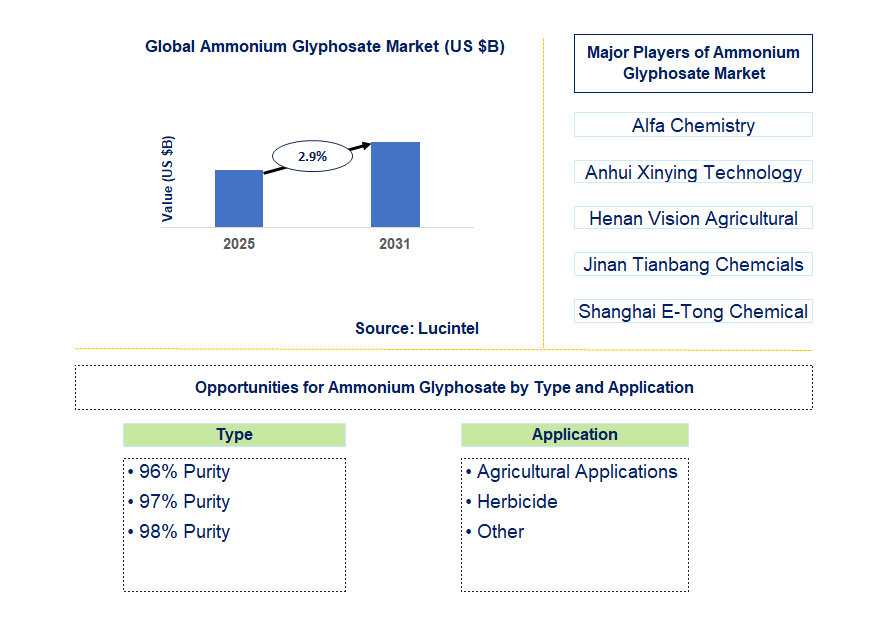
Key data points: The growth forecast = 2.9% annually for the next 7 years. Scroll below to get more insights. This market report covers Trends, opportunity and forecast in ammonium glyphosate market to 2031 by type (96% purity, 97% purity, and 98% purity), application (agricultural applications, herbicide, and other), and region (North America, Europe, Asia Pacific, and the Rest of the World)
We'll send your sample report shortly.
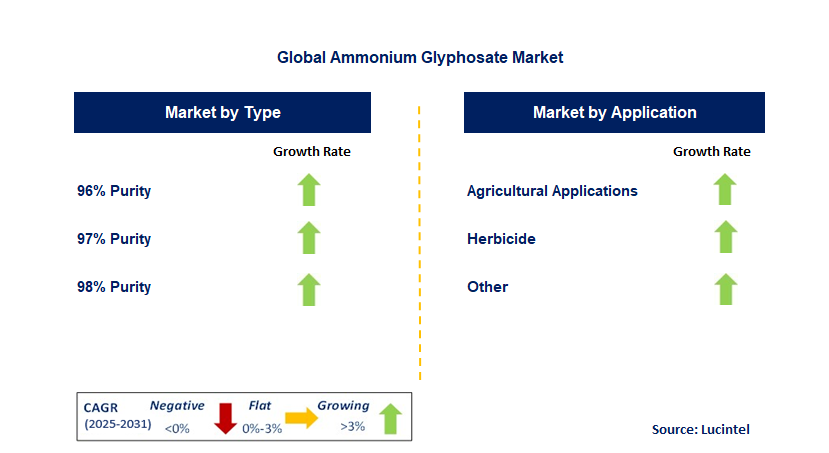
• Lucintel forecasts that, within the type category, 96% purity is expected to witness the highest growth over the forecast period due to its cost-effectiveness and suitability for general agricultural use.
• Within the application category, agricultural companies is expected to witness the highest growth due to large-scale purchasing power and commercial use.
• In terms of region, APAC is expected to witness the highest growth over the forecast period due to its vast agricultural industry and increasing demand for efficient weed control solutions. Gain valuable insights for your business decisions with our comprehensive 150+ page report. Sample figures with some insights are shown below.
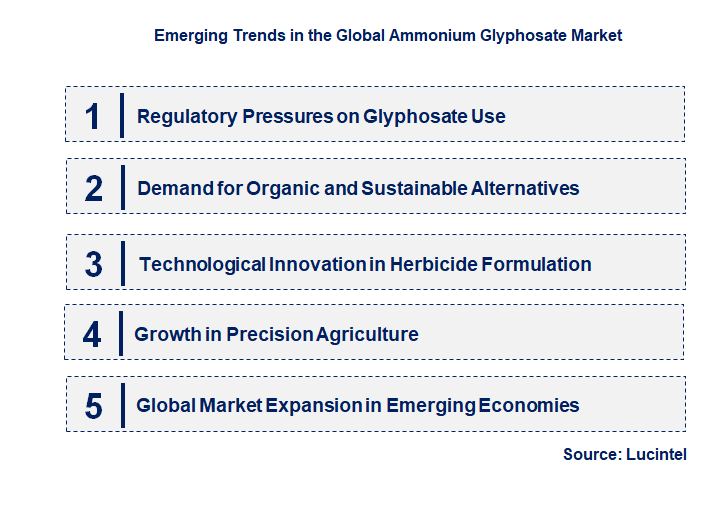
• Regulatory Pressures on Glyphosate Use: Governments worldwide are increasing scrutiny of glyphosate due to health and environmental concerns. This trend is particularly evident in Europe and the U.S., where legal actions and scientific studies continue to challenge its safety. As a result, stricter regulations are being enforced, pushing manufacturers to explore safer alternatives and invest in innovations that meet these new standards.
• Demand for Organic and Sustainable Alternatives: As consumer preferences shift towards organic and sustainably grown produce, there is growing demand for glyphosate alternatives. This trend is driven by environmental and health concerns, and manufacturers are investing in the development of new herbicides and farming techniques that reduce reliance on synthetic chemicals, including glyphosate.
• Technological Innovation in Herbicide Formulation: Technological advancements in herbicide formulation are leading to more effective and targeted application of Ammonium Glyphosate. New formulations are designed to minimize environmental impact and reduce the risk of pesticide resistance. These innovations offer more efficient and eco-friendly ways to use glyphosate, benefiting both farmers and the environment.
• Growth in Precision Agriculture: The rise of precision agriculture, which uses technology like GPS and drones for targeted pesticide application, is reshaping the glyphosate market. This approach allows for more efficient herbicide use, reducing overall chemical usage and minimizing the environmental footprint. Precision agriculture is expected to drive the adoption of Ammonium Glyphosate in the coming years, especially in regions with large-scale farming.
• Global Market Expansion in Emerging Economies: As agriculture continues to grow in emerging economies like India and Brazil, the demand for effective herbicides, including Ammonium Glyphosate, is expected to rise. These regions have large agricultural sectors that rely on glyphosate for efficient weed management. However, these markets are also under pressure to adopt sustainable farming practices and reduce chemical use, which could lead to increased interest in alternatives. These trends are significantly impacting the Ammonium Glyphosate market by pushing for more sustainable and effective farming practices. Regulatory changes and consumer demand for safer products are driving the industry toward innovations and alternatives, while technological advancements in farming methods continue to improve efficiency and reduce environmental impact.
• Stricter Regulatory Scrutiny: Regulatory bodies, particularly in Europe and the U.S., have raised concerns about glyphosate’s potential carcinogenic effects. In response, companies are being pushed to modify labeling, use, and production methods. Stricter rules are also affecting glyphosate registration processes and sales in various markets, driving research into alternative herbicides.
• Rise of Glyphosate Alternatives: Due to increasing concerns over glyphosate’s environmental and health effects, there is growing interest in developing alternative herbicides and integrated pest management (IPM) solutions. These alternatives aim to reduce chemical dependence while maintaining weed control efficacy.
• Technological Advancements in Herbicide Formulations: New advancements in formulation technologies have led to the development of more efficient Ammonium Glyphosate products that require lower doses and reduce environmental impact. These innovations also help address the growing problem of herbicide resistance, making glyphosate more effective in the long term.
• Shift Toward Sustainable Agricultural Practices: Sustainable agriculture is gaining traction, with a focus on reducing chemical use. This shift is influencing glyphosate usage patterns, with farmers increasingly seeking environmentally friendly alternatives. The push for organic farming is also contributing to reduced reliance on chemical herbicides.
• Increased Use of Precision Agriculture: The integration of precision agriculture technologies, such as GPS-guided sprayers and drones, has made glyphosate application more targeted and efficient. This trend is reducing the overall volume of chemicals applied and helping farmers optimize their use of herbicides. These developments are transforming the Ammonium Glyphosate market by encouraging safer, more efficient, and sustainable agricultural practices. While glyphosate remains an essential tool in weed control, evolving regulations and consumer demand for safer products are driving the market toward more innovative and eco-friendly alternatives.
• Advancements in Herbicide Technology: Technological innovations in herbicide formulations and application techniques are offering new opportunities for growth. By developing more efficient, lower-dosage formulations and targeting specific weed species, manufacturers can offer products that reduce environmental impact and improve crop yields, making them more attractive to farmers.
• Sustainable Agriculture Solutions: With the increasing emphasis on sustainability in agriculture, there is an opportunity for companies to develop and promote glyphosate alternatives that align with eco-friendly farming practices. Bio pesticides and integrated pest management (IPM) systems are gaining popularity, creating a growth avenue for companies focusing on organic and sustainable products.
• Expansion into Emerging Markets: Countries like India, Brazil, and other parts of Africa represent significant growth opportunities for the Ammonium Glyphosate market due to their rapidly expanding agricultural sectors. As these regions adopt modern farming practices, the demand for effective and affordable herbicides like glyphosate is expected to grow, creating opportunities for market expansion.
• Precision Agriculture Adoption: The growth of precision agriculture technologies presents an opportunity for glyphosate producers to offer solutions that allow for more targeted and efficient herbicide application. This trend is particularly promising in developed markets, where high-tech farming practices are becoming more common, improving overall crop production efficiency.
• Collaborations for Regulatory Compliance: Collaborations between manufacturers, regulatory bodies, and research institutions to address regulatory concerns surrounding glyphosate use can create growth opportunities. Developing safer formulations and improving product labeling and safety standards can help manufacturers navigate regulatory hurdles and maintain market access. These growth opportunities are reshaping the Ammonium Glyphosate market by creating a more sustainable, technologically advanced, and globally integrated industry. As demand grows in emerging markets and new technologies are adopted, the market is poised for continued expansion and innovation.
• Alfa Chemistry
• Anhui Xinying Technology
• Henan Vision Agricultural Science Thiab Technology
• Jinan Tianbang Chemcials
• Shanghai E-Tong Chemical
• 96% Purity
• 97% Purity
• 98% Purity
• Agricultural Applications
• Herbicide
• Other
• North America
• Europe
• Asia Pacific
• The Rest of the World
• United States: In the U.S., Ammonium Glyphosate continues to be a dominant herbicide, especially for crops like soybeans, corn, and cotton. However, the market faces mounting scrutiny due to concerns over health and environmental impacts. Legal battles regarding glyphosate safety have intensified, with lawsuits alleging links to cancer. This has led to changes in how glyphosate products are marketed and used. Additionally, there is increasing investment in glyphosate alternatives and more sustainable farming practices. Despite regulatory challenges, the market remains large, and demand continues due to its effectiveness in weed control.
• China: China, being one of the largest producers of glyphosate-based herbicides, has seen an increase in domestic demand for Ammonium Glyphosate, particularly in its agricultural sector. With significant acreage dedicated to rice, corn, and cotton, glyphosate remains a critical tool for weed management. China is also advancing its environmental policies and encouraging more sustainable agricultural practices, which could impact the production and use of chemical herbicides. However, as glyphosate faces increasing scrutiny globally, China is investing in research for safer alternatives to meet domestic and international market demands while managing regulatory pressures.
• Germany: Germany has adopted stringent regulations regarding pesticide use, and Ammonium Glyphosate is under significant scrutiny. The European Union, which has strong environmental policies, continues to evaluate the safety and sustainability of glyphosate. In response to concerns over potential carcinogenic risks, some German farmers are moving toward alternatives and adopting integrated pest management practices. However, glyphosate remains essential for crop protection, and the German market is expected to see continued use alongside growing pressure for more sustainable and environmentally friendly agricultural chemicals.
• India: In India, Ammonium Glyphosate is used extensively in agriculture, especially for controlling weeds in cotton, rice, and other crops. The demand is driven by the country’s large farming sector and the need for cost-effective solutions for weed management. However, India faces concerns regarding pesticide overuse and residue levels, leading to regulatory scrutiny. Recent developments indicate a growing interest in organic farming and the reduction of chemical inputs, which may affect the demand for glyphosate-based herbicides. The market is expected to continue growing, but there is increasing pressure for more environmentally conscious agricultural practices.
• Japan: In Japan, Ammonium Glyphosate is commonly used in both large-scale agriculture and in non-agricultural settings like gardens and parks. The demand is driven by the country’s focus on efficient farming practices and the need for effective weed control. However, Japan has been active in implementing stricter pesticide regulations and encouraging the use of sustainable agricultural practices. There is an increased push toward reducing chemical usage, which could lead to a decrease in glyphosate demand. Japanese consumers and agricultural stakeholders are increasingly prioritizing safer and more sustainable agricultural chemicals.


• Alfa Chemistry
• Anhui Xinying Technology
• Henan Vision Agricultural Science Thiab Technology
• Jinan Tianbang Chemcials
• Shanghai E-Tong Chemical Q5. Which ammonium glyphosate market segment will be the largest in future? Answer: Lucintel forecasts that 96% purity is expected to witness the highest growth over the forecast period due to its cost-effectiveness and suitability for general agricultural use. Q6. In ammonium glyphosate market, which region is expected to be the largest in next 5 years? Answer: APAC is expected to witness the highest growth over the forecast period due to its vast agricultural industry and increasing demand for efficient weed control solutions. Q7. Do we receive customization in this report? Answer: Yes, Lucintel provides 10% customization without any additional cost.


Choose a license that fits your team. Instant PDF delivery.
Prices exclude taxes. Instant delivery. Custom licensing available on request.
Market Report · July 22, 2026
Market Report · July 22, 2026
Market Report · July 22, 2026
Trusted partner for strategic intelligence and business growth


Receive a complimentary market analysis tailored to your industry. Our analysts will identify key growth opportunities and competitive dynamics specific to your business.

Market size, growth rate, and key trend analysis for your specific sector.

Top competitor positioning and market share analysis.

Strategic recommendations backed by data-driven insights.
Get curated market intelligence and competitive moves straight to your inbox.
By subscribing, you agree to receive our monthly insights. Unsubscribe anytime.
Receive a complimentary market analysis tailored to your industry. Our analysts will identify key growth opportunities and competitive dynamics specific to your business.
Market size, growth rate, and key trend analysis for your specific sector.
Top competitor positioning and market share analysis.
Strategic recommendations backed by data-driven insights.
Get curated market intelligence, emerging trends, and competitive moves straight to your inbox each month.
By subscribing, you agree to receive our monthly insights. Unsubscribe anytime.
We'll send your sample report shortly.