
Market Report · May 18, 2026

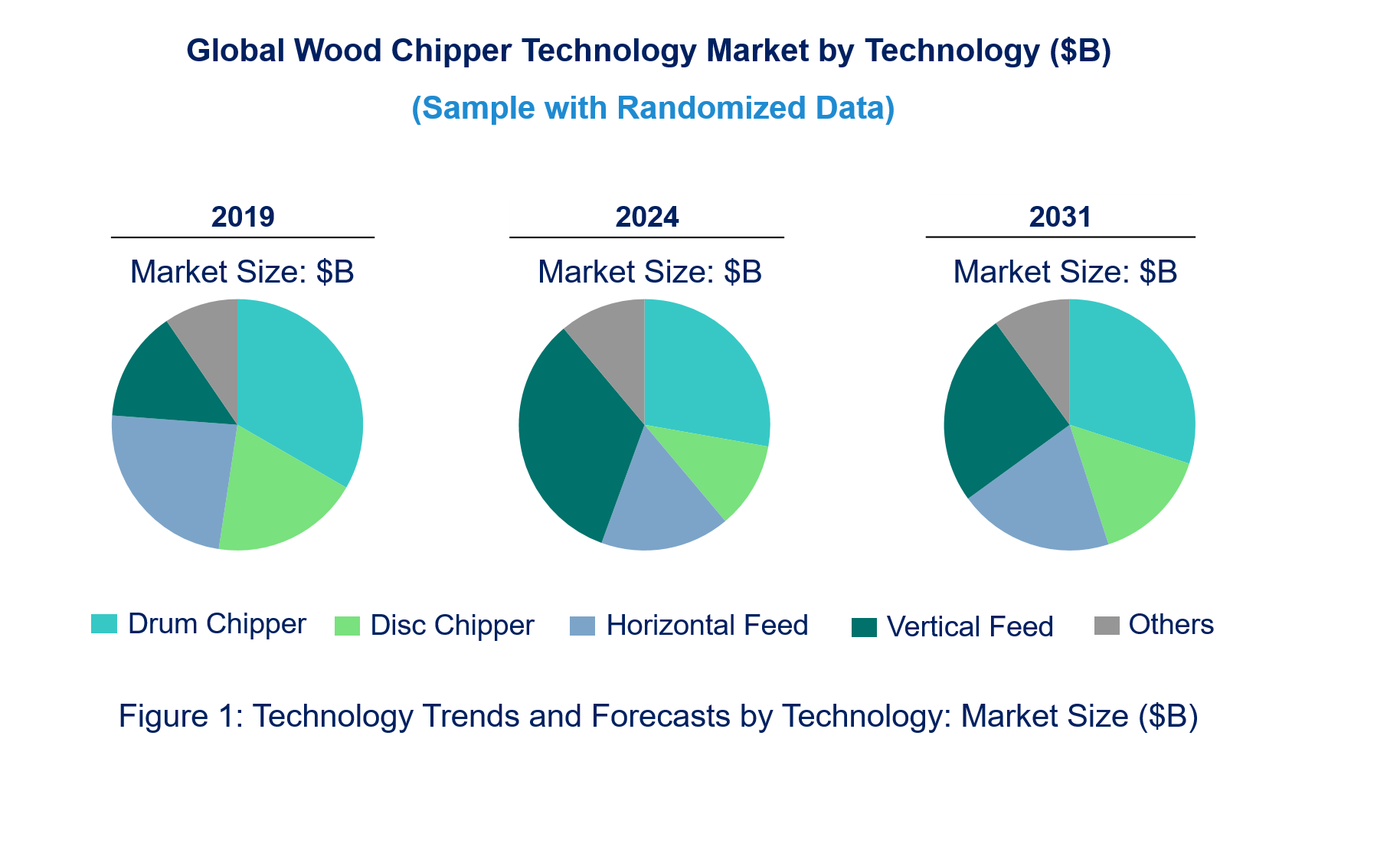
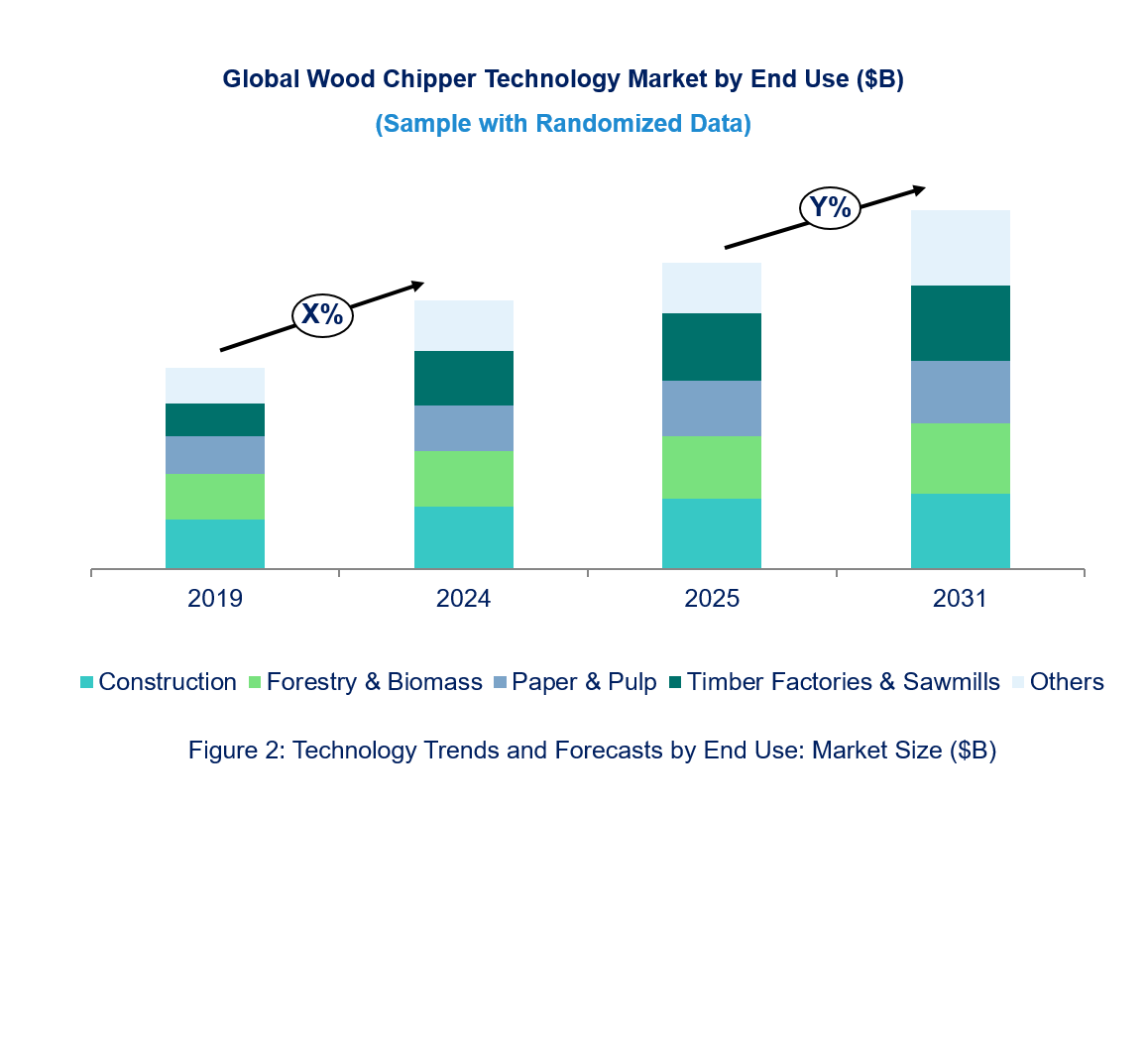
This market report covers trends, opportunities, and forecasts in the global wood chipper market to 2031 by technology (drum chipper, disc chipper, horizontal feed, vertical feed, and others), end use industry (construction, forestry & biomass, paper & pulp, timber factories & sawmills, and others), and region (North America, Europe, Asia Pacific, and the Rest of the World)
We'll send your sample report shortly.
• Automation and IoT Integration: Increased adoption of automated control systems and IoT-based solutions for real-time monitoring of equipment performance. This increases efficiency and reduces downtime for maintenance.
• Electric-Powered Chippers: The demand for environmentally friendly alternatives has led to the development of electric-powered chippers, which offer quieter operation and reduced emissions compared to traditional fuel-powered models.
• Compact and Portable Models: Smaller, more portable models are becoming increasingly popular, especially in urban forestry and landscaping applications, where space and mobility are a primary concern.
• Safety Features: Enhanced safety features include automatic shutoff systems, emergency stop mechanisms, and advanced operator protection devices to minimize accident risks.
• Customization and Flexibility: The demand for customized wood chippers that can handle specific materials—from forestry residue to construction debris—allows companies to tailor a solution for diversified applications. These trends have introduced significant changes in favor of greater efficiency, sustainability, and adaptability in the wood chipper market. With continually evolving technology, these changes are shaping the industry to meet the demands of diversified end-user industries.
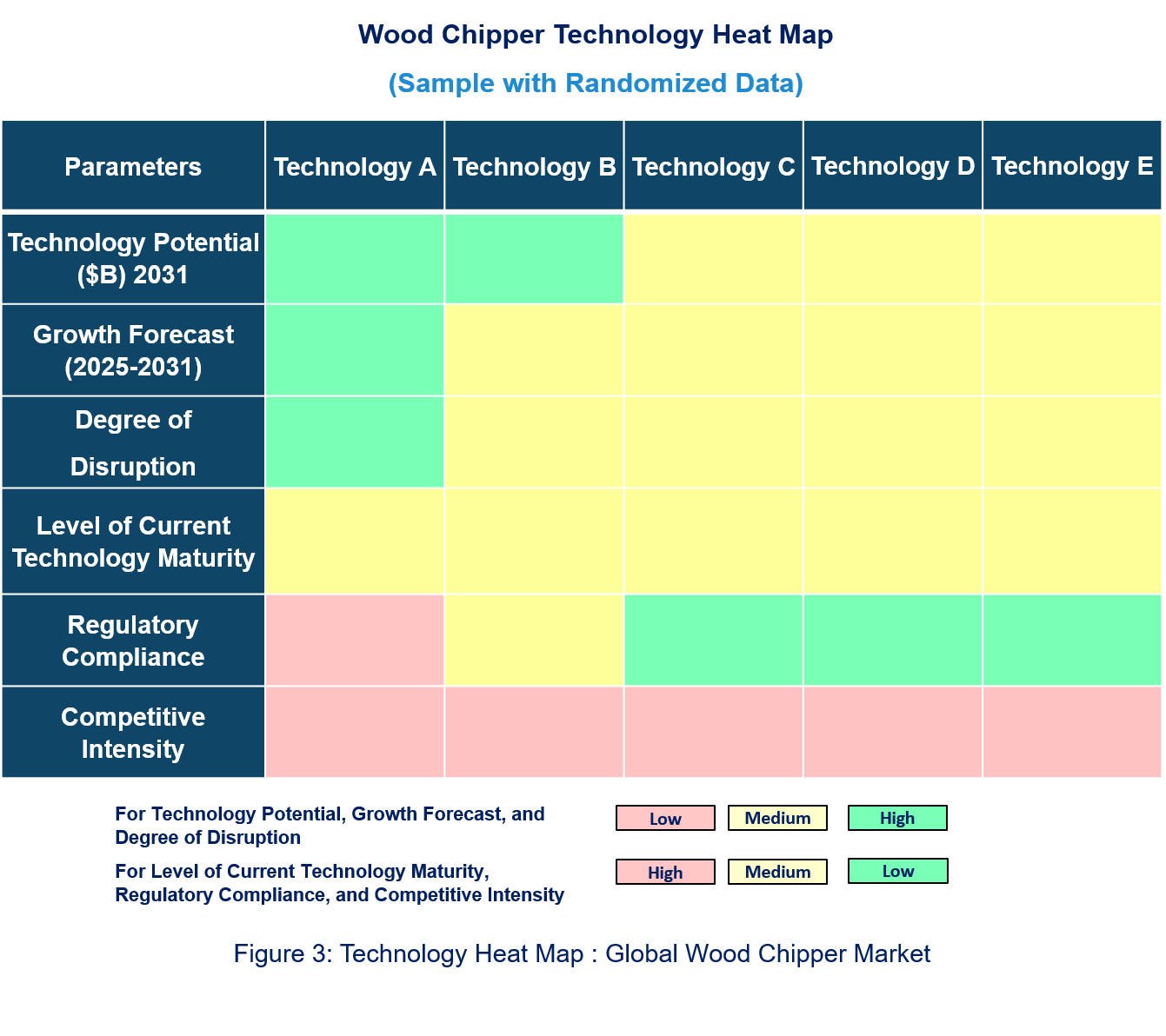
• Potential in Technology: The potential of technology in wood chippers lies in increasing engine efficiency, automation systems, and material handling capacities. Advanced features such as remote monitoring, smart sensors, and fuel-efficient engines are increasingly being integrated into newer wood chippers. Another trend for tracking and optimizing wood chippers is the use of GPS technology.
• Degree of Disruption: The degree of disruption in the wood chipper market is moderate. Technological innovations improve the operational efficiency and environmental sustainability of products, but the market is not undergoing dramatic shifts, as traditional wood chippers continue to dominate. However, smart technologies and electric-powered models are slowly gaining ground and challenging conventional models.
• Current Technology Maturity Level: The current technology maturity in the wood chipper market is advanced, with reliable internal combustion engines, safety features, and efficient chip processing. However, smart technologies and automation are still in the growth phase, and innovations are emerging.
• Regulatory Compliance: Regulatory compliance is becoming increasingly important, especially with regard to emissions standards and safety regulations. Governments worldwide are enforcing strict environmental standards, pushing manufacturers to adopt cleaner, more energy-efficient technologies. The wood chipper market is evolving with technological advancements that improve efficiency and sustainability, though the degree of disruption remains moderate.
• Terex: Terex has introduced more advanced, high-performance chipper models that offer better fuel efficiency and require less maintenance for large-scale forestry operations.
• Bandit: Bandit has focused on expanding its line of wood chippers with improved mobility and higher throughput capabilities to cater to both urban and rural forestry businesses.
• Vermeer: Vermeer has developed cutting-edge disc chippers with enhanced safety features and automated systems for more precise operations, offering a competitive edge in terms of productivity and operator protection.
• Patriot Products: Patriot Products is advancing its product line with more compact and electric-powered chippers, responding to the increasing demand for sustainable, quieter alternatives in residential and small-scale applications.
• Avant Tecno Oy: Avant Tecno Oy has integrated telematics into its chippers, enabling remote monitoring of machine conditions, thus giving customers more control over performance and maintenance schedules.
• Bruks: Bruks has innovated horizontal feed chippers that have improved throughput and efficiency in large-scale biomass and timber processing applications.
• Siwertell: Siwertell has improved its wood chipper designs, moving toward more environmentally sustainable machinery to meet industry demands.
• Bugnot 52: The company has made efforts to perfect designs for their chippers and improve their versatility for applications ranging from construction to forestry.
• Crary Industries: The company has designed specific wood chipper models for industrial use, emphasizing safety features and user-friendliness.
• Wajax: Wajax has incorporated hydraulic systems in its wood chippers with advanced technology to enhance operational efficiency and reduce maintenance time. These advancements reflect the increasing demand for efficiency, safety, and sustainability in the wood chipper market. The key players are continually innovating and enhancing products to meet these demands.
• Environmental awareness has increased the demand for environmentally friendly wood chippers. This includes electric-powered and low-emission wood chippers that meet regulatory standards.
• Technological advancements in automation, IoT, and safety features have enhanced the performance and safety of wood chippers, thus increasing operational efficiency for users.
• Biomass and Renewable Energy Growth: The increasing production of biomass energy from wood chips is driving the demand for high-performance wood chippers capable of processing large volumes of wood for energy.
• Rising Forestry and Timber Markets: The rapidly growing forestry and timber markets are driving demand for long-lasting, reliable, heavy-duty wood chippers. Challenges in the wood chipper market include:
• High Initial Cost of Advanced Models: The upfront cost of advanced wood chippers with automated systems and eco-friendly technologies can be prohibitive for small- to medium-sized businesses.
• Maintenance and Operational Complexity: Despite technological advancements, some users may face difficulties in maintaining sophisticated equipment, which requires specialized training and spare parts.
• Environmental Regulations and Compliance: Stringent regulations regarding emissions and noise levels pose challenges for traditional chipper models, forcing manufacturers to continuously innovate to meet compliance standards. The drivers and challenges above highlight the changing nature of the market, with higher demands for innovation and sustainable solutions. This is further fueling a dynamic and competitive environment for the wood chipper market.
• Terex
• Bandit
• Vermeer
• Patriot Products
• Avant Tecno Oy
• Bruks
• Technology Readiness by Technology Type: Drum chippers are mature and widely used for large-scale operations. Disc chippers are evolving with automation, while horizontal feed chippers are gaining traction in industrial applications. Vertical feed chippers are progressing with automation. Emerging hybrid and electric chippers focus on sustainability. Competitive levels depend on efficiency, regulatory compliance, and application suitability.
• Competitive Intensity and Regulatory Compliance: The wood chipper market is highly competitive, with drum chippers leading but facing competition from disc chippers. Horizontal and vertical feed chippers compete on efficiency and versatility. Regulatory compliance is crucial, especially for emissions and safety standards. Stricter regulations encourage environmentally friendly innovations, requiring companies to balance technological advancements with compliance to stay competitive.
• Disruption Potential by Technology Type: The wood chipper market is disrupted by drum chippers, disc chippers, horizontal feed, and vertical feed systems. Drum chippers offer efficiency for large-scale operations but are complex and require maintenance. Disc chippers are cost-effective and flexible, suited for smaller operations. Horizontal feed chippers provide high throughput, while vertical feed chippers handle various wood sizes. Emerging technologies integrating automation and IoT improve efficiency and sustainability, driving market disruption.
• Drum Chipper
• Disc Chipper
• Horizontal Feed
• Vertical Feed
• Others
• Construction
• Forestry & Biomass
• Paper & Pulp
• Timber Factories & Sawmills
• Others
• North America
• Europe
• Asia Pacific
• The Rest of the World
• Latest Developments and Innovations in the Wood Chipper Technologies
• Companies / Ecosystems
• Strategic Opportunities by Technology Type




Choose a license that fits your team. Instant PDF delivery.
Prices exclude taxes. Instant delivery. Custom licensing available on request.
Market Report · May 18, 2026
Market Report · May 18, 2026
Market Report · May 18, 2026
Trusted partner for strategic intelligence and business growth


Receive a complimentary market analysis tailored to your industry. Our analysts will identify key growth opportunities and competitive dynamics specific to your business.

Market size, growth rate, and key trend analysis for your specific sector.

Top competitor positioning and market share analysis.

Strategic recommendations backed by data-driven insights.
Get curated market intelligence and competitive moves straight to your inbox.
By subscribing, you agree to receive our monthly insights. Unsubscribe anytime.
Receive a complimentary market analysis tailored to your industry. Our analysts will identify key growth opportunities and competitive dynamics specific to your business.
Market size, growth rate, and key trend analysis for your specific sector.
Top competitor positioning and market share analysis.
Strategic recommendations backed by data-driven insights.
Get curated market intelligence, emerging trends, and competitive moves straight to your inbox each month.
By subscribing, you agree to receive our monthly insights. Unsubscribe anytime.
We'll send your sample report shortly.