
Market Report · July 22, 2026

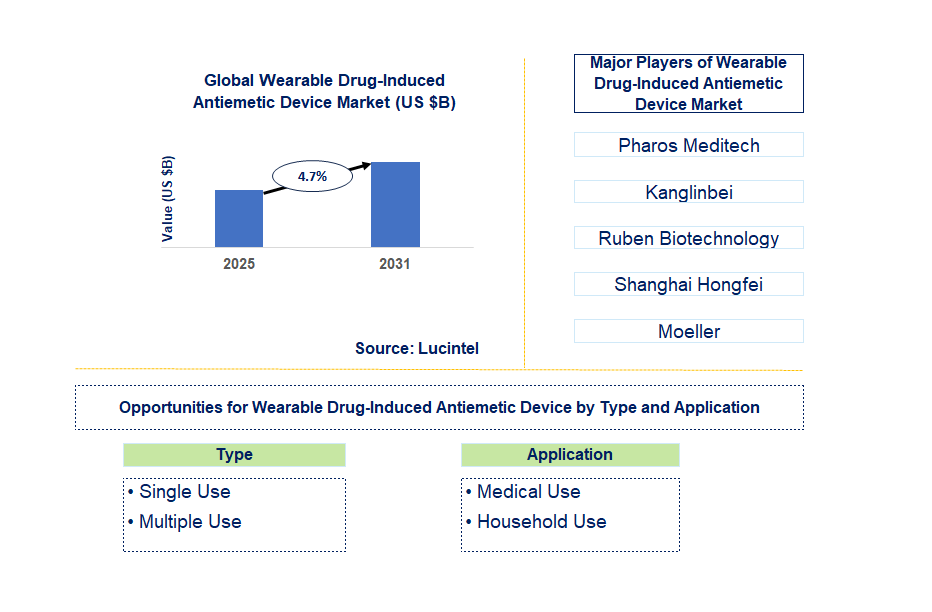
Key data points: The growth forecast = 4.7% annually for the next 7 years. Scroll below to get more insights. This market report covers Trends, opportunity and forecast in wearable drug-induced antiemetic device market to 2031 by type (single use and multiple use), application (medical use and household use), and region (North America, Europe, Asia Pacific, and the Rest of the World)
We'll send your sample report shortly.
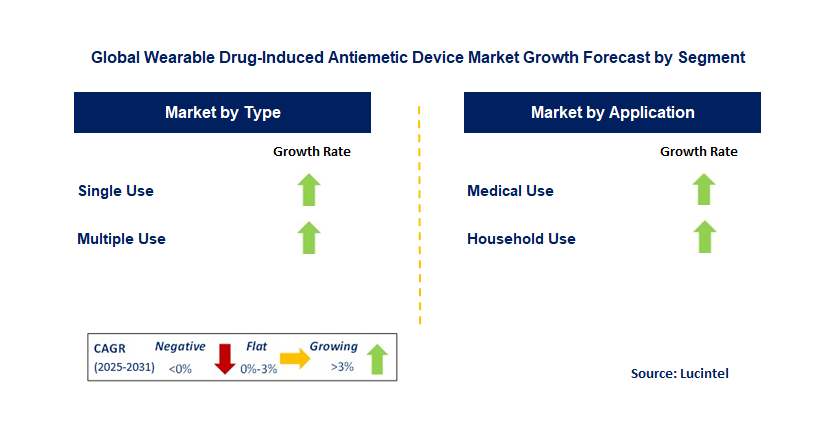
• Lucintel forecasts that, within the type category, single use is expected to witness higher growth over the forecast period.
• Within the application category, medical use is expected to witness the higher growth.
• In terms of region, APAC is expected to witness the highest growth over the forecast period. Gain valuable insights for your business decisions with our comprehensive 150+ page report. Sample figures with some insights are shown below.
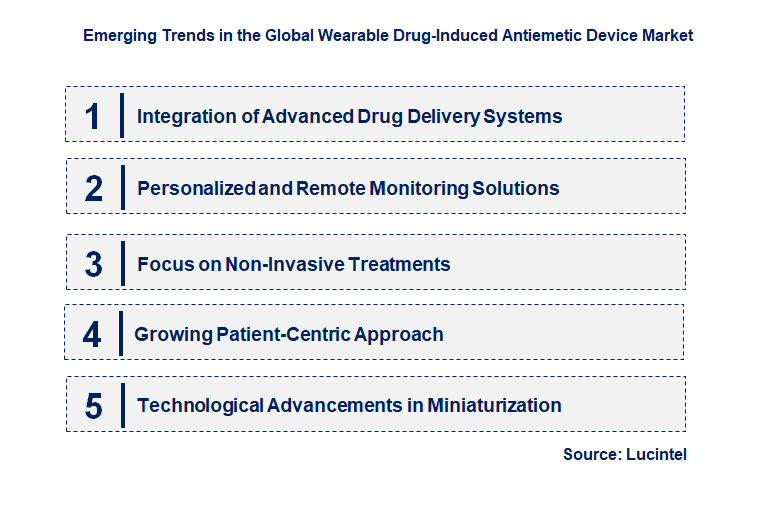
• Integration of Advanced Drug Delivery Systems: The use of advanced transdermal drug delivery systems in wearable antiemetic devices is a significant trend. These systems allow for controlled, sustained release of antiemetic drugs, ensuring better symptom management and enhancing patient comfort during chemotherapy treatments. This non-invasive approach offers a more personalized and effective solution for CINV management.
• Personalized and Remote Monitoring Solutions: Wearable devices are increasingly incorporating remote monitoring capabilities to track patient progress and provide personalized care. These devices can collect data on nausea symptoms and automatically adjust drug delivery, enhancing treatment outcomes. The integration of wearable technology with mobile health apps allows patients and healthcare providers to monitor treatment effectiveness in real-time, improving overall care.
• Focus on Non-Invasive Treatments: The growing demand for non-invasive treatments is driving the adoption of wearable antiemetic devices. Unlike traditional oral medications or intravenous injections, wearable devices offer a non-invasive and more comfortable solution to managing chemotherapy side effects, particularly nausea and vomiting. This shift toward non-invasive treatments is being embraced by both patients and healthcare providers.
• Growing Patient-Centric Approach: The patient-centric model in healthcare is fostering demand for devices that improve patient autonomy and quality of life. Wearable antiemetic devices, which allow patients to manage their symptoms on the go, align with this trend. Patients can now take control of their treatment, improving their adherence and overall satisfaction with chemotherapy treatments.
• Technological Advancements in Miniaturization: Technological advancements are leading to the miniaturization of wearable antiemetic devices. These devices are becoming smaller, more discreet, and more comfortable for long-term wear. The trend towards lighter, more portable devices is enhancing patient compliance and allowing these devices to be worn inconspicuously, further driving adoption among patients undergoing chemotherapy. These trends indicate that the wearable drug-induced antiemetic device market is evolving towards more effective, patient-centered solutions. The integration of advanced drug delivery, personalized care, and non-invasive technologies is transforming the way chemotherapy-induced nausea and vomiting are managed, leading to improved patient outcomes and greater market growth.
• FDA Approval of the S-Clinic Patch: The approval of the S-Clinic wearable patch by the FDA marks a major development in the wearable antiemetic device market. This transdermal device delivers antiemetic drugs through the skin to manage nausea and vomiting associated with chemotherapy. The FDA’s approval provides a significant boost to the market by offering a clinically validated solution for CINV management.
• Launch of New Wearable Anti-Nausea Devices in China: In China, new wearable antiemetic devices have been introduced, focusing on improving the management of chemotherapy-induced side effects. These devices use advanced drug delivery systems to release antiemetic medication in a controlled manner. The growing cancer patient population in China is a key driver for this development, as these devices offer a non-invasive and more convenient alternative to traditional treatments.
• Partnerships for Innovation in Wearable Devices in Germany: German medical device companies have formed strategic partnerships to innovate and develop more advanced wearable drug-induced antiemetic devices. These collaborations aim to enhance device performance by improving drug delivery systems and incorporating smart technology for remote patient monitoring. The growing focus on personalized cancer treatment options in Germany supports this development.
• Government Support for Wearable Medical Devices in India: The Indian government has increased its support for the development and distribution of wearable medical devices, including antiemetic devices. With an increasing number of cancer cases and a large patient population, India is focusing on making wearable antiemetic devices more affordable and accessible, especially in rural regions where access to traditional antiemetic therapies may be limited.
• Technological Advancements in Japan’s Wearable Devices: Japan continues to lead in technological innovations for wearable antiemetic devices, with new developments focused on miniaturization and improved user comfort. Japanese companies are focusing on creating smaller, lighter, and more effective devices that integrate seamlessly into patients’ daily lives, allowing for more discreet and convenient symptom management during chemotherapy. These recent developments illustrate the ongoing innovation and growth within the wearable drug-induced antiemetic device market. Advances in technology, regulatory approvals, and global demand for better symptom management are driving market expansion and improving the quality of life for patients undergoing chemotherapy.
• Expansion in Chemotherapy-Induced Nausea and Vomiting (CINV) Treatment: The growing demand for solutions to manage CINV presents a major growth opportunity. Wearable antiemetic devices can provide patients with real-time, non-invasive treatment options, reducing their reliance on oral medications and intravenous therapies. This market is expected to expand as cancer cases rise globally.
• Increased Adoption in Home Healthcare: The trend toward home healthcare offers a significant opportunity for wearable antiemetic devices. Patients undergoing chemotherapy can manage their symptoms at home with wearable devices that provide continuous, personalized antiemetic therapy. This reduces hospital visits and enhances patient autonomy, a trend that is expected to accelerate globally.
• Integration with Mobile Health Apps: The integration of wearable antiemetic devices with mobile health applications presents a growth opportunity by enabling remote monitoring and data sharing with healthcare providers. This connectivity allows for better patient tracking, tailored treatment adjustments, and enhanced communication between patients and doctors, improving patient outcomes.
• Focus on Cost-Effective Solutions in Emerging Markets: Wearable antiemetic devices offer an opportunity to cater to emerging markets where there is a growing demand for affordable healthcare solutions. By making these devices more accessible and cost-effective, manufacturers can tap into the large patient population in regions like India and China, where cancer treatment is increasingly common.
• Development of Multi-Use Wearable Devices: The development of wearable devices that can manage multiple chemotherapy side effects, such as pain and nausea, is an exciting growth opportunity. These multifunctional devices could replace the need for separate treatments, improving patient compliance and convenience, and attracting a broader patient base. Strategic growth opportunities in the wearable drug-induced antiemetic device market lie in expanding treatment options, enhancing patient autonomy through home healthcare, and integrating wearable technology with mobile health solutions. These opportunities are expected to fuel market growth and address the increasing global demand for efficient, non-invasive treatments for chemotherapy-induced nausea and vomiting.
• Pharos Meditech
• Kanglinbei
• Ruben Biotechnology
• Shanghai Hongfei
• Moeller
• Single Use
• Multiple Use
• Medical Use
• Household Use
• North America
• Europe
• Asia Pacific
• The Rest of the World
• United States: In the United States, the wearable drug-induced antiemetic device market is experiencing rapid growth due to increasing cancer treatment cases and the rising prevalence of chemotherapy-induced nausea and vomiting (CINV). Devices like the S-Clinic patch, which delivers antiemetic drugs transdermally, are gaining popularity. The FDA’s approval of such devices has boosted confidence among healthcare providers, while the increasing trend toward home-based care and non-invasive treatment options enhances their market penetration.
• China: China is seeing rising demand for wearable drug-induced antiemetic devices, driven by a growing cancer patient population and advancements in healthcare technology. The government’s increasing focus on improving cancer treatment options and quality of life for patients is further accelerating the market. The wearable devices are being embraced due to their convenience and efficacy in managing chemotherapy side effects. However, challenges like high costs and limited awareness may slow adoption in rural areas.
• Germany: Germany’s healthcare system has increasingly supported the adoption of wearable drug-induced antiemetic devices. Devices that offer personalized, real-time symptom management for chemotherapy-induced nausea and vomiting are in demand. With a well-established healthcare infrastructure and strong regulatory support, Germany is seeing greater integration of wearable devices into cancer treatment protocols. The country also benefits from a high rate of innovation in medical technologies, enhancing the availability of these devices in clinics and hospitals.
• India: India is experiencing a growing need for wearable antiemetic devices, particularly due to the rising cases of cancer and chemotherapy treatments. The affordability and non-invasiveness of wearable devices like the S-Clinic patch are attracting attention in urban areas, but the market in rural regions faces challenges due to cost and lack of awareness. The government’s focus on improving healthcare accessibility and supporting innovative medical devices could potentially expand the market in India.
• Japan: In Japan, the wearable drug-induced antiemetic device market is expanding due to the country’s aging population and the increasing cancer incidence. Japanese healthcare providers have embraced wearable antiemetic devices to manage chemotherapy-induced nausea and vomiting in patients. The market is supported by a strong focus on innovation, high standards for medical devices, and favorable government policies. The growing trend toward personalized medicine and patient-centric solutions further fuels the demand for wearable devices in Japan.


• Pharos Meditech
• Kanglinbei
• Ruben Biotechnology
• Shanghai Hongfei
• Moeller Q5. Which wearable drug-induced antiemetic device market segment will be the largest in future? Answer: Lucintel forecasts that single use is expected to witness higher growth over the forecast period. Q6. In wearable drug-induced antiemetic device market, which region is expected to be the largest in next 5 years? Answer: APAC is expected to witness the highest growth over the forecast period. Q7. Do we receive customization in this report? Answer: Yes, Lucintel provides 10% customization without any additional cost.


Choose a license that fits your team. Instant PDF delivery.
Prices exclude taxes. Instant delivery. Custom licensing available on request.
Market Report · July 22, 2026
Market Report · July 22, 2026
Market Report · July 22, 2026
Trusted partner for strategic intelligence and business growth


Receive a complimentary market analysis tailored to your industry. Our analysts will identify key growth opportunities and competitive dynamics specific to your business.

Market size, growth rate, and key trend analysis for your specific sector.

Top competitor positioning and market share analysis.

Strategic recommendations backed by data-driven insights.
Get curated market intelligence and competitive moves straight to your inbox.
By subscribing, you agree to receive our monthly insights. Unsubscribe anytime.
Receive a complimentary market analysis tailored to your industry. Our analysts will identify key growth opportunities and competitive dynamics specific to your business.
Market size, growth rate, and key trend analysis for your specific sector.
Top competitor positioning and market share analysis.
Strategic recommendations backed by data-driven insights.
Get curated market intelligence, emerging trends, and competitive moves straight to your inbox each month.
By subscribing, you agree to receive our monthly insights. Unsubscribe anytime.
We'll send your sample report shortly.