Portable Medical Electronic Product Market Report: Trends, Forecast and Competitive Analysis to 2035

Key data points: The market size in 2035 = $215 billion, growth forecast = 9.1% annually for the next 9 years. Scroll below to get more insights. This market report covers trends, opportunities and forecasts in portable medical electronic product market to 2035 by product type (diagnostic imaging systems, monitoring devices, therapeutic devices, mobile medical apps & software, and others), portability type (hand-held, wearable, and portable trolley-mounted), component (sensors, batteries & power modules, communication modules, display & interface modules, and processors & AI chips), end use (hospitals, physician offices & clinics, home-care settings, emergency medical services, and military & remote healthcare), and region (North America, Europe, Asia Pacific, and the Rest of the World)

Publisher: Lucintel Last Updated: July 2026
See Pricing

Download Sample Report

| ✨ New Download Sample report — Get instant insights! | ✨ New Download Sample report — Get instant insights!

Portable Medical Electronic Product Market Report: Trends, Forecast and Competitive Analysis to 2035

Portable Medical Electronic Product Market

The future of the global portable medical electronic product market looks promising with opportunities in the hospital, physician office & clinic, home-care setting, emergency medical service, and military & remote healthcare markets. The global portable medical electronic product market is expected to reach an estimated $215 billion by 2035 with a CAGR of 9.1% from 2026 to 2035. The major drivers for this market are the increasing use of remote patient monitoring devices, the rising need for home healthcare solutions, and the growing adoption of wearable medical electronics.

  • Lucintel forecasts that, within the product type category, monitoring device will remain the largest segment over the forecast period due to the increasing demand for advanced patient monitoring solutions.
  • Within the end use category, hospital will remain the largest segment due to the rising adoption of hospital-based healthcare services.
  • In terms of regions, North America will remain the largest region over the forecast period due to the growing healthcare spending supporting medical device adoption.

Gain valuable insights for your business decisions with our comprehensive 150+ page report. Sample figures with some insights are shown below.
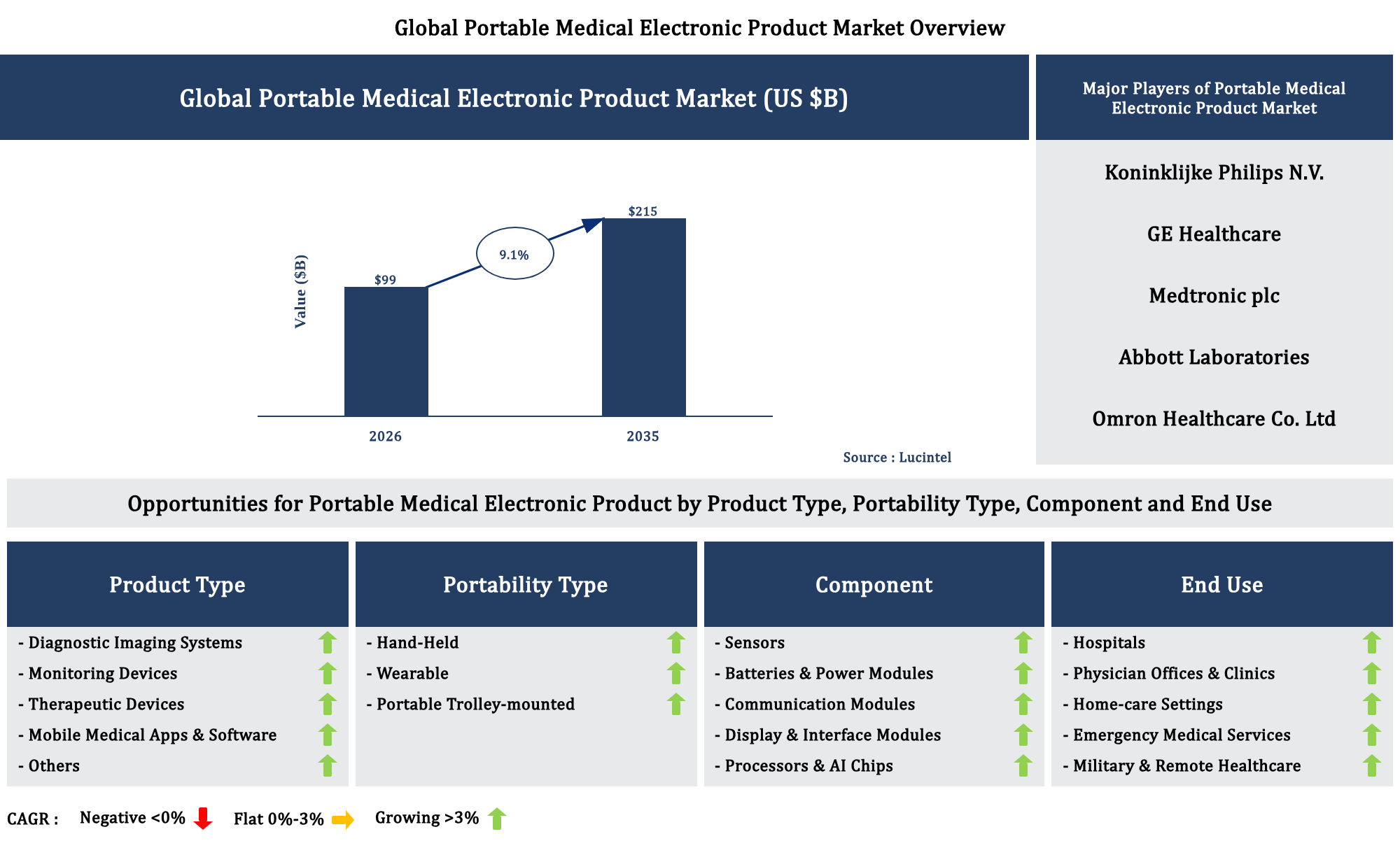
Portable Medical Electronic Product Market

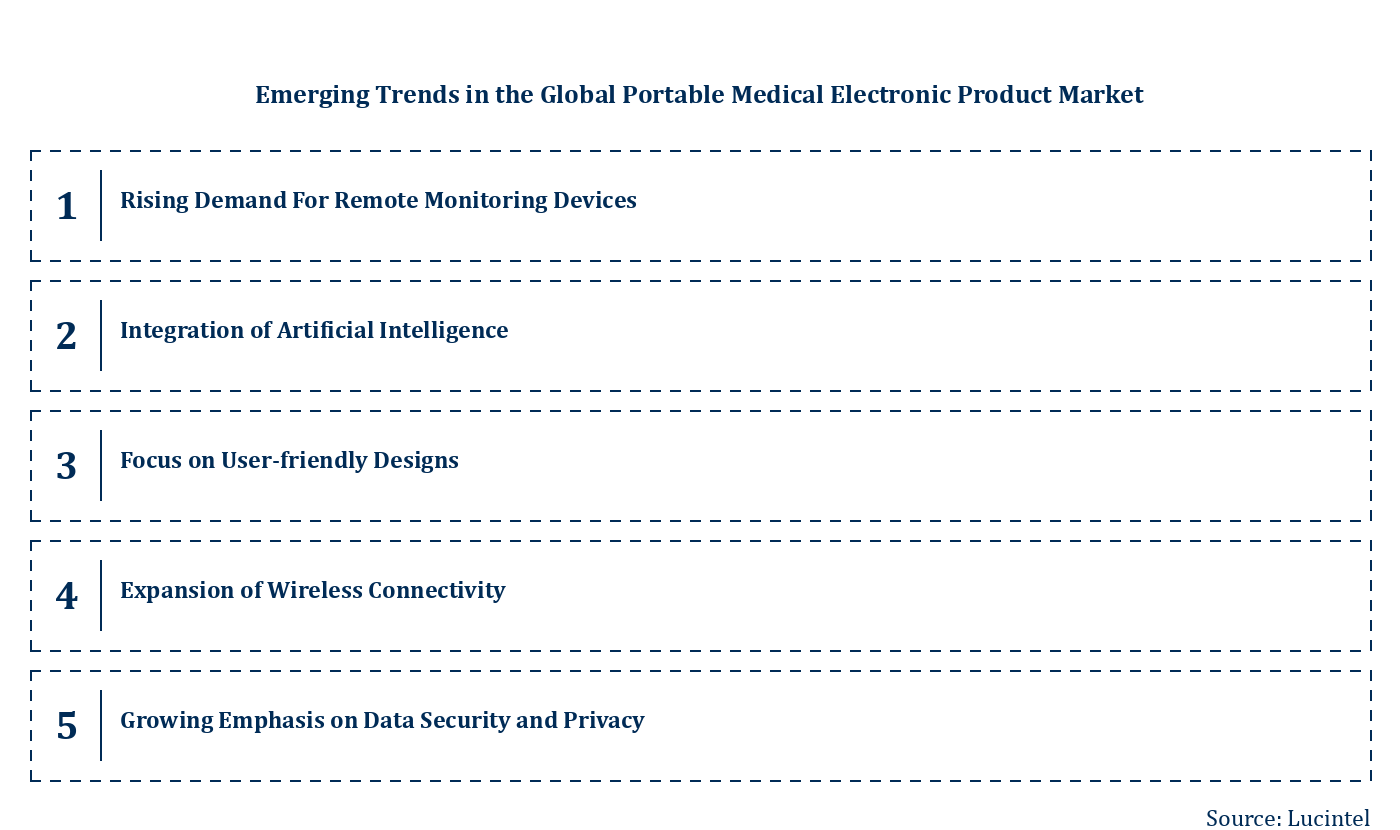
Emerging Trends in the Portable Medical Electronic Product Market

The portable medical electronic product market is experiencing rapid growth driven by technological advancements, increasing healthcare needs, and a shift towards personalized medicine. As consumers demand more accessible and efficient healthcare solutions, manufacturers are innovating to meet these needs. The market is characterized by a surge in portable devices that enable real-time monitoring, improved diagnostics, and enhanced patient management outside traditional clinical settings. These developments are transforming healthcare delivery, making it more patient-centric, cost-effective, and accessible. The following key trends highlight the major shifts shaping this dynamic market landscape.

  • Rising Demand for Remote Monitoring Devices: The increasing prevalence of chronic diseases and the need for continuous health monitoring are fueling demand for portable remote monitoring devices. These products enable patients to track vital signs and health metrics from home, reducing hospital visits and improving disease management. The convenience and real-time data collection offered by these devices are enhancing patient engagement and enabling healthcare providers to make timely interventions, ultimately improving health outcomes and reducing healthcare costs.
  • Integration of Artificial Intelligence: The incorporation of AI into portable medical devices is revolutionizing diagnostics and data analysis. AI algorithms can interpret complex health data, identify patterns, and predict health risks with high accuracy. This integration enhances device capabilities, allowing for faster, more precise diagnoses and personalized treatment plans. AI-powered portable devices are also improving remote patient monitoring by providing actionable insights, which helps in early detection of health issues and reduces the burden on healthcare facilities.
  • Focus on User-Friendly Designs: Manufacturers are prioritizing ergonomic, intuitive designs to improve user experience and compliance. Portable medical devices are becoming more compact, lightweight, and easy to operate, catering to a broader user base, including elderly and non-tech-savvy individuals. Simplified interfaces, clear displays, and minimal maintenance requirements are making these products more accessible, encouraging consistent use and better health management outside clinical environments.
  • Expansion of Wireless Connectivity: Wireless connectivity features such as Bluetooth, Wi-Fi, and cellular networks are becoming standard in portable medical devices. These features facilitate seamless data transfer to healthcare providers and electronic health records, enabling real-time monitoring and remote consultations. Enhanced connectivity improves workflow efficiency, reduces manual data entry errors, and supports telemedicine initiatives. As a result, patients benefit from more coordinated care, and providers can deliver timely interventions, especially in remote or underserved areas.
  • Growing Emphasis on Data Security and Privacy: As portable medical devices handle sensitive health information, ensuring data security and privacy has become paramount. Manufacturers are adopting advanced encryption, secure data storage, and compliance with regulatory standards to protect patient data. This focus builds trust among users and healthcare providers, encouraging wider adoption of portable health solutions. Robust security measures are essential to prevent data breaches, maintain confidentiality, and comply with legal requirements, thereby supporting the sustainable growth of the market.

These trends are collectively reshaping the portable medical electronic product market by making devices more accessible, intelligent, secure, and integrated into everyday healthcare. They are driving innovation, improving patient outcomes, and expanding the reach of healthcare services beyond traditional settings, ultimately fostering a more connected and patient-centric healthcare ecosystem.
Portable Medical Electronic Product Market by country

Recent Developments in the Portable Medical Electronic Product Market

The portable medical electronic product market is experiencing rapid growth driven by technological advancements, increasing demand for remote healthcare, and a rising prevalence of chronic diseases. Innovations in device miniaturization, connectivity, and user-friendly interfaces are expanding market opportunities. Additionally, the integration of AI and IoT is enhancing device capabilities. Governments and healthcare providers are investing heavily in portable solutions to improve patient outcomes and reduce costs. These developments are transforming healthcare delivery, making it more accessible, efficient, and personalized.

  • Technological Advancements in Device Miniaturization: The miniaturization of medical electronics allows for more compact, lightweight devices, improving patient comfort and mobility. This innovation enables continuous monitoring and real-time data collection outside clinical settings, expanding the scope of remote healthcare. Smaller devices also facilitate easier integration with smartphones and wearables, broadening user adoption. As technology progresses, these portable devices will become more sophisticated, offering enhanced diagnostic and therapeutic functionalities, thus driving market growth and improving healthcare outcomes.
  • Increasing Adoption of Telemedicine and Remote Monitoring: The surge in telemedicine adoption has significantly boosted demand for portable medical devices. These devices enable remote patient monitoring, reducing hospital visits and enabling timely interventions. They are especially vital during pandemics and in rural areas with limited healthcare access. The integration of wireless connectivity and cloud data management enhances real-time communication between patients and healthcare providers. This trend is expected to continue, making healthcare more accessible, cost-effective, and personalized, thereby expanding market opportunities globally.
  • Rising Prevalence of Chronic Diseases: The global increase in chronic conditions such as diabetes, hypertension, and cardiovascular diseases has heightened the need for continuous health monitoring. Portable medical electronic products facilitate regular tracking of vital signs and health parameters outside clinical environments. This ongoing monitoring helps in early detection, better disease management, and improved patient compliance. As chronic disease prevalence rises, so does the demand for reliable, easy-to-use portable devices, fueling market expansion and innovation in device functionalities.
  • Integration of Artificial Intelligence and IoT Technologies: The incorporation of AI and IoT into portable medical devices enhances diagnostic accuracy, predictive analytics, and personalized treatment plans. These technologies enable devices to learn from data, identify patterns, and alert users or healthcare providers proactively. IoT connectivity ensures seamless data sharing and remote management. This integration is revolutionizing patient care by providing real-time insights and reducing healthcare costs. As AI and IoT become more sophisticated, the market for intelligent portable medical devices is expected to grow exponentially.
  • Regulatory Approvals and Market Expansion Strategies: Recent regulatory approvals have accelerated the commercialization of innovative portable medical devices. Companies are adopting strategic partnerships, acquisitions, and market expansion initiatives to penetrate new regions and demographics. These efforts improve device accessibility and compliance with local standards. Enhanced regulatory frameworks also foster innovation by ensuring safety and efficacy. As these strategies evolve, they will further stimulate market growth, attract investments, and facilitate the widespread adoption of portable medical electronic products across diverse healthcare settings.

The overall impact of these developments is a dynamic, expanding market characterized by innovative, accessible, and efficient healthcare solutions. These advancements are improving patient outcomes, reducing healthcare costs, and enabling more personalized care. As technology continues to evolve, the portable medical electronic product market is poised for sustained growth, transforming healthcare delivery worldwide.

Strategic Growth Opportunities in the Portable Medical Electronic Product Market

The portable medical electronic product market is experiencing rapid expansion driven by technological advancements, increasing healthcare needs, and a growing emphasis on remote patient monitoring. These devices enhance accessibility, improve patient outcomes, and reduce healthcare costs. As demand rises globally, manufacturers are innovating to develop more efficient, user-friendly, and connected solutions. This evolving landscape presents numerous strategic growth opportunities for industry players to capitalize on emerging trends and address unmet needs in diverse healthcare settings.

  • Expanding Telemedicine and Remote Monitoring Capabilities: The integration of portable medical devices with telehealth platforms offers significant growth potential. These devices enable real-time data transmission, remote diagnostics, and continuous patient monitoring, especially in rural or underserved areas. As telemedicine adoption accelerates, demand for portable, connected medical products increases, creating opportunities for innovation, partnerships, and market expansion in remote healthcare delivery.
  • Increasing Adoption of Wearable and Wireless Devices: The rising popularity of wearable medical electronics, such as fitness trackers, glucose monitors, and ECG devices, is transforming patient engagement and disease management. Wireless connectivity enhances ease of use and data accuracy, fostering better health outcomes. Market players can leverage this trend by developing advanced, comfortable, and interoperable wearables tailored to specific medical conditions, thus capturing a larger share of the growing wearable device market.
  • Rising Focus on Personalized and Preventive Healthcare: Portable medical electronics facilitate personalized treatment plans and proactive health management. Devices that monitor vital signs, medication adherence, and lifestyle factors enable early detection of health issues, reducing hospitalizations. Companies investing in customizable, user-friendly solutions aligned with preventive healthcare strategies can tap into a lucrative market segment focused on reducing long-term healthcare costs and improving quality of life.
  • Growing Demand for Compact, User-Friendly Devices in Home Care: The shift towards home-based healthcare services increases the need for portable, easy-to-use medical electronics. Devices that support self-monitoring and management of chronic conditions empower patients and reduce hospital visits. Innovating with intuitive interfaces, portability, and connectivity features will allow manufacturers to meet the rising demand from aging populations and healthcare providers seeking cost-effective home care solutions.
  • Advancements in Battery Technology and Miniaturization: Improvements in battery life and device miniaturization are critical for the development of more efficient portable medical electronics. Longer-lasting, lightweight, and compact devices enhance user convenience and compliance. Companies investing in cutting-edge materials and design techniques can create more reliable, discreet, and versatile products, opening new markets and applications across various medical fields, including emergency care, diagnostics, and continuous monitoring.

These strategic growth opportunities are poised to significantly influence the evolution of the portable medical electronic product market. By leveraging technological innovations, expanding connectivity, and addressing emerging healthcare needs, industry players can achieve sustainable growth, improve patient outcomes, and strengthen their market positions in an increasingly competitive landscape.

Portable Medical Electronic Product Market Drivers and Challenges

The portable medical electronic product market is influenced by a variety of technological, economic, and regulatory factors. Rapid advancements in medical device technology, increasing healthcare demands, and supportive government policies are key drivers. Simultaneously, challenges such as regulatory hurdles, high development costs, and market competition pose significant obstacles. These factors collectively shape the growth trajectory of the market, impacting innovation, accessibility, and affordability. Understanding these drivers and challenges is essential for stakeholders to navigate the evolving landscape effectively and capitalize on emerging opportunities while mitigating risks.

The factors responsible for driving the portable medical electronic product market include:-

  • Technological Innovation: The continuous development of miniaturized, user-friendly, and connected medical devices enhances patient monitoring and diagnostics, leading to increased adoption. Advances in IoT and wireless technology enable real-time data sharing, improving healthcare outcomes and enabling remote patient management. This technological evolution attracts investments and fosters new product development, expanding market reach.
  • Rising Healthcare Expenditure: Increasing global healthcare spending, driven by aging populations and the prevalence of chronic diseases, boosts demand for portable medical devices. These products offer cost-effective, convenient solutions for continuous health monitoring outside clinical settings, reducing hospital visits and associated costs. Governments and private sectors are investing heavily in portable healthcare solutions to improve patient care.
  • Regulatory Support and Approvals: Favorable regulatory frameworks and streamlined approval processes in many regions facilitate faster market entry for innovative portable medical devices. Regulatory bodies are increasingly recognizing the importance of remote monitoring and portable diagnostics, providing clear guidelines that encourage innovation while ensuring safety and efficacy, thus accelerating market growth.
  • Growing Prevalence of Chronic Diseases: The rising incidence of conditions such as diabetes, cardiovascular diseases, and respiratory disorders necessitates continuous monitoring, which portable medical electronic products can provide efficiently. This demand drives manufacturers to develop specialized devices, expanding the product portfolio and market size, especially in home healthcare settings.

The challenges in the portable medical electronic product market are:

  • Regulatory Complexities: Navigating diverse and stringent regulatory requirements across different regions can delay product launches and increase compliance costs. Ensuring safety, efficacy, and data security in portable devices involves rigorous testing and documentation, which can hinder innovation and market entry, especially for smaller companies with limited resources.
  • High Development and Manufacturing Costs: Developing advanced portable medical devices requires significant investment in research, technology, and manufacturing infrastructure. These costs can be prohibitive, limiting the entry of new players and restricting innovation. Additionally, maintaining quality standards adds to the overall expenses, impacting pricing strategies and market competitiveness.
  • Market Competition and Price Pressure: The increasing number of players in the portable medical device market intensifies competition, leading to price wars and reduced profit margins. Companies must continuously innovate to differentiate their products, which can be costly. Moreover, price sensitivity among consumers and healthcare providers pressures manufacturers to offer affordable solutions without compromising quality.

The portable medical electronic product market is driven by technological advancements, rising healthcare needs, and supportive regulations, which foster growth and innovation. However, regulatory hurdles, high costs, and intense competition pose significant challenges. These factors collectively influence market dynamics, requiring stakeholders to strategically navigate the landscape to capitalize on opportunities while managing risks. The overall impact is a rapidly evolving market with substantial growth potential, contingent on overcoming existing barriers and leveraging technological progress.

List of Portable Medical Electronic Product Market Companies

Companies in the market compete on the basis of product quality offered. Major players in this market focus on expanding their manufacturing facilities, R&D investments, infrastructural development, and leverage integration opportunities across the value chain. Through these strategies portable medical electronic product market companies cater increasing demand, ensure competitive effectiveness, develop innovative products & technologies, reduce production costs, and expand their customer base. Some of the portable medical electronic product market companies profiled in this report include-

  • Koninklijke Philips N.V.
  • GE Healthcare
  • Medtronic plc
  • Abbott Laboratories
  • Omron Healthcare Co. Ltd
  • Becton Dickinson & Company
  • Siemens Healthineers AG
  • Samsung Electronics
  • Fujifilm Holdings Corporation
  • Hologic Inc.

Portable Medical Electronic Product Market by Segment

The study includes a forecast for the global portable medical electronic product market by product type, portability type, component, end use, and region.

  • Portable Medical Electronic Product Market by Product Type [Value from 2019 to 2035]:
    • Diagnostic Imaging Systems
    • Monitoring Devices
    • Therapeutic Devices
    • Mobile Medical Apps & Software
    • Others
  • Portable Medical Electronic Product Market by Portability Type [Value from 2019 to 2035]:
    • Hand-Held
    • Wearable
    • Portable Trolley-mounted
  • Portable Medical Electronic Product Market by Component [Value from 2019 to 2035]:
    • Sensors
    • Batteries & Power Modules
    • Communication Modules
    • Display & Interface Modules
    • Processors & AI Chips
  • Portable Medical Electronic Product Market by End Use [Value from 2019 to 2035]:
    • Hospitals
    • Physician Offices & Clinics
    • Home-care Settings
    • Emergency Medical Services
    • Military & Remote Healthcare
  • Portable Medical Electronic Product Market by Region [Value from 2019 to 2035]:
    • North America
    • Europe
    • Asia Pacific
    • The Rest of the World

Country Wise Outlook for the Portable Medical Electronic Product Market

The portable medical electronic product market has experienced rapid growth driven by technological advancements, increasing healthcare demands, and a shift towards remote patient monitoring. As healthcare systems evolve globally, countries are investing in innovative solutions to improve patient outcomes and reduce costs. The United States, China, Germany, India, and Japan are leading this transformation, each contributing unique developments based on their healthcare infrastructure, technological capabilities, and market needs. These countries are focusing on integrating AI, IoT, and wearable devices to enhance diagnostics, treatment, and patient engagement, shaping the future landscape of portable medical electronics worldwide.

  • United States: The US market has seen significant innovation with the integration of AI and IoT in portable devices, improving remote diagnostics and chronic disease management. Major companies are developing advanced wearable health monitors, and regulatory agencies are streamlining approval processes to accelerate product deployment. Telehealth adoption surged during the pandemic, boosting demand for portable medical electronics. Additionally, startups are focusing on personalized health solutions, and collaborations between tech giants and healthcare providers are expanding the market’s reach.
  • China: China is rapidly expanding its portable medical electronic market, driven by government initiatives and a large domestic consumer base. The country has seen a surge in affordable wearable devices and mobile health apps, especially in rural areas. Local companies are investing heavily in R&D to develop innovative products with AI capabilities for early diagnosis and disease management. The government’s focus on digital health infrastructure and policies supporting telemedicine are further propelling market growth. China’s manufacturing strength also enables competitive pricing and widespread distribution of portable medical devices.
  • Germany: Germany’s market emphasizes high-quality, reliable portable medical electronics, with a focus on integrating advanced sensor technology and data security. The country’s strong healthcare system and strict regulatory standards ensure the safety and efficacy of new products. German companies are innovating in wearable devices for cardiovascular and neurological monitoring, often collaborating with research institutions. The adoption of digital health solutions is supported by government initiatives promoting e-health and telemedicine, fostering a conducive environment for market expansion and technological advancements.
  • India: India’s portable medical electronic market is experiencing rapid growth due to increasing healthcare access, affordability, and a large population. Local startups and global companies are introducing cost-effective wearable devices and portable diagnostic tools tailored for rural and underserved areas. The government’s Ayushman Bharat scheme and digital health initiatives are encouraging the adoption of portable health solutions. Innovations focus on affordability, portability, and ease of use, with a rising trend in mobile health apps and remote monitoring devices to address the country’s diverse healthcare needs.
  • Japan: Japan’s market is characterized by high technological sophistication and aging population needs. The country is advancing in wearable health devices for chronic disease management and elderly care, integrating AI for predictive analytics. Japanese companies are investing in compact, user-friendly devices that support remote monitoring and telemedicine. Regulatory frameworks are supportive of innovation, and collaborations with healthcare providers are common to develop tailored solutions. The focus remains on improving quality of life for seniors and managing healthcare costs through innovative portable medical electronics.

Features of the Portable Medical Electronic Product Market

  • Market Size Estimates: Portable medical electronic product market size estimation in terms of value ($B).
  • Trend and Forecast Analysis: Market trends (2019 to 2025) and forecast (2026 to 2035) by various segments and regions.
  • Segmentation Analysis: Portable medical electronic product market size by various segments, such as by product type, portability type, component, end use, and region in terms of value ($B).
  • Regional Analysis: Portable medical electronic product market breakdown by North America, Europe, Asia Pacific, and Rest of the World.
  • Growth Opportunities: Analysis of growth opportunities in different product types, portability types, components, end uses, and regions for the portable medical electronic product market.
  • Strategic Analysis: This includes M&A, new product development, and competitive landscape of the portable medical electronic product market.
  • Analysis of competitive intensity of the industry based on Porter’s Five Forces model.

Top 5 Companies

  • Koninklijke Philips N.V.
  • GE Healthcare
  • Medtronic plc
  • Abbott Laboratories
  • Omron Healthcare Co. Ltd

Table of Contents

1. Executive Summary
15.1 Competitive Analysis Overview

List of Figures

List of Tables

Methodology

Lucintel has been in the business of market research and management consulting since 2000 and has published over 1000 market intelligence reports in various markets / applications and served over 1,000 clients worldwide. This study is a culmination of four months of full-time effort performed by Lucintel's analyst team. The analysts used the following sources for the creation and completion of this valuable report:

  • In-depth interviews of the major players in this market
  • Detailed secondary research from competitors' financial statements and published data
  • Extensive searches of published works, market, and database information pertaining to industry news, company press releases, and customer intentions
  • A compilation of the experiences, judgments, and insights of Lucintel's professionals, who have analyzed and tracked this market over the years.

Extensive research and interviews are conducted across the supply chain of this market to estimate market share, market size, trends, drivers, challenges, and forecasts. Below is a brief summary of the primary interviews that were conducted by job function for this report.

Lucintel's methodology for market research

Thus, Lucintel compiles vast amounts of data from numerous sources, validates the integrity of that data, and performs a comprehensive analysis. Lucintel then organizes the data, its findings, and insights into a concise report designed to support the strategic decision-making process. The figure below is a graphical representation of Lucintel's research process.

Primary interviews by job function

Buy Now

Choose a license that fits your team. Instant PDF delivery.

Market Report

1 User PDF

$4,850
Buy Now

Market Report

2-5 Users PDF

$6,700
Buy Now

Market Report

Corporate PDF

$8,850
Buy Now

Market Report

Global PDF

$10,000
Buy Now

Prices exclude taxes. Instant delivery. Custom licensing available on request.

Frequently Asked Questions

What is the portable medical electronic product market size?
The global portable medical electronic product market is expected to reach an estimated $215 billion by 2035.
What is the growth forecast for portable medical electronic product market?
The global portable medical electronic product market is expected to grow with a CAGR of 9.1% from 2026 to 2035.
What are the major drivers influencing the growth of the portable medical electronic product market?
The major drivers for this market are the increasing use of remote patient monitoring devices, the rising need for home healthcare solutions, and the growing adoption of wearable medical electronics.
What are the major segments for portable medical electronic product market?
The future of the portable medical electronic product market looks promising with opportunities in the hospital, physician office & clinic, home-care setting, emergency medical service, and military & remote healthcare markets.
Who are the key portable medical electronic product market companies?

Some of the key portable medical electronic product companies are as follows:

  • Koninklijke Philips N.V.
  • GE Healthcare
  • Medtronic plc
  • Abbott Laboratories
  • Omron Healthcare Co. Ltd
  • Becton Dickinson & Company
  • Siemens Healthineers AG
  • Samsung Electronics
  • Fujifilm Holdings Corporation
  • Hologic Inc.
Which portable medical electronic product market segment will be the largest in future?
Lucintel forecasts that, within the product type category, monitoring device will remain the largest segment over the forecast period.
In portable medical electronic product market, which region is expected to be the largest in next 9 years?
In terms of region, North America will remain the largest region over the forecast period.
Do we receive customization in this report?
Yes, Lucintel provides 10% customization without any additional cost.

Key Questions

  • What are some of the most promising, high-growth opportunities for the portable medical electronic product market by product type (diagnostic imaging systems, monitoring devices, therapeutic devices, mobile medical apps & software, and others), portability type (hand-held, wearable, and portable trolley-mounted), component (sensors, batteries & power modules, communication modules, display & interface modules, and processors & AI chips), end use (hospitals, physician offices & clinics, home-care settings, emergency medical services, and military & remote healthcare), and region (North America, Europe, Asia Pacific, and the Rest of the World)?
  • Which segments will grow at a faster pace and why?
  • Which region will grow at a faster pace and why?
  • What are the key factors affecting market dynamics? What are the key challenges and business risks in this market?
  • What are the business risks and competitive threats in this market?
  • What are the emerging trends in this market and the reasons behind them?
  • What are some of the changing demands of customers in the market?
  • What are the new developments in the market? Which companies are leading these developments?
  • Who are the major players in this market? What strategic initiatives are key players pursuing for business growth?
  • What are some of the competing products in this market and how big of a threat do they pose for loss of market share by material or product substitution?
  • What M&A activity has occurred in the last 6 years and what has its impact been on the industry?
Why Choose Us

The Lucintel Advantage

Trusted partner for strategic intelligence and business growth

25+ Years Excellence

25+ Years Excellence

Quarter century of proven expertise in management consulting and market research across global markets.
Game-Changer Ideas

Game-Changer Ideas

Innovative strategies and actionable insights that help clients become the smartest in their industry.
Global Reach

Global Reach

Extensive coverage across 50+ industries and markets worldwide with localized expertise.
Start Your Growth Journey

Get Your Free
Market Intelligence
Briefing

Receive a complimentary market analysis tailored to your industry. Our analysts will identify key growth opportunities and competitive dynamics specific to your business.

Custom Market Snapshot

Market size, growth rate, and key trend analysis for your specific sector.

Competitive Landscape Overview

Top competitor positioning and market share analysis.

Growth Opportunity Identification

Strategic recommendations backed by data-driven insights.

Subscribe

Subscribe to our Newsletter

Get curated market intelligence and competitive moves straight to your inbox.

By subscribing, you agree to receive our monthly insights. Unsubscribe anytime.

Industry Trends Market Signals Opportunities Competitor Moves