
Market Report · July 22, 2026

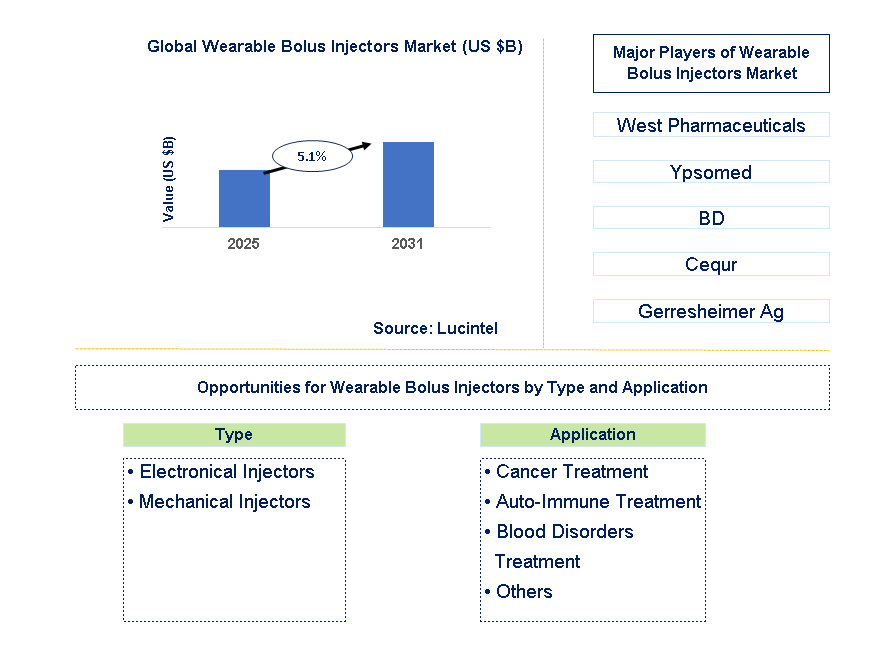
Key data points: The growth forecast = 5.1% annually for the next 7 years. Scroll below to get more insights. This market report covers Trends, opportunity and forecast in wearable bolus injectors market to 2031 by type (electronical injectors and mechanical injectors), application (cancer treatment, auto-immune treatment, blood disorders treatment, and others), and region (North America, Europe, Asia Pacific, and the Rest of the World)
We'll send your sample report shortly.
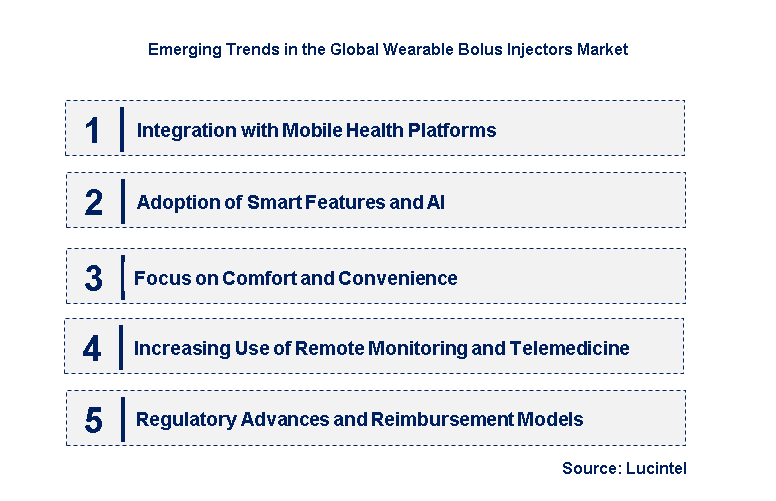
• Integration with Mobile Health Platforms: Wearable bolus injectors are increasingly being integrated with mobile health platforms, providing users with real-time monitoring, data sharing, and remote management of their insulin delivery. This integration allows patients to track their treatment more easily and receive personalized insights, improving treatment adherence. Healthcare providers can monitor their patients' insulin levels remotely, making timely adjustments to treatment plans. This trend is transforming how diabetes care is managed, enhancing both patient and healthcare provider experience.
• Adoption of Smart Features and AI: Wearable bolus injectors are incorporating advanced technologies like artificial intelligence (AI) and machine learning to optimize insulin dosing. These smart injectors analyze user data and adapt insulin delivery based on the patient’s needs, improving treatment precision and personalization. AI-based features can predict insulin needs based on lifestyle factors, such as exercise or meals. This shift towards smarter devices is improving the quality of care for patients with diabetes and reducing the burden on healthcare providers.
• Focus on Comfort and Convenience: Comfort and ease of use are becoming critical design features for wearable bolus injectors. Manufacturers are focusing on making devices smaller, more discreet, and more comfortable for daily wear. This trend is important for improving patient compliance, as wearable bolus injectors need to be worn continuously. Enhanced user experience, such as simple interface controls and less invasive designs, is driving adoption. The goal is to make these devices less noticeable and more comfortable, encouraging patients to use them consistently.
• Increasing Use of Remote Monitoring and Telemedicine: Remote monitoring and telemedicine are becoming significant components of wearable bolus injector systems. These injectors can transmit real-time data to healthcare providers, allowing for remote tracking and personalized care adjustments. This trend is especially beneficial in rural or underserved areas where access to healthcare professionals may be limited. The ability to monitor insulin delivery remotely and receive immediate feedback is making wearable bolus injectors more accessible and enhancing patient outcomes by providing timely intervention.
• Regulatory Advances and Reimbursement Models: As wearable bolus injectors become more common, regulatory bodies are evolving their approval processes to support the market's growth. Increased recognition of these devices by regulatory agencies like the FDA is paving the way for faster approval and market access. Additionally, evolving reimbursement models are making wearable bolus injectors more affordable for patients, contributing to wider adoption. Insurance companies are recognizing the benefits of these devices in managing chronic diseases, leading to improved access for a broader patient population. The key emerging trends in the wearable bolus injectors market, including integration with mobile health platforms, the adoption of smart features, improved comfort and convenience, the use of remote monitoring, and advancements in regulatory frameworks, are reshaping the landscape of diabetes care. These trends are improving patient outcomes, driving market growth, and increasing the accessibility and effectiveness of wearable bolus injectors worldwide.
• Enhanced Connectivity with Digital Health Systems: Recent developments in wearable bolus injectors have focused on enhancing connectivity features, enabling seamless integration with digital health systems. These devices can now transmit data directly to smartphones, cloud-based systems, and healthcare providers. This connectivity allows for better monitoring of insulin delivery and more precise management of diabetes. Patients benefit from real-time feedback, while healthcare providers can adjust treatment plans based on continuous data. Enhanced connectivity is driving the adoption of wearable bolus injectors, offering improved convenience for patients and healthcare professionals.
• Development of Miniaturized and Wearable Devices: Manufacturers have made significant strides in miniaturizing wearable bolus injectors, making them smaller, lighter, and more discreet. This development is crucial for enhancing patient comfort and encouraging consistent use. Smaller devices are more convenient for daily wear, improving patient compliance with insulin therapy. This trend toward compact, portable devices is driving market growth by making wearable bolus injectors more user-friendly and appealing to a broader population.
• Innovations in Insulin Delivery Technology: Recent advancements in insulin delivery technology have led to the development of more precise and efficient wearable bolus injectors. These devices use advanced sensors to detect blood sugar levels and adjust insulin delivery accordingly. This innovation ensures that patients receive the right dose at the right time, reducing the risk of over- or under-dosing. More accurate insulin delivery is improving patient outcomes, particularly for those with complex insulin needs, making these devices a valuable tool in diabetes management.
• Introduction of Multi-Function Devices: Multi-function wearable bolus injectors that combine insulin delivery with other diabetes management features, such as continuous glucose monitoring (CGM), are becoming more common. These devices streamline diabetes care by offering both insulin delivery and blood glucose monitoring in a single device, improving treatment efficiency. The combination of these features in one device makes it easier for patients to manage their condition and reduces the number of devices they need to carry. This development is further enhancing the convenience of wearable bolus injectors.
• Focus on Patient-Centered Design: More companies are focusing on patient-centered design to improve the user experience of wearable bolus injectors. These designs prioritize comfort, ease of use, and aesthetics, ensuring that devices are more discreet and comfortable for long-term use. Simpler controls and more intuitive interfaces are making these devices easier to operate, encouraging better patient adherence to insulin therapy. This focus on user-friendly design is driving market growth, as patients are more likely to use devices that align with their lifestyles and needs. Recent developments in the wearable bolus injectors market, such as enhanced connectivity, miniaturization, insulin delivery innovations, multi-function devices, and patient-centered design, are transforming the way diabetes is managed. These advancements are improving device functionality, comfort, and accessibility, driving the growth of the wearable bolus injectors market.
• Home Healthcare Applications: The rise of home healthcare is a major growth opportunity for wearable bolus injectors. These devices enable patients to manage their insulin delivery at home, offering convenience and reducing the need for frequent clinic visits. With the growing preference for at-home care and advancements in telemedicine, wearable bolus injectors are playing a key role in empowering patients to manage their diabetes independently, leading to improved outcomes and reduced healthcare costs.
• Digital Health Integration: Integration of wearable bolus injectors with digital health platforms offers a significant growth opportunity. By connecting these devices with mobile apps and cloud-based systems, patients and healthcare providers can track and analyze data in real time. This integration enhances personalized care by providing insights into insulin delivery patterns and blood glucose levels. The growing trend of digital health is driving the adoption of wearable bolus injectors, improving patient management and treatment outcomes.
• Diabetes Management for the Elderly: With the global aging population, there is an increasing demand for wearable bolus injectors that cater specifically to the elderly. These patients often face challenges in managing chronic conditions, such as diabetes. Wearable bolus injectors designed for older adults offer ease of use, comfort, and reliability, making it easier for them to manage their insulin delivery. This market segment represents a significant growth opportunity for wearable bolus injectors, as the elderly population requires continuous care for managing diabetes.
• Remote Monitoring and Telemedicine: Remote monitoring and telemedicine are key drivers of growth in the wearable bolus injectors market. By enabling real-time data transmission to healthcare providers, these devices facilitate continuous monitoring and adjustments to insulin therapy. This growth opportunity is especially significant in rural areas, where access to healthcare providers may be limited. Remote monitoring improves patient care, reducing the need for in-person visits and providing patients with better control over their treatment.
• Corporate Wellness Programs: Corporate wellness programs are increasingly incorporating wearable health devices, including bolus injectors, to help employees manage chronic conditions like diabetes. These programs promote health and well-being, which can reduce healthcare costs and improve employee productivity. The growing adoption of wearable bolus injectors in corporate wellness programs represents a significant growth opportunity as companies recognize the importance of supporting employees' health and well-being. The wearable bolus injectors market is poised for growth through strategic opportunities in home healthcare, digital health integration, diabetes management for the elderly, remote monitoring, and corporate wellness programs. These opportunities are driving market expansion and improving the accessibility, effectiveness, and patient outcomes associated with wearable bolus injectors.
• West Pharmaceuticals
• Ypsomed
• BD
• Cequr
• Gerresheimer Ag
• Amgen
• Enable Injections
• United Therapeutics
• E3D Elcam Drug Delivery Devices
• Eitan Medical
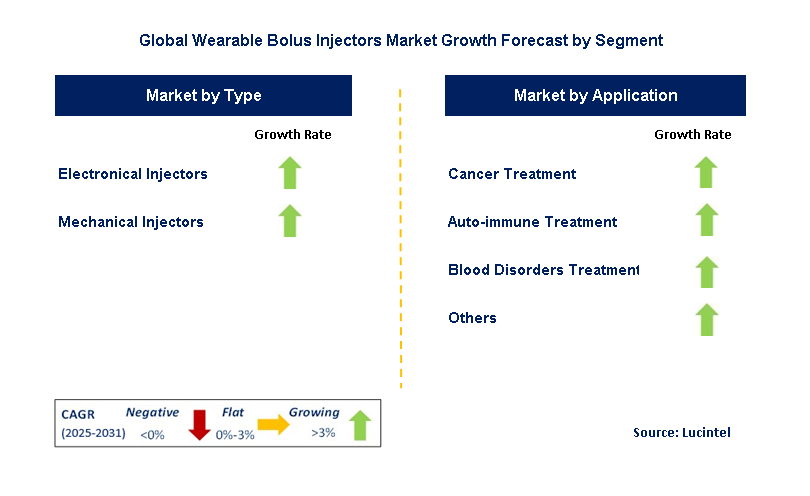
• Electronical Injectors
• Mechanical Injectors
• Cancer Treatment
• Auto-Immune Treatment
• Blood Disorders Treatment
• Others
• North America
• Europe
• Asia Pacific
• The Rest of the World
• United States: In the United States, wearable bolus injectors are experiencing rapid advancements with the integration of advanced technologies like Bluetooth connectivity and cloud-based systems. These systems enable real-time monitoring of insulin delivery and patient data, allowing healthcare providers to make timely adjustments to treatment plans. The FDA’s increasing approval of wearable bolus injectors, coupled with growing consumer demand for more convenient diabetes management tools, is fueling market expansion. Additionally, partnerships between tech companies and healthcare providers are accelerating innovation, making it easier for patients to access and manage their insulin delivery at home.
• China: China is seeing strong growth in the wearable bolus injectors market, driven by the rise in diabetes cases and increasing healthcare awareness. Chinese companies are developing more affordable, user-friendly injectors, tailored for both urban and rural populations. Government initiatives to improve healthcare infrastructure and support for diabetes management technologies are propelling market growth. Moreover, local firms are leveraging advancements in mobile health apps and artificial intelligence to optimize insulin therapy, allowing for more personalized care. This market growth is expected to continue as the demand for chronic disease management tools rises.
• Germany: Germany is one of the leaders in Europe in adopting wearable bolus injectors, with a focus on innovative and precise insulin delivery systems. German companies are emphasizing the development of compact, accurate, and efficient injectors that integrate seamlessly with other diabetes management technologies, such as continuous glucose monitors (CGMs). The healthcare system’s emphasis on precision medicine and reimbursement for advanced diabetes care is driving adoption. With its strong medical technology sector, Germany remains a key player in wearable bolus injector innovation, and the market is expected to continue expanding with more sophisticated devices entering the market
• India: India is witnessing a growing market for wearable bolus injectors, driven by the increasing prevalence of diabetes and the demand for affordable, easy-to-use treatment options. Indian companies are focusing on developing cost-effective bolus injectors, making them accessible to a broader segment of the population. The government’s focus on improving healthcare access, coupled with an increasing shift toward digital health solutions, is facilitating market growth. Additionally, partnerships with international companies to bring advanced wearable insulin delivery systems to India are contributing to the expansion of this market, particularly in urban areas.
• Japan: Japan’s market for wearable bolus injectors is expanding rapidly, driven by its aging population and high prevalence of diabetes. The country’s advanced healthcare system supports the integration of innovative wearable insulin delivery systems, with an emphasis on improving patient convenience and treatment adherence. Japanese companies are focusing on developing highly efficient, compact, and user-friendly devices that integrate well with other diabetes management tools. The Japanese government’s focus on diabetes prevention and management, coupled with a strong healthcare infrastructure, is providing a solid foundation for the growth of wearable bolus injectors in the country.


• West Pharmaceuticals
• Ypsomed
• BD
• Cequr
• Gerresheimer Ag
• Amgen
• Enable Injections
• United Therapeutics
• E3D Elcam Drug Delivery Devices
• Eitan Medical Q5. Which wearable bolus injectors market segment will be the largest in future? Answer: Lucintel forecasts that electronic injectors is expected to witness higher growth over the forecast period. Q6. In wearable bolus injectors market, which region is expected to be the largest in next 5 years? Answer: APAC is expected to witness the highest growth over the forecast period. Q7. Do we receive customization in this report? Answer: Yes, Lucintel provides 10% customization without any additional cost.


Choose a license that fits your team. Instant PDF delivery.
Prices exclude taxes. Instant delivery. Custom licensing available on request.
Market Report · July 22, 2026
Market Report · July 22, 2026
Market Report · July 22, 2026
Trusted partner for strategic intelligence and business growth


Receive a complimentary market analysis tailored to your industry. Our analysts will identify key growth opportunities and competitive dynamics specific to your business.

Market size, growth rate, and key trend analysis for your specific sector.

Top competitor positioning and market share analysis.

Strategic recommendations backed by data-driven insights.
Get curated market intelligence and competitive moves straight to your inbox.
By subscribing, you agree to receive our monthly insights. Unsubscribe anytime.
Receive a complimentary market analysis tailored to your industry. Our analysts will identify key growth opportunities and competitive dynamics specific to your business.
Market size, growth rate, and key trend analysis for your specific sector.
Top competitor positioning and market share analysis.
Strategic recommendations backed by data-driven insights.
Get curated market intelligence, emerging trends, and competitive moves straight to your inbox each month.
By subscribing, you agree to receive our monthly insights. Unsubscribe anytime.
We'll send your sample report shortly.