
Market Report · May 18, 2026

This market report covers trends, opportunities, and forecasts in the global vapor phase epitaxy furnaces market to 2031 by technology (horizontal vapor phase epitaxy furnaces and vertical vapor phase epitaxy furnaces), applications (research centers and laboratories and industrial production), and region (North America, Europe, Asia Pacific, and the Rest of the World)
We'll send your sample report shortly.
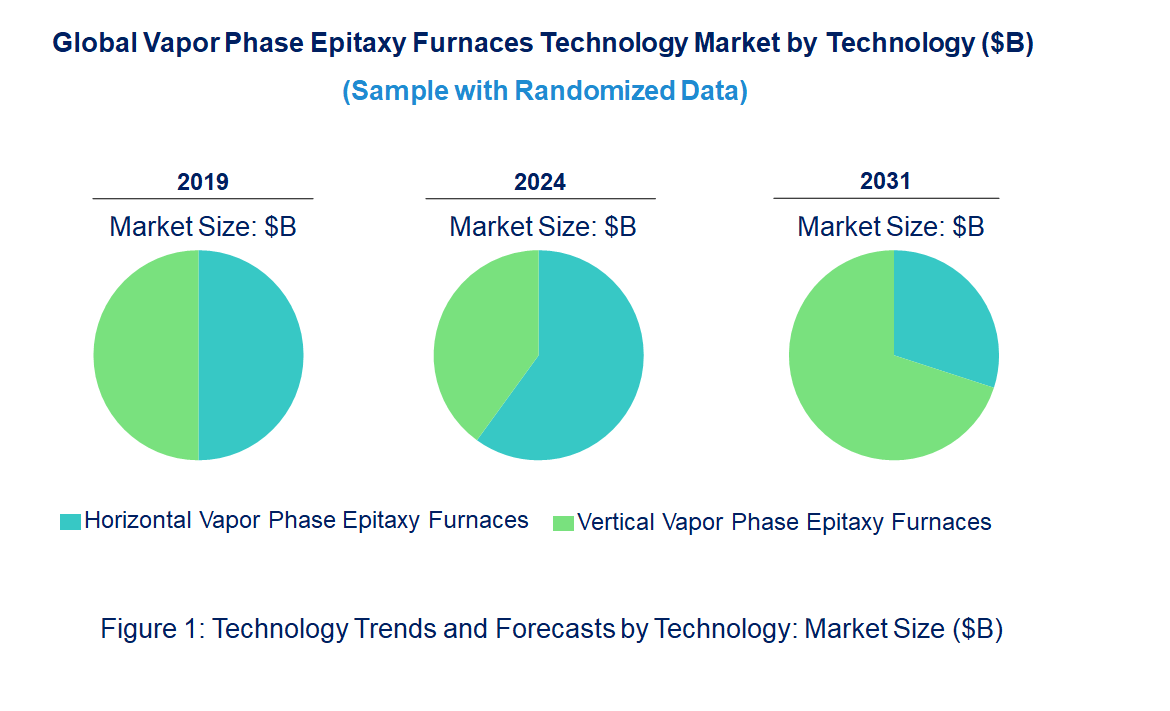
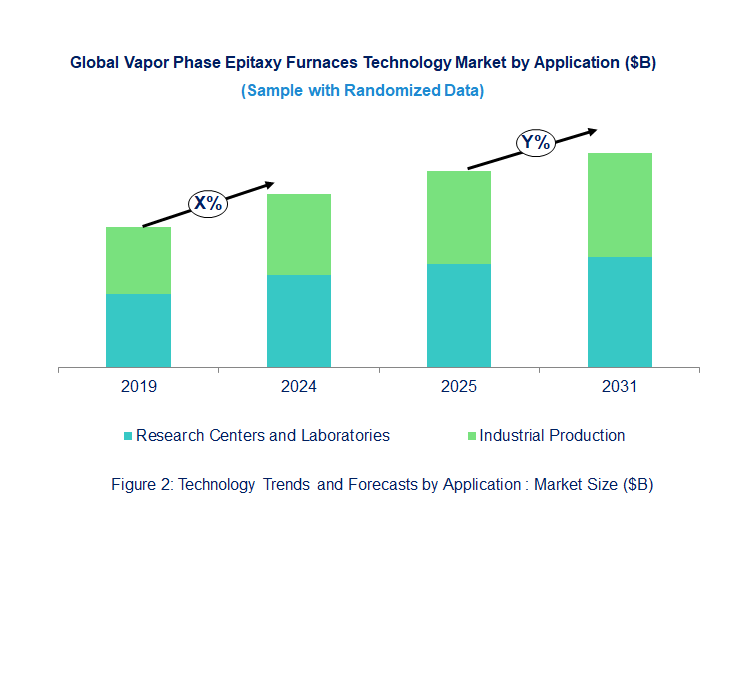
• Shift Toward Vertical Vapor Phase Epitaxy Furnaces: Because of the increasing demand for high-throughput and cost-effective production, the market is shifting away from horizontal vapor phase epitaxy to vertical systems. Vertical vapor phase epitaxy furnaces provide improved efficiency, reduced material waste, and more uniform layer deposition, which are critical parameters for industrial-scale production.
• More automation and IoT integration into vapor phase epitaxy furnaces: Integration of automation and IoT technologies is a significant trend. These smart systems can monitor parameters like temperature, pressure, and gas flow in real-time. It improves process control, reduces downtime, and increases yield in industrial production environments.
• Energy Efficiency and Sustainability: As semiconductor and solar industries continue to grow, more emphasis is placed on energy-efficient vapor phase epitaxy furnaces in terms of reducing power consumption and carbon emissions. It is both regulatory and cost-driven for companies to develop technologies to support greener manufacturing processes.
• Customization and Precision in Thin Film Deposition: The demand for precision in thin film deposition is driving the development of more customizable vapor phase epitaxy furnace systems. These systems allow for precise control over the thickness and quality of deposited layers, enabling advances in semiconductor and solar cell production for high-performance applications.
• Expansion in Applications Beyond Semiconductors: While the semiconductor industry remains the main application, vapor phase epitaxy furnaces are being used increasingly in new fields like LED production, photovoltaic devices, and research centers. This growth is prompted by the call for high-quality material deposition in applications that require controlling thin film growth closely. These trends indicate that the market is progressing toward more automated, efficient, and customizable systems that can meet the growing demands of high-volume production and high-performance material deposition across diverse industries.
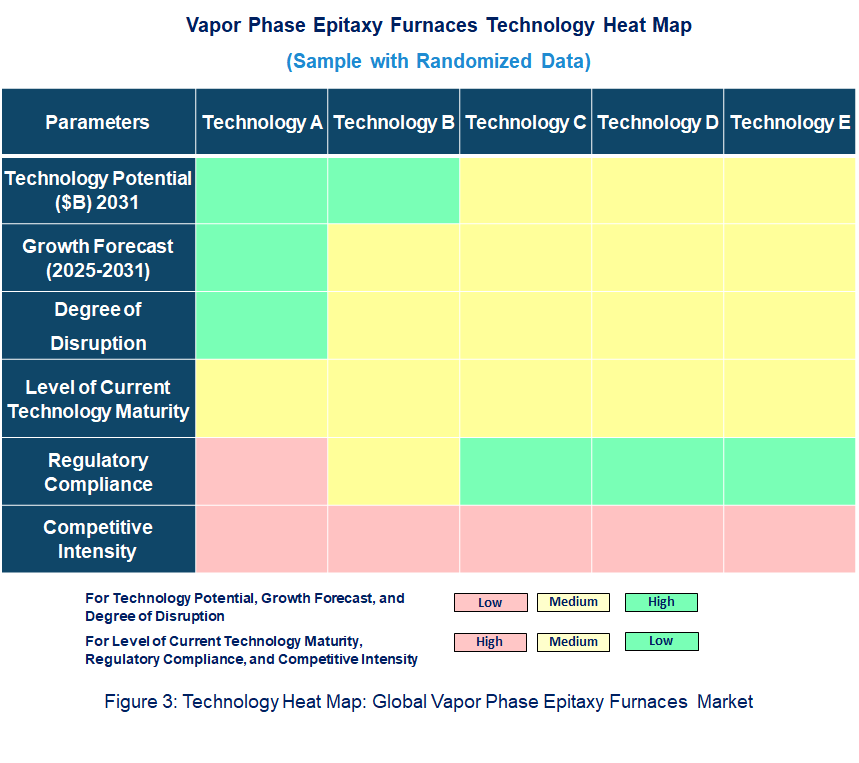
• Technology Growth Potential: Technology growth potential in vapor phase epitaxy furnaces is significant. It continues focusing on improvements in deposition uniformity, increased throughput, and lesser waste of material. Vvapor phase epitaxy furnaces, which will replace Hvapor phase epitaxy furnaces as they are capable of yielding more quality films and scalable production, are gaining popularity as well. Integration of AI with automation for real-time control and predictive maintenance is also expected to continue improving performance and reduce down time.
• Degree of Disruption: The degree of disruption is moderate. Though vapor phase epitaxy technology has been in existence for decades, the trend towards more advanced systems such as vapor phase epitaxy and smart technologies is forcing the market towards new paradigms. The disruption is gradual due to the high capital costs and the complexity of the semiconductor manufacturing process.
• Technology Maturity: Technology maturity is high as established systems are available in the market for vapor phase epitaxy furnaces. The recent innovations, though primarily focused on process automation and advanced material handling, are still developing.
• Regulatory Compliance: Vapor phase epitaxy furnaces have strict regulatory requirements for safety, environmental impact, and equipment efficiency. Industry certifications, such as ISO and SEMI, guarantee that the technology complies with environmental sustainability and safety in semiconductor fabrication.
• CVD Equipment Corporation: CVD Equipment Corporation has recently updated its VPE furnaces, adding multi-zone temperature control and advanced gas flow management for better uniformity and precision in deposition. The solutions presented here can lead to higher-quality material growth for industries like semiconductors and solar cells.
• Veeco: Veeco offers vertical VPE furnaces with automatic loading and unloading systems, ensuring higher throughput with lower manual error rates. The firm has emphasized enhancing the efficiency of any process, along with producing consistent material, thereby making it perfect for mass production in the semiconductor and LED industries.
• Applied Materials Applied Materials has made improvements in its VPE furnace systems through the inclusion of AI-driven process optimization tools. These tools enable real-time monitoring and control of the deposition process, improving yield and quality control in advanced semiconductor manufacturing.
• Soitec: Soitec developed VPE technologies specific to SOI wafer fabrication. Their equipment is designed to precisely control the deposition of thin films, thereby ensuring that materials used in advanced semiconductor chips meet very demanding performance specifications.
• Agnitron Technology: Agnitron Technology has developed customizable VPE systems targeted to research laboratories and industrial-scale production facilities. The systems provide precise deposition control, allowing research centers to create the next generation of materials with high uniformity and low defect density.
• NAURA Technology NAURA has concentrated on scalable, fully automated VPE furnaces with in-situ monitoring and feedback loops for process optimization. The furnaces produced are designed to scale up high-volume semiconductor production, improving throughput and energy efficiency.
• ASM: ASM has unveiled a series of vertical VPE furnaces featuring advanced CVD. Their systems are designed to apply wherever pristine thin films are crucial for performance and life in solar cells and MEMS manufacturing.
• Lam Research Corporation: Lam Research has advanced VPE furnace systems with aspects of automation and integration and assured precise deposition in high-precision semiconductor applications. Its systems are currently used in next-generation chip manufacturing, particularly when ultra-thin layers become crucial for device performance.
• GT Advanced Technologies: GT Advanced Technologies has been focusing on sustainability with their energy-efficient VPE furnaces. Its systems were designed to minimize energy consumption at still-high deposition rates, making them suitable for industrial-scale manufacturing of photovoltaic devices and semiconductors.
• Proto Flex: Proto Flex specializes in custom VPE furnace designs for research and development purposes. Their systems are highly adaptable, with configuration options tailored to specific deposition needs in cutting-edge semiconductor research and material science. These developments thus reflect the increasing demand for automation, energy efficiency, and precision of VPE furnaces and their expanded applications in other broader fields.
• High-Performance Semiconductors: The rising demand for more advanced and high-performance semiconductors, driven by technologies like 5G, AI, and IoT, is propelling the necessity for precise thin-film deposition. This directly benefits the vapor phase epitaxy furnaces market, as these systems are essential in producing high-quality semiconductor materials.
• Increase in Solar Energy Production: With the global focus on renewable energy, the market for solar cells is rapidly increasing. The production of high-efficiency photovoltaic devices depends on vapor phase epitaxy furnaces, which has increased the demand for advanced vapor phase epitaxy systems that support thin-film deposition and solar cell manufacturing.
• The Rise in Industrial Automation: With increasing automation of manufacturing processes, fully automated vapor phase epitaxy furnaces are becoming more necessary to support the aim of most industries toward striving to achieve optimum production.
• Technological Advancements in Materials Science: The rapid developments in materials science are creating new opportunities for vapor phase epitaxy furnace technologies to produce high-quality thin films and complex materials. This is benefiting sectors such as MEMS, LED manufacturing, and advanced semiconductor research. Challenges in the vapor phase epitaxy furnaces market are:
• High capital investment: Acquiring the vapor phase epitaxy furnace system is costly, and its maintenance is also expensive. Hence, not many small manufacturers and laboratories can afford this investment. The high price of acquiring such systems makes it difficult for smaller operations to adopt them.
• Complexity in Process Control and Customization: The increasing complexity of semiconductor devices requires significantly more customized vapor phase epitaxy furnaces. However, the deposition process for different materials and wafer sizes poses technical challenges in cutting-edge research and development.
• Environmental and Regulatory Compliance: vapor phase epitaxy furnaces involve various chemicals and gases that should be handled in a way not have adverse impacts on the environment. Stricter controls on emissions, waste management, and chemical handling present difficult tasks for manufacturers looking to meet compliance standards with efficiency. The vapor phase epitaxy furnaces market, however, finds grounds for tremendous growth due to advancements in semiconductor production, renewable energy, and automation. Yet, the capital cost, custom complexity, and regulatory pressures present challenges in extending the market potential to its full, maximum value.
• CVD Equipment Corporation
• Veeco
• Applied Materials
• Soitec
• Agnitron Technology
• NAURA Technology
• Technology Readiness by Technology Type for Vapor Phase Epitaxy Furnaces Market: HVPE furnaces are maturing and widely used in the production of semiconductors, especially for high-throughput materials such as GaN and sapphire, making them very competitive in standard applications. The VVPE furnaces are relatively more recent and still in process but are increasingly becoming ready for precise and high-quality applications, for example, in power electronics, LEDs, and advanced semiconductor materials. Leading competitors are available with HVPE systems, while VVPE systems are just emerging to be a major factor in niche, high-performance applications. Regulation aspects for these two systems vary by requiring environmental and safety standards for high-volume production of HVPE systems and stricter material purity and consistency in VVPE systems.
• Competitive Intensity and Regulatory Compliance by Various Technologies Used for Vapor Phase Epitaxy Furnaces Market: Competitive intensity in the vapor phase epitaxy furnaces market is intense with horizontal as well as vertical systems together vying for requirements across sectors. HVPE furnaces are however currently dominating large volumes owing to their efficiencies and track record; however, VVPE systems are increasingly taking the lead in sectors requiring higher quality and precision. Both technologies have stringent requirements for regulatory compliance; the environmental and safety standards related to gas handling, waste management, and temperature control are critical. Because VVPE systems have superior design and higher quality material, they may be subject to stricter regulation to ensure precision in applications for high-performance semiconductor production in cleanroom environments.
• Disruption Potential of Different Technologies in Vapor Phase Epitaxy Furnaces Market: There are two types of furnaces; horizontal vapor phase epitaxy (HVPE) furnaces, and vertical vapor phase epitaxy (VVPE) furnaces which have distinctive disruption potentials in the market. HVPE furnaces have been well established and widely applied for large-scale production of materials, such as gallium nitride, and other semiconductor compounds, promising high throughput with uniformity. Nevertheless, VVPE furnaces are increasingly becoming popular because of the handling of larger substrates and better material quality, especially for high-performance applications like power electronics and LED manufacturing. As the need for more efficient and advanced semiconductor devices continues to grow, so does the disruptive potential of VVPE systems, especially for niche applications that require high precision and material performance.
• Horizontal Vapor Phase Epitaxy Furnaces
• Vertical Vapor Phase Epitaxy Furnaces
• Research Centers and Laboratories
• Industrial Production
• North America
• Europe
• Asia Pacific
• The Rest of the World
• Latest Developments and Innovations in the Vapor Phase Epitaxy Furnaces Technologies
• Companies / Ecosystems
• Strategic Opportunities by Technology Type


Choose a license that fits your team. Instant PDF delivery.
Prices exclude taxes. Instant delivery. Custom licensing available on request.
Market Report · May 18, 2026
Market Report · May 18, 2026
Market Report · May 18, 2026
Trusted partner for strategic intelligence and business growth


Receive a complimentary market analysis tailored to your industry. Our analysts will identify key growth opportunities and competitive dynamics specific to your business.

Market size, growth rate, and key trend analysis for your specific sector.

Top competitor positioning and market share analysis.

Strategic recommendations backed by data-driven insights.
Get curated market intelligence and competitive moves straight to your inbox.
By subscribing, you agree to receive our monthly insights. Unsubscribe anytime.
Receive a complimentary market analysis tailored to your industry. Our analysts will identify key growth opportunities and competitive dynamics specific to your business.
Market size, growth rate, and key trend analysis for your specific sector.
Top competitor positioning and market share analysis.
Strategic recommendations backed by data-driven insights.
Get curated market intelligence, emerging trends, and competitive moves straight to your inbox each month.
By subscribing, you agree to receive our monthly insights. Unsubscribe anytime.
We'll send your sample report shortly.