
Market Report · May 18, 2026

This market report covers trends, opportunities, and forecasts in the global smart bands payment market to 2031 by technology (near-field communication (nfc), radio-frequency identification (rfid), and others), end use (bank, shopping mall, supermarket, and others), and region (North America, Europe, Asia Pacific, and the Rest of the World)
We'll send your sample report shortly.
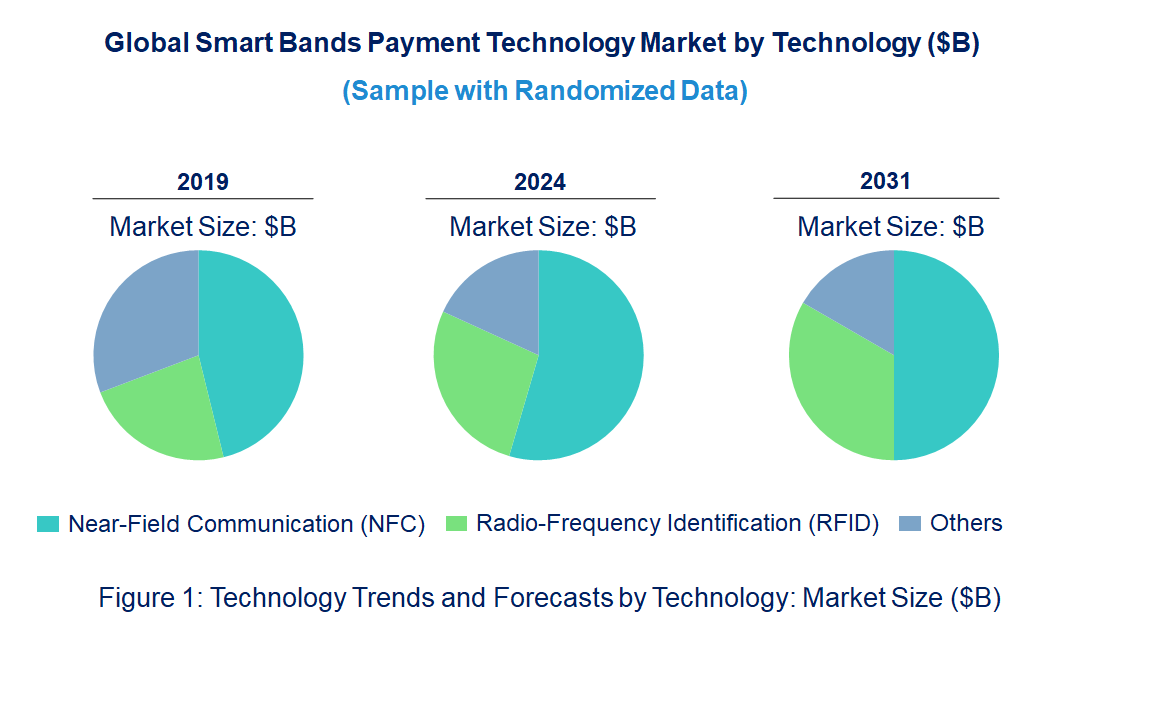

• Contactless Payments: With NFC-enabled smart bands, contactless payments are increasingly becoming the preferred way to make fast and secure transactions. The convenience of tap-and-go payments in retail, transportation, and other daily-use scenarios is a strong driver for this trend.
• Integration of Biometric Security Features: To increase user privacy and transaction security, most smart bands now include biometric features, such as fingerprint or heart-rate sensors. This development addresses growing security concerns with contactless payment methods.
• Mobile Wallet Partnerships: Leading players in the payment industry, such as PayPal, Visa, and Mastercard, are increasingly partnering with smart band manufacturers to integrate mobile wallets. This enables users to store multiple payment options, loyalty cards, and membership details directly on their wearable devices.
• Focus on Seamless User Experience: Companies are investing in making the experience with smart bands intuitive, wear-friendly, and user-friendly for payments. This includes longer battery life, better water resistance, and enhanced interfaces to provide users with quick access to the payment feature. This trend of smart bands is being adopted in emerging economies, where the demand for cashless solutions is increasing. It is driven by the growing mobile payment ecosystem and the need for affordable, quick financial solutions in these geographical markets.
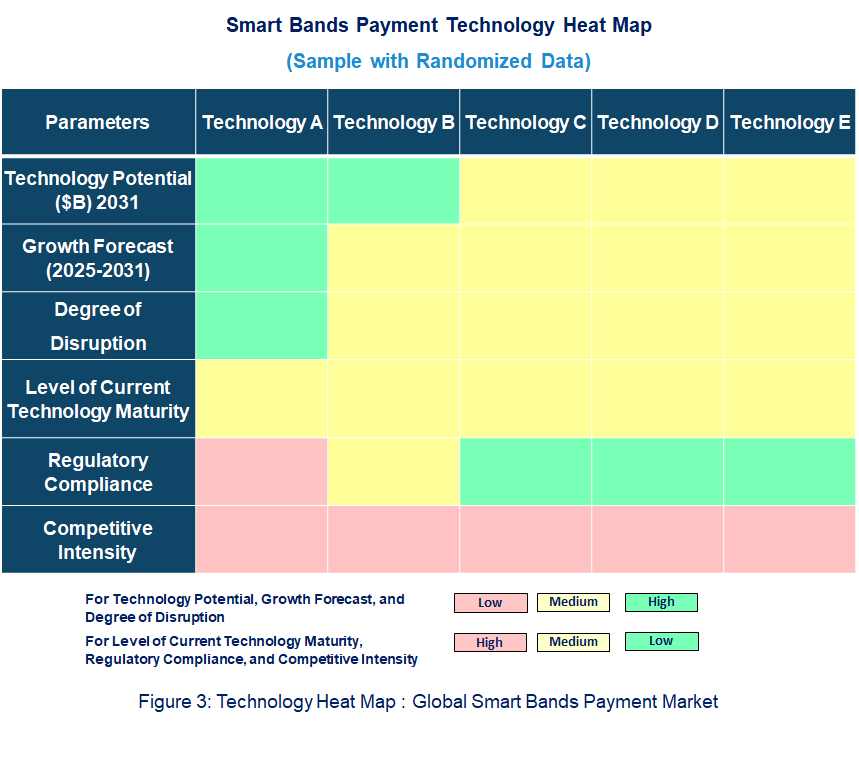
• Technological Potential: The potential of smart band payment technology is high, as it enhances convenience, security, and accessibility in everyday transactions. This technology allows users to make contactless payments directly from their wrist as a seamless and quick alternative to traditional payment methods. It is likely to flourish with the increasing adoption of mobile payments and the rise of digital wallets, especially in regions focused on fintech innovation.
• Degree of Disruption: Smart band payments have the potential to disrupt the traditional payments industry by adding another layer of convenience and accessibility. As mobile and contactless payments become mainstream, smart bands can further improve the ease of making transactions, particularly for consumers focused on fitness and health.
• Current Technology Maturity Level: Although the technology is still developing, smart band payments are relatively mature, with successful integrations within major wearable brands such as Fitbit and Garmin. Challenges remain regarding universal adoption and the scaling of secure, seamless payment systems.
• Regulatory Compliance: Global standards, such as EMV (Europay, MasterCard, and Visa), are observed in the smart band payment system for secure transactions, and GDPR ensures the privacy of users. Adhering to these regulations will ensure the safe transmission and storage of payment data, mitigating safety concerns commonly associated with digital transactions.
• Alibaba Group: Alibaba has included payment features in its smart band products, allowing users to make purchases through its Alipay platform. This move makes smart bands more attractive in the Chinese market, where mobile payments are widely used.
• Apple Inc.: Apple has further expanded its Apple Pay ecosystem by integrating payment functionality into its Apple Watch, enabling seamless NFC-based payments from the wearable device. The emphasis on privacy and security has driven the wide-scale adoption of its wearables for financial transactions.
• Barclays Plc.: Barclays has been developing several wearable payment solutions, such as smart bands and watches, that allow users to perform secure payments. Through collaborations with wearable manufacturers, these contactless payment methods have boosted usage in the UK and other countries.
• Fitbit Inc.: Fitbit, which specializes in health and fitness devices, has entered the payment space by incorporating NFC technology into its smart bands. This has enabled Fitbit users to make secure payments directly from their wrist, broadening Fitbit’s ecosystem to include payment functionalities.
• Google Inc.: Google has enabled smart band payments through the integration of Google Pay into wearables, such as the Google Pixel Watch. By extending its payment capabilities in its smartwatches, Google is positioning itself as a strong player in the wearable payment market.
• Jawbone: Jawbone, once a major player in fitness trackers, has evolved its smart band offerings to include payment capabilities, partnering with various payment networks to ensure users can make secure payments through their wearables.
• Mastercard: Mastercard has collaborated with fitness wearable companies to integrate contactless payment technology into smart bands. By offering a secure and fast payment system, Mastercard promotes the adoption of these wearable payment devices.
• PayPal Inc.: PayPal has ventured into the smart band payment arena by embedding its mobile wallet in different wearable devices. With a global presence and user base, PayPal is driving the adoption of wearable payment solutions, especially in e-commerce and digital transactions.
• Samsung Electronics Co. Ltd.: Samsung has incorporated its Samsung Pay platform into its smart bands and watches, allowing users to perform contactless payments. Samsung focuses on offering flexible and secure payment solutions, making its wearables more popular among consumers.
• Visa Inc.: Visa has collaborated with wearable manufacturers to enable secure payment technology in smart bands. This allows payments to be made contact-free using the Visa network, making it widely accepted due to its security and global reach. These recent developments reflect growing interest and investment by major players such as Apple, Google, Mastercard, and PayPal in the smart bands payment market. With mobile wallets, NFC technology, and secure payment options, these companies are driving the adoption of wearable payment solutions and expanding the market for contactless transactions.
• Growth in Contactless Payment Adoption: The global growth in contactless payment adoption has been a strong driver for the smart bands payment market. Smart bands equipped with NFC technology enable customers to pay quickly and securely.
• Growing Demand for Wearable Technology: The increasing popularity of fitness trackers and smartwatches has created demand for smart bands with payment functionality. Consumers are looking for devices that combine fitness tracking with payment capabilities.
• Security and Convenience of NFC Payments: NFC technology is secure, fast, and convenient for transactions. This makes it one of the key enablers for the smart bands payment market. The security features of NFC, such as encryption and tokenization, help build consumer confidence in using wearables for payments.
• Digital Payment Ecosystems: The integration of mobile wallets with payment network partnerships is expanding digital payment ecosystems. Smart band manufacturers can leverage existing networks such as Google Pay, Apple Pay, or Visa, providing greater convenience and acceptance. Challenges in the smart bands payment market include:
• Consumer Privacy Issues: Despite the security of NFC payments, consumers may still have concerns about the privacy of their payment data. Manufacturers must address these concerns by implementing proper data protection and clear privacy policies to build consumer trust in wearable payment solutions.
• Interoperability Across Devices: Compatibility and interoperability with various smart bands, payment systems, and retail terminals are key challenges. The lack of standardization across devices and systems can present barriers to the seamless adoption of smart band payments.
• Resistance to Shifting from Traditional Payment Methods: Consumers are still accustomed to traditional payment methods like cash and credit cards. Getting these users on board with wearable payments will remain one of the biggest challenges, especially in regions with low mobile payment penetration. Key factors propelling the smart bands payment market include advancements in contactless payments, high demand for wearables, and the security of NFC technology. However, challenges such as privacy risks, compatibility with various devices, and low consumer adoption hinder growth.
• Alibaba Group
• Apple Inc.
• Barclays Plc.
• Fitbit Inc.
• Google Inc.
• Jawbone
• Technology Readiness by Type: The technology for NFC is mature, with widespread deployments in mobile payments, banking, and transit systems. It is the most ready for integration into smart bands, supporting seamless and secure transactions. RFID, while widely used in supply chain and asset tracking, is less mature in the payments space and faces security and range issues. BLE, integrated into smart bands for low-power applications, improves interaction and connectivity but is still evolving in the payment sector. NFC leads in readiness for secure contactless transactions, while RFID and newer technologies must overcome challenges to achieve similar success in the smart band payment market. Regulatory compliance ensures secure, efficient payment solutions in line with global standards.
• Competitive Intensity and Regulatory Compliance: The competitive intensity in the smart bands payment market is high, with NFC and RFID technologies competing for dominance. NFC is widely accepted in the payments sector due to its speed, security, and compatibility with existing payment infrastructure. RFID is emerging in payment applications but faces issues related to security and range. BLE and biometric solutions are newer technologies that add complexity to the competitive landscape. Regulatory compliance is critical; NFC must meet secure payment standards like EMVCo, while RFID faces regulation concerns related to data security and privacy. Companies must ensure compliance with international standards for secure financial transactions, data encryption, and consumer privacy protection to stay competitive.
• Disruption Potential of Different Technologies: Near-field communication (NFC), Radio-Frequency Identification (RFID), and other technologies have different disruption potentials in the smart bands payment market. NFC has enabled contactless, fast, and secure payments, helping popularize smart bands for payments in the retail and transportation sectors. RFID, more widely deployed for inventory tracking, is also seen in payment applications, particularly for short-range communication. BLE and biometric technologies are increasingly embedded in smart bands to improve security and personalization functionalities. NFC, with its seamless user experience and growing adoption, is the most disruptive, positioning smart bands as a viable alternative to traditional wallets in mobile payment ecosystems.
• Near-Field Communication (NFC)
• Radio-Frequency Identification (RFID)
• Others
• Bank
• Shopping Mall
• Supermarket
• Others
• North America
• Europe
• Asia Pacific
• The Rest of the World
• Latest Developments and Innovations in the Smart Bands Payment Technologies
• Companies / Ecosystems
• Strategic Opportunities by Technology Type


Choose a license that fits your team. Instant PDF delivery.
Prices exclude taxes. Instant delivery. Custom licensing available on request.
Market Report · May 18, 2026
Market Report · May 18, 2026
Market Report · May 18, 2026
Trusted partner for strategic intelligence and business growth


Receive a complimentary market analysis tailored to your industry. Our analysts will identify key growth opportunities and competitive dynamics specific to your business.

Market size, growth rate, and key trend analysis for your specific sector.

Top competitor positioning and market share analysis.

Strategic recommendations backed by data-driven insights.
Get curated market intelligence and competitive moves straight to your inbox.
By subscribing, you agree to receive our monthly insights. Unsubscribe anytime.
Receive a complimentary market analysis tailored to your industry. Our analysts will identify key growth opportunities and competitive dynamics specific to your business.
Market size, growth rate, and key trend analysis for your specific sector.
Top competitor positioning and market share analysis.
Strategic recommendations backed by data-driven insights.
Get curated market intelligence, emerging trends, and competitive moves straight to your inbox each month.
By subscribing, you agree to receive our monthly insights. Unsubscribe anytime.
We'll send your sample report shortly.