
Sleeping Pod Market Report: Trends, Forecast and Competitive Analysis to 2035

Key data points: The market size in 2035 = $993 million, growth forecast = 7.3% annually for the next 8 years. Scroll below to get more insights. This market report covers trends, opportunities and forecasts in sleeping pod market to 2035 by pod (compact nap pods, single sleeping pods, and double sleeping pods), revenue model (direct sales and rental & pay-per-use), application (airports, corporate offices, hospitals, academic institutions, wellness/SPA, shopping centers, and others), and region (North America, Europe, Asia Pacific, and the Rest of the World)

Publisher: Lucintel Last Updated: July 2026
See Pricing

Download Sample Report

| ✨ New Download Sample report — Get instant insights! | ✨ New Download Sample report — Get instant insights!

Sleeping Pod Market Report: Trends, Forecast and Competitive Analysis to 2035

Sleeping Pod Market

The future of the global sleeping pod market looks promising with opportunities in the airport, corporate office, hospital, academic institution, wellness/SPA, and shopping center markets. The global sleeping pod market is expected to reach an estimated $993 million by 2035 with a CAGR of 7.3% from 2026 to 2035. The major drivers for this market are the increasing demand for privacy focused spaces, the rising urban population boosting compact solutions, and the growing wellness trends driving sleep innovation.

  • Lucintel forecasts that, within the pod category, compact nap pod is expected to witness the highest growth over the forecast period due to space efficiency, affordability, and growing demand for quick rest.
  • Within the application category, airport is expected to witness the highest growth due to increasing passenger traffic and demand for convenient resting spaces.
  • In terms of regions, North America is expected to witness the highest growth over the forecast period due to rising travel frequency and increasing demand for comfort solutions.

Gain valuable insights for your business decisions with our comprehensive 150+ page report. Sample figures with some insights are shown below.
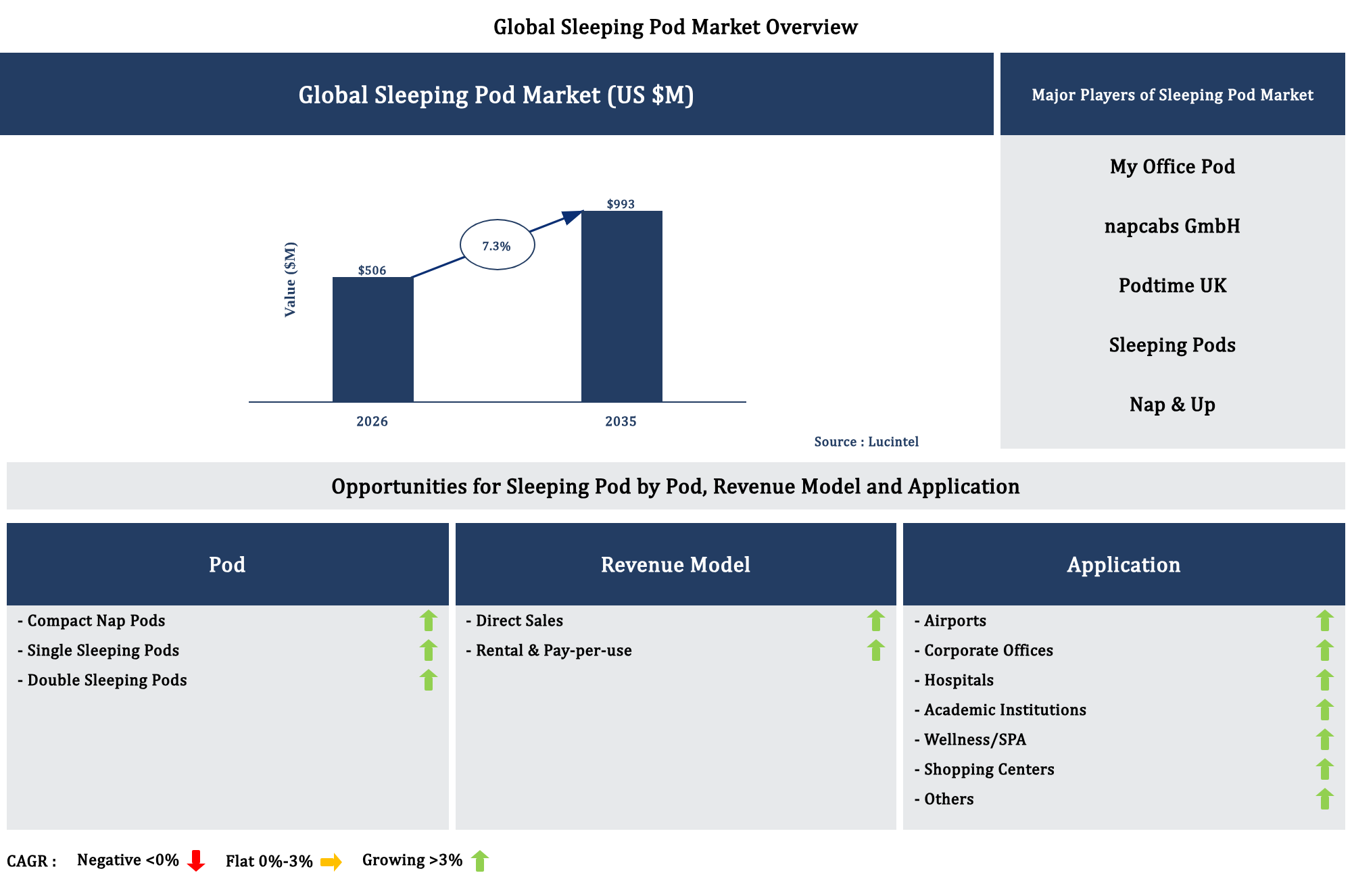
Sleeping Pod Market

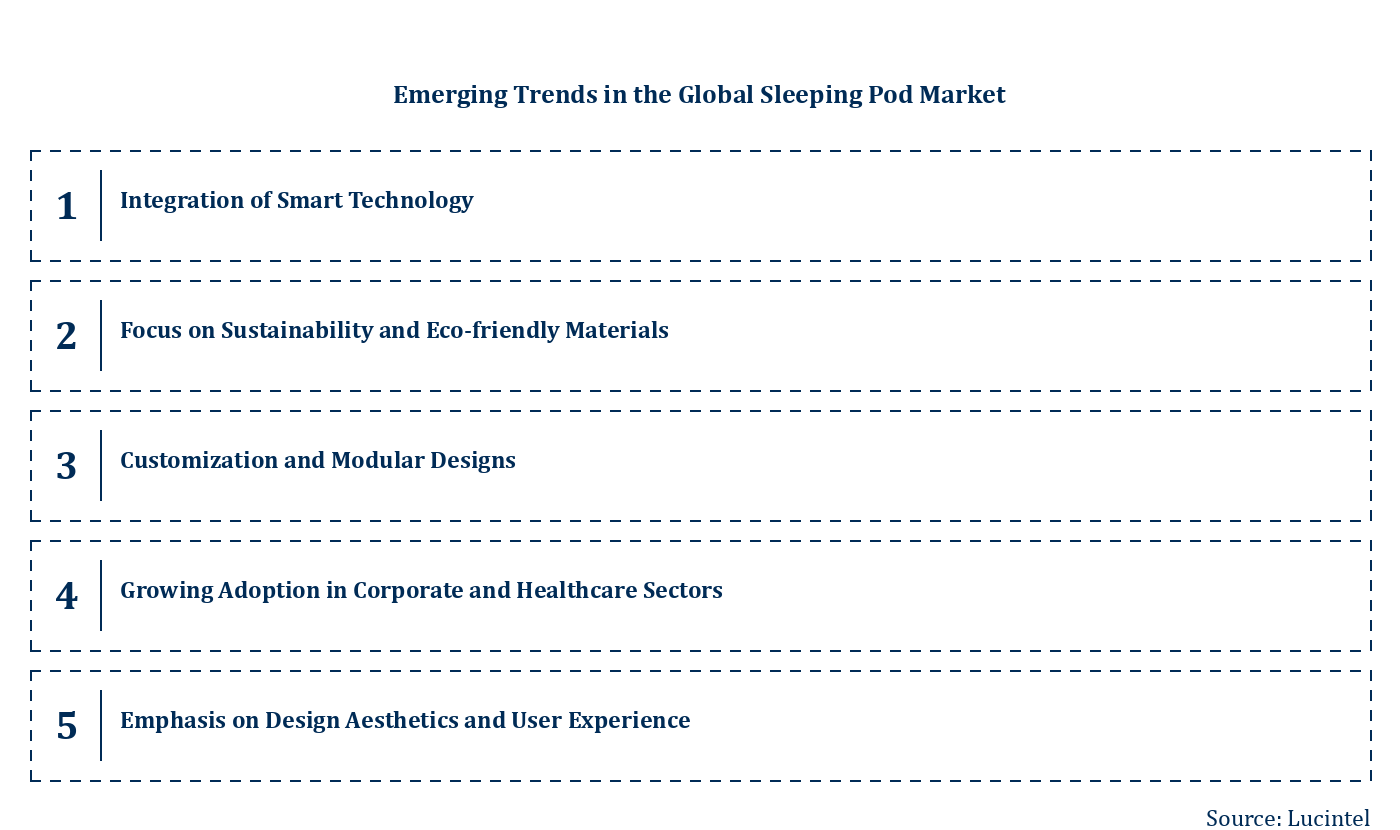
Emerging Trends in the Sleeping Pod Market

The sleeping pod market is experiencing rapid growth driven by increasing urbanization, rising health consciousness, and the need for efficient rest solutions in busy environments. As workplaces, airports, and public spaces seek innovative ways to enhance comfort and productivity, sleeping pods are becoming a popular choice. Technological advancements, sustainability concerns, and changing consumer preferences are further fueling this trend. These developments are transforming the market landscape, creating new opportunities for manufacturers and service providers. Understanding these emerging trends is essential for stakeholders aiming to capitalize on this expanding industry and meet evolving customer demands effectively.

  • Integration of Smart Technology: The adoption of IoT-enabled sleeping pods is revolutionizing user experience by offering features like personalized climate control, sleep tracking, and automated adjustments. This enhances comfort, health monitoring, and convenience, making sleeping pods more attractive in corporate, hospitality, and transit sectors. Smart technology also allows for better maintenance and operational efficiency, reducing downtime and costs. As consumers increasingly seek connected solutions, the integration of IoT is expected to become a standard feature, driving innovation and differentiation in the market.
  • Focus on Sustainability and Eco-Friendly Materials: Environmental concerns are prompting manufacturers to develop sleeping pods using sustainable, biodegradable, and recyclable materials. This trend aligns with the global push towards eco-conscious products and corporate social responsibility. Eco-friendly sleeping pods appeal to environmentally aware consumers and organizations aiming to reduce their carbon footprint. Innovations include the use of recycled plastics, bamboo, and natural fabrics, along with energy-efficient manufacturing processes. This shift not only enhances brand reputation but also opens new market segments focused on green solutions.
  • Customization and Modular Designs: The market is witnessing a move towards highly customizable and modular sleeping pods that can be tailored to specific environments and user preferences. Modular designs allow easy installation, relocation, and scalability, making them suitable for diverse settings like airports, offices, and healthcare facilities. Customization options include size, interior features, lighting, and privacy levels, catering to individual needs. This flexibility improves user satisfaction and operational efficiency, enabling providers to serve a broader customer base and adapt quickly to changing demands.
  • Growing Adoption in Corporate and Healthcare Sectors: Sleeping pods are increasingly being integrated into workplaces and healthcare facilities to promote well-being, productivity, and recovery. In corporate settings, they serve as nap zones or relaxation areas, reducing stress and boosting employee performance. In healthcare, they support patient rest and recovery, especially in busy hospitals. This trend reflects a broader recognition of the importance of rest and mental health, leading to increased investments and innovations tailored to these sectors. The expansion into these markets is expected to significantly drive growth and diversification.
  • Emphasis on Design Aesthetics and User Experience: As sleeping pods become more mainstream, emphasis on sleek, modern designs and enhanced user comfort is growing. Attractive aesthetics and ergonomic features are crucial for integration into premium environments like luxury hotels and corporate offices. User experience improvements include noise reduction, ambient lighting, and comfortable bedding, creating a relaxing atmosphere. This focus on design not only elevates the perceived value but also helps differentiate brands in a competitive market. Enhanced aesthetics and comfort are key to attracting a broader customer base and encouraging widespread adoption.

These emerging trends are reshaping the sleeping pod market by fostering innovation, sustainability, customization, and enhanced user experiences. They are expanding market reach across sectors and driving the development of smarter, greener, and more user-centric solutions. As these trends continue to evolve, the market is poised for significant growth, offering new opportunities for stakeholders to meet the changing needs of consumers worldwide.
Sleeping Pod Market by country

Recent Developments in the Sleeping Pod Market

The sleeping pod market is experiencing rapid growth driven by increasing urbanization, rising health awareness, and the need for efficient rest solutions in busy environments. Innovations in design and technology are making sleeping pods more accessible across various sectors, including corporate offices, airports, and healthcare facilities. As consumer preferences shift towards comfort and convenience, market players are investing heavily in product development and strategic partnerships. These developments are shaping a dynamic landscape that promises significant expansion and diversification in the coming years.

  • Technological Innovations in Sleep Pod Design: Advancements in soundproofing, climate control, and ergonomic features are enhancing user comfort, leading to higher adoption rates. These innovations improve sleep quality, making pods suitable for long-term use in workplaces and public spaces. The integration of smart technology, such as sleep tracking and automation, further boosts appeal. As a result, companies are gaining competitive advantages, expanding their customer base, and opening new revenue streams through premium offerings.
  • Growing Adoption in Corporate Workspaces: Corporations are increasingly integrating sleeping pods to promote employee wellness and productivity. These pods provide a quick rest option, reducing fatigue and improving focus. The trend is driven by the rising emphasis on mental health and work-life balance. Major firms are investing in on-site rest facilities, which enhances employee satisfaction and retention. This shift is creating a lucrative market segment, encouraging manufacturers to develop customizable and scalable solutions tailored to corporate needs.
  • Expansion in Airport and Transit Hubs: Airports and transit centers are adopting sleeping pods to cater to travelers seeking comfort during layovers or delays. These pods offer privacy, convenience, and a restful environment, improving passenger experience. The demand is fueled by increased air travel and the need for efficient space utilization. Market players are partnering with transportation authorities to deploy innovative, space-saving designs. This expansion is significantly contributing to revenue growth and market diversification, positioning sleeping pods as essential travel amenities.
  • Increasing Use in Healthcare and Wellness Facilities: Healthcare providers are incorporating sleeping pods to facilitate patient rest, staff breaks, and wellness programs. These pods support recovery, reduce stress, and improve overall health outcomes. The integration of medical-grade features and hygiene standards is critical for this segment. The rising focus on holistic health and patient comfort is driving demand. This sectors growth is prompting manufacturers to develop specialized solutions, opening new avenues for market expansion and technological innovation.
  • Rising Investment and Strategic Collaborations: Investment in sleeping pod startups and established companies is accelerating, fueling product innovation and market penetration. Strategic collaborations between tech firms and furniture manufacturers are enhancing product features and distribution channels. Funding from venture capitalists and corporate investors indicates strong confidence in market potential. These investments are enabling rapid scaling, diversification, and entry into new geographic markets, ultimately strengthening the overall market ecosystem and fostering sustainable growth.

The overall impact of these developments is a robust, expanding market characterized by innovation, increased adoption across sectors, and strategic collaborations. This growth is creating diverse opportunities for manufacturers, investors, and end-users, positioning the sleeping pod industry as a vital component of modern urban and corporate infrastructure. The market is poised for continued evolution, driven by technological advancements and shifting consumer preferences.

Strategic Growth Opportunities in the Sleeping Pod Market

The sleeping pod market is experiencing rapid growth driven by increasing urbanization, rising health awareness, and the need for efficient rest solutions in busy environments. Innovations in comfort, technology integration, and design are expanding applications across corporate, healthcare, and hospitality sectors. As consumer preferences shift towards personalized and convenient rest options, market players are focusing on product development and strategic partnerships to capture emerging opportunities. This evolving landscape promises significant expansion, driven by technological advancements and changing lifestyle demands.

  • Corporate Wellness and Office Napping Solutions: The rise of corporate wellness programs emphasizes employee health and productivity, creating demand for sleeping pods in workplaces. These pods offer quick rest options, reducing fatigue and improving focus. Companies are investing in ergonomic, soundproof, and tech-enabled pods to enhance employee satisfaction. The healthcare sector also benefits from specialized pods for patient rest and recovery, broadening application scope and market reach.
  • Healthcare Facilities and Patient Comfort Enhancement: Hospitals and clinics are adopting sleeping pods to improve patient comfort and facilitate rest during long stays or recovery periods. These pods provide a private, hygienic, and calming environment, aiding in faster healing. Integration of medical monitoring and comfort features makes them suitable for outpatient and inpatient settings. The focus on patient-centered care is driving demand for customizable, hygienic, and easy-to-maintain sleeping solutions.
  • Hospitality Industry and Guest Experience Improvement: Hotels, resorts, and serviced apartments are incorporating sleeping pods to offer unique, space-efficient accommodation options. Pods appeal to budget travelers, digital nomads, and short-stay guests seeking convenience and privacy. Innovative designs with smart features, such as climate control and entertainment systems, enhance guest experience. The trend toward micro-stays and experiential lodging is fueling growth in this segment.
  • Technological Innovations and Smart Sleep Pods: Advancements in IoT, AI, and comfort technology are transforming sleeping pods into smart, personalized rest environments. Features like sleep tracking, climate control, and voice-activated controls improve user experience. These innovations enable data collection for health insights and customization. The integration of wireless charging, ambient lighting, and sound therapy makes smart pods more appealing, expanding their application in corporate, healthcare, and residential markets.
  • Eco-Friendly and Sustainable Sleeping Pod Designs: Growing environmental awareness is prompting manufacturers to develop sustainable, eco-friendly sleeping pods using recyclable materials and energy-efficient systems. Solar-powered and biodegradable options are gaining popularity, appealing to environmentally conscious consumers and organizations. These sustainable solutions reduce carbon footprint and operational costs, making them attractive for eco-conscious hotels, offices, and healthcare facilities. The focus on sustainability is expected to drive innovation and market differentiation.

The overall growth of the sleeping pod market is propelled by technological advancements, increasing demand for personalized rest solutions, and a focus on health and well-being. These opportunities collectively enhance market expansion, foster innovation, and cater to diverse application needs across multiple sectors. As consumer preferences evolve, the market is poised for significant development, driven by strategic investments and product diversification.

Sleeping Pod Market Drivers and Challenges

The sleeping pod market is influenced by a variety of technological, economic, and regulatory factors that shape its growth and development. Advances in materials and design technology have enabled the creation of more comfortable, space-efficient sleeping pods, appealing to urban dwellers and travelers. Economic factors such as rising disposable incomes and increasing demand for innovative accommodation solutions are driving market expansion. Regulatory considerations, including safety standards and zoning laws, impact product development and deployment. Additionally, evolving consumer preferences for wellness and convenience further propel the market forward. However, challenges such as high manufacturing costs, regulatory hurdles, and market saturation pose significant obstacles. Understanding these drivers and challenges is essential for stakeholders aiming to capitalize on emerging opportunities.

The factors responsible for driving the sleeping pod market include:

  • Technological Innovation: The development of advanced materials and ergonomic designs has significantly improved the comfort, safety, and durability of sleeping pods. Innovations such as noise reduction, climate control, and smart features enhance user experience, making pods more attractive for various applications like airports, offices, and urban accommodations. These technological advancements reduce manufacturing costs over time and enable customization, broadening market reach. As technology continues to evolve, the market is expected to see increased adoption driven by improved product features and efficiency, fostering growth in both residential and commercial sectors.
  • Urbanization and Space Constraints: Rapid urbanization has led to increased demand for space-efficient solutions in densely populated areas. Sleeping pods offer a compact, private, and affordable alternative to traditional accommodations, making them ideal for urban environments, co-living spaces, and transit hubs. The need for quick, flexible, and cost-effective sleeping arrangements is fueling market growth. As cities expand and real estate prices soar, the demand for innovative, space-saving sleeping solutions is expected to rise, encouraging developers and investors to adopt sleeping pods as a practical solution to urban space limitations.
  • Rising Travel and Hospitality Industry: The global increase in travel, tourism, and the hospitality sector has created a substantial demand for innovative accommodation options. Sleeping pods are increasingly integrated into airports, train stations, and hotels to provide travelers with comfortable, private resting spaces. The convenience, privacy, and cost-effectiveness of sleeping pods appeal to budget-conscious travelers and service providers seeking to enhance customer experience. As the travel industry continues to grow, the adoption of sleeping pods is expected to expand, offering new revenue streams and improving operational efficiency for hospitality providers.
  • Wellness and Comfort Trends: Growing consumer awareness around health, wellness, and comfort is a key driver for the sleeping pod market. Modern consumers seek personalized, relaxing, and restorative sleep environments, which sleeping pods can provide through features like adjustable lighting, soundproofing, and climate control. The integration of smart technology and ergonomic design caters to health-conscious individuals, boosting demand across corporate wellness programs, co-working spaces, and residential complexes. As wellness trends gain momentum, the market is poised for sustained growth driven by consumer preferences for innovative, health-oriented sleep solutions.
  • Strategic Partnerships and Market Expansion: Collaborations between manufacturers, technology providers, and real estate developers are facilitating market expansion. Strategic alliances enable the integration of advanced features, customization, and scalable deployment of sleeping pods across various sectors. Additionally, expanding into emerging markets with rising urban populations and increasing disposable incomes offers significant growth opportunities. These partnerships help overcome barriers related to distribution, branding, and technological integration, accelerating market penetration and adoption. As companies continue to forge alliances and explore new markets, the sleeping pod industry is positioned for robust growth.

The challenges facing the sleeping pod market include:

  • High Manufacturing and Deployment Costs: Producing high-quality sleeping pods involves significant investment in advanced materials, technology, and safety features. These costs can translate into higher retail prices, limiting affordability for some consumer segments and restricting mass adoption. Additionally, deploying pods in various environments requires infrastructure modifications and logistical planning, further increasing expenses. The high initial investment can deter small and medium-sized enterprises from entering the market, slowing overall growth. Overcoming cost barriers through technological innovation and economies of scale will be crucial for expanding market reach.
  • Regulatory and Safety Standards: The sleeping pod industry faces complex regulatory challenges related to safety, health, and zoning laws. Ensuring compliance with local building codes, fire safety regulations, and health standards requires rigorous testing and certification processes, which can be time-consuming and costly. Variations in regulations across regions complicate international expansion and product standardization. Non-compliance can lead to legal issues, product recalls, and reputational damage. Navigating these regulatory landscapes is essential for sustainable growth, necessitating proactive engagement with authorities and adherence to evolving standards.
  • Market Saturation and Competition: As the market matures, increased competition from established players and new entrants can lead to saturation, price wars, and reduced profit margins. Differentiating products becomes challenging, especially in commoditized segments. Additionally, consumer preferences may shift, and the novelty of sleeping pods could diminish over time, impacting demand. Market saturation can also limit growth opportunities in certain regions, requiring companies to innovate continuously and diversify offerings. Strategic marketing, product differentiation, and exploring untapped markets will be vital to overcoming competitive pressures and sustaining growth.

The sleeping pod market is driven by technological advancements, urbanization, travel industry growth, wellness trends, and strategic collaborations. However, high costs, regulatory complexities, and market saturation pose significant challenges. These factors collectively influence the pace and nature of market development. While opportunities for innovation and expansion are substantial, addressing the challenges effectively will determine long-term success. Stakeholders must balance technological progress with regulatory compliance and competitive strategies to capitalize on emerging trends and sustain growth in this evolving industry.

List of Sleeping Pod Market Companies

Companies in the market compete on the basis of product quality offered. Major players in this market focus on expanding their manufacturing facilities, R&D investments, infrastructural development, and leverage integration opportunities across the value chain. Through these strategies sleeping pod market companies cater increasing demand, ensure competitive effectiveness, develop innovative products & technologies, reduce production costs, and expand their customer base. Some of the sleeping pod market companies profiled in this report include-

  • My Office Pod
  • napcabs GmbH
  • Podtime UK
  • Sleeping Pods
  • Nap & Up
  • BIDUA Pods
  • Rest Works
  • RestSpace
  • OBIDUA
  • Gosleep

Sleeping Pod Market by Segment

The study includes a forecast for the global sleeping pod market by pod, revenue model, application, and region.

  • Sleeping Pod Market by Pod [Value from 2019 to 2035]:
    • Compact Nap Pods
    • Single Sleeping Pods
    • Double Sleeping Pods
  • Sleeping Pod Market by Revenue Model [Value from 2019 to 2035]:
    • Direct Sales
    • Rental & Pay-per-use
  • Sleeping Pod Market by Application [Value from 2019 to 2035]:
    • Airports
    • Corporate Offices
    • Hospitals
    • Academic Institutions
    • Wellness/SPA
    • Shopping Centers
    • Others
  • Sleeping Pod Market by Region [Value ($M) from 2019 to 2035]:
    • North America
    • Europe
    • Asia Pacific
    • The Rest of the World

Country Wise Outlook for the Sleeping Pod Market

The sleeping pod market has experienced significant growth driven by increasing urbanization, rising health consciousness, and the demand for innovative rest solutions in public and private spaces. Technological advancements, sustainability initiatives, and the expansion of hospitality and corporate sectors have further propelled this industry. Countries are adopting new designs, integrating smart features, and expanding distribution channels to meet diverse consumer needs. The market's evolution reflects a shift towards personalized, comfortable, and accessible sleep environments, making it a vital segment within the broader wellness and hospitality industries. Here is a country-specific overview of recent developments in this market.

  • United States: The US market has seen a surge in smart sleeping pods equipped with IoT technology, offering personalized comfort and health monitoring. Major hospitality chains are integrating sleeping pods into their spaces to attract younger travelers seeking quick rest options. Additionally, corporate wellness programs are incorporating sleeping pods to enhance employee productivity and well-being. Innovative designs focusing on privacy and noise reduction are gaining popularity, and startups are expanding rapidly with new leasing models and partnerships.
  • China: China’s sleeping pod market is expanding rapidly, driven by urban congestion and a growing demand for convenient rest solutions in public areas like airports, malls, and transit stations. Local companies are investing in eco-friendly materials and smart features such as temperature control and biometric monitoring. The government’s focus on health and wellness has also supported market growth, with several new product launches tailored to the Chinese consumer’s preferences for comfort and affordability. E-commerce platforms are playing a crucial role in distribution and marketing.
  • Germany: In Germany, the focus is on sustainable and ergonomic sleeping pod designs, aligning with the country’s emphasis on eco-conscious products. The market is witnessing increased adoption in airports, train stations, and corporate offices, emphasizing quick rest for travelers and employees. Technological integration, such as sleep tracking and climate control, is becoming standard. German companies are also collaborating with research institutions to develop innovative materials that improve comfort and durability, positioning the country as a leader in high-quality, eco-friendly sleep solutions.
  • India: The Indian sleeping pod market is emerging, with a focus on affordability and accessibility. Startups are introducing compact, cost-effective pods suitable for urban workplaces, co-working spaces, and transit hubs. The market is driven by the rising urban population, increasing demand for wellness amenities, and the growth of the hospitality sector. Local manufacturers are customizing designs to suit Indian preferences, incorporating features like ventilation and local aesthetics. Investment from venture capital firms is fueling innovation and expansion into tier 2 and tier 3 cities.
  • Japan: Japan’s market emphasizes advanced technology and space efficiency, reflecting the country’s limited urban space. Sleeping pods are integrated with smart features such as sleep quality sensors, adjustable lighting, and soundproofing. They are widely used in capsule hotels, airports, and train stations, catering to busy travelers and commuters. Japanese companies are also exploring robotic and AI-driven solutions to enhance user experience. Sustainability and minimalism are key design principles, with a focus on creating compact, functional, and eco-friendly sleep environments.

Features of the Sleeping Pod Market

  • Market Size Estimates: Sleeping pod market size estimation in terms of value ($M).
  • Trend and Forecast Analysis: Market trends (2019 to 2025) and forecast (2026 to 2035) by various segments and regions.
  • Segmentation Analysis: Sleeping pod market size by pod, revenue model, application, and region in terms of value ($M).
  • Regional Analysis: Sleeping pod market breakdown by North America, Europe, Asia Pacific, and Rest of the World.
  • Growth Opportunities: Analysis of growth opportunities in different pods, revenue model, applications, and regions for the sleeping pod market.
  • Strategic Analysis: This includes M&A, new product development, and competitive landscape of the sleeping pod market.
  • Analysis of competitive intensity of the industry based on Porter’s Five Forces model.

Top 5 Companies

  • My Office Pod
  • napcabs GmbH
  • Podtime UK
  • Sleeping Pods
  • Nap & Up

Table of Contents

1. Executive Summary
14.1 Competitive Analysis Overview

List of Figures

List of Tables

Methodology

Lucintel has been in the business of market research and management consulting since 2000 and has published over 1000 market intelligence reports in various markets / applications and served over 1,000 clients worldwide. This study is a culmination of four months of full-time effort performed by Lucintel's analyst team. The analysts used the following sources for the creation and completion of this valuable report:

  • In-depth interviews of the major players in this market
  • Detailed secondary research from competitors' financial statements and published data
  • Extensive searches of published works, market, and database information pertaining to industry news, company press releases, and customer intentions
  • A compilation of the experiences, judgments, and insights of Lucintel's professionals, who have analyzed and tracked this market over the years.

Extensive research and interviews are conducted across the supply chain of this market to estimate market share, market size, trends, drivers, challenges, and forecasts. Below is a brief summary of the primary interviews that were conducted by job function for this report.

Lucintel's methodology for market research

Thus, Lucintel compiles vast amounts of data from numerous sources, validates the integrity of that data, and performs a comprehensive analysis. Lucintel then organizes the data, its findings, and insights into a concise report designed to support the strategic decision-making process. The figure below is a graphical representation of Lucintel's research process.

Primary interviews by job function

Buy Now

Choose a license that fits your team. Instant PDF delivery.

Market Report

1 User PDF

$4,850
Buy Now

Market Report

2-5 Users PDF

$6,700
Buy Now

Market Report

Corporate PDF

$8,850
Buy Now

Market Report

Global PDF

$10,000
Buy Now

Prices exclude taxes. Instant delivery. Custom licensing available on request.

Frequently Asked Questions

What is the sleeping pod market size?
The global sleeping pod market is expected to reach an estimated $993 million by 2035.
What is the growth forecast for sleeping pod market?
The global sleeping pod market is expected to grow with a CAGR of 7.3% from 2026 to 2035.
What are the major drivers influencing the growth of the sleeping pod market?
The major drivers for this market are the increasing demand for privacy focused spaces, the rising urban population boosting compact solutions, and the growing wellness trends driving sleep innovation.
What are the major segments for sleeping pod market?
The future of the sleeping pod market looks promising with opportunities in the airport, corporate office, hospital, academic institution, wellness/SPA, and shopping center markets.
Who are the key sleeping pod market companies?

Some of the key sleeping pod companies are as follows:

  • My Office Pod
  • napcabs GmbH
  • Podtime UK
  • Sleeping Pods
  • Nap & Up
  • BIDUA Pods
  • Rest Works
  • RestSpace
  • OBIDUA
  • Gosleep
Which sleeping pod market segment will be the largest in future?
Lucintel forecasts that, within the pod category, compact nap pod is expected to witness the highest growth over the forecast period.
In sleeping pod market, which region is expected to be the largest in next 8 years?
In terms of region, North America is expected to witness the highest growth over the forecast period.
Do we receive customization in this report?
Yes, Lucintel provides 10% customization without any additional cost.

Key Questions

  • What are some of the most promising, high-growth opportunities for the sleeping pod market by pod (compact nap pods, single sleeping pods, and double sleeping pods), revenue model (direct sales and rental & pay-per-use), application (airports, corporate offices, hospitals, academic institutions, wellness/SPA, shopping centers, and others), and region (North America, Europe, Asia Pacific, and the Rest of the World)?
  • Which segments will grow at a faster pace and why?
  • Which region will grow at a faster pace and why?
  • What are the key factors affecting market dynamics? What are the key challenges and business risks in this market?
  • What are the business risks and competitive threats in this market?
  • What are the emerging trends in this market and the reasons behind them?
  • What are some of the changing demands of customers in the market?
  • What are the new developments in the market? Which companies are leading these developments?
  • Who are the major players in this market? What strategic initiatives are key players pursuing for business growth?
  • What are some of the competing products in this market and how big of a threat do they pose for loss of market share by material or product substitution?
  • What M&A activity has occurred in the last 5 years and what has its impact been on the industry?
Why Choose Us

The Lucintel Advantage

Trusted partner for strategic intelligence and business growth

25+ Years Excellence

25+ Years Excellence

Quarter century of proven expertise in management consulting and market research across global markets.
Game-Changer Ideas

Game-Changer Ideas

Innovative strategies and actionable insights that help clients become the smartest in their industry.
Global Reach

Global Reach

Extensive coverage across 50+ industries and markets worldwide with localized expertise.
Start Your Growth Journey

Get Your Free
Market Intelligence
Briefing

Receive a complimentary market analysis tailored to your industry. Our analysts will identify key growth opportunities and competitive dynamics specific to your business.

Custom Market Snapshot

Market size, growth rate, and key trend analysis for your specific sector.

Competitive Landscape Overview

Top competitor positioning and market share analysis.

Growth Opportunity Identification

Strategic recommendations backed by data-driven insights.

Subscribe

Subscribe to our Newsletter

Get curated market intelligence and competitive moves straight to your inbox.

By subscribing, you agree to receive our monthly insights. Unsubscribe anytime.

Industry Trends Market Signals Opportunities Competitor Moves
