
Market Report · July 22, 2026

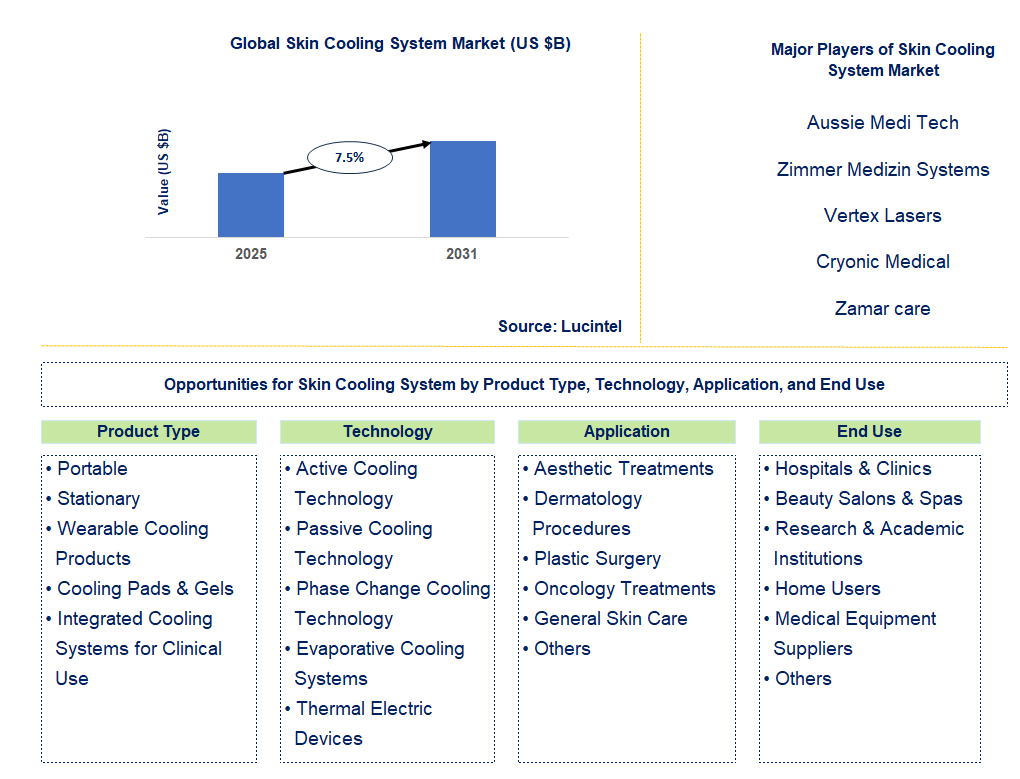
Key data points: The growth forecast = 7.5% annually for the next 7 years. Scroll below to get more insights. This market report covers trends, opportunities and forecasts in skin cooling system market to 2031 by product type (portable, stationary, wearable cooling products, cooling pads & gels, and integrated cooling systems for clinical use), technology (active cooling technology, passive cooling technology, phase change cooling technology, evaporative cooling systems, and thermal electric devices), application (aesthetic treatments, dermatology procedures, plastic surgery, oncology treatments, general skin care, and others), end use (hospitals & clinics, beauty salons & spas, research & academic institutions, home users, medical equipment suppliers, and others), and region (North America, Europe, Asia Pacific, and the Rest of the World)
We'll send your sample report shortly.
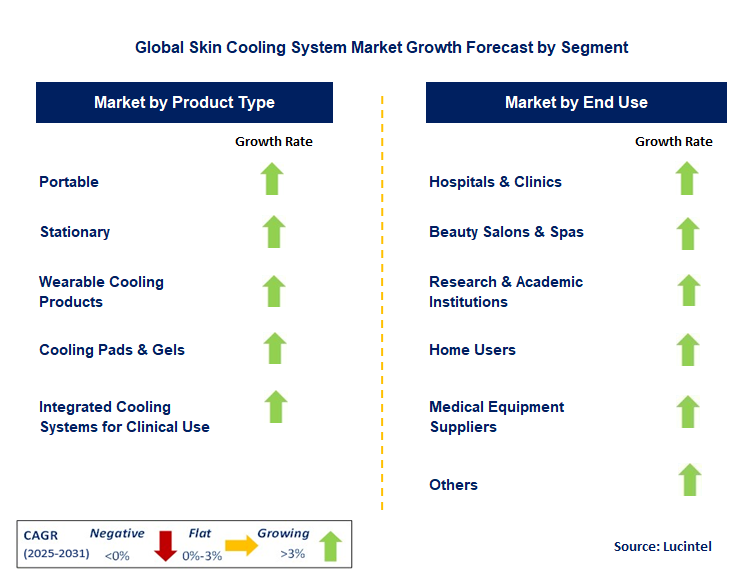
• Lucintel forecasts that, within the product type category, wearable cooling product is expected to witness the highest growth over the forecast period.
• Within the end use category, beauty salon & spa is expected to witness the highest growth.
• In terms of region, APAC is expected to witness the highest growth over the forecast period. Gain valuable insights for your business decisions with our comprehensive 150+ page report. Sample figures with some insights are shown below.
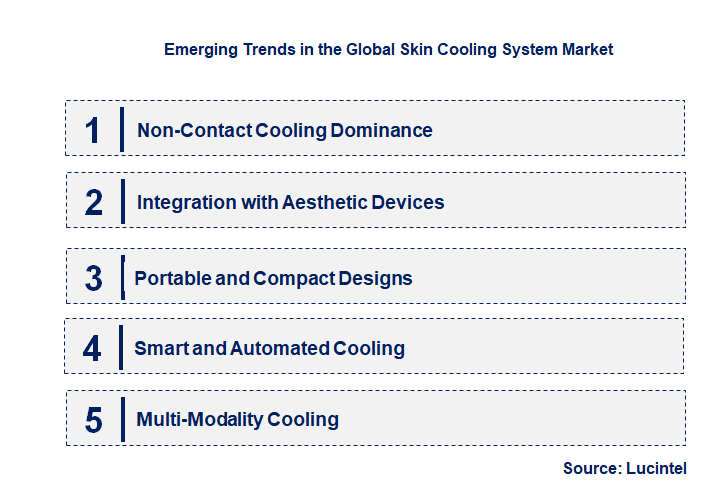
• Non-Contact Cooling Dominance: There’s a clear trend towards non-contact skin cooling systems, particularly those using forced air or cryogen spray. These systems offer hygienic advantages, faster cooling, and better patient comfort during procedures, reducing the risk of cross-contamination and providing a more consistent cooling effect without direct skin contact.
• Integration with Aesthetic Devices: A significant trend is the seamless integration of skin cooling systems directly into aesthetic and dermatological laser/IPL devices. This "all-in-one" approach enhances procedural efficiency, provides immediate pre-, intra-, and post-cooling, and optimizes treatment outcomes by minimizing discomfort and adverse effects.
• Portable and Compact Designs: The market is moving towards more portable, lightweight, and compact skin cooling devices. This trend increases the versatility of these systems, making them suitable for smaller clinics, mobile aesthetic services, and even home-use applications, offering greater accessibility and convenience for practitioners and patients.
• Smart and Automated Cooling: The integration of smart features, such as automated temperature control, intelligent feedback systems, and customizable cooling protocols, is an emerging trend. These intelligent systems adapt cooling intensity based on real-time skin temperature and procedure requirements, ensuring optimal safety and efficacy with minimal manual adjustments.
• Multi-Modality Cooling: The development of systems offering multiple cooling modalities (e.g., combining cryotherapy with contact cooling) in a single device is gaining traction. This trend provides practitioners with greater flexibility to choose the most appropriate cooling method for different procedures and skin types, enhancing treatment versatility and patient outcomes. These trends are profoundly reshaping the skin cooling system market by moving towards more hygienic and efficient non-contact methods, integrating cooling directly into treatment devices for streamlined procedures, enhancing portability for wider applicability, incorporating intelligence for optimized and safe cooling, and offering multi-modal options for greater treatment flexibility.
• Advanced Cryogen Spray Cooling: A significant development is the refinement of cryogen spray delivery systems, offering more precise and controllable bursts. This ensures optimal epidermal cooling without causing frostbite or discomfort, especially critical during high-energy laser treatments, thus improving patient safety and comfort during intense procedures.
• Peltier-Based Contact Cooling: There’s been a surge in sophisticated Peltier-based contact cooling devices that provide consistent, adjustable cooling directly to the skin surface. These systems are highly effective for pain management and thermal injury prevention in various dermatological procedures, offering immediate and sustained relief.
• Hybrid Cooling Technologies: Recent innovations include hybrid systems combining different cooling modalities, such as forced cold air with contact cooling plates. This allows practitioners to select the most effective and comfortable cooling method for specific treatments and patient needs, enhancing versatility and customization during procedures.
• Ergonomic and User-Friendly Designs: Manufacturers are focusing on developing more ergonomic designs for skin cooling systems, including lightweight handpieces and intuitive touchscreens. These improvements enhance ease of use for practitioners, reduce operator fatigue, and streamline workflow in busy clinical settings, contributing to overall efficiency.
• Integration with AI and Sensors: The incorporation of artificial intelligence (AI) and advanced sensors for real-time skin temperature monitoring is an emerging development. This enables intelligent control of cooling parameters, automatically adjusting intensity to maintain optimal temperatures, ensuring both efficacy and patient safety during treatments. These developments are collectively impacting the skin cooling system market by pushing the boundaries of precision and safety, offering more versatile and adaptable cooling solutions, enhancing user experience through ergonomic designs, and leveraging smart technologies for automated and optimized performance, ultimately improving outcomes for both practitioners and patients.
• Aesthetic and Cosmetic Procedures: This remains the largest growth opportunity. The rising popularity of laser hair removal, skin rejuvenation, tattoo removal, and other energy-based treatments drives demand for effective skin cooling to minimize pain, prevent thermal damage, and enhance patient comfort during these popular cosmetic interventions.
• Dermatological Treatments: The treatment of various skin conditions, including acne, rosacea, and vascular lesions, often involves procedures that benefit from cooling. Strategic growth lies in providing precise cooling solutions for these dermatological applications, improving patient tolerance and reducing post-procedure downtime.
• Pain Management and Sports Medicine: Skin cooling systems are increasingly used for localized pain relief, swelling reduction, and recovery in sports injuries. Opportunities exist in developing portable, targeted cooling devices for athletic trainers, physical therapists, and individuals for immediate relief and faster rehabilitation.
• Surgical and Post-Surgical Recovery: In certain surgical procedures, particularly dermatological or minor surgeries, skin cooling can reduce inflammation, minimize bruising, and manage pain post-operatively. This represents a niche but growing opportunity for specialized cooling systems designed for peri-operative care and faster recovery.
• Personal Use and At-Home Devices: With a growing interest in at-home beauty and wellness, there’s an emerging opportunity for compact, user-friendly skin cooling devices for personal use. These could include cooling tools for immediate relief from minor burns, insect bites, or to enhance the application of skincare products. These strategic growth opportunities are profoundly impacting the skin cooling system market by driving innovation towards application-specific cooling solutions, expanding the market’s reach beyond traditional clinical settings, and fostering product diversification to meet the varied needs of both professional practitioners and individual consumers, thereby ensuring sustained market growth.
• Aussie Medi Tech
• Zimmer Medizin Systems
• Vertex Lasers
• Cryonic Medical
• Zamar care
• METRUM CRYOFLEX
• The Global Beauty Group
• Portable
• Stationary
• Wearable Cooling Products
• Cooling Pads & Gels
• Integrated Cooling Systems for Clinical Use
• Active Cooling Technology
• Passive Cooling Technology
• Phase Change Cooling Technology
• Evaporative Cooling Systems
• Thermal Electric Devices
• North America
• Europe
• Asia Pacific
• The Rest of the World
• United States: The US market leads in the adoption of advanced skin cooling technologies, particularly in dermatology and aesthetic clinics. Driven by a high volume of cosmetic procedures, there’s a strong emphasis on contact and non-contact cooling systems that integrate seamlessly with laser and energy-based devices, prioritizing patient comfort and faster recovery.
• China: China skin cooling system market is rapidly expanding, fueled by a growing middle class and increasing access to aesthetic and medical treatments. The focus is on both localized production of cost-effective cooling devices and the import of high-end systems, catering to a burgeoning demand for dermatological and cosmetic procedures.
• Germany: Germany market for skin cooling systems is characterized by a strong emphasis on precision engineering, safety, and integration with high-end medical equipment. Developments are geared towards robust, reliable cooling solutions for specialized dermatological treatments and surgical applications, reflecting the country’s stringent quality standards in healthcare.
• India: India skin cooling system market is experiencing substantial growth due to rising disposable incomes, increasing awareness of aesthetic treatments, and a growing number of dermatology clinics. There’s a rising demand for portable and efficient cooling solutions that offer a balance of effectiveness and affordability to cater to a diverse patient base.
• Japan: Japan skin cooling system market focuses on advanced, compact, and highly precise devices, aligning with its technologically sophisticated healthcare sector. Developments include innovative cryotherapy systems and integrated cooling solutions for delicate aesthetic procedures, emphasizing patient comfort and superior treatment outcomes in a highly discerning market.


• Aussie Medi Tech
• Zimmer Medizin Systems
• Vertex Lasers
• Cryonic Medical
• Zamar care
• METRUM CRYOFLEX
• The Global Beauty Group Q5. Which skin cooling system market segment will be the largest in future? Answer: Lucintel forecasts that, within the product type category, wearable cooling product is expected to witness the highest growth over the forecast period. Q6. In skin cooling system market, which region is expected to be the largest in next 5 years? Answer: In terms of region, APAC is expected to witness the highest growth over the forecast period. Q7. Do we receive customization in this report? Answer: Yes, Lucintel provides 10% customization without any additional cost.


Choose a license that fits your team. Instant PDF delivery.
Prices exclude taxes. Instant delivery. Custom licensing available on request.
Market Report · July 22, 2026
Market Report · July 22, 2026
Market Report · July 22, 2026
Trusted partner for strategic intelligence and business growth


Receive a complimentary market analysis tailored to your industry. Our analysts will identify key growth opportunities and competitive dynamics specific to your business.

Market size, growth rate, and key trend analysis for your specific sector.

Top competitor positioning and market share analysis.

Strategic recommendations backed by data-driven insights.
Get curated market intelligence and competitive moves straight to your inbox.
By subscribing, you agree to receive our monthly insights. Unsubscribe anytime.
Receive a complimentary market analysis tailored to your industry. Our analysts will identify key growth opportunities and competitive dynamics specific to your business.
Market size, growth rate, and key trend analysis for your specific sector.
Top competitor positioning and market share analysis.
Strategic recommendations backed by data-driven insights.
Get curated market intelligence, emerging trends, and competitive moves straight to your inbox each month.
By subscribing, you agree to receive our monthly insights. Unsubscribe anytime.
We'll send your sample report shortly.