
Market Report · May 18, 2026

This market report covers trends, opportunities, and forecasts in the global semiconductor wet benches market to 2031 by technology (fully-automated, semi-automated, and manual), application (semiconductor production and research centers and labs), and region (North America, Europe, Asia Pacific, and the Rest of the World)
We'll send your sample report shortly.
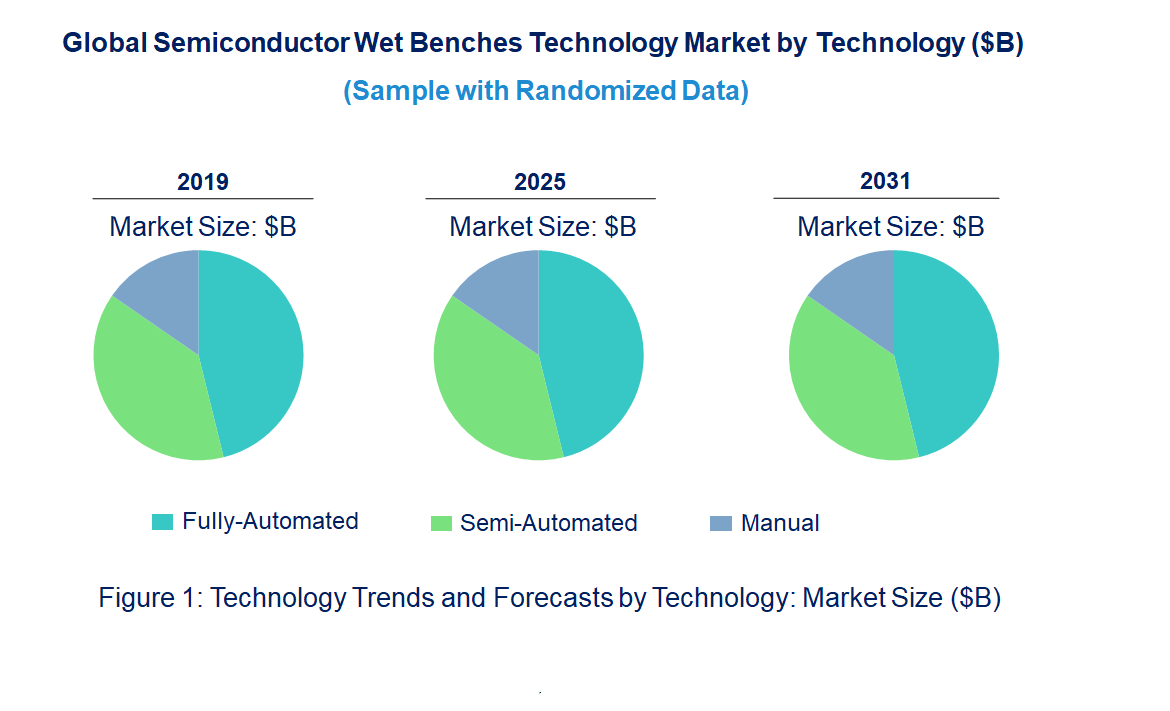
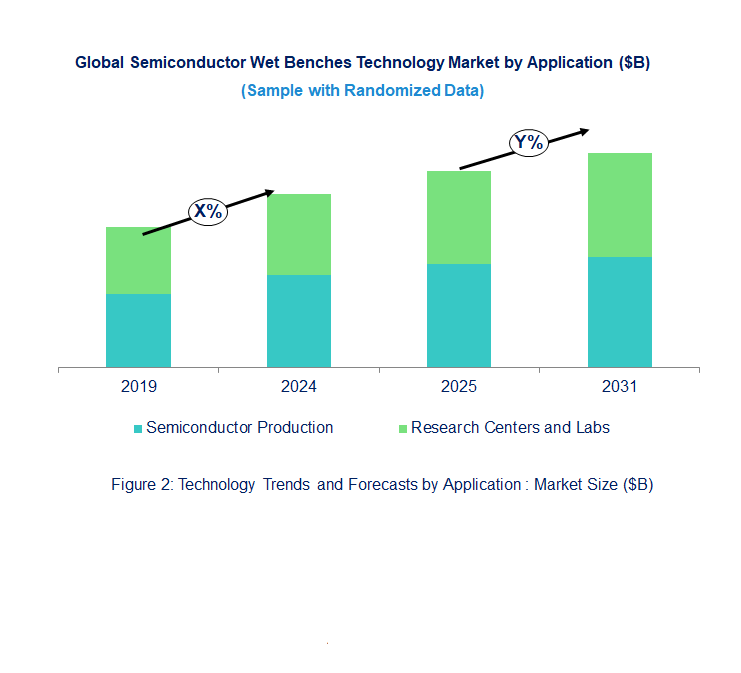
• Trend Toward Fully Automated Wet Benches: Fully automated wet benches are sought after in the industry as a trend toward higher precision, repeatability, and lower labor costs. These systems automate the cleaning, etching, and deposition processes to ensure consistency and reduce human error, thereby increasing throughput, an important aspect of high-volume semiconductor production.
• More Demand for Cleanroom-Ready Systems. With semiconductor devices becoming smaller and more complex, cleanroom-compliant wet bench systems are in high demand. Manufacturers are now emphasizing the development of wet benches that will meet the highly stringent cleanliness requirements for advanced semiconductor production, including 3D IC and nanoscale devices
• Miniaturization and High-Precision Control: Because of the relentless miniaturization of semiconductor components, wet benches with high precision control have become more in demand. Precise chemical treatments and handling at the miniaturized end of wafer sizes allow wet benches to produce increasingly complex devices with reduced feature sizes.
• IoT and Smart Integration: IoT and smart technologies integration into wet bench systems is an emerging trend. It enables real-time monitoring, predictive maintenance, and remote control to make semiconductor production facilities operate with higher efficiency and reduce the time spent on downtime.
• Sustainable System: This is based on the sustainability and environmental compliance aspect because, with an increase in environmental regulations for the semiconductor industry, manufacturers of wet benches are emphasizing on developing sustainable systems with minimal chemical waste, use of minimal water, and stringent environmental compliance. These trends depict an emerging demand for higher automation, accuracy, and sustainability in the semiconductor wet benches market as part of the industry's ongoing shift toward advanced semiconductor manufacturing technologies.
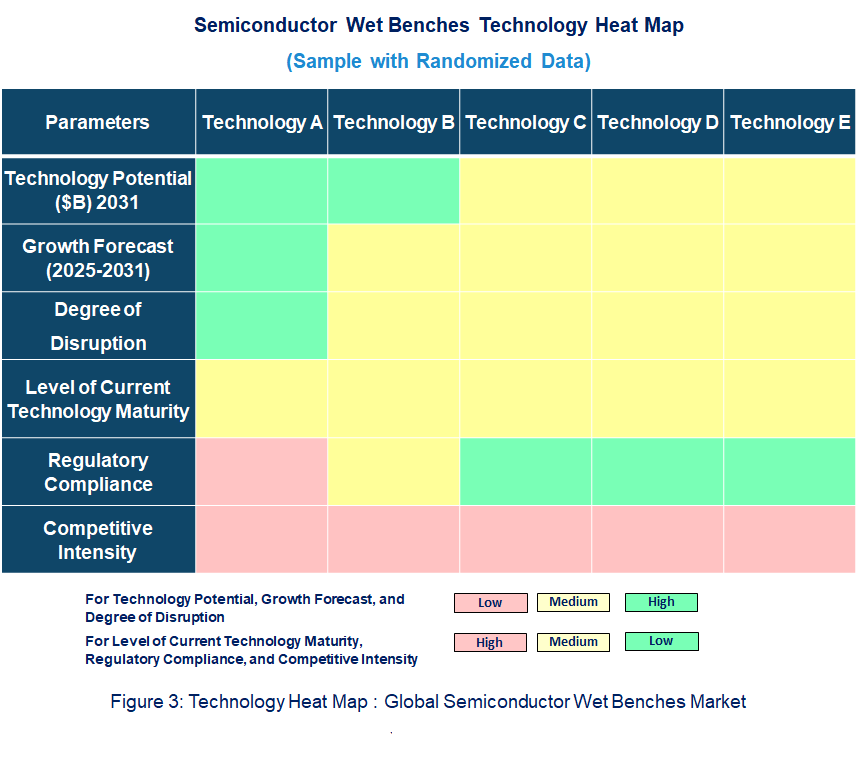
• Technology Potential: Innovation in semiconductor wet benches lies in improving the precision, efficiency, and safety of wafer processing. Key developments focus on chemical delivery automation, process uniformity improvements, and chemical waste minimization. Advanced materials and coatings for wet benches are also seen in the development of corrosion resistance and the reduction of contamination risk. Integration of real-time monitoring and process control utilizing sensors and AI-driven analytics will also enhance the optimization of wafer treatment and yield.
• Degree of Disruption: The degree of disruption in the semiconductor wet bench market is moderate. Wet benches are well-established, but demand for miniaturization, precision, and environmental sustainability is forcing the market toward more advanced solutions. New technologies such as closed-loop recycling systems for chemicals and advanced automation could make a significant difference in terms of efficiency and the environmental footprint of wet bench operations. The maturity of technology is high since wet benches have been in use for decades, though new innovations, especially automation and sustainability, are still under development.
• Regulatory Compliance: Wet benches in semiconductor manufacturing are subject to strict safety and environmental regulations. Compliance with standards such as ISO, SEMI, and local environmental guidelines ensures safe chemical handling, waste disposal, and operational efficiency. like copy
• Wafer Process Systems: Wafer Process Systems developed advanced fully automated wet benches for high-precision semiconductor applications. Their systems offer superior chemical processing control, thus bettering process efficiency and yield. This would be of high value for 3D IC manufacturers as well as makers of other sophisticated semiconductor devices.
• Modutek: Modutek has developed semi-automated and fully automated wet benches for semiconductor fabrication and MEMS applications. Its systems feature the latest in chemical handling technologies, enabling precise and safe processing of wafers. This innovation is driving growth in MEMS applications and high-precision wafer cleaning.
• SPM: The latest wet bench systems from SPM are fitted with advanced cleaning and etching technologies that ensure superior performance in advanced wafer processing. The systems are designed to meet the stringent requirements of nanotechnology and high-tech manufacturing processes, thus providing an increase in yield and improved process uniformity.
• JST Manufacturing: JST has enriched its portfolio of wet bench systems with more automated versions, which help to make semiconductor production more efficient and safe. Such systems are designed for high-volume lines and ensure real-time monitoring and control to deliver a constant process outcome.
• TAKADA: Recently, TAKADA introduced fully integrated wet bench systems for precise semiconductor production. The systems offered include automation in wafer handling, chemical mixing, and treatment cycles to avoid human intervention and enhance throughput while maintaining high safety levels.
• PCT Systems: PCT Systems focuses on developing cleanroom-compatible wet bench solutions for advanced semiconductor processing. Their systems minimize contamination and maximize chemical safety so that manufacturers can produce next-generation semiconductor devices in compliant environments.
• Ramgraber: Ramgraber has introduced innovative manual and semi-automated wet benches, which are ideal for research centers and labs where flexibility and precision are paramount. These systems provide users with enhanced control over processing parameters, making them suitable for both semiconductor production and material research applications.
• AP&S: AP&S offers high-end automated wet benches that can be used for high-precision etching and cleaning in semiconductor production. Its systems use IoT technologies for real-time monitoring and predictive maintenance, enhancing the efficiency of operations and reducing downtime.
• Tokyo Electron Limited: The company, Tokyo Electron, has unveiled wet bench next-generation solutions focusing on precise handling and cleaning. These systems are applied in highly advanced environments in semiconductor manufacturing and respond to the high-tech needs of faster processing speed and higher yields.
• Atp GmbH: Atp GmbH has focused on developing fully automated wet benches for the semiconductor and MEMS industries. The company's systems are characterized by in-line chemical mixing and temperature control, giving manufacturers increased flexibility and precision in their semiconductor fabrication processes. These recent developments show that key players in the semiconductor wet benches market focus on automation, precision, cleanroom compatibility, and sustainability to address the changing needs of the semiconductor and advanced manufacturing sectors.
• Demand for Advanced Semiconductor Devices: As semiconductor devices become more complex and smaller, the demand for high-precision wet benches that can handle advanced etching, cleaning, and deposition processes is increasing. This is driving the growth of the market, especially in 3D ICs and MEMS applications.
• Rise of Fully-Automated and Semi-Automated Systems: The increasing demand for automation in semiconductor production is propelling the growth of automated wet bench systems. These systems improve efficiency, throughput, and consistency, while minimizing human error, leading to greater yield and productivity.
• Sustainable Wet Bench Focus and Environmental Compliance: As environmental regulations tighten, manufacturers are now designing sustainable wet bench solutions to minimize the amount of wastewater and chemicals. Thus, it is driving the companies towards adopting more environmentally friendly technologies which will lead to a more sustainable solution for the long-term.
• Growth in Semiconductor Manufacturing for Consumer Electronics: The consumer electronics industry continues to grow due to the demand for smartphones, wearables, and other devices. This is creating a need for advanced semiconductor wet bench systems that can meet the high-performance and high-volume demands of the sector. Challenges in the semiconductor wet benches market are:
• High Initial Cost of Automated Wet Benches: One of the biggest problems in the market is the high capital expenditure of a fully automated and semi-automated wet bench. It acts as a hindrance to smaller manufacturers or research centers investing in such systems, although long-term benefits are offered.
• Complexity in Material Handling of New Materials: New materials and advanced semiconductor technologies often require different chemical process adaption in wet bench systems. The increased complexity of new material processing offers challenges concerning their efficiency and effectiveness.
• Integration of IoT and Automation Technologies: With the benefits of improved efficiency and predictive maintenance offered by IoT integration and automation, the complexity of integrating such systems into existing manufacturing setups remains a challenge. Compatibility of the new systems with legacy systems must be ensured by companies and that the implementation of these new systems does not disrupt production. In conclusion, the growth in the semiconductor wet benches market is very robust, which is due to advances in automation, precision control, and sustainability. However, it has to face challenges like high initial costs, new material handling complexity, and smart technologies integration for further expansion of the market.
• Wafer Process Systems
• Modutek
• SPM
• JST Manufacturing
• TAKADA
• PCT Systems
• Technology Readiness by Technology Type for the Semiconductor Wet Benches Market: Fully automated wet benches are highly advanced and match the precision and throughput requirements for large-scale semiconductor manufacturing. Semi-automated systems are established but in transition; they are appropriate for medium-scale production. Manual systems are mature but are being increasingly displaced by automation. Fully automated systems are the most mature and drive efficiency and innovation, while manual systems are for low-volume applications. Full automation is the most critical for regulatory compliance, as they face the most complex standards for integrating into cleanroom environments.
• Competitive Intensity and Regulatory Compliance of Various Technologies for Semiconductor Wet Benches Market: The market is competitive, with fully-automated systems dominating the volume productions due to efficiency and scalability. Semi-automated systems compete in medium-scale production, and there's still a need for fully manual systems for low-volume and research purposes. Regulations are very strict across the three systems, especially as regards chemical handling and waste disposal. Fully automated and semi-automated systems must also pass critical standards on contamination control and reliability in semiconductor fabrication.
• Disruption Potential of various technologies in the semiconductor wet benches market: Fully automated wet benches offer the greatest disruption potential for high-volume semiconductor manufacturing, which increases throughput, reduces errors, and improves consistency. Semi-automated systems are cost-effective for medium-scale production, and manual wet benches are less disruptive, focusing on small-scale or research applications. With the trend toward smaller nodes in semiconductor manufacturing, fully automated systems will be the driving force for innovation, especially in advanced applications like memory and 5G chips.
• Fully-Automated
• Semi-Automated
• Manual
• Semiconductor Production
• Research Centers and Labs
• North America
• Europe
• Asia Pacific
• The Rest of the World
• Latest Developments and Innovations in the Semiconductor Wet Benches Technologies
• Companies / Ecosystems
• Strategic Opportunities by Technology Type


Choose a license that fits your team. Instant PDF delivery.
Prices exclude taxes. Instant delivery. Custom licensing available on request.
Market Report · May 18, 2026
Market Report · May 18, 2026
Market Report · May 18, 2026
Trusted partner for strategic intelligence and business growth


Receive a complimentary market analysis tailored to your industry. Our analysts will identify key growth opportunities and competitive dynamics specific to your business.

Market size, growth rate, and key trend analysis for your specific sector.

Top competitor positioning and market share analysis.

Strategic recommendations backed by data-driven insights.
Get curated market intelligence and competitive moves straight to your inbox.
By subscribing, you agree to receive our monthly insights. Unsubscribe anytime.
Receive a complimentary market analysis tailored to your industry. Our analysts will identify key growth opportunities and competitive dynamics specific to your business.
Market size, growth rate, and key trend analysis for your specific sector.
Top competitor positioning and market share analysis.
Strategic recommendations backed by data-driven insights.
Get curated market intelligence, emerging trends, and competitive moves straight to your inbox each month.
By subscribing, you agree to receive our monthly insights. Unsubscribe anytime.
We'll send your sample report shortly.