
Market Report · July 22, 2026

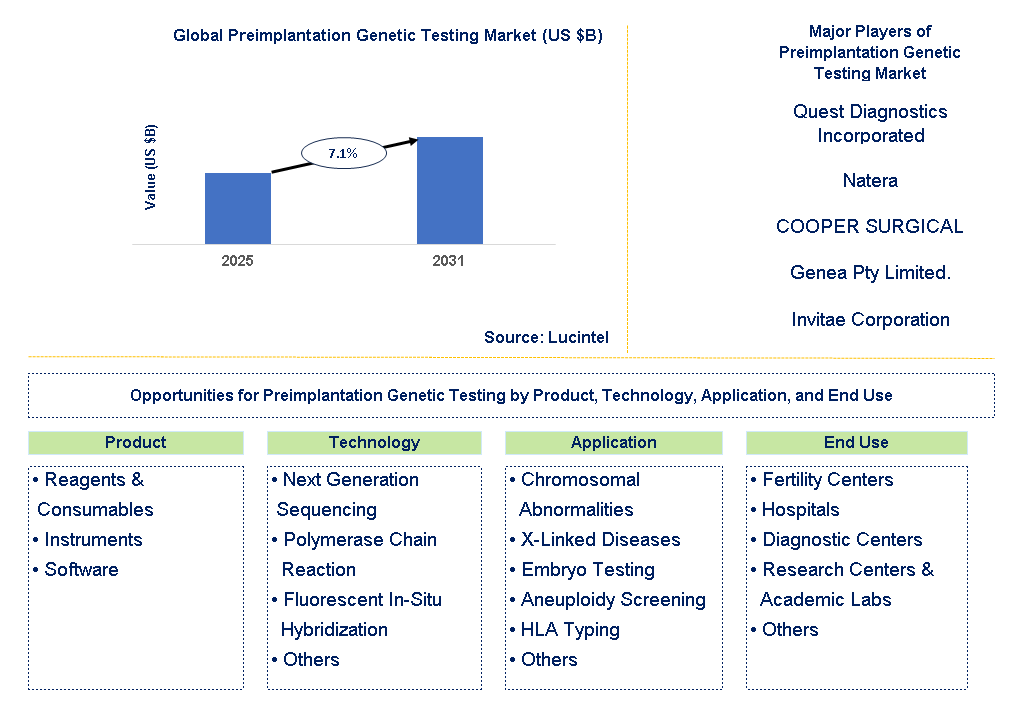
Key data points: The growth forecast = 7.1% annually for the next 7 years. Scroll below to get more insights. This market report covers trends, opportunities and forecasts in preimplantation genetic testing market to 2031 by product (reagents & consumables, instruments, and software), technology (next generation sequencing, polymerase chain reaction, fluorescent in-situ hybridization, and others), application (chromosomal abnormalities, x-linked diseases, embryo testing, aneuploidy screening, hla typing, and others), end use (fertility centers, hospitals, diagnostic centers, research centers & academic labs, and others), and region (North America, Europe, Asia Pacific, and the Rest of the World)
We'll send your sample report shortly.
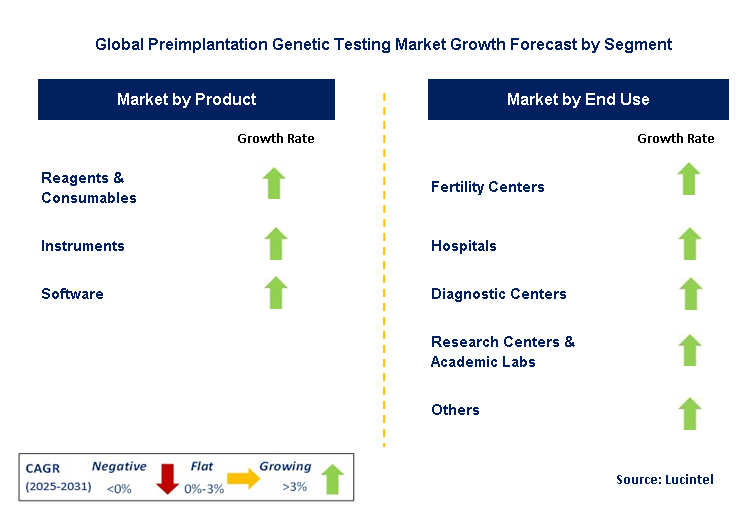
• Lucintel forecasts that, within the product category, reagent & consumable is expected to witness higher growth over the forecast period.
• Within the end use category, fertility center is expected to witness the highest growth.
• In terms of region, APAC is expected to witness the highest growth over the forecast period. Gain valuable insights for your business decisions with our comprehensive 150+ page report. Sample figures with some insights are shown below.
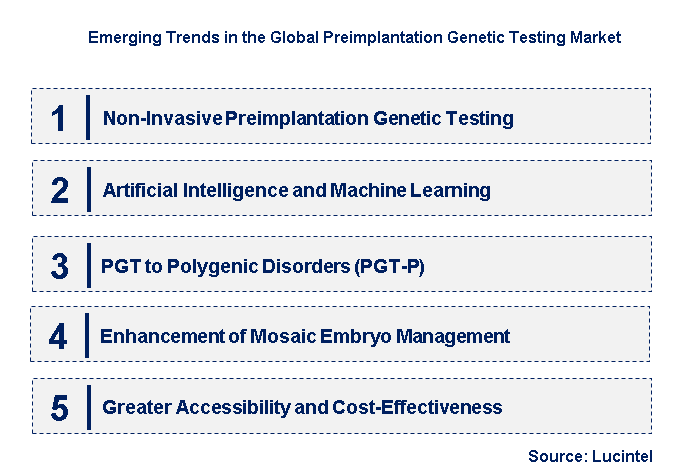
• Non-Invasive Preimplantation Genetic Testing: The trend here is to test cell-free DNA (cfDNA) shed by the embryo into the embryo culture medium used after embryos are cultured, where no invasive biopsy is required. Conventional PGT involves the removal of a few cells from the embryo and has a small risk of harming it. nippit seeks to reduce the risk and stress to the embryo and possibly enhance its viability. Increasing the concordance rate of nippit with conventional biopsy-based PGT is the focus of research, overcoming issues of maternal contamination of DNA and low cfDNA yield to provide accurate results.
• Artificial Intelligence and Machine Learning: AI and machine learning are being used more and more to analyze the vast amount of data produced by PGT, especially for embryo selection. AI algorithms can assess embryo morphology through time-lapse imaging, forecast chromosomal normality, and even rank embryos for transfer, lessening human subjectivity and increasing efficiency. This is a trend that has the potential for more accurate embryo selection, resulting in improved implantation rates and fewer miscarriages, and thus optimizing IVF success rates.
• PGT to Polygenic Disorders (PGT-P): Historically, PGT has been applied to single-gene disorders (PGT-M) or chromosomal aneuploidies (PGT-A). The newer trend is the creation of PGT for polygenic disorders (PGT-P), which involve complex conditions determined by several genes and environmental factors (e.g., diabetes, heart disease, some cancers). Although still primarily investigational, PGT-P seeks to evaluate an embryo’s genetic susceptibility to such conditions, enabling appropriate embryo selection. This growth raises serious ethical issues but potentially may provide preventative strategies against prevalent disease.
• Enhancement of Mosaic Embryo Management: Mosaicism, or the presence of normal and abnormal cells in an embryo, is a frequent occurrence in PGT-A and raises a clinical concern about transfer. Current trends address enhancing knowledge of mosaicism, creating more accurate techniques for its identification, and defining more exact guidelines for transferring mosaic embryos. Research seeks to distinguish between various degrees of mosaicism and their clinical significance, providing more sophisticated advice to clinicians and potential parents, potentially improving the number of transferable viable embryos.
• Greater Accessibility and Cost-Effectiveness: There is increasing movement towards the accessibility and cost-effectiveness of PGT. This includes the optimization of laboratory procedures, creating high-throughput sequencing platforms that decrease per-test costs, and expanding insurance coverage for PGT cycles. As the technology evolves and becomes more efficient, the objective is to reduce overall costs, enabling more couples, especially those experiencing infertility or genetic concerns, to avail themselves of PGT, making advanced reproductive services more accessible. These new trends are basically remodeling the preimplantation genetic testing market by pushing it toward more accuracy, non-invasiveness, and comprehensive diagnosing ability. The assimilation of AI, the investigation of polygenic screening, the subtle comprehension of mosaicism, and the emphasis on affordability are poised to transform reproductive medicine, presenting more promising and successful results for potential parents while consistently provoking ethical paradigms.
• Universal uptake of Next-Generation Sequencing: One of the biggest recent advancements is universal uptake of Next-Generation Sequencing (NGS) as the main technology for PGT. NGS provides much increased resolution and throughput compared to traditional technologies such as array comparative genomic hybridization (ash) or FISH. This enables more complete and precise detection of chromosomal aneuploidies (PGT-A), segmental imbalances, and particular gene mutations (PGT-M), resulting in better embryo selection and better pregnancy rates.
• Advances in Techniques of Embryo Biopsy: New advances have involved improvements in embryo biopsy technology, specifically the trophectoderm biopsy at the blastocyst stage. Advances in laser-assisted biopsy equipment and micro-manipulation methods have improved the safety and effectiveness of the procedure, minimizing possible stress on the embryo. This technical advance is essential for achieving adequate and representative cellular material for proper genetic analysis without loss of embryo viability.
• More Sophisticated Understanding and Control of Mosaicism: There has been considerable recent advancement in knowing and controlling mosaicism within embryos. Early PGT-A results occasionally revealed mosaicism, and this created doubt regarding embryo transfer. More recent investigations have shed more light on the clinical relevance of various forms and degrees of mosaicism, resulting in improved interpretation criteria and, in certain situations, cautious transfer of certain mosaic embryos, which may potentially raise the number of viable embryos for couples.
• Creation of Non-Invasive PGT Protocols: A key recent advancement is the research and testing of non-invasive PGT (nippit) protocols. This is performed through the analysis of cell-free DNA (cfDNA) in spent culture medium in which embryos are cultured. If proven, nippit would render embryo biopsy unnecessary, avoiding embryo risk, making the PGT procedure simpler, and increasing access. Although literature is still under thorough research, preliminary findings are promising for future clinical use.
• Enhancement of PGT for Single-Gene Disorders Capabilities: There has been an expansion in the scope and precision of PGT-M in recent years. Advances in single-cell genomics and targeted sequencing panels enable the identification of more monogenic diseases, such as intricate or rare diseases. This allows for greater choices for at-risk couples to have healthy children without the inherited disease. These recent advances collectively are influencing preimplantation genetic testing by improving its accuracy, widening its range of diagnostics, and shifting direction towards less invasive diagnostic and therapeutic approaches. The common use of NGS, advanced biopsy protocols, greater insight into mosaicism, the potential of nippit, and the increased potentials of PGT-M are greatly enhancing success in assisted reproduction and providing more hope for families with genetic issues.
• Aneuploidy Screening for IVF Patients of Advanced Maternal Age: This use is a large and increasing market. Women of advanced maternal age are more likely to generate aneuploid embryos, which have poorer implantation rates and greater potential for miscarriage. PGT-A assists in the identification of chromosomally normal embryos, thus enhancing IVF success rates. Strategic expansion entails increasing awareness among this population, making testing services available to them, and incorporating PGT-A as a standard of care in IVF protocols for this patient population.
• PGT-M for High-Risk Families: This use provides an important growth opportunity, especially for high-risk couples at risk of passing on a particular inherited genetic condition (e.g., cystic fibrosis, Huntington’s disease). PGT-M permits the availability of selection of mutation-free embryos. Growth opportunities include establishing detailed test panels for a broad spectrum of monogenic diseases, working with genetic counseling services, and creating transparent pathways for patient referral by genetic clinics.
• Extending PGT-SR to Couples with Chromosomal Rearrangements: Couples with balanced chromosomal structural rearrangements (e.g., translocations, inversions) are at a high risk of having unbalanced embryos, resulting in repeated miscarriage or affected children. PGT-SR is actually the screening for such imbalances. Strategic development involves the fine-tuning of the detection capacity for intricate rearrangements, providing individualized probe design, and counseling reproductive specialists on the advantages of PGT-SR in this particular patient group.
• Non-Invasive PGT as a Standard of the Future: Although still in the process of being developed, the achievement of clinical validation and uptake of non-invasive PGT (nippit) through embryo culture media represents a vast opportunity for growth. If found to be reliable, nippit may be used to supplant or supplement invasive biopsy protocols, making PGT safer, less complex, and potentially more prevalent. Research investment, establishment of sound nippit protocols, and establishment of early market position in this new field will be critical to future growth.
• PGT for Recurrent Implantation Failure and Recurrent Pregnancy Loss: In the case of couples with recurrent implantation failure (RIF) in IVF or recurrent pregnancy loss (RPL), PGT may prove to be an effective technique to detect chromosomal anomalies in the embryos. Growth potential exists in providing end-to-end PGT solutions for dealing with these problem fertility cases, emphasizing highly precise screening and offering unambiguous diagnostic reports to enhance the success rate of subsequent IVF cycles and minimize patient emotional trauma. These growth strategies are set to have profound effects on the preimplantation genetic testing market through the promotion of specialization, technological development, and wider clinical take-up. Through a focus on specific patient requirements, including advanced maternal age, monogenic disease risk, chromosomal rearrangements, and recurrent fertility problems, and through investment in non-invasive technologies, the market can extend its scope and deliver enhanced outcomes for more would-be parents.
• Quest Diagnostics Incorporated
• Natera
• COOPER SURGICAL
• Genea Pty Limited.
• Invitae Corporation
• Laboratory Corporation of America Holdings
• Thermo Fisher Scientific
• Bioarray
• Illumina
• Igenomix
• Reagents & Consumables
• Instruments
• Software
• Next Generation Sequencing
• Polymerase Chain Reaction
• Fluorescent In-Situ Hybridization
• Others
• Chromosomal Abnormalities
• X-Linked Diseases
• Embryo Testing
• Aneuploidy Screening
• HLA Typing
• Others
• Fertility Centers
• Hospitals
• Diagnostic Centers
• Research Centers & Academic Labs
• Others
• North America
• Europe
• Asia Pacific
• The Rest of the World
• United States: In the United States, the use of PGT has steadily grown, with Next-Generation Sequencing (NGS) now being the leading technology for extensive chromosome screening. Recent advances center on better accuracy of PGT-A, especially in dealing with mosaic embryos, where some cells are abnormal and others are not. Research into non-invasive PGT (nippit) via culture embryo media continues in an effort to minimize risks attached to embryo biopsy. There is also increasing emphasis on the ethical considerations and standardization of PGT procedures in clinics.
• China: China has experienced considerable advancement in PGT, especially for monogenic disease (PGT-M), due to its large population suffering from such conditions. The nation is researching and applying highly advanced sequencing technologies actively to improve the identification of particular genetic mutations. Increasing attention is given to non-invasive PGT technologies, investigating the application of cell-free DNA from spent embryo culture medium. Ethical issues, such as genetic counseling and regulation of PGT usage, are also an area of concern as the technology expands.
• Germany: Germany’s policy on PGT is well controlled, with strict ethical standards. Recent advances have been concentrated on optimizing the available PGT-M and PGT-SR protocols in high-risk couples who are likely to pass on serious genetic disorders. The individual PGT cases require approval by the ethics committees. Although the uptake of PGT-A for screening aneuploidy has been slower in other countries because of legal and ethical controversy, research continues on non-invasive strategies that may extend its use within current legal frameworks.
• India: India’s PGT market is growing fueled by rising awareness of genetic disease and increased numbers of IVF cycles. New developments are the increasing use of NGS for more extensive and precise genetic screening. Fertility clinics are starting to provide PGT-A and PGT-M services on a larger scale, especially for couples with a previous history of recurrent pregnancy loss or diagnosed genetic disorders. There is an emphasis on the enhancement of accessibility and affordability of these sophisticated genetic tests, as both domestic and foreign participants are expanding their services.
• Japan: Japan’s PGT scene is defined by stringent regulation and significant attention to ethical considerations of embryo manipulation. Recent news has involved ongoing reconsideration of criteria for "serious" genetic conditions that are eligible for PGT-M, which mirrors an ongoing societal discussion. Although PGT-A was taken up more cautiously, research is pushing ahead in non-invasive methods and optimizing the accuracy of current PGT methods. The nation balances technological advancement with a strong commitment to ethical control and patient counseling.


• Quest Diagnostics Incorporated
• Natera
• COOPER SURGICAL
• Genea Pty Limited.
• Invitae Corporation
• Laboratory Corporation of America Holdings
• Thermo Fisher Scientific
• Bioarray
• Illumina
• Igenomix Q5. Which preimplantation genetic testing market segment will be the largest in future? Answer: Lucintel forecasts that, within the product category, reagent & consumable is expected to witness higher growth over the forecast period. Q6. In preimplantation genetic testing market, which region is expected to be the largest in next 5 years? Answer: In terms of region, APAC is expected to witness the highest growth over the forecast period. Q7. Do we receive customization in this report? Answer: Yes, Lucintel provides 10% customization without any additional cost.


Choose a license that fits your team. Instant PDF delivery.
Prices exclude taxes. Instant delivery. Custom licensing available on request.
Market Report · July 22, 2026
Market Report · July 22, 2026
Market Report · July 22, 2026
Trusted partner for strategic intelligence and business growth


Receive a complimentary market analysis tailored to your industry. Our analysts will identify key growth opportunities and competitive dynamics specific to your business.

Market size, growth rate, and key trend analysis for your specific sector.

Top competitor positioning and market share analysis.

Strategic recommendations backed by data-driven insights.
Get curated market intelligence and competitive moves straight to your inbox.
By subscribing, you agree to receive our monthly insights. Unsubscribe anytime.
Receive a complimentary market analysis tailored to your industry. Our analysts will identify key growth opportunities and competitive dynamics specific to your business.
Market size, growth rate, and key trend analysis for your specific sector.
Top competitor positioning and market share analysis.
Strategic recommendations backed by data-driven insights.
Get curated market intelligence, emerging trends, and competitive moves straight to your inbox each month.
By subscribing, you agree to receive our monthly insights. Unsubscribe anytime.
We'll send your sample report shortly.