
Market Report · July 22, 2026

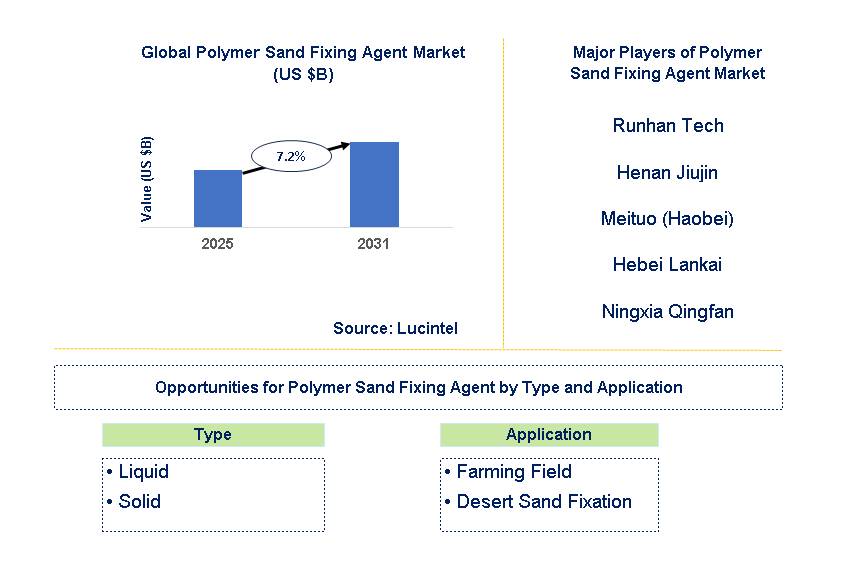
Key data points: The growth forecast = 7.2% annually for the next 7 years. Scroll below to get more insights. This market report covers Trends, opportunity and forecast in polymer sand fixing agent market to 2031 by type (liquid and solid), application (farming field and desert sand fixation), and region (North America, Europe, Asia Pacific, and the Rest of the World)
We'll send your sample report shortly.
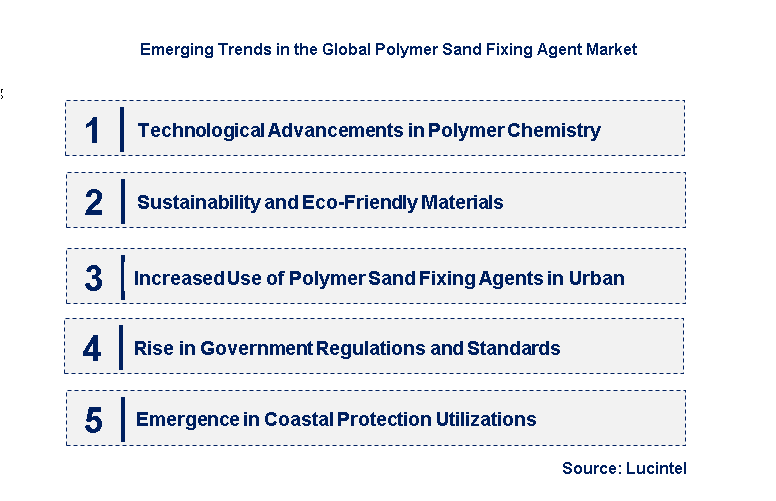
• Technological Advancements in Polymer Chemistry: New advancements in polymer chemistry are enhancing the performance of sand fixative products. Researchers are developing polymers that offer stronger bonding properties, greater resistance to environmental degradation, and faster curing times. These innovations improve the durability and effectiveness of polymer sand fixing agents, contributing to longer-lasting erosion control and better stabilization in challenging environments. This trend is expected to reduce the need for frequent reapplication, leading to cost savings for construction and landscaping projects.
• Sustainability and Eco-Friendly Materials: Sustainability is becoming a key driver in the polymer sand fixing agent market. As environmental concerns increase, consumers and companies alike are looking for more eco-friendly alternatives. Bio-based polymers, biodegradable materials, and non-toxic additives are gaining popularity. This shift toward greener products aligns with growing global emphasis on reducing plastic pollution and carbon footprints. Manufacturers are investing in research to develop polymers that can provide effective erosion control without harming ecosystems or wildlife.
• Increased Use of Polymer Sand Fixing Agents in Urban Landscaping: Urbanization is contributing to the growing demand for polymer sand fixing agents in landscaping and infrastructure projects. With cities growing rapidly, there is a need for cost-effective and long-lasting solutions to prevent soil erosion in urban parks, roads, and green spaces. Polymer sand fixatives are becoming an essential tool for maintaining aesthetically pleasing and functional landscapes, offering superior control over sand and soil movement in public spaces and residential developments.
• Rise in Government Regulations and Standards: Governments worldwide are increasingly introducing regulations and standards for environmental protection, particularly related to erosion control. In response, the polymer sand fixing agent market is adapting to meet these stricter requirements. Manufacturers are ensuring that their products comply with local and international standards, which focus on reducing environmental impact, improving safety, and enhancing performance. This new wave of regulatory approach will facilitate more innovative product developments as they pursue even greater efficiency and compliance improvements.
• Emergence in Coastal Protection Utilizations: Coastal segments are at an extra vulnerability from being eroded upon; the development and usage of polymer sand fixing agents in coating the shores and other similar coastline parts. In response to climate change and rising sea levels, many governments and organizations are investing in technologies that can effectively prevent coastal erosion. Polymer sand fixatives provide a cost-effective and long-lasting solution for stabilizing sand, reducing the loss of land, and preserving the natural environment. These emerging trends reflect how the polymer sand fixing agent market is evolving to meet the needs of sustainability, urbanization, and environmental protection. Technological innovations and eco-friendly materials are transforming the industry, while regulatory changes are pushing companies to develop more effective, sustainable solutions. These trends are reshaping the market landscape and creating new opportunities for growth.
• Development of Biodegradable Polymers: The introduction of biodegradable polymers is one of the most significant developments in the Polymer Sand Fixing Agent market. Manufacturers have started using materials that break down over time, reducing the environmental impact of polymer sand fixatives. These innovations meet both sustainability goals and performance requirements, making them increasingly attractive for use in sensitive environments such as coastal regions or agricultural areas.
• Advanced Manufacturing Technologies: Advances in manufacturing technologies have made the production of polymer sand fixing agents more efficient and of higher quality. The use of automated systems and the latest blending techniques allow manufacturers to produce products that are much more consistent and provide better bonding properties, faster curing times, and greater resistance to extreme weather conditions. These developments result in reduced production costs and improved performance in the field.
• Increased Adoption of Polymer Sand Fixatives in Landscaping: Polymer sand fixing agents are seeing increased adoption in landscaping applications. As urbanization accelerates, cities are investing in more sustainable and resilient landscaping solutions. Polymer sand fixatives help stabilize sandy soils in parks, public spaces, and roads, improving both aesthetic appeal and functionality. This development is particularly relevant in areas prone to drought, where erosion can be a significant concern.
• Growth in Coastal and Flood Protection Projects: With rising sea levels and increasing natural disasters, coastal and flood protection projects have become a primary area of focus for the Polymer Sand Fixing Agent market. Governments are investing in these initiatives, utilizing polymer-based solutions for stabilizing dunes, beaches, and riverbanks. These developments are helping to prevent erosion and protect infrastructure in vulnerable coastal regions.
• Developing Markets: The market for Polymer Sand Fixing Agent is expanding in developing countries where there is urbanization and construction projects. Increasing construction activities in the Asian, African, and Latin American regions have raised demand for stabilization of sand and prevention of erosion. The increasing construction activities have created an expanding market for this market. As such, less expensive and more scalable polymer sand fixatives are being developed for the region. These developments highlight the ongoing transformation of the polymer sand fixing agent market. Innovations in biodegradable materials, production technologies, and applications are driving growth across various regions and industries. As the demand for more sustainable and cost-effective solutions rises, these developments are positioning the market for continued expansion.
• Urban Landscaping and Infrastructure: Urban landscaping is one of the fastest-growing applications for polymer sand fixing agents. With rapid urbanization, cities are focusing on creating sustainable green spaces, parks, and recreational areas. Polymer sand fixatives are ideal for stabilizing sandy soils and preventing erosion in these spaces. The increasing emphasis on sustainable urban development presents significant opportunities for growth in this sector.
• Coastal and Shoreline Protection: Coastal and shoreline protection is another key area for growth. Rising sea levels and coastal erosion due to climate change have created an urgent need for solutions that protect coastlines and prevent sand loss. Polymer sand fixatives provide an effective, long-lasting solution to stabilize beaches, dunes, and shorelines, creating growth opportunities for manufacturers focusing on coastal erosion control.
• Agricultural Land Preservation: Agricultural lands, especially in areas prone to erosion, are increasingly adopting polymer sand fixing agents to stabilize sandy soils and reduce the impact of wind erosion. As agricultural land preservation becomes a priority, these products can help maintain soil health, improve crop yields, and protect valuable arable land. This trend is expected to grow, especially in regions facing desertification or drought.
• Flood Protection and Riverbank Stabilization: Polymer sand fixatives are also being used for flood protection and riverbank stabilization. With increased flooding risks due to climate change, governments and organizations are investing in technologies that can prevent erosion along rivers, lakes, and flood-prone areas. Polymer sand fixatives offer an efficient and cost-effective solution to stabilize riverbanks and reduce the impact of floods.
• Infrastructure Development in Emerging Economies: Emerging economies are witnessing significant growth in infrastructure development, creating opportunities for polymer sand fixing agents in roads, railways, and other construction projects. As the demand for sand stabilization and erosion control rises in these regions, manufacturers are developing more affordable solutions to meet the needs of these markets. The polymer sand fixing agent market offers numerous growth opportunities across various applications, including urban landscaping, coastal protection, agricultural land preservation, flood management, and infrastructure development in emerging economies. As demand for sustainable solutions grows, these opportunities are shaping the future of the market and driving its expansion.
• Runhan Tech
• Henan Jiujin
• Meituo (Haobei)
• Hebei Lankai
• Ningxia Qingfan
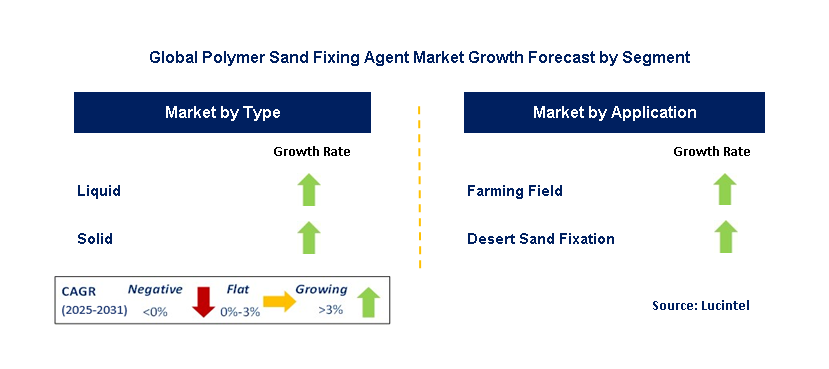
• Liquid
• Solid
• Farming Field
• Desert Sand Fixation
• North America
• Europe
• Asia Pacific
• The Rest of the World
• United States: In the United States, the Polymer Sand Fixing Agent market has been growing steadily with an increasing focus on environmentally friendly construction solutions. The demand for sustainable infrastructure, particularly in coastal areas, has led to the development of advanced polymer sand fixatives. These solutions are used to stabilize sand dunes, reduce erosion, and promote plant growth, aligning with national environmental protection initiatives. Additionally, several states have implemented stricter regulations on erosion control methods, driving the adoption of polymer-based solutions for better efficiency and longer-lasting results.
• China: China has been investing heavily in sustainable construction and erosion control measures. The Polymer Sand Fixing Agent market has expanded due to increasing urbanization, infrastructure development, and a growing emphasis on environmental sustainability. The Chinese government has been promoting green construction practices, which has driven the demand for polymer sand fixatives in both urban and rural development projects. Companies in China are now focusing on producing more cost-effective and environmentally friendly polymer solutions, meeting both domestic and export market demands.
• Germany: Germany, known for its focus on environmental innovation, has seen the Polymer Sand Fixing Agent market evolve with advancements in eco-friendly materials. As part of the European Union’s broader green initiatives, German companies are incorporating sustainable polymers into their sand stabilization products. These innovations help prevent erosion, preserve biodiversity, and protect the landscape, especially in coastal and desert areas. German manufacturers are also focusing on biodegradable and non-toxic alternatives, aligning with stricter environmental regulations across Europe.
• India: In India, the demand for polymer sand fixatives is growing, driven by rapid urbanization, infrastructure projects, and an increasing need for soil erosion control in coastal and hilly areas. The Indian government has been implementing policies encouraging the use of sustainable materials in construction and environmental protection. Polymer sand fixing agents are now being applied in roads, landscaping, and flood protection projects. Local manufacturers are also focusing on developing low-cost alternatives suitable for the Indian market, contributing to the overall growth of the sector.
• Japan: Japan’s focus on disaster preparedness and sustainable construction methods has contributed to the growth of the Polymer Sand Fixing Agent market. The country’s vulnerability to erosion, particularly in areas affected by typhoons, has spurred the demand for sand stabilization solutions. The Japanese government has also implemented regulations encouraging the use of eco-friendly building materials. In response, local companies are innovating with polymer-based solutions for coastal protection and erosion control, leveraging both advanced technology and sustainable practices.


• Runhan Tech
• Henan Jiujin
• Meituo (Haobei)
• Hebei Lankai
• Ningxia Qingfan Q5. Which polymer sand fixing agent market segment will be the largest in future? Answer: Lucintel forecasts that liquid is expected to witness higher growth over the forecast period. Q6. In polymer sand fixing agent market, which region is expected to be the largest in next 5 years? Answer: APAC is expected to witness the highest growth over the forecast period. Q7. Do we receive customization in this report? Answer: Yes, Lucintel provides 10% customization without any additional cost.


Choose a license that fits your team. Instant PDF delivery.
Prices exclude taxes. Instant delivery. Custom licensing available on request.
Market Report · July 22, 2026
Market Report · July 22, 2026
Market Report · July 22, 2026
Trusted partner for strategic intelligence and business growth


Receive a complimentary market analysis tailored to your industry. Our analysts will identify key growth opportunities and competitive dynamics specific to your business.

Market size, growth rate, and key trend analysis for your specific sector.

Top competitor positioning and market share analysis.

Strategic recommendations backed by data-driven insights.
Get curated market intelligence and competitive moves straight to your inbox.
By subscribing, you agree to receive our monthly insights. Unsubscribe anytime.
Receive a complimentary market analysis tailored to your industry. Our analysts will identify key growth opportunities and competitive dynamics specific to your business.
Market size, growth rate, and key trend analysis for your specific sector.
Top competitor positioning and market share analysis.
Strategic recommendations backed by data-driven insights.
Get curated market intelligence, emerging trends, and competitive moves straight to your inbox each month.
By subscribing, you agree to receive our monthly insights. Unsubscribe anytime.
We'll send your sample report shortly.