
Market Report · July 22, 2026

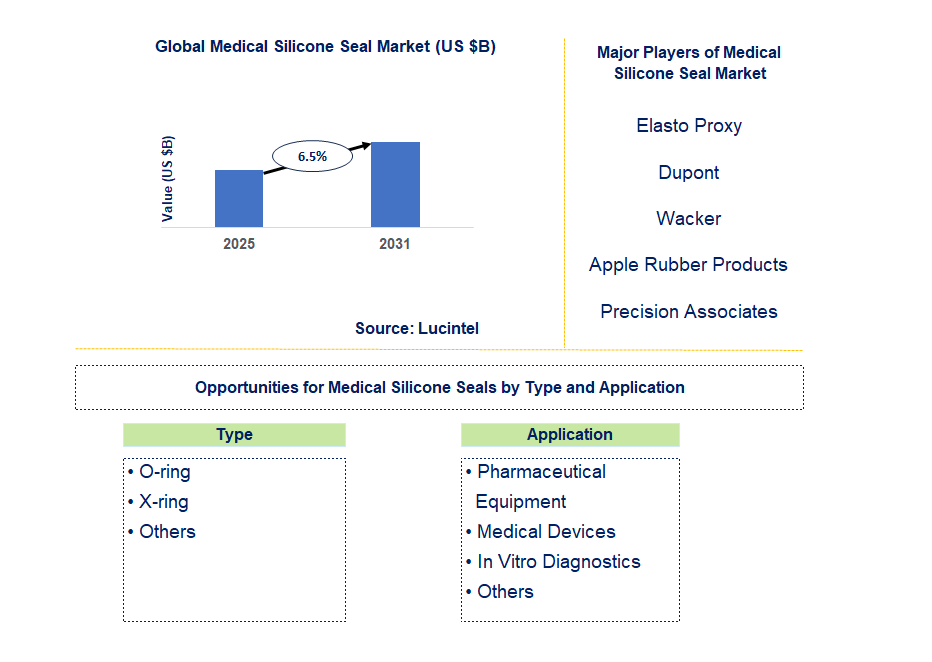
Key data points: The growth forecast = 6.5% annually for the next 7 years. Scroll below to get more insights. This market report covers trends, opportunities and forecasts in medical silicone seal market to 2031 by type (o-ring, x-ring, and others), application (pharmaceutical equipments, medical devices, in vitro diagnostics, and others), and region (North America, Europe, Asia Pacific, and the Rest of the World)
We'll send your sample report shortly.
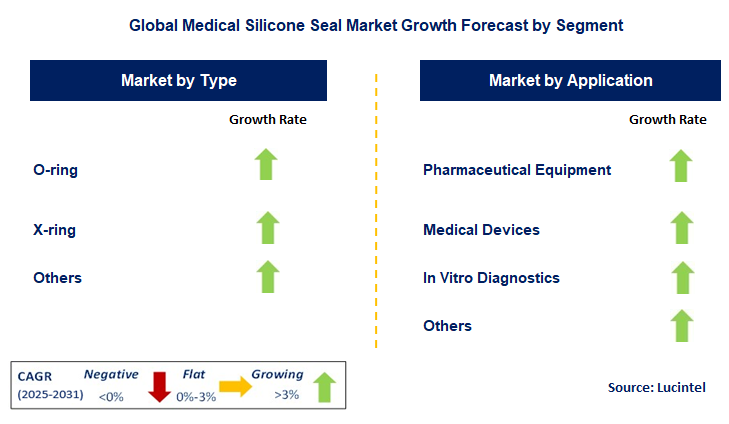
• Lucintel forecasts that, within the type category, o-ring is expected to witness higher growth over the forecast period.
• Within the application category, medical device is expected to witness the highest growth.
• In terms of region, APAC is expected to witness the highest growth over the forecast period. Gain valuable insights for your business decisions with our comprehensive 150+ page report. Sample figures with some insights are shown below.
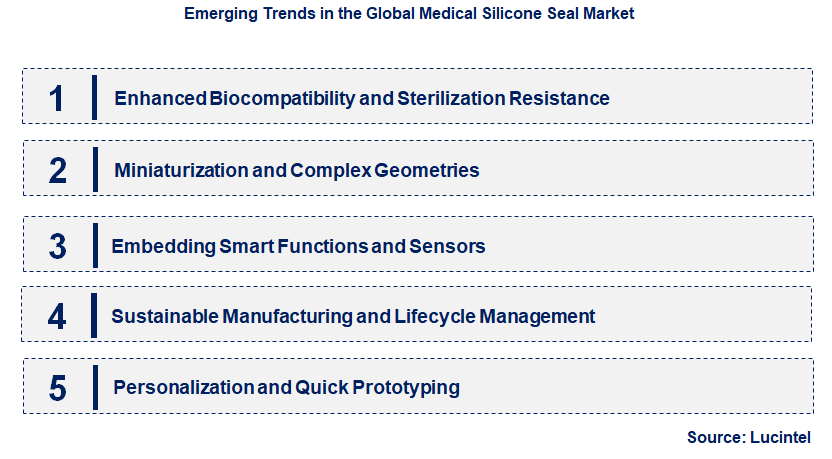
• Enhanced Biocompatibility and Sterilization Resistance: This trend is to design medical silicone seals with greater biocompatibility, reduce negative reactions in the human body, and enhance their resistance to different sterilization processes such as autoclaving, ETO, and gamma irradiation. This includes optimizing silicone formulations to minimize extractables and leachable to provide long-term safety and performance in critical applications, including implantable devices and surgical instruments. The consequence is greater patient safety, more reliable devices, and adherence to increasingly strict regulatory standards, widening the application ground for silicone seals in delicate medical environments.
• Miniaturization and Complex Geometries: With smaller and more advanced medical devices, the trend is toward creating medical silicone seals with extremely complex and accurate geometries, frequently in microscopic dimensions. This is fueled by the need for minimally invasive surgical devices, wearable medical equipment, and sophisticated drug delivery systems. The effect is the facilitation of next-generation medical technologies that call for small, high-precision sealing solutions. This trend calls for an advancement in molding technologies, including micro-molding and liquid silicone rubber (LSR) injection molding, which provides heretofore unseen design flexibility and integration.
• Embedding Smart Functions and Sensors: A new wave is the embedding of smart functionalities and built-in sensors into medical silicone seals. These may be temperature, pressure, flow, or drug release sensors, allowing for real-time monitoring and enhanced diagnostics capability in medical devices. The effect is a revolution towards smarter medical components that give useful data, enhance patient outcomes, and facilitate personalized medicine. This trend creates new opportunities for device functionality and remote monitoring of healthcare, developing high-value market niches.
• Sustainable Manufacturing and Lifecycle Management: With increasing emphasis on more sustainable manufacturing practices in medical silicone seals, such as minimizing waste, maximizing energy use, and developing recycling or responsible disposal options, there is alignment with wider corporate environmental responsibility goals and regulatory drivers. The effect is a more environmentally friendly supply chain for medical devices, appealing to green-conscious consumers and healthcare professionals. The trend fuels innovation in material processing as well as a circular economy strategy, boosting the overall sustainability profile of the medical silicone market.
• Personalization and Quick Prototyping: The movement towards personalized medicine and highly specialized medical devices requires greater customization and quick prototyping capacity for medical silicone seals. Companies are using sophisticated CAD/CAM, 3D printing, and additive manufacturing methods to rapidly create customized seals optimized for individual device needs. The effect is dramatically shorter development cycles and time-to-market for new medical devices with more innovation and responsiveness to the needs of the clinic. This trend encourages the creation of specialized solutions for intricate medical problems, promoting customized production. These new trends are deeply transforming the medical silicone seal industry by accelerating innovation in material science, processes, and product functionality. The emphasis on improved biocompatibility, miniaturization, smart integration, sustainability, and customization is transforming medical silicone seals from simple components to key enablers of sophisticated medical technologies. This transformation delivers increased performance, enhanced patient safety, and faster development of next-generation medical devices, cementing silicones' irreplaceable position in healthcare.
• New Developments in Liquid Silicone Rubber Technology: One notable development is the dramatic improvement in Liquid Silicone Rubber (LSR) technology for medical seals. LSR enables the injection molding of intricate geometries at high precision with high consistency, outstanding tear resistance, and chemical resistance. The effect is increased production efficiency, less material waste, and the capability to produce complex, high-performing seals for miniature and highly sensitive medical devices. This allows mass production of advanced components, essential in devices such as catheters, surgical instruments, and drug-delivery systems.
• Antimicrobial and Specialty Formulations Development: Advances include the development of medical silicone seals with antimicrobial functionality built into them, aimed at minimizing infection risk in devices that are exposed to body fluids or tissue contact. Specialty formulations are also being created for specialized uses, such as where very high temperature resistance is needed or improved lubricity. The effect is enhanced patient safety, longer device life, and broader application fields for silicone seals in high-risk medical settings. The innovation addresses immediate clinical needs for infection control directly.
• Increased Regulatory Stringency and Quality Control: The market for medical silicone seals has experienced a trend of progressively tighter regulatory demands, especially from such organizations as the FDA and European Medical Device Regulation (MDR). This has triggered more emphasis on stringent material testing, traceability, and overall quality assurance measures throughout the manufacturing process. The result is improved product reliability and safety, and greater confidence among medical device manufacturers and healthcare professionals. Compliance verifies that seals meet the highest possible standards of patient welfare and device performance.
• Increased Demand for Disposable and Single-Use Devices: There is a significant growth in the development and production of disposable and single-use medical devices due to infection control issues and efficient working in healthcare environments. This trend greatly increases the demand for economical, high-volume medical silicone seals intended for short-term application. The application is a high-volume market niche for silicone seal manufacturers, which requires production processes to be efficient and cost-competitive. This innovation minimizes risks of cross-contamination and streamlines sterilization processes for health care facilities.
• Growth in Wearable and Home Healthcare Devices: Recent innovations underscore increasing use of medical silicone seals in wearable health care devices (e.g., continuous glucose sensors, smart patches) and home healthcare products (e.g., CPAP devices, portable diagnostic devices). Silicone's skin tolerability, flexibility, and durability in these patient-facing applications are its best assets. The result is a strong growth of the market beyond conventional hospitals to accommodate the surging trend of remote patient monitoring and decentralized healthcare. This opens up the market opportunity and application range for medical silicone seals. These latest innovations are having a profound influence on the medical silicone seal market by fueling material and manufacturing innovation, improving product safety and reliability, and broadening its use to a wider range of medical devices, especially in the rapidly expanding single-use and home healthcare markets. The emphasis on high-performance, specialized, and compliant products is critical to enabling the ongoing development of medical technology and addressing global healthcare needs.
• Implantable Medical Devices: This use offers tremendous growth potential. Seals are essential in long-term implantable devices such as pacemakers, neurostimulators, and prosthetics, calling for extreme biocompatibility, longevity, and resistance to body fluids. Opportunities are in creating ultra-stable, non-leaching silicone formulations and precision-molded seals resistant to decades of implantation. The effect is facilitating the creation of safer and longer-lasting implants, enhancing patient quality of life and limiting revision surgeries, a high-value market for advanced silicone materials.
• Drug Delivery Systems: The drug delivery systems segment presents significant growth. Applications involve creating very accurate seals for insulin pumps, auto-injectors, pre-filled syringes, and other controlled-release devices to ensure proper dosing and avoid contamination. The benefit is enhanced therapeutic results through consistent drug delivery and improved patient compliance, especially for long-term disease states. The field requires seals that are chemically inert, leakage-free, and integrity-sustaining with sensitive drug ingredients, leading to innovation in material and design.
• Surgical Instruments and Equipment: Medical silicone seals have great promise in this application field. Opportunities include custom seal design for reusable and disposable surgical instruments, endoscopes, and robotic surgical instruments with high-temperature resistance for sterilization and good tear resistance. The effect is increased instrument performance, better infection control, and greater efficiency in surgery. Seals aid precision and safety in high-technology surgical equipment, an essential element in operating rooms worldwide.
• Diagnostic and Monitoring Devices: The expanding diagnostic equipment and patient monitoring devices market presents robust growth opportunities. Opportunities range from formulating seals for blood analyzers, hand-held diagnostic kits, continuous glucose monitors, and wearable health trackers. Such applications demand highly flexible, skin-compatible seals that function in different environmental conditions. The effect is providing precise and trustworthy diagnostic measurements and ongoing health monitoring, stimulating home healthcare and preventative medicine markets' growth, which are dependent to a great extent on small and dependable sealing solutions.
• Respiratory and Anesthesia Products: This market segment is of paramount importance to the treatment of patients and offers dramatic growth. Applications include seals for ventilators, CPAP devices, anesthesia masks, and breathing circuits, where leak-tight integrity is essential for patient protection and therapeutic success. The effect is leak-free connections, comfortable patient interfaces, and smooth equipment performance in life-support applications. This application requires seals to withstand repeated cycles of sterilization and provide outstanding sealing performance against fluctuating pressures, directly affecting important patient care strategies. These strategic growth prospects are deeply affecting the medical silicone seal market by propelling specialization and innovation in key healthcare applications. By concentrating on implantable devices, drug delivery systems, surgical instruments, diagnostic equipment, and respiratory devices, producers are creating highly customized and sophisticated sealing solutions. This application-driven focus not only grows the market but also increases the significance of medical silicone seals as key enabling components facilitating the next generation of secure and efficient medical technologies.
• Elasto Proxy
• Dupont
• Wacker
• Apple Rubber Products
• Precision Associates
• Newman Sanitary Gasket
• SBR Life Sciences
• Suconvey Rubber
• JIOrings
• Reiss Manufacturing
• O-ring
• X-ring
• Others
• Pharmaceutical Equipments
• Medical Devices
• In Vitro Diagnostics
• Others
• North America
• Europe
• Asia Pacific
• The Rest of the World
• United States: The medical silicone seal market in the United States continues its growth trend, driven by an advanced healthcare infrastructure and significant research and development emphasis in medical devices. Emerging trends involve growing demand for custom-molded silicone seals for minimally invasive surgical instruments and home healthcare equipment. Significant investment in newer manufacturing methods, including liquid silicone rubber (LSR) injection molding, for higher accuracy and lower costs, is also emerging. High-purity, biocompatible materials and strong quality controls are mandated by strict FDA regulations.
• China: The Chinese market for medical silicone seal is growing fast, driven by tremendous growth in its local medical device production industry and growing health spending. Recent trends include the enhanced local capacities of producing medical-grade silicone rubber, with the objective of decreasing dependency on imports. There is a keen interest in creating cost-effective but dependable sealing solutions for various kinds of medical products, from consumables to sophisticated equipment. Government aid to healthcare infrastructure development and demographic aging are also major forces for this emerging market.
• Germany: The medical silicone seal market in Germany is driven by a high sense of precision engineering, advanced materials performance, and observation of strict standards of quality. Some of the recent trends are highlighted by the focus placed on specialist silicone formulations for intricate medical applications, including long-term implantable devices and drug delivery systems, where material stability and biocompatibility are of the essence. German firms are spending on sophisticated molding and assembly automation to provide consistent product quality and efficiency to supply the demanding European medical device market.
• India: The Indian medical silicone seal market is in an important growth stage, supported by growing healthcare infrastructure, rising medical tourism, and escalating prevalence of chronic diseases. Recent trends involve an emerging domestic base for the manufacture of medical devices, which has created a high level of demand for locally produced silicone seals. There is a need to balance cost savings with adherence to international standards of quality as India moves towards becoming a center of excellence for the manufacture of medical devices, creating opportunities for both local and foreign silicone seal manufacturers.
• Japan: The Japanese medical silicone seal industry is characterized by its emphasis on advanced medical technologies, such as sophisticated diagnostic instruments and tiny implantable devices. Recent trends include the creation of ultra-high purity silicone formulations and accuracy molding technology for very small and intricate seal geometries. Japanese producers are also investing in developing smart functionalities into seals for better device performance and monitoring. The market values higher-quality materials, reliability over the long term, and small size to suit the requirements of its high-technology healthcare industry.


• Elasto Proxy
• Dupont
• Wacker
• Apple Rubber Products
• Precision Associates
• Newman Sanitary Gasket
• SBR Life Sciences
• Suconvey Rubber
• JIOrings
• Reiss Manufacturing Q5. Which medical silicone seal market segment will be the largest in future? Answer: Lucintel forecasts that, within the type category, o-ring is expected to witness higher growth over the forecast period. Q6. In medical silicone seal market, which region is expected to be the largest in next 5 years? Answer: In terms of region, APAC is expected to witness the highest growth over the forecast period. Q7. Do we receive customization in this report? Answer: Yes, Lucintel provides 10% customization without any additional cost.


Choose a license that fits your team. Instant PDF delivery.
Prices exclude taxes. Instant delivery. Custom licensing available on request.
Market Report · July 22, 2026
Market Report · July 22, 2026
Market Report · July 22, 2026
Trusted partner for strategic intelligence and business growth


Receive a complimentary market analysis tailored to your industry. Our analysts will identify key growth opportunities and competitive dynamics specific to your business.

Market size, growth rate, and key trend analysis for your specific sector.

Top competitor positioning and market share analysis.

Strategic recommendations backed by data-driven insights.
Get curated market intelligence and competitive moves straight to your inbox.
By subscribing, you agree to receive our monthly insights. Unsubscribe anytime.
Receive a complimentary market analysis tailored to your industry. Our analysts will identify key growth opportunities and competitive dynamics specific to your business.
Market size, growth rate, and key trend analysis for your specific sector.
Top competitor positioning and market share analysis.
Strategic recommendations backed by data-driven insights.
Get curated market intelligence, emerging trends, and competitive moves straight to your inbox each month.
By subscribing, you agree to receive our monthly insights. Unsubscribe anytime.
We'll send your sample report shortly.