
Market Report · July 22, 2026

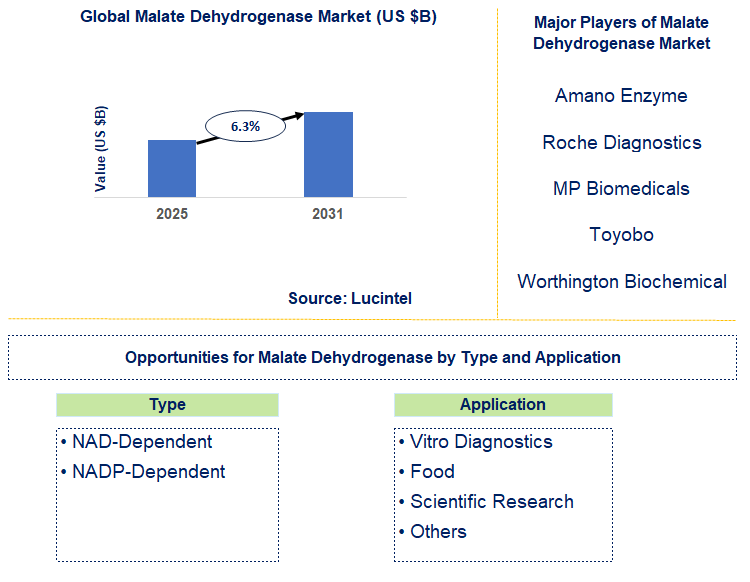
Key data points: The growth forecast = 6.3% annually for the next 7 years. Scroll below to get more insights. This market report covers trends, opportunities and forecasts in malate dehydrogenase market to 2031 by type (NAD-dependent and NADP-dependent), application (vitro diagnostics, food, scientific research, and others), and region (North America, Europe, Asia Pacific, and the Rest of the World)
We'll send your sample report shortly.
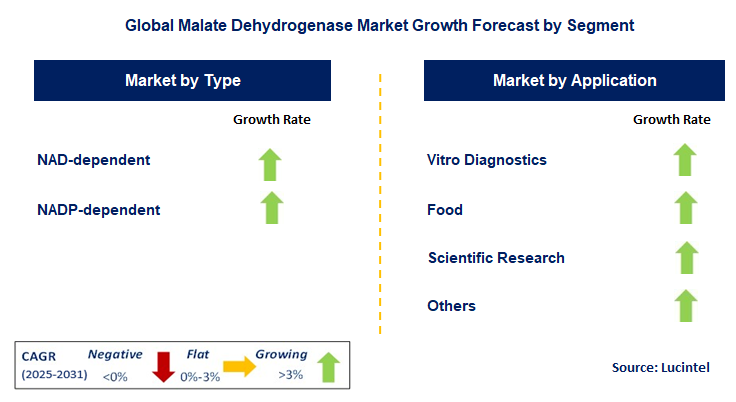
• Lucintel forecasts that, within the type category, NAD-dependent is expected to witness higher growth over the forecast period.
• Within the application category, scientific research is expected to witness the highest growth.
• In terms of region, APAC is expected to witness the highest growth over the forecast period. Gain valuable insights for your business decisions with our comprehensive 150+ page report. Sample figures with some insights are shown below.
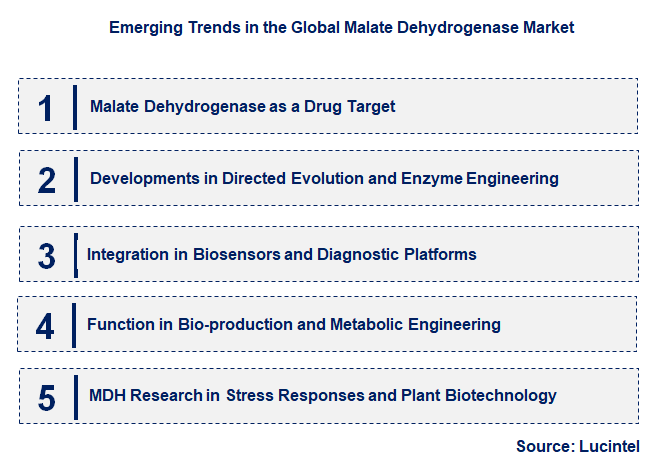
• Malate Dehydrogenase as a Drug Target: This trend reflects the growing appreciation of MDH as an effective target for therapeutic interventions in numerous disorders. Scientists are intent on the discovery of inhibitors or modulators of MDH activity to treat metabolic disorders, cancer, and infectious diseases. For instance, certain MDH isoforms are overexpressed in specific malignancies and therefore are desirable targets for new anti-cancer drugs. In parasitic infections, inhibition of MDH may specifically impair the pathogen’s metabolism with minimal interference to the host, resulting in new anti-parasitic medicines.
• Developments in Directed Evolution and Enzyme Engineering: Substantial advances in enzyme engineering and directed evolution methods are making MDH properties amenable to tailoring. It is now possible for scientists to tailor MDH to improve its stability, catalytic rate, or specificity towards specific substrates or cofactors. This tendency makes it possible to create customized MDH variants for particular industrial processes, diagnostic tests, or research use, which translates into more efficient and cost-saving solutions for different areas of biotechnology.
• Integration in Biosensors and Diagnostic Platforms: MDH is increasingly being integrated into biosensors and advanced diagnostic platforms due to its role in key metabolic reactions. Its ability to catalyze a reversible reaction involving NAD+/NADH makes it valuable for detecting malate or oxaloacetate levels, which are indicative of certain physiological states or disease markers. This trend is leading to the development of more sensitive, rapid, and accurate diagnostic tools for clinical settings, environmental monitoring, and food quality control.
• Function in Bio-production and Metabolic Engineering: The increasing need for sustainable and bio-based production processes is propelling the use of MDH in metabolic engineering applications. MDH is an essential enzyme for the biosynthesis of many organic acids, including L-malic acid, which has broad applications across food, pharmaceutical, and industrial chemical industries. By improving MDH activity in microbial cell factories, scientists are gaining increased yields and more effective production of these valuable products, leading to cleaner industrial processes.
• MDH Research in Stress Responses and Plant Biotechnology: There is an increasing interest in deciphering the function of MDH in plant stress responses and its possible applications in plant biotechnology. MDH has an important function in plant growth, development, and adaptation to different abiotic stresses such as salinity, drought, and low temperature. Research in this direction seeks to design crops with higher tolerance to extreme environmental conditions, ultimately contributing to enhanced agricultural productivity and food security. These new trends are essentially transforming the malate dehydrogenase market by broadening its applications from the classical forms. The emphasis on drug discovery, tailored enzyme solutions, sophisticated diagnostics, green bio-production, and agricultural resilience highlights the growing importance of MDH as a highly versatile biotechnological reagent. This transition holds the promise of tremendous growth and innovation in various sectors.
• Greater Emphasis on MDH as a Therapeutic Target for Cancer: Recent research has increasingly highlighted the role of Malate Dehydrogenase isoforms in cancer metabolism, particularly in their contribution to tumor growth and survival. This has led to a surge in studies aimed at identifying and developing selective MDH inhibitors as potential anti-cancer agents. The understanding that targeting specific MDH isoforms could disrupt cancer cell energy metabolism without severely affecting healthy cells is a significant development, driving pharmaceutical interest and investment in this area.
• Enhanced Enzyme Stability and Activity through Genetic Engineering: Growth in genetic engineering and protein expression technologies has made it possible to develop Malate Dehydrogenase variants with enhanced stability and catalytic ability. Scientists are using methodologies such as site-directed mutagenesis and directed evolution for the maximization of MDH for targeted industrial conditions, including increased temperature or extreme ph. This progress is important for ensuring that MDH becomes more viable and proficient in large-scale biotechnological applications with less cost and better performance.
• Development of Novel Malate Biosensors for Real-time Monitoring: A significant development is the engineering of genetically encoded, protein-based fluorescent biosensors for real-time sensing of malate levels, often involving MDH. These biosensors are crucial for monitoring enzymatic reactions in vitro and analyzing malate levels in living systems and bioelectrodes. This innovation provides researchers and industries with powerful tools for understanding metabolic pathways, optimizing fermentation processes, and developing new diagnostic assays with high specificity and real-time feedback capabilities.
• Increasing Demand in Microbial Production of L-Malic Acid: The Malate Dehydrogenase market is witnessing significant growth because of its key function in the microbial fermentation of L-malic acid. L-malic acid is a high-value platform chemical with multifarious uses in foods, pharmaceuticals, and other sectors. Advances include metabolic engineering approaches that have been known to overexpress MDH in microbial strains, resulting in highly enhanced yields and enhanced efficiency of production of L-malic acid. Such a development aids the transformation towards sustainable and eco-friendly biochemical production.
• Enlargement of Diagnostic Uses for Liver Function and Other Conditions: MDH is increasingly being utilized in diagnostic tests for various conditions, particularly liver function tests. Its presence and activity in blood serum can indicate liver damage or other physiological abnormalities. Recent developments include the refinement of enzyme-linked immunosorbent assays (ELISA) and coupled multi-enzyme reaction assays that incorporate MDH for more accurate and sensitive detection of biomarkers. This expansion into broader diagnostic applications reinforces MDH’s importance in clinical diagnostics. These recent developments underscore the dynamic nature of the malate dehydrogenase market. The convergence of targeted therapeutic research, advanced enzyme engineering, innovative biosensor technology, efficient bio-production methods, and expanded diagnostic utility is propelling the market forward, demonstrating MDH’s versatile and growing importance in both healthcare and industrial biotechnology.
• Therapeutic Development for Metabolic Diseases and Cancer: One significant area for growth opportunity: Malate Dehydrogenase as a therapeutic target: With its central role in cellular metabolism, especially in the citric acid cycle and glycolysis, inhibition or modulation of MDH activity is an attractive area for treatment of metabolic disorders, such as diabetes, as well as cancers, where MDH is often dysregulated. Strategic investment in selective MDH inhibitors or activators drug discovery programs could unlock much market potential and fulfill unmet medical needs.
• Advances in diagnostics and biomarker detection: The use of Malate Dehydrogenase in advanced diagnostic tools presents another significant growth opportunity. As a key enzyme, its activity levels can serve as crucial biomarkers for various health conditions, including liver damage, myocardial infarction, and certain cancers. Developing highly sensitive and specific MDH-based diagnostic kits, particularly for point-of-care testing and early disease detection, will cater to the increasing demand for rapid and accurate clinical assessments.
• Optimizing Bio-production of Organic Acids and Biofuels: The growing push for sustainable industrial processes offers a substantial opportunity for MDH in the bio-production of high-value organic acids like L-malic acid and succinic acid, as well as biofuels. Metabolic engineering of microorganisms to overexpress or modify MDH can significantly enhance fermentation efficiency and yield. Companies investing in research and development to optimize MDH pathways for industrial-scale bio-production will gain a competitive edge in the expanding bio-economy.
• Enzyme Biocatalysts in Chemical Synthesis: Malate Dehydrogenase also holds strategic growth potential as a biocatalyst in the chemical industry. Its ability to catalyze redox reactions with high specificity and enantioselectivity makes it an attractive alternative to traditional chemical synthesis methods. Opportunities exist in developing novel enzymatic processes for the production of chiral chemicals and pharmaceuticals, reducing reliance on harsh chemical reagents and contributing to greener manufacturing practices.
• Applications in Agricultural Biotechnology for Crop Improvement: Exploring the role of Malate Dehydrogenase in plant stress responses and metabolic pathways offers a strategic opportunity in agricultural biotechnology. Understanding how MDH contributes to plant resilience against abiotic stresses like drought, salinity, and temperature extremes can lead to the development of genetically modified crops with enhanced stress tolerance and improved yields. This area promises significant impact on food security and sustainable agriculture. These strategic growth opportunities across therapeutic development, diagnostics, bio-production, chemical synthesis, and agriculture are poised to drive the malate dehydrogenase market forward. By focusing on innovation and addressing specific application needs, market players can effectively tap into these burgeoning segments and secure a strong position in the evolving MDH landscape.
• Amano Enzyme
• Roche Diagnostics
• MP Biomedicals
• Toyobo
• Worthington Biochemical
• Calzyme
• Carl ROTH
• Innovative Enzymes
• NZYTECH
• Sorachim
• NAD-Dependent
• NADP-Dependent
• Vitro Diagnostics
• Food
• Scientific Research
• Others
• North America
• Europe
• Asia Pacific
• The Rest of the World
• United States: The malate dehydrogenase market in the United States is growing because of strong research and development in biotechnology and pharmaceuticals. Advancements in diagnostic enzymes in relation to diseases such as cancer and metabolic disorders are the primary reason. Furthermore, the application of MDH in metabolic engineering for the biosynthesis of organic acids, such as L-malic acid, is expanding, particularly in the production of bio-based chemicals and biofuels. The emphasis on precision medicine and advanced diagnostics also contributes to the rising demand for high-quality MDH.
• China: China is a rapidly expanding market for malate dehydrogenase, fueled by increasing investment in biotechnology and a growing pharmaceutical sector. There is significant research activity in understanding MDH in parasitic organisms for drug discovery, particularly in diseases prevalent in Asian countries. Additionally, China is focusing on leveraging MDH in industrial biotechnology for the efficient production of biochemicals, aiming to enhance sustainable manufacturing processes and reduce reliance on traditional chemical synthesis methods.
• Germany: Germany’s malate dehydrogenase market is characterized by a strong focus on high-quality enzyme production and applications in advanced diagnostics and industrial biocatalysts. The country’s robust pharmaceutical and chemical industries drive demand for MDH in research and development, particularly for its role in metabolic pathways and as a potential drug target. There is also an emphasis on sustainable biochemical production, where MDH plays a part in optimizing fermentation processes for various industrial applications.
• India: The Indian malate dehydrogenase market is growing in tandem with its growing pharmaceutical and biotechnology industries. Attention is being directed towards the creation of cost-effective diagnostic solutions and the investigation of the enzyme’s use as a tool in different areas of research. Rising biomedical research funding and growing incidence of chronic diseases are driving demand for diagnostic enzymes such as MDH. In addition, the establishment of indigenous biotechnological expertise is driving innovation and market penetration.
• Japan: Japan’s malate dehydrogenase market is characterized by the heavy focus on advanced research and development, especially in drug discovery and high-precision diagnostic tools. Japan’s cutting-edge healthcare infrastructure and innovation focus propel the demand for MDH in therapeutic target identification of several diseases, such as neurological disease and cancer. Japanese firms are also investigating the enzyme’s application in new biomaterials and advanced biosensing technologies.


• Amano Enzyme
• Roche Diagnostics
• MP Biomedicals
• Toyobo
• Worthington Biochemical
• Calzyme
• Carl ROTH
• Innovative Enzymes
• NZYTECH
• Sorachim Q5. Which malate dehydrogenase market segment will be the largest in future? Answer: Lucintel forecasts that, within the type category, NAD-dependent is expected to witness higher growth over the forecast period. Q6. In malate dehydrogenase market, which region is expected to be the largest in next 5 years? Answer: In terms of region, APAC is expected to witness the highest growth over the forecast period. Q7. Do we receive customization in this report? Answer: Yes, Lucintel provides 10% customization without any additional cost.


Choose a license that fits your team. Instant PDF delivery.
Prices exclude taxes. Instant delivery. Custom licensing available on request.
Market Report · July 22, 2026
Market Report · July 22, 2026
Market Report · July 22, 2026
Trusted partner for strategic intelligence and business growth


Receive a complimentary market analysis tailored to your industry. Our analysts will identify key growth opportunities and competitive dynamics specific to your business.

Market size, growth rate, and key trend analysis for your specific sector.

Top competitor positioning and market share analysis.

Strategic recommendations backed by data-driven insights.
Get curated market intelligence and competitive moves straight to your inbox.
By subscribing, you agree to receive our monthly insights. Unsubscribe anytime.
Receive a complimentary market analysis tailored to your industry. Our analysts will identify key growth opportunities and competitive dynamics specific to your business.
Market size, growth rate, and key trend analysis for your specific sector.
Top competitor positioning and market share analysis.
Strategic recommendations backed by data-driven insights.
Get curated market intelligence, emerging trends, and competitive moves straight to your inbox each month.
By subscribing, you agree to receive our monthly insights. Unsubscribe anytime.
We'll send your sample report shortly.