
Market Report · May 18, 2026

This market report covers trends, opportunities, and forecasts in the global machine vision system market to 2031 by technology (hardware, software, and services), application (quality assurance and inspection, positioning and guidance, measurement, identification, and predictive maintenance), and region (North America, Europe, Asia Pacific, and the Rest of the World)
We'll send your sample report shortly.
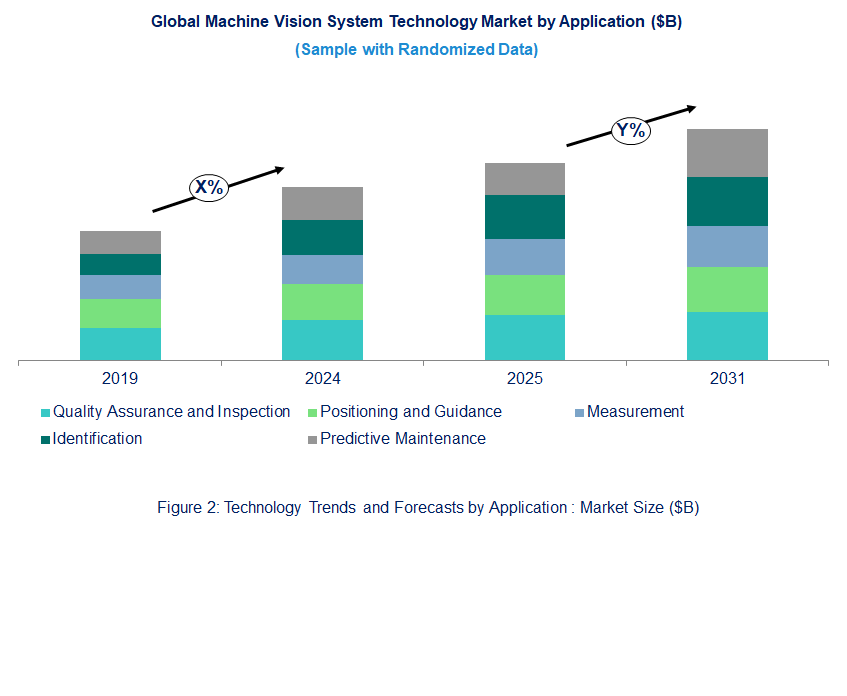
• AI and Deep Learning Integration: Machine vision systems are increasingly integrating AI and deep learning technologies to enhance image recognition, pattern analysis, and decision-making. This integration enables systems to perform more complex tasks, eliminating manual interventions and improving the accuracy of quality assurance and inspection processes.
• Edge Computing and Cloud Computing Integration: The integration of edge computing and cloud computing is transforming the data processing capabilities of machine vision systems. Edge computing allows for real-time processing closer to the source, reducing latency and increasing speed. Cloud computing, based on scalable data-driven insights, facilitates centralized management across multiple locations.
• Industrial IoT (IIoT) Adoption: IIoT adoption is enabling smarter automation in machine vision systems. Through IIoT, machines can communicate with other machines and central control systems, allowing for real-time monitoring, predictive maintenance, and optimized production line efficiency. This facilitates quicker responses to issues and optimization of system performance.
• 3D and Multispectral Imaging Technologies: Advancements in both 3D imaging sensors and multispectral sensors are enhancing machine vision systems’ capabilities in defect detection, precise measurement, and material analysis. These technological improvements allow systems to capture more detailed data, leading to better quality control processes, especially in complex or high-precision industries like electronics and pharmaceuticals.
• Miniaturization and Improved Flexibility: As industries move towards smaller, more compact, and flexible machine vision solutions, the trend for miniaturized systems that can be easily integrated into tight spaces or mobile systems is increasing. These compact solutions provide greater flexibility and can be deployed in a variety of applications, from automotive assembly lines to small-scale robotics. These emerging trends—AI integration, edge computing, IIoT adoption, advanced imaging technologies, and miniaturization—are fundamentally reshaping the machine vision system market. As these technologies continue to evolve, they are driving automation, improving efficiency, and enhancing quality control across industries such as automotive, pharmaceuticals, food and beverage, and electronics. The future of machine vision will be marked by more intelligent, scalable, and flexible solutions to meet the rising demand for precision, speed, and automation in modern industrial environments.
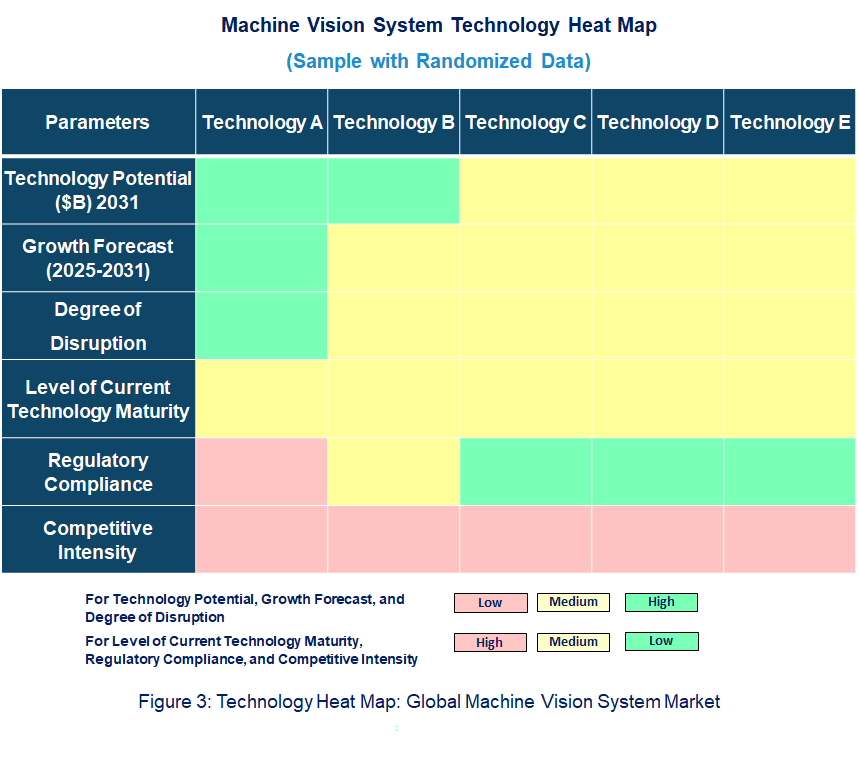
• Technology Potential: The potential of machine vision technology lies in its ability to integrate AI, deep learning, and real-time analytics, which can revolutionize industries like automotive, pharmaceuticals, and food processing. The integration of these technologies enables faster, more accurate decision-making, offering endless opportunities for automation and efficiency improvements.
• Degree of Disruption: The disruption caused by these technologies is significant. AI and machine learning algorithms, for example, are replacing traditional inspection systems, transforming quality control processes, and reducing human errors. The integration of edge and cloud computing further disrupts by enabling real-time data processing and analysis, leading to faster decision-making and reduced latency.
• Level of Technology Maturity: Machine vision systems are in a mature phase, especially in sectors such as automotive, electronics, and manufacturing. However, the ongoing integration of advanced AI, IoT, and 3D imaging technologies is still evolving and holds immense future potential.
• Regulatory Compliance: As industries adopt machine vision solutions, compliance with regional safety, quality, and data security standards remains a key concern. Manufacturers must ensure their systems meet stringent regulations to avoid legal challenges and ensure global scalability.
• Allied Vision Technologies GmbH: Allied Vision Technologies has expanded its new line of high-resolution camera systems through a series of advanced imaging technologies. Their new range primarily focuses on increasing performance capabilities for complex industrial applications, including quality control and measurement. These innovations are advancing their position, with major pharmaceutical, automotive, and robotic businesses competing for their solutions.
• Basler AG: Basler AG has launched a range of smart cameras with embedded deep learning for enhanced object recognition and defect detection. This innovation will simplify the quality inspection process, especially in high-speed production environments in the electronics and automotive industries, where even slight delays in defect detection can be a major issue.
• Cognex Corporation: Cognex has made significant progress in integrating AI-powered machine vision systems, focusing on the deployment of deep learning algorithms for more complex inspection tasks. It has also advanced in 3D vision systems, which have helped industries like logistics and packaging automate and optimize operations by providing enhanced object tracking and measurement capabilities.
• Keyence Corporation: Keyence has released new 3D vision systems that combine high-speed imaging with laser triangulation technology. These systems can be used in various high-precision applications, such as the automotive and electronics industries, enhancing measurement accuracy for complex shapes and parts that need to be inspected, which are critical for manufacturing intricate components.
• LMI Technologies, Inc.: LMI Technologies has developed advanced 3D laser profiling and scanning systems that provide real-time, high-accuracy surface measurements for industrial automation and robotics. These solutions are particularly impactful in sectors like robotics and automotive, where precise measurements of complex surfaces are crucial for process optimization.
• National Instruments Corp.: National Instruments has integrated machine vision systems with advanced data acquisition and control technologies, enabling real-time analytics and predictive maintenance. This integration of vision and control systems aims at optimizing production lines, particularly in the automotive, electronics, and energy sectors, which often experience significant periods of equipment inactivity.
• OMRON Corporation: OMRON focuses on the integration of machine vision with IoT and AI, introducing smart vision sensors and inspection systems. Its latest developments emphasize adaptive learning, which enables machines to improve their accuracy in inspections over time by processing real-time operational data. These innovations support sectors such as automotive, food & beverage, and electronics in achieving higher levels of automation and quality control. These new developments indicate that key players in the machine vision system market are pushing the limits of automation, precision, and adaptability. Through innovations in AI, 3D imaging, smart cameras, and IoT integration, these companies help industries enhance productivity, reduce errors, and achieve greater quality assurance. As these technologies continue to evolve, they are expected to further reshape the machine vision landscape across various industries.
• Technological Advancements: Technologies like AI, deep learning, and edge computing revolutionize machine vision systems through quicker and more accurate processing. These innovations have led to adoption in industries like automotive, pharmaceuticals, and electronics as companies seek to increase automation and precision in inspection tasks.
• Rise in Demand for Automation: Industrial industries’ demand for higher automation makes companies more likely to use machine vision systems. The automation aspect reduces human error, accelerates speed, and enhances productivity. These are all necessary for processes such as manufacturing quality control, defect detection, and predictive maintenance, optimizing manufacturing operations.
• Industrial Internet of Things (IIoT): The integration of IIoT enables machine vision systems to communicate with other devices, facilitating real-time data sharing, predictive maintenance, and optimized production lines. This improves operational efficiency and reduces downtime in industries like automotive, food & beverage, and electronics. Challenges in the machine vision system market are:
• High Initial Investment: High upfront costs are associated with advanced technologies such as AI and 3D imaging. Small to medium-sized companies may be discouraged from adopting these systems due to the high initial investment, even though there is potential for long-term savings through automation and efficiency improvements.
• Complexity and Integration Issues: One major hurdle in integrating machine vision systems with existing industrial processes and equipment is compatibility problems, along with the need for specialized skills required for installation and maintenance. This complexity adds to the challenge of transitioning smoothly to automated environments.
• Data Security and Privacy Concerns: With increased connectivity in machine vision systems through IIoT, data security and privacy issues are a growing concern. Sensitive operational data is transmitted across networks, creating the risk of cyberattacks and data breaches, especially in industries like automotive, healthcare, and pharmaceuticals. The machine vision system market is driven by significant technological advancements, increasing demand for automation, and the integration of IIoT. However, high costs, complexity, and data security concerns are challenges that are being mitigated by continuous innovations. These factors are reshaping the market, accelerating its growth, and expanding the scope of applications in various industries.
• Allied Vision Technologies Gmbh
• Basler AG
• Cognex Corporation
• Keyence Corporation
• LMI Technologies, Inc.
• National Instruments Corp.
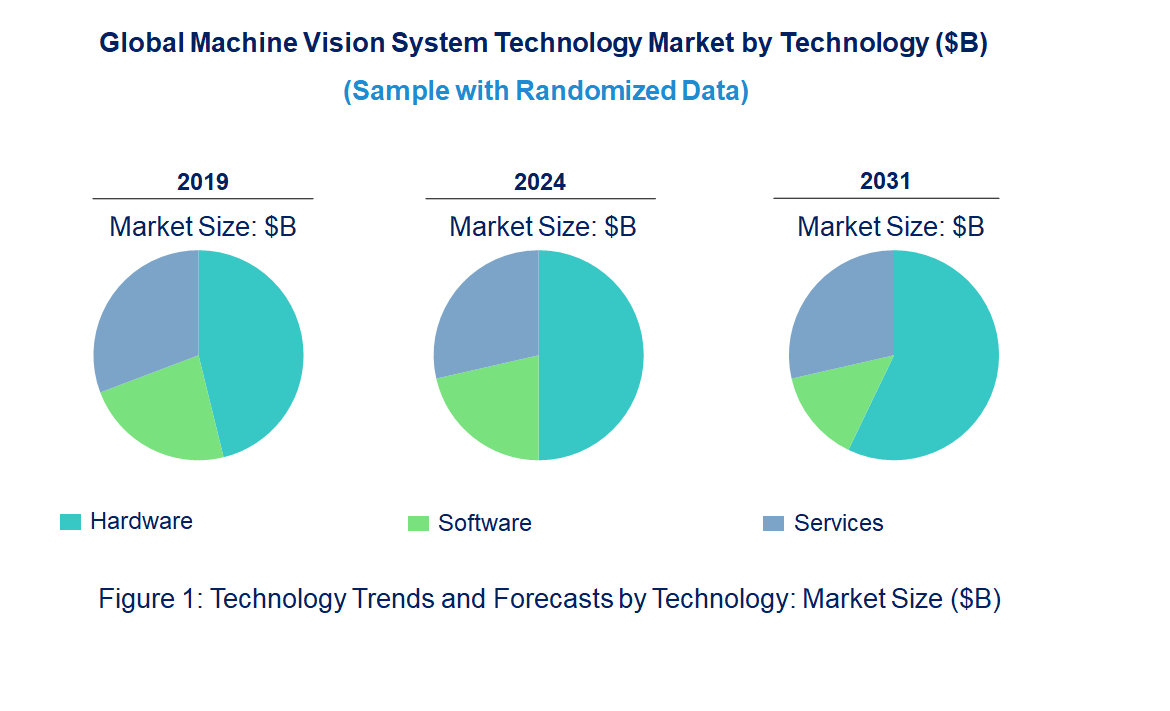
• Disruption Potential of Different Technologies in the Machine Vision System Market: The disruption potential of hardware, software, and services in the machine vision system market is significant. Hardware advancements like high-resolution cameras and sensors provide better image processing and precision, while software innovations such as AI, deep learning, and real-time analytics enhance system capabilities and automation. Services like cloud-based platforms and edge computing enable scalable and efficient data processing. These technologies together are transforming industries by increasing automation, reducing human errors, and enabling more sophisticated inspection and quality control processes. The ability of these technologies to work seamlessly together is making machine vision systems smarter, faster, and more adaptable to a wide range of applications.
• Competitive Intensity and Regulatory Compliance in Machine Vision System Market: Competitive intensity in the machine vision system market is high due to the increasing demand for automation and precision across industries like automotive, electronics, and pharmaceuticals. The rapid pace of technological advancements forces companies to innovate constantly. At the same time, regulatory compliance remains a challenge as industries must meet stringent quality and safety standards. Hardware, software, and service providers must ensure that their solutions comply with both industry-specific regulations and broader standards related to data security and privacy. Companies that can balance technological innovation with regulatory compliance have a competitive edge in the market.
• Technology Readiness by Technology Type in Machine Vision System Market: The readiness of hardware, software, and services in the machine vision system market varies. Hardware technologies, like cameras and sensors, are highly mature and widely adopted in industries such as automotive and electronics. Software, particularly AI and deep learning, is rapidly advancing and being integrated into machine vision systems, although its full potential is still unfolding. Services like cloud computing and edge processing are also emerging, offering scalable solutions for real-time data processing. Competitive intensity is driven by the need for continuous innovation across all technology types. Regulatory compliance is crucial, with hardware meeting safety standards, software adhering to data security guidelines, and services following privacy regulations. These technologies are widely applied in automation, quality control, defect detection, and predictive maintenance across various sectors.
• Hardware
• Software
• Services
• Quality Assurance and Inspection
• Positioning and Guidance
• Measurement
• Identification
• Predictive Maintenance
• North America
• Europe
• Asia Pacific
• The Rest of the World
• Latest Developments and Innovations in the Machine Vision System Technologies
• Companies / Ecosystems
• Strategic Opportunities by Technology Type


Choose a license that fits your team. Instant PDF delivery.
Prices exclude taxes. Instant delivery. Custom licensing available on request.
Market Report · May 18, 2026
Market Report · May 18, 2026
Market Report · May 18, 2026
Trusted partner for strategic intelligence and business growth


Receive a complimentary market analysis tailored to your industry. Our analysts will identify key growth opportunities and competitive dynamics specific to your business.

Market size, growth rate, and key trend analysis for your specific sector.

Top competitor positioning and market share analysis.

Strategic recommendations backed by data-driven insights.
Get curated market intelligence and competitive moves straight to your inbox.
By subscribing, you agree to receive our monthly insights. Unsubscribe anytime.
Receive a complimentary market analysis tailored to your industry. Our analysts will identify key growth opportunities and competitive dynamics specific to your business.
Market size, growth rate, and key trend analysis for your specific sector.
Top competitor positioning and market share analysis.
Strategic recommendations backed by data-driven insights.
Get curated market intelligence, emerging trends, and competitive moves straight to your inbox each month.
By subscribing, you agree to receive our monthly insights. Unsubscribe anytime.
We'll send your sample report shortly.