
Market Report · May 18, 2026

This market report covers trends, opportunities, and forecasts in the global internet radio market to 2031 by technology (mp3, ogg, wma, ra, and aac plus), end use industry (residential and commercial), and region (North America, Europe, Asia Pacific, and the Rest of the World)
We'll send your sample report shortly.
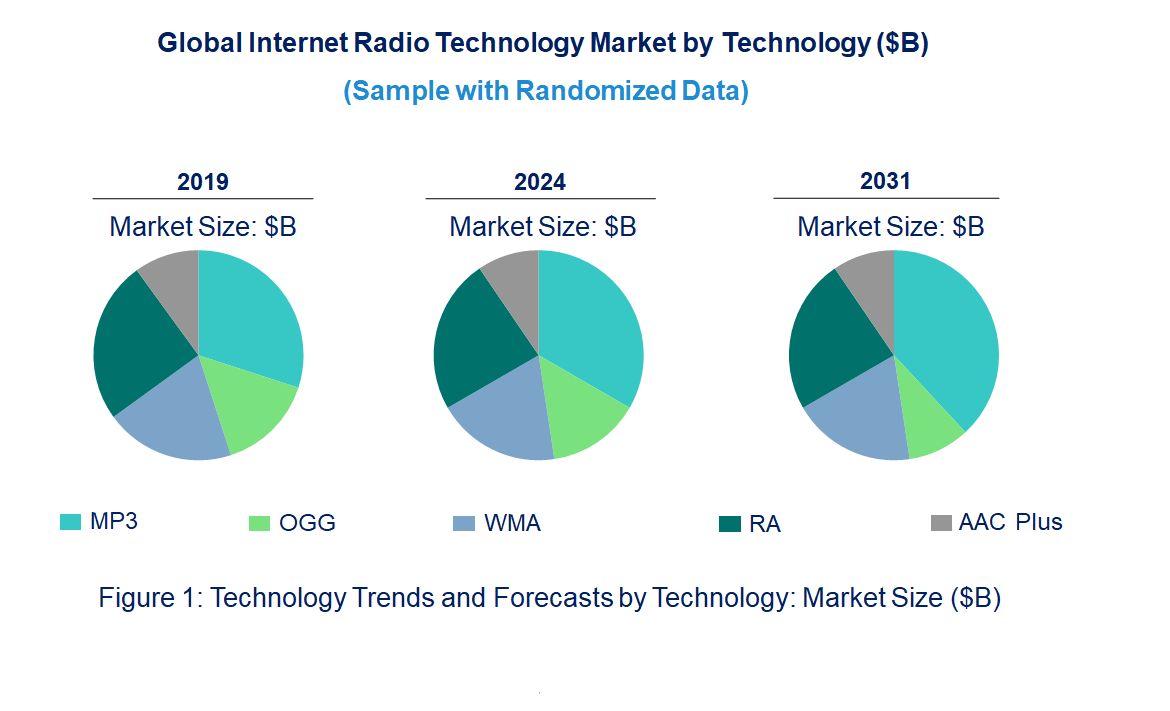
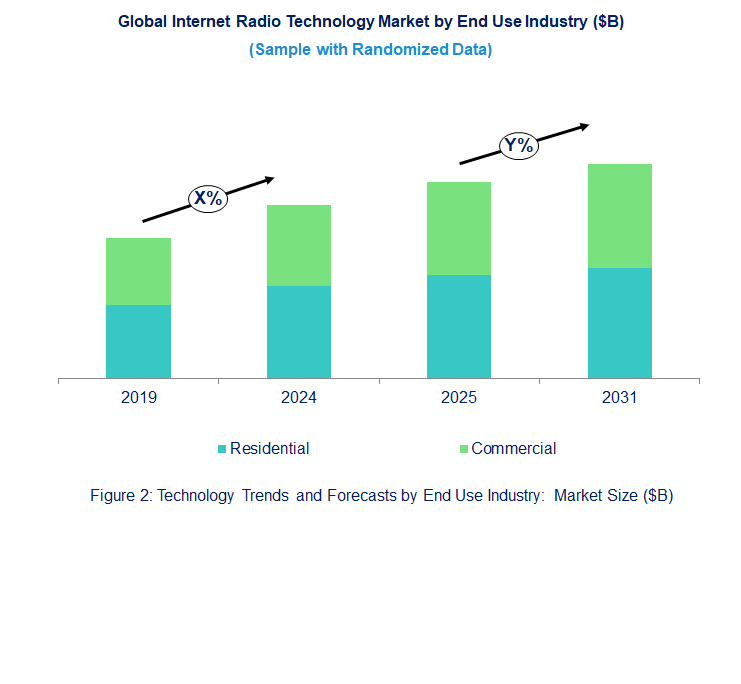
• Shift to High-Quality Audio Formats: The transition from older audio formats like MP3 to more advanced formats such as AAC Plus is picking up pace. This allows for better audio quality at lower bitrates, improving the streaming experience, especially in bandwidth-constrained environments, and enhancing overall user satisfaction.
• Personalized Content and AI Integration: AI and machine learning also enable personalized content recommendations in internet radio services. By analyzing user preferences, these technologies can provide a specific listening experience, engaging users and potentially increasing the time they spend online.
• Streaming on Multiple Devices via Mobile: As people use smartphones and other portable devices more intensively, the growth in the number of mobile streams for internet radios has become a key aspect of the internet radio market trend. This also leads to enhanced app features and enables hassle-free streaming across smartphones, smart speakers, and infotainment devices in cars.
• Increased Podcast Integration: Podcasts are now part of internet radio, with most stations incorporating podcasts into their programming schedules. This attracts more listeners, as they gain access to a broader range of content, news, and entertainment.
• Subscription Models: The monetization model for these stations includes subscription models and advertisements. Most internet radio services have begun adopting subscription models to meet the rising demand for ad-free listening experiences, while ad-supported services utilize targeted advertising toward specific demographics, creating new revenue streams and enhancing the market economy. This evolving scenario, the new inclusion of high-quality audio formats, the assimilation of AI, mobile streaming, the addition of podcasts, and monetization models are transforming the internet radio market. Together, these trends increase customer experience and options, leading to new sources of revenue generation as well as growth and change in the internet radio sector.
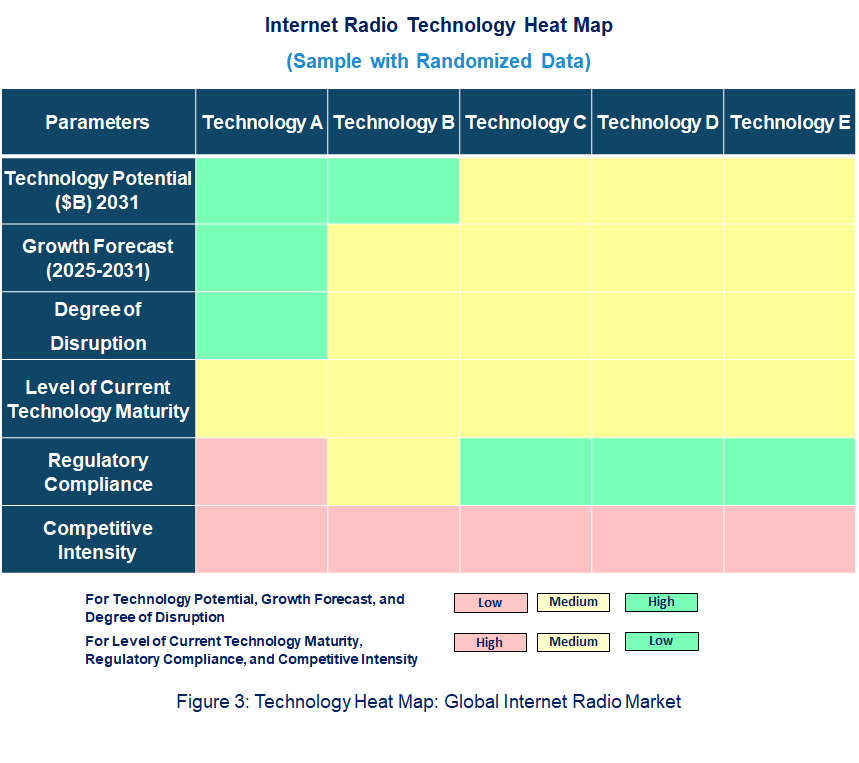
• Technology Potential: The Internet Radio Market holds substantial potential with continuous innovation in audio codecs like AAC Plus and AI-powered personalization features. These technologies enable better sound quality, user engagement, and seamless integration across various devices, increasing market appeal.
• Degree of Disruption: The degree of disruption is significant as traditional radio faces competition from internet-based platforms. AI, machine learning, and real-time streaming technologies have revolutionized content delivery, offering personalized listening experiences and content on demand, disrupting the status quo in broadcasting.
• Level of Current Technology Maturity: The technology maturity level is relatively high, with widespread use of cloud platforms, mobile applications, and advanced audio formats. However, some technologies, such as AI-driven recommendation systems, are still evolving to achieve optimal results in personalization and content curation.
• Regulatory Compliance: Regulatory compliance is a challenge, as internet radio services must adhere to copyright laws, licensing agreements, and data privacy regulations, varying by region. As the market expands, ensuring compliance with global standards and laws remains a key concern for operators.
• Slacker Radio: Slacker Radio has undergone several changes, from its rebranding to LiveXLive, to include live streaming and podcast content. Through the diversification of offerings, the company has managed to create a more immersive experience for users and better respond to the increasing demand for personalized music and podcasts, thus becoming a leading company in the streaming space.
• CBS Corporation: Through the expansion of its streaming into internet radio, CBS merged its traditional terrestrial radio with its modern digital platforms, integrating these radio broadcasts into podcasts, on-demand audio, and live streams. This has led to the overall expansion of audiences and more multi-channel exposure, ensuring a significant position in the competitive radio and podcast industry.
• Somafm: Somafm has created its niche in the Internet Radio Market by specializing in commercial-free, independent music stations. It has built a loyal user base of people who enjoy curated, commercial-free content. By offering high-quality, genre-specific stations, Somafm is capitalizing on consumer preferences for personalized, ad-free listening experiences, driving growth in audience engagement.
• Citadel Broadcasting: Citadel Broadcasting, now part of Cumulus Media, has strengthened its presence in digital radio by merging its assets and enhancing the quality of its streaming products. The acquisition has provided Cumulus Media with more opportunities to expand its market reach and compete better in digital radio and podcasting. It aims to grow its mobile and web-based platforms to achieve more user-friendly accessibility.
• TuneIn: TuneIn has emerged as a leader by offering all kinds of content, ranging from live radio to podcasts, sports broadcasts, and news. The company has strategically expanded its global presence and increased its content offerings, making it a go-to destination for users seeking a comprehensive streaming experience. This further cements its competitive position in the Internet radio space.
• Chrysalis Group: Chrysalis Group has strengthened its position in the Internet Radio Market by focusing on acquiring high-quality, niche radio content and expanding its digital footprint. Its acquisition of various stations and digital content has enabled the company to offer more targeted audio content, capturing a broader range of listeners and increasing advertising opportunities.
• Napster: Napster, once a popular music-sharing service, has emerged as a premium music streaming service that offers both on-demand music and radio streams. The company is shifting focus to personalized playlists and exclusive content to provide a more wholesome and engaging experience for listeners, making it a direct competitor to other market giants like Spotify and Apple Music. These developments highlight ongoing changes within the internet radio market. Companies are shifting focus toward diversification, personalization of content, and expansion into new audio formats. These efforts reflect the industry’s adjustment to changing consumer demands, thereby positioning them for continued growth and success.
• Advancements in Audio Technology: The transition from traditional audio formats to advanced formats like AAC Plus and HE-AAC has improved sound quality and streaming efficiency. These advancements enable a superior user experience, especially in bandwidth-constrained environments, helping services reach more listeners with high-quality audio.
• Personalized Content and AI Integration: Artificial intelligence and machine learning enable more personalized content recommendations. Based on user preferences, these technologies create tailored listening experiences, thus increasing user engagement and session time. This has significantly improved the user experience, making internet radio services more attractive.
• Mobile and Multi-Device Streaming: As mobile devices continue to advance, internet radio consumption on devices such as smartphones, tablets, and smart speakers has increased. The market grows due to users’ need for seamless streaming across devices. Mobile optimization is essential in driving the adoption of a larger, technology-driven audience. Challenges in the internet radio market are:
• Podcasting Growth: Podcasts have become a vital part of internet radio services. As they are integrated into all streaming platforms, new listeners are attracted, and content diversity is increased. Podcasting has created a new revenue stream and has expanded its reach to a broader audience.
• Subscription and Ad-Supported Models: Subscription-based and ad-supported models are changing how internet radio platforms generate revenue. Subscription services offer ad-free listening, while ad-supported platforms provide targeted advertising to specific user demographics. These models help radio services meet diverse listener preferences and monetize content effectively. Technologies like AI integration, personalized content, and improved audio quality are driving growth. The increasing demand for mobile and multi-device streaming, combined with the growth in podcasts and new monetization models, is reshaping how the market operates on a global scale. These changes will foster growth and enhance the user experience in the internet radio market.
• Slacker Radio
• CBS Corporation
• Somafm
• Citadel Broadcasting
• Tunein
• Chrysalis Group
• Technology Readiness by Technology Type for the Internet Radio Market (MP3, OGG, WMA, RA, AAC Plus): MP3 is the most mature and widely used technology in the Internet Radio Market, with widespread compatibility across platforms and devices. OGG is steadily gaining adoption, especially in open-source environments, and is gaining popularity among developers for its flexibility. WMA has limited relevance today due to compatibility challenges, with fewer applications being developed for it. RA, while still used in some niche sectors, has low technological readiness compared to other formats. AAC Plus is the most advanced among these technologies, offering high efficiency, better sound quality, and widespread support on mobile devices. The competitive level is highest for AAC Plus, given its technical superiority and regulatory adherence, making it the most future-proof option.
• Competitive Intensity and Regulatory Compliance of Different Technologies (MP3, OGG, WMA, RA, AAC Plus) for the Internet Radio Market: The competitive intensity within the Internet Radio Market is shaped by the need for high-quality audio at reduced bandwidth. MP3 remains dominant but faces growing competition from AAC Plus, which offers superior sound and streaming efficiency. OGG, as an open-source alternative, attracts interest from developers looking for flexible solutions. WMA is increasingly seen as outdated, with few competitive advantages left. RA has limited appeal, primarily catering to legacy users. AAC Plus stands out for regulatory compliance, particularly in mobile and streaming, where it ensures higher audio quality while adhering to broadcasting standards. Technologies like AAC Plus and OGG must navigate licensing issues and patent compliance, while MP3 has established itself within the legal frameworks.
• Disruption Potential of Different Technologies (MP3, OGG, WMA, RA, AAC Plus) for the Internet Radio Market: The disruption potential of technologies like MP3, OGG, WMA, RA, and AAC Plus in the Internet Radio Market lies in their impact on audio quality, bandwidth usage, and streaming efficiency. MP3, once the standard, faces challenges from newer formats like AAC Plus, which provides better sound quality at lower bitrates, improving streaming in bandwidth-constrained environments. OGG is gaining traction due to its open-source nature and superior quality, while WMA has declined due to compatibility issues. RA (RealAudio) still exists in niche markets but struggles against newer technologies. AAC Plus is emerging as a disruptive force, offering high-quality audio, better compression, and enhanced compatibility across devices, especially for mobile and streaming services.
• MP3
• OGG
• WMA
• RA
• AAC Plus
• Residential
• Commercial
• North America
• Europe
• Asia Pacific
• The Rest of the World
• Latest Developments and Innovations in the Internet Radio Technologies
• Companies / Ecosystems
• Strategic Opportunities by Technology Type


Choose a license that fits your team. Instant PDF delivery.
Prices exclude taxes. Instant delivery. Custom licensing available on request.
Market Report · May 18, 2026
Market Report · May 18, 2026
Market Report · May 18, 2026
Trusted partner for strategic intelligence and business growth


Receive a complimentary market analysis tailored to your industry. Our analysts will identify key growth opportunities and competitive dynamics specific to your business.

Market size, growth rate, and key trend analysis for your specific sector.

Top competitor positioning and market share analysis.

Strategic recommendations backed by data-driven insights.
Get curated market intelligence and competitive moves straight to your inbox.
By subscribing, you agree to receive our monthly insights. Unsubscribe anytime.
Receive a complimentary market analysis tailored to your industry. Our analysts will identify key growth opportunities and competitive dynamics specific to your business.
Market size, growth rate, and key trend analysis for your specific sector.
Top competitor positioning and market share analysis.
Strategic recommendations backed by data-driven insights.
Get curated market intelligence, emerging trends, and competitive moves straight to your inbox each month.
By subscribing, you agree to receive our monthly insights. Unsubscribe anytime.
We'll send your sample report shortly.