
Market Report · May 18, 2026

This market report covers trends, opportunities, and forecasts in the global incidence management software market to 2031 by technology (cloud-based solutions, artificial intelligence (ai) and machine learning, mobile solutions, integration with it service management, and others), end use industry (it & telecommunications, healthcare, manufacturing, government and public sector, retail, and others), and region (North America, Europe, Asia Pacific, and the Rest of the World)
We'll send your sample report shortly.
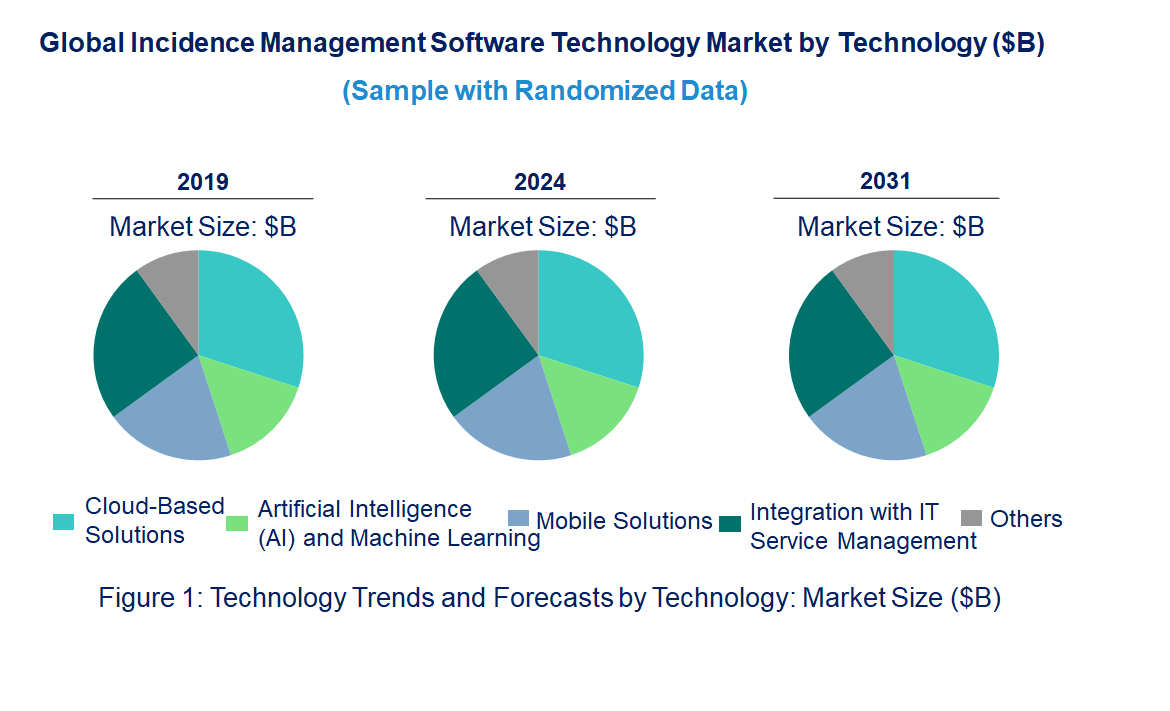
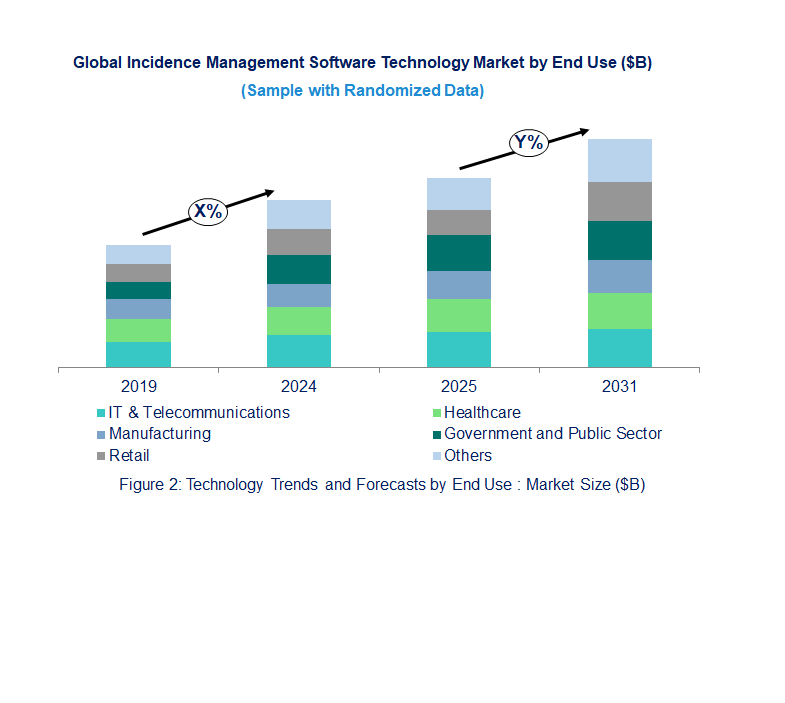
• Moving from on-premise systems to cloud-based solutions: There is a marked increase in the use of cloud-based incident management systems as cloud computing technology becomes more advanced. By enabling bi-directional communication between geographically dispersed teams, cloud-based solutions enhance integration and virtualization, allowing instant updates of information, remote access, and more efficient sharing of resources.
• The use of AI and ML for improved incident management: With the help of AI and ML technologies, incident management tools are becoming more capable of incident forecasting and optimizing responses. Using historical data analysis, AI solves the problem of anticipating disruptions by providing appropriate solutions that save time and improve decisions.
• Mobile incident management: Mobile solutions are increasingly adopted, making it easy for employees to deal with incidents from any location as they arise. This effect is pronounced in industries like healthcare and retail, where response time is critical. Mobile applications reduce communication barriers and enhance reporting and tracking of incidents, reducing resolution times.
• Integration of incident management tools with ITSM applications: There is an increasing trend to develop incident management software that is compatible with IT Service Management (ITSM) tools. This helps in effective workflow management, coordination among IT teams, and faster resolution of IT incidents. This effect is enhancing productivity and reducing the labor involved in the incident response process.
• Cybersecurity and data protection: As cyberattacks become more frequent and sophisticated, there is a growing tendency to supplement incident management systems with enhanced technological protection. This includes advanced threat detection and real-time monitoring, as well as active incident management associated with security breaches, data leaks, and other cyber-related issues. These technology trends are paving the way for a major transformation in the incident management software market, one driven toward greater automation, proactivity, and self-service. As more of these technologies are adopted across organizations, incident management will become more refined, time-efficient, and effective, leading to better business operations and minimal interruptions across sectors.
• Potential in Technology: Pressure sensor technology holds significant potential across various industries due to its ability to provide precise and real-time pressure measurements. Advances in microelectromechanical systems (MEMS) have miniaturized sensors, enabling their integration into a wide range of applications from automotive to healthcare. The technology’s potential is further amplified by developments in wireless communication and IoT integration, facilitating smarter and more interconnected systems. This evolution promises enhanced automation, improved safety, and predictive maintenance, positioning pressure sensors as critical components in Industry 4.0 and smart infrastructure.
• Degree of Disruption: The degree of disruption brought about by pressure sensors is considerable, especially with the advent of flexible, wearable, and embedded sensors that redefine traditional measurement paradigms. These innovations challenge existing systems and open new markets, such as personalized healthcare and advanced manufacturing. However, the current technology maturity level is relatively high, with many pressure sensors already commercialized and widely adopted. Continuous improvements in sensitivity, durability, and power consumption are ongoing.
• Regulatory Compliance: Regulatory compliance is crucial, particularly in healthcare and safety-critical sectors. Standards from organizations like ISO, IEC, and FDA govern quality, safety, and performance. Ensuring compliance involves rigorous testing, calibration, and documentation, which can be resource-intensive but essential for market acceptance. Overall, pressure sensor technology is poised for sustained growth, driven by its transformative potential and evolving regulatory landscape.
• ServiceNow has expanded its cloud-based incident management capabilities with human-computer interaction technology, automating performance and predictive analytics, which helps organizations prevent incidents. Its integrations with other ITSM solutions and enhanced workflows improve efficiency across industries.
• Atlassian (Jira Service Management) has strengthened its use of automation and AI to improve ticket management and issue resolution for IT leaders, making incident management simpler and faster. The use of automation and AI by Atlassian represents a major step forward, especially for IT teams to focus on core activities.
• PagerDuty has introduced new enhancements, particularly in alerting and orchestration systems. By utilizing PagerDuty’s AI and predictive intelligence, incidents can be prioritized based on the probability of impact, allowing users to proactively address issues and reduce downtime.
• IBM (Resilient) has incorporated AI and advanced analytics into its incident management platform for quicker response times and crisis management. Resilient’s focus on cybersecurity incident management, with real-time collaboration tools and threat intelligence, has been crucial for enterprises facing security breaches and other critical incidents.
• Splunk continues to expand its machine learning and advanced analytics capabilities within its incident management systems. Splunk helps organizations make faster decisions during incidents by providing relevant information and actionable insights to resolve issues quickly and effectively. The integration of security operations (SecOps) within the platform enhances its approach to handling complex incidents. These improvements highlight the growing demand for integrated, proactive, and data-centric approaches to incident management. As technology continues to evolve, these key players keep upgrading their platforms, helping organizations remain operational with minimal disruptions.
• Cloud-based solutions: The availability of scalable, affordable, and flexible incident management systems on the cloud continues to positively influence market growth. Teams can access incident management tools from anywhere, reducing operational costs and improving response times.
• AI and machine learning integration: The incorporation of AI and machine learning into incident management systems enhances automation and adds predictive capabilities, enabling organizations to identify potential risks and resolve them before they occur. This leads to improved decision-making, reduced downtime, and faster issue resolution.
• Mobile solutions: The rapid increase in mobile-based applications for incident management has made it easier for teams to resolve issues instantly. In sectors like healthcare and retail, where every second counts, mobile solutions improve operational productivity, internal communication, and service delivery speed.
• Integration with IT Service Management (ITSM): Integrating incident management with IT management systems ensures smooth transitions and enhances collaboration, leading to faster incident resolution and improved workflow. Challenges:
• Legal regulation compliance and data protection: As more sensitive information is stored on the cloud, protecting and preserving data has become a critical issue. Laws like HIPAA and GDPR raise concerns regarding the mechanisms used to protect sensitive data.
• Significant implementation costs: Despite the long-term advantages of AI and cloud-based solutions, the initial setup costs are steep and may deter adoption in financially constrained areas.
• Integration challenges: Incorporating new incident management systems into existing IT infrastructure can be complex and time-consuming. These difficulties may delay the adoption of advanced technologies and increase their costs.
• The decreasing availability of skilled workers: The demand for professionals who can manage advanced incident management systems using AI and machine learning is high, but the supply is low, making hiring and retention of skilled professionals challenging. Cloud-based solutions, AI and ML integration, mobile capabilities, and ITSM integration are the core drivers in the Incidence Management Software Market and are transforming the way incidents are managed and handled further improving response time and efficiency. However, in such a case, data security concerns, high implementation costs, integration difficulties, and a lack of skilled workers should be overcome for the market to reach its full potential. Despite these obstacles, the opportunities of growth are stimulating creativity and improvement in the incident management processes within the markets.
• ServiceNow
• Atlassian (Jira Service Management)
• PagerDuty
• IBM (Resilient)
• Splunk
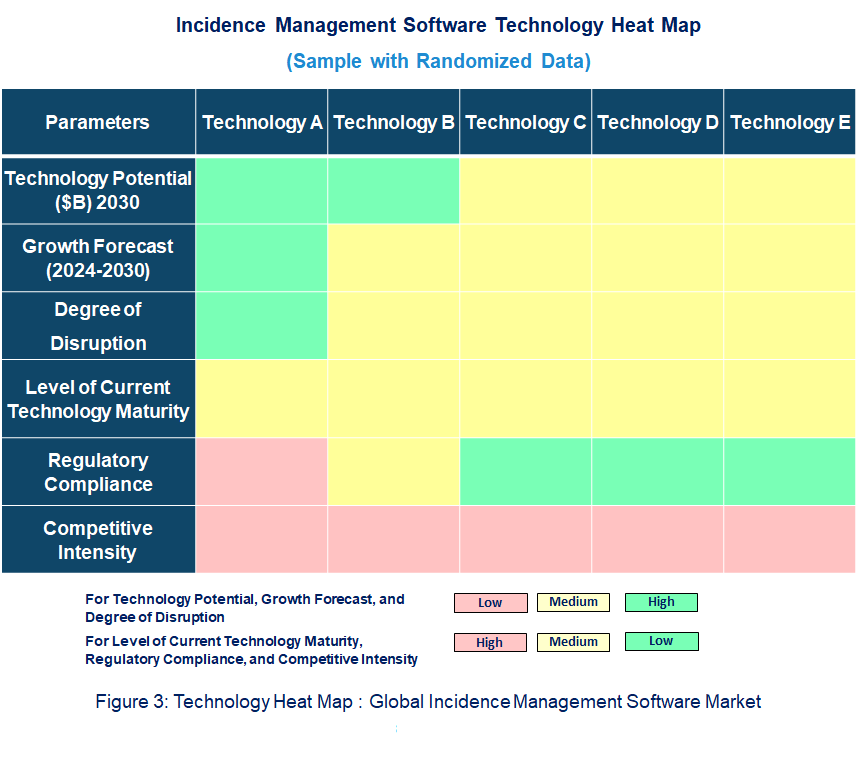
• Technology Readiness by Technology Type: There is significant variability in the readiness of different technologies across the incident management software market. Some technologies are fully established, while others are still in development.
• Cloud-based systems are extensive and successful in many industries, classifying them as mature solutions.
• AI and machine learning have made significant progress technologically, with research into these fields intensifying, and industries using AI-driven machines continue to grow.
• ITSM integration has been around for a long time and applying it to incident management has allowed for automation and better coordination of processes.
• Mobile solutions are widely used and highly developed, as real-time capabilities are essential for reducing the time required to resolve incidents.
• Emerging technologies such as blockchain and cybersecurity are still evolving, but their focus on regulation, especially in larger sectors, holds high potential for growth.
• Competitive Intensity and Regulatory Compliance: The competitive intensity in the USA incident management software market is increasing due to the adoption of advanced technologies by numerous companies.
• Cloud-based solutions are facing stiff competition, as key suppliers focus on business expansion and ensuring data security.
• AI and machine learning are advancing rapidly, with some organizations targeting investments in these technologies to compete in predictive analytics and automation.
• Mobile solutions have seen notable improvement due to the growth of companies offering apps for incident management.
• While integration with IT Service Management (ITSM) can enhance operations, it requires compliance with data protection regulations.
• Other technologies, such as cybersecurity solutions, must comply with specific regulatory requirements like GDPR and HIPAA, particularly in sectors like healthcare and finance.
• Disruption Potential by Technology Type: The potential disruption scope of different technologies within the incident management software market is substantial. Workflow is being transformed by cloud-based solutions, as incidents can now be managed on affordable and easily accessible platforms, enabling better management of incidents. Another notable impact of AI and machine learning is their integration into incident management systems, changing the game in incident response. Mobile solutions, which are relevant to both users and administrators, offer the ability to manage incidents in real time, especially in sectors like healthcare and retail. Integration with IT Service Management (ITSM) provides the necessary linkages between incident management and service provision through IT, adding value. Other technologies, such as blockchain and automation, are providing additional security, improving traceability, and offering process optimization, further increasing disruption in various sectors.
• Cloud-Based Solutions
• Artificial Intelligence (AI) and Machine Learning
• Mobile Solutions
• Integration with IT Service Management
• Others
• IT & Telecommunications
• Healthcare
• Manufacturing
• Government and Public Sector
• Retail
• Others
• North America
• Europe
• Asia Pacific
• The Rest of the World
• Latest Developments and Innovations in the Incidence Management Software Technologies
• Companies / Ecosystems
• Strategic Opportunities by Technology Type


Choose a license that fits your team. Instant PDF delivery.
Prices exclude taxes. Instant delivery. Custom licensing available on request.
Market Report · May 18, 2026
Market Report · May 18, 2026
Market Report · May 18, 2026
Trusted partner for strategic intelligence and business growth


Receive a complimentary market analysis tailored to your industry. Our analysts will identify key growth opportunities and competitive dynamics specific to your business.

Market size, growth rate, and key trend analysis for your specific sector.

Top competitor positioning and market share analysis.

Strategic recommendations backed by data-driven insights.
Get curated market intelligence and competitive moves straight to your inbox.
By subscribing, you agree to receive our monthly insights. Unsubscribe anytime.
Receive a complimentary market analysis tailored to your industry. Our analysts will identify key growth opportunities and competitive dynamics specific to your business.
Market size, growth rate, and key trend analysis for your specific sector.
Top competitor positioning and market share analysis.
Strategic recommendations backed by data-driven insights.
Get curated market intelligence, emerging trends, and competitive moves straight to your inbox each month.
By subscribing, you agree to receive our monthly insights. Unsubscribe anytime.
We'll send your sample report shortly.