
Market Report · July 22, 2026

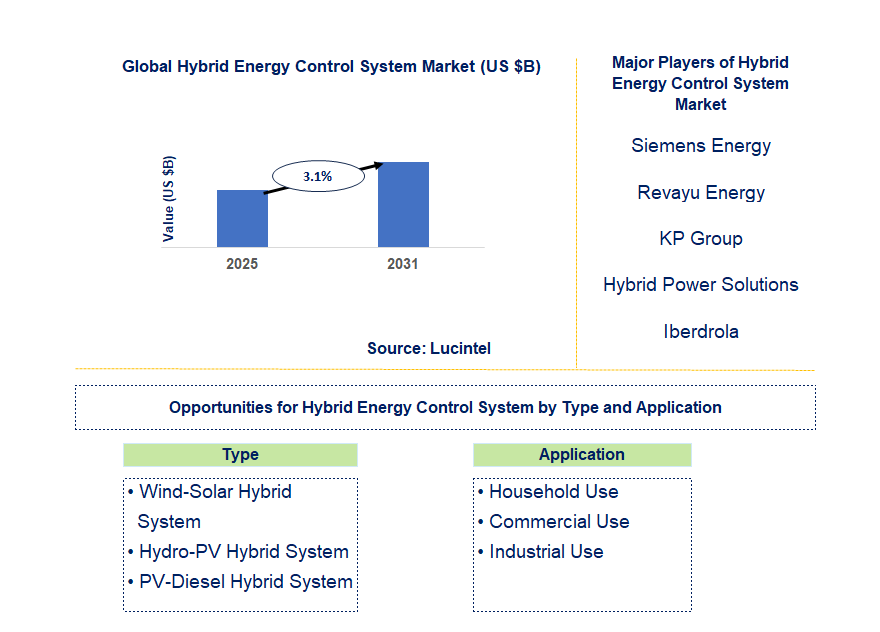
Key data points: The growth forecast = 3.1% annually for the next 7 years. Scroll below to get more insights. This market report covers Trends, opportunities and forecasts in hybrid energy control system market to 2031 by type (wind-solar hybrid system, hydro-PV hybrid system, and PV-diesel hybrid system), application (household use, commercial use, and industrial use), and region (North America, Europe, Asia Pacific, and the Rest of the World)
We'll send your sample report shortly.
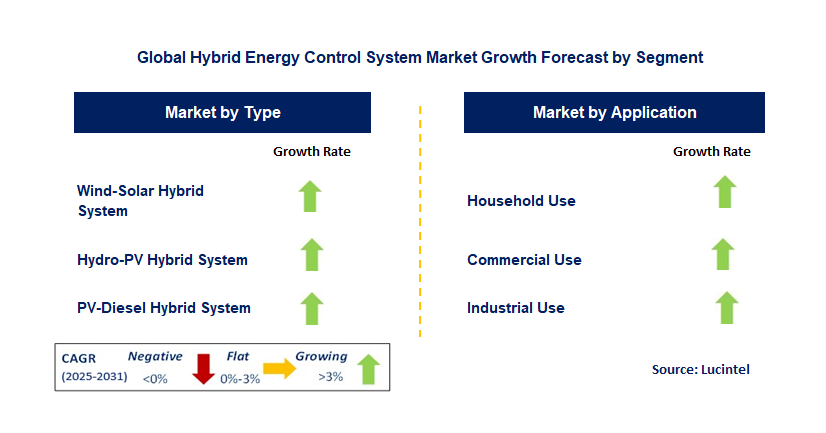
• Lucintel forecasts that, within the type category, PV-diesel hybrid system is expected to witness the highest growth over the forecast period.
• Within the application category, industrial use is expected to witness the highest growth.
• In terms of region, APAC is expected to witness the highest growth over the forecast period.
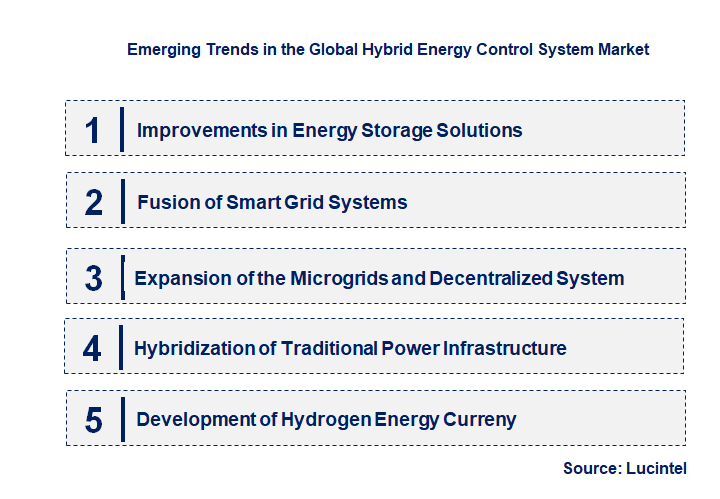
• Improvements in Energy Storage Solutions: In hybrid systems, energy storage is essential for equilibrium in energy supply and demand. The latest innovations in battery technologies, including lithium-ion, flow batteries, and solid-states, have significantly improved storage capacity, life span, and safety. These advancements allow power to become more stable by reducing dependency on fossil fuels through storing the excess renewable energy. Enhanced storage systems allow greater autonomy and efficiency of hybrid systems, most especially in isolated and off-grid locations. With performance improvements coupled with lower costs, energy storage is becoming foundational to next-generation hybrid energy control systems. The hybrid systems will manage better with a self reliant framework for power.
• Fusion of Smart Grid Systems: Smart grid integration is enhancing the monitoring, control and decision making processes for hybrid energy systems employing real time control capabilities. Smart meters, IoT sensors, and advanced AI analytics are optimizing energy allocation, estimating consumption, and eliminating outages. Effective control of diverse energy resources for seamless transitions, quick response to supply or generation changes and complex source/ demand balance is made possible by smart grids. Through reliability and efficiency improvements and smarter load control, flexibility strengthened hybrid energy control frameworks rendering them more sustainable in urban and industrial settings.
• Expansion of the Microgrids and Decentralized System: Microgrids are self-sufficient energy networks featuring solar panels, wind turbines, batteries, and backup generators. As microgrid technology advances, these systems are particularly useful on military bases, remote islands, and places frequently impacted by natural disasters because they can maintain power during grid outages. With the increase in the decentralized energy resources, microgrids with hybrid energy management systems are becoming increasingly popular for providing reliable and efficient energy services to local populated areas. These hybrid control systems helps in maintaining local energy independence and flexibility while improve energy resilience.
• Hybridization of Traditional Power Infrastructure: Power generation and utility companies are adapting older infrastructure by adding renewables to existing systems. This hybridization of traditional resources leads to the reduction of emissions, improvement in fuel savings, and increased the service life of utility assets. These hybrid setups helps in the combination of traditional inputs with renewables by control dispatching strategies and system stability of the grid. There is greater flexibility during transition periods when attempting to cleaner fuel options and these setups allow the combination of diesel with renewables, for example, using solar power or wind with gas turbines. Embracing these approaches enables utilities to efficiently and effectively comply with regulatory targets without fully dismantling their legacy systems.
• Development of Hydrogen Energy Currency: Countries such as Japan, Germany, and South Korea are at the forefront of initiatives to produce, store, and utilize green hydrogen as part of their energy transition strategies. Hydrogen is rapidly becoming a vital component of hybrid energy systems, primarily for long-duration storage and decarbonization of hard-to-electrify sectors. Hybrid energy management systems are being designed to integrate hydrogen fuel cells in conjunction with solar, wind, and battery storage. These systems allow for flexible energy management, particularly for industrial processes and mobility. Incorporating hydrogen not only improves the resilience of the system but also contributes toward energy self-sufficiency and long-term sustainability objectives. As the incorporation of hydrogen and the integration of smarter grids evolves into microgrids, these trends are fundamentally increasing the adaptability, intelligence, and sustainability of the hybrid energy control system market. Every step taken is aiming toward a solution to the energy problems we are facing today. These advancements promote a decentralized, reliable, and greener energy system. With nations increasing their focus on meeting climate goals and securing energy supplies, the management of complex multi-source energy systems will position hybrid energy control systems at the forefront, propelling the world toward cleaner, more resilient power systems.
• New Possibilities in Energy Storage: Progress in hybrid energy systems has been attributed to the advancement of battery technology and increasing its lifespan. The increased energy density also leads to a stronger reliance on intermittent renewable energy sources such as wind and solar, which improves the energy supply stability and reliability. The improvements resolve fossil fuel dependency in grid-connected as well as off-grid systems, leading to carbon emission reductions. The evolution of energy storage technology is central to the widespread adoption of hybrid energy solutions, and the technology’s future prospects look bright.
• Advancement of Smart Grid: Shifting energy management systems toward computers greatly improves the upkeep smart grid technologies need, and combined with hybrid energy systems, the energy handling and administration have been transformed. Smart grids offer advanced technologies for monitoring and controlling the energy system, providing real-time adjustments to the energy supply and demand balance. This translates to greater efficiency, lower costs, and better operational stability. Additionally, smart grids allow the easier integration of many energy sources, enhancing the resilience of the energy system further. The complexities of modern energy systems are more effectively dealt with through the adoption of smart grid technologies.
• Rise of Microgrids: Microgrids, localized energy grids that can either operate independently or depend on an external grid, have a growing market in the hybrid energy control system sector. Particularly, they provide reliable energy in remote or off-grid locations and are therefore useful for off-grid regions. The renewable components are supplemented by traditional generators in hybrid energy systems within microgrids, ensuring that power is always available. Their scalability and flexibility make microgrids appealing to communities and industries looking for energy autonomy and resilience.
• Hybridization of Traditional Power Plants: Traditional power plants are incorporating renewables at an increasing rate to reduce emissions and improve efficiency. This hybridization is the integration of solar or wind with fossil fuel-based generation on the power plants, made possible with modern control technologies. Blending all these factors helps ease the transition to cleaner energy production by accommodating the existing structure with the addition of sustainable practices. This in turn denotes a shift within the industry aimed towards minimizing the carbon footprint of energy production.
• Increasing Adoption of Hydrogen: Hydrogen is starting to play a pivotal role in the development of hybrid energy systems due to its growing status as a clean and flexible energy carrier. Its role in hybrid systems encompasses the storage of surplus renewable energy as well as providing dependable energy on demand. The hydrogen economy also seeks to decarbonize a number of sectors such as transportation and industry which is supportive of global goals of Sustainability. The development of sophisticated techniques for hydrogen production and usage is enhancing the efficacy of hybrid energy systems. These factors are undoubtedly driving efficiency, dependability and sustainability of the hybrid energy control system market. Innovations in energy storage and smart grids are optimizing the performance and integration of the system. The emergence of microgrids and the hybridization of conventional power plants broaden the scope of hybrid systems application for varying locations. Coupled with this is the increasing use of hydrogen for clean energy, which is providing more opportunities for enhanced storage and utilization of hydrogen.
• Residential Sector: The rising interest of residents is due to greater independence and reduced utility payments. These systems help to hold a solar panel, have their battery stored and even have backup generators so that they can keep getting initiated power even when the grid fails (offline electricity). Especially useful for those instead where power cuts happens on regular basis or when the cost of electricity is high. The level of demand in the residential sector is climatic nowadays because of the positive attitude of society towards the environment and due to the support of government programs. Hybrid energy systems in r newcomers data regions leads to reduced dependency on traditional sources of energy, increased consumption of renewable implanted energy, their self-reliability during power outages and household energy security. The adoption rate of hybrid energy systems in the residential market is dawned heavily on the price of the technology, which is expected to rise in the future.
• Commercial Sector: Energy management is becoming increasingly important for commercial establishments with offices, malls, and data centers due to continuously increasing energy expenditures. These businesses are leveraging hybrid energy systems to lower peak electricity demand, energy resilience, and enhance sustainability. Enhancing the energy control system with elements of renewable energy makes real-time monitoring as well as energy optimization possible. Moreover, hybrid systems can support business operations during power interruptions, enabling continuity of business processes. Numerous businesses are implementing such strategies to improve their energy transition processes. As implemented in urban centers, the commercial sector represents a great potential market for hybrid energy control systems where critical demand, dependability, and economical regulation is prioritized.
• Industrial Sector: Industrial sectors with high and steady energy requirements are adopting hybrid energy systems for better energy cost savings and reliability. These systems combine renewable energy sources with conventional power sources and storage systems, offering a reliable energy supply. They are especially useful within the mining, manufacturing, oil and gas, and other sectors that require uninterrupted power. Hybrid systems enable fuel price volatility and regulatory emission reduction pressure to be more easily managed within industrial contexts. Through greater energy efficiency and reduced operational costs, hybrid energy systems bolster competitiveness while facilitating a shift toward the use of cleaner energy within the industry.
• Rural Electrification: In developing countries, the grid often does not reach rural and remote regions. The combination of solar, wind, and diesel generators with battery storage provides a solution with hybrid energy control systems. Rural communities can access electricity for healthcare, education, and small businesses. Diesel generation can be considerably reduced while ensuring stable power. More and more governments and non-governmental organizations are funding hybrid mini-grids to promote rural development. The rural electrification segment allows rapid deployment, creating a significant growth opportunity for these systems. Hybrid systems can be quickly scaled to adapt to the community's energy needs.
• Transporting People and Goods: The transporting of people and goods is now adopting hybrid forms of energy for electric vehicle charging stations, ports, and railway systems. These systems improve grid stability, assist with the incorporation of renewable energy, and minimize emissions. In both public and private areas with a large number of electric vehicles, hybrid systems can ensure availability of vehicle charging stations while not overburdening the grid. Hubs such as airports and seaports are also adopting hybrid solutions to enhance energy resilience while simultaneously improving environmental impact. These hybrid energy systems will enable the transport industry to transition to cleaner mobility solutions and provide the needed infrastructure support. Such application creates an extensive market opportunity as world-wide industry standards shift towards sustainable and electric transport. The market for hybrid energy control system is seeing significant expansion across multiple application areas, each with its distinct advantages and opportunities. Domestic consumers want self-sufficiency and to reduce costs, commercial customers want to maximize productivity, and industrial customers want dependable energy. These systems provide transformational access to electricity in rural regions, while the transportation industry uses them to achieve electrification targets. All of these combined key areas of growth are advancing the proliferation of hybrid systems, fostering innovation, and transforming the world’s energy systems. The need for cleaner, more resilient, and effective energy solutions will deepen alongside these applications, driving market growth and investment.
• Siemens Energy
• Revayu Energy
• KP Group
• Hybrid Power Solutions
• Iberdrola
• POWR2
• DEIF
• Caterpillar
• NoviOcean
• Delta
• Wind-Solar Hybrid System
• Hydro-PV Hybrid System
• PV-Diesel Hybrid System
• Household Use
• Commercial Use
• Industrial Use
• North America
• Europe
• Asia Pacific
• The Rest of the World
• United States: In the United States, the modernization of the energy grid is accompanied by considerable investment in smart grid technology and hybrid energy systems. The integration of renewable resources such as wind and solar into traditional power supply systems has been a priority to bolster grid reliability and omega efficiency. Improving energy storage systems, especially with regard to battery technologies, has enabled the better handling of energy resource demand and supply. Moreover, clean energy policies and those aimed at lowering carbon footprint have catalyzed the invention and therefore, the innovation of hybrid energy control systems in multiple industries.
• China: China is shifting to renewables from coal at breakneck speed and is simultaneously upgrading its power infrastructure by leaps and bounds. To cope with the strain of transitioning to cleaner energy, the government is planning to allocate upwards of $800 billion over six years toward the electricity grid. This includes improvements to the transmission and distribution systems, as well as implementing demand response programs that incentivize consumers to use power during off-peak periods. Additionally, pilot projects in Beijing and Shanghai are utilizing electric vehicles as distributed batteries to power the grid through Vehicle-to-Grid (V2G) technology during high demand periods.
• Germany: Germany remains at the forefront of integrating renewable energy into the power grid, prioritizing hybrid power system development and the integration of control systems to better manage renewable energies like wind and solar. The country is also investing in smart grids and advanced energy storage technologies to further optimize grid efficiency and stability. These policies supporting the Energiewende (energy transition) seeks to mitigate carbon emissions and expand renewable energy’s share that propels innovation in hybrid energy management and control systems.
• India: India is undergoing a noticeable shift in the amount of funding available for renewable energy projects, projected. These changes in funding stem from the introduction of the National Green Hydrogen Mission which aims to improve the production capacity of green hydrogen, one of the centerpieces of the government's energy transition plan. Policies encouraging the modernization of the power grid and adoption of clean energy are aiding in the implementation of microgrid solutions in rural regions. The further advancement of hybrid energy control systems in the country is being driven by smart grid technology.
• Japan: The country is working on expanding the energy infrastructure with a focus on hydrogen powered energy as an alternative resource. Through the Hydrogen Society Promotion Act, the government supports businesses that manufacture, import, and supply low carbon hydrogen by providing subsidies, which aims to significantly enhance the domestic hydrogen supply by 2050. Moreover, Japan is also developing some of the new virtual power plants that will allow users with home batteries to sell surplus energy to the grid and will enable better energy storage. This is in line with the country's goal to become carbon neutral and strengthen energy security.


• Siemens Energy
• Revayu Energy
• KP Group
• Hybrid Power Solutions
• Iberdrola
• POWR2
• DEIF
• Caterpillar
• NoviOcean
• Delta Q5. Which hybrid energy control system market segment will be the largest in future? Answer: Lucintel forecasts that, within the type category, PV-diesel hybrid system is expected to witness the highest growth over the forecast period. Q6. In hybrid energy control system market, which region is expected to be the largest in next 5 years? Answer: In terms of region, APAC is expected to witness the highest growth over the forecast period. Q7. Do we receive customization in this report? Answer: Yes, Lucintel provides 10% customization without any additional cost.


Choose a license that fits your team. Instant PDF delivery.
Prices exclude taxes. Instant delivery. Custom licensing available on request.
Market Report · July 22, 2026
Market Report · June 26, 2026
Market Report · May 18, 2026
Trusted partner for strategic intelligence and business growth


Receive a complimentary market analysis tailored to your industry. Our analysts will identify key growth opportunities and competitive dynamics specific to your business.

Market size, growth rate, and key trend analysis for your specific sector.

Top competitor positioning and market share analysis.

Strategic recommendations backed by data-driven insights.
Get curated market intelligence and competitive moves straight to your inbox.
By subscribing, you agree to receive our monthly insights. Unsubscribe anytime.
Receive a complimentary market analysis tailored to your industry. Our analysts will identify key growth opportunities and competitive dynamics specific to your business.
Market size, growth rate, and key trend analysis for your specific sector.
Top competitor positioning and market share analysis.
Strategic recommendations backed by data-driven insights.
Get curated market intelligence, emerging trends, and competitive moves straight to your inbox each month.
By subscribing, you agree to receive our monthly insights. Unsubscribe anytime.
We'll send your sample report shortly.