
Market Report · July 22, 2026

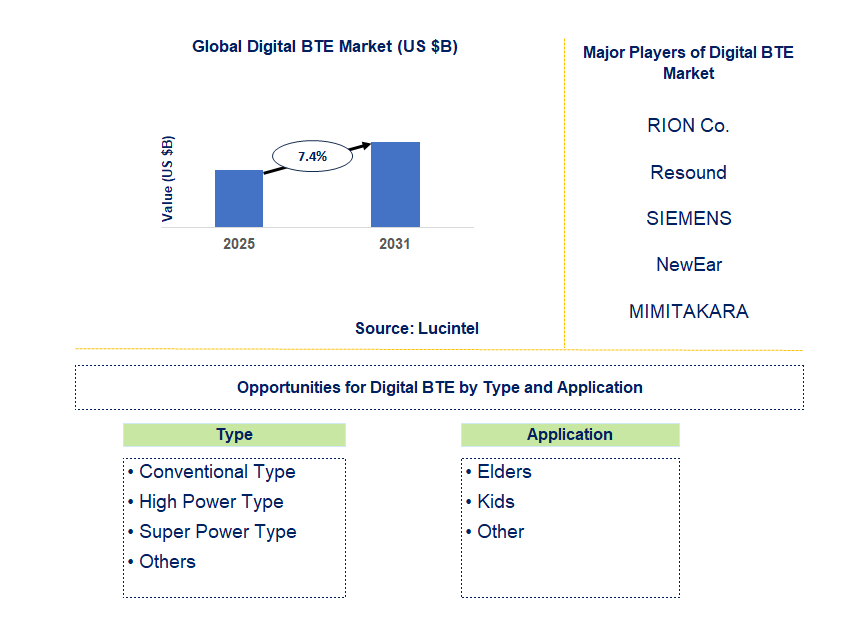
Key data points: The growth forecast = 7.4% annually for the next 7 years. Scroll below to get more insights. This market report covers trends, opportunities and forecasts in digital BTE market to 2031 by type (conventional type, high power type, super power type, and others), application (elders, kids, and other), and region (North America, Europe, Asia Pacific, and the Rest of the World)
We'll send your sample report shortly.
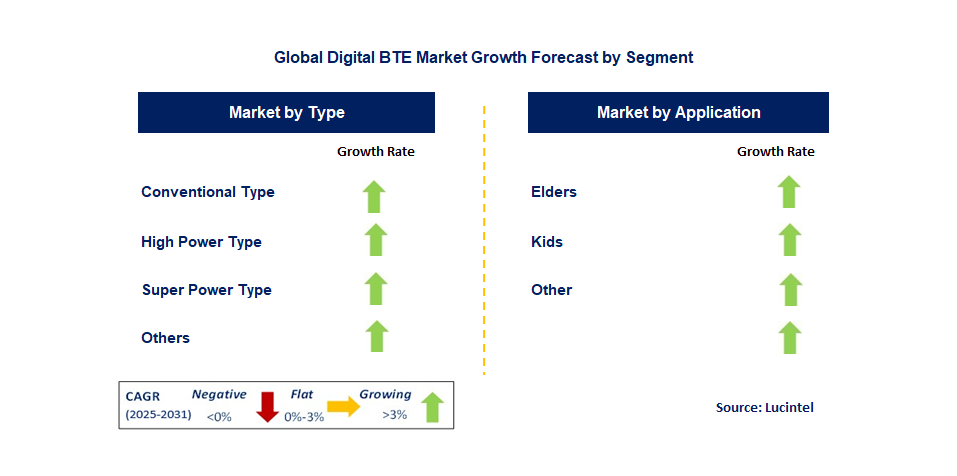
• Lucintel forecasts that, within the type category, conventional type is expected to witness the highest growth over the forecast period due to its wider adoption and affordability.
• Within the application category, elders are expected to witness higher growth.
• In terms of region, North America is expected to witness the highest growth over the forecast period due to presence of advanced healthcare systems in the region. Gain valuable insights for your business decisions with our comprehensive 150+ page report. Sample figures with some insights are shown below.
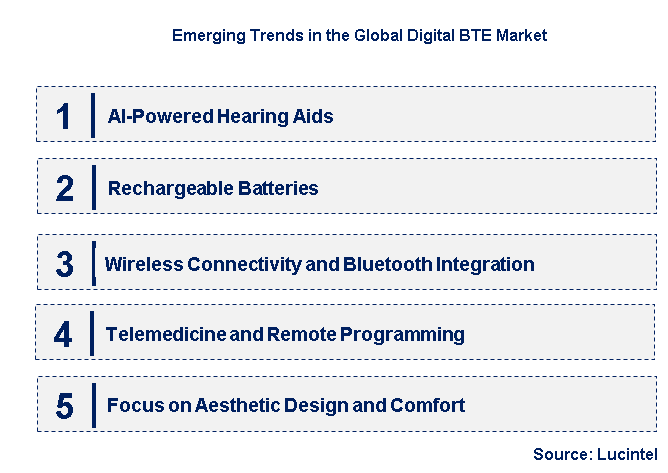
• AI-Powered Hearing Aids: Artificial intelligence (AI) is revolutionizing the digital BTE market by offering smarter sound processing. AI algorithms enable real-time adjustments to the hearing aid’s performance, tailoring it to individual environments, such as crowded spaces or quiet rooms. This personalization allows users to have a more natural and seamless hearing experience. AI-powered hearing aids can also help reduce background noise, improve speech clarity, and adapt to the user’s hearing needs throughout the day. The integration of AI is making hearing aids more intuitive, enhancing user satisfaction and driving demand.
• Rechargeable Batteries: Rechargeable batteries are becoming increasingly popular in Digital BTE hearing aids due to their convenience and cost-effectiveness. With advancements in lithium-ion technology, these hearing aids offer longer battery life and faster charging times. Users no longer need to worry about changing small disposable batteries regularly, which can be both costly and environmentally unfriendly. Rechargeable hearing aids are also gaining traction among users who appreciate their ease of use and sustainable design. This trend is particularly popular among older adults who seek a hassle-free solution for their hearing aid needs.
• Wireless Connectivity and Bluetooth Integration: Wireless connectivity, particularly Bluetooth, has become a standard feature in modern Digital BTE hearing aids. Bluetooth integration allows users to connect their hearing aids to smartphones, televisions, and other devices, enabling a more integrated and convenient experience. This connectivity offers users the ability to stream music, make phone calls, and control their hearing aids remotely through apps, enhancing the overall functionality of the devices. The rise of smart homes and the increasing use of digital technology are further driving the demand for wireless hearing aids, making them more appealing to tech-savvy consumers.
• Telemedicine and Remote Programming: Telemedicine is emerging as a key trend in the digital BTE market, particularly during the COVID-19 pandemic, when remote services became essential. Many manufacturers are now offering remote programming and virtual consultations to adjust hearing aids or troubleshoot issues without requiring in-person visits. This convenience is especially valuable for individuals in rural or underserved areas, as well as for those who prefer the convenience of remote care. The integration of telemedicine with digital hearing aids is enhancing accessibility and convenience, making it easier for users to maintain optimal hearing aid performance.
• Focus on Aesthetic Design and Comfort: Aesthetic design and comfort are becoming increasingly important in the digital BTE market, as consumers demand hearing aids that not only offer high performance but also look and feel good. Manufacturers are focusing on creating sleeker, more discreet designs that can be customized to match the user’s preferences. Advances in ergonomics and materials ensure that the hearing aids are comfortable for long-term wear. As consumers become more concerned with appearance and comfort, these features are becoming essential to attract a wider range of buyers, especially younger users who may be reluctant to wear traditional, bulky hearing aids. The emerging trends in the digital BTE market—AI integration, rechargeable batteries, wireless connectivity, telemedicine, and improved aesthetics—are reshaping the landscape of hearing aid technology. These innovations are making hearing aids more personalized, convenient, and user-friendly, addressing the diverse needs of modern consumers. As these trends continue to evolve, they are expanding the market, improving user experiences, and making hearing aids more accessible to a broader population.
• FDA Approval of Over-the-Counter (OTC) Hearing Aids: In the United States, the FDA’s approval of over-the-counter (OTC) hearing aids has been a landmark development, significantly lowering the cost and barriers to entry for consumers. OTC hearing aids are designed for individuals with mild to moderate hearing loss and can be purchased directly from retailers without the need for a prescription or a visit to an audiologist. This move has democratized access to hearing aids and is expected to increase market penetration, particularly among younger consumers and those without insurance coverage.
• Advancements in AI-Based Sound Processing: The integration of artificial intelligence (AI) in Digital BTE hearing aids has been a key development, allowing for real-time sound adjustments based on environmental factors. AI-powered hearing aids can automatically fine-tune settings for optimal hearing in various situations, such as noisy environments or quiet spaces. These advancements in AI sound processing are improving the overall listening experience, providing more personalized solutions for users, and making hearing aids more adaptable to everyday life.
• Wireless Connectivity and Integration with Consumer Devices: The inclusion of Bluetooth and wireless technology in Digital BTE hearing aids has expanded their functionality, allowing users to connect to smartphones, TVs, and other devices. This wireless integration enhances the user experience by enabling streaming of audio content and phone calls directly to the hearing aids. Users can also control their hearing aids remotely through smartphone apps, offering greater convenience and ease of use. As digital ecosystems become more integrated, wireless connectivity is a crucial development in driving the market forward.
• Introduction of Rechargeable Hearing Aids: Rechargeable batteries are becoming a standard feature in many Digital BTE hearing aids, replacing the traditional disposable batteries. These hearing aids offer convenience, cost savings, and environmental benefits. Rechargeable hearing aids also provide users with longer battery life, reducing the need for frequent replacements. This innovation is particularly appealing to older adults who may find it challenging to change small batteries regularly, and it is helping to improve user satisfaction and adoption rates.
• Growth of Telemedicine and Remote Services: The rise of telemedicine has influenced the digital BTE market by enabling remote consultations, programming, and troubleshooting. Many hearing aid manufacturers now offer telehealth services that allow users to receive adjustments and support without needing to visit a clinic. This development is particularly valuable for individuals in rural or underserved regions, as well as for users who prefer the convenience of remote care. Telemedicine has expanded access to hearing aid services, improving user experiences and supporting market growth. These key developments—FDA approval of OTC hearing aids, advancements in AI and wireless connectivity, the introduction of rechargeable batteries, and the rise of telemedicine—are transforming the digital BTE market. These innovations are driving growth by improving accessibility, enhancing user experience, and expanding the range of available products, ensuring that hearing aids are more accessible, efficient, and user-friendly than ever before.
• Telehealth Integration for Remote Care: Telehealth services present a significant growth opportunity in the digital BTE market, allowing users to receive remote consultations, adjustments, and troubleshooting. This is particularly valuable for older adults or those living in rural areas. As telemedicine becomes more widespread, the integration of remote services into hearing aid devices will enhance accessibility and improve user satisfaction. This growing trend is driving the expansion of digital BTE products that support remote services, creating new avenues for market growth.
• Development of Multi-Functional Hearing Aids: Hearing aids that offer multiple functionalities beyond traditional hearing support are a key growth opportunity. These devices can integrate with other technologies such as smart home systems, fitness trackers, and personal assistants, making them more appealing to a tech-savvy consumer base. As hearing aids evolve into multi-functional devices, they will attract a broader range of users, driving market growth and increasing adoption rates.
• Affordable and Customizable Solutions for Emerging Markets: In emerging markets, where affordability is a key consideration, manufacturers have an opportunity to develop cost-effective and customizable Digital BTE hearing aids. These devices can be tailored to meet the needs of individuals with varying degrees of hearing loss while keeping costs manageable. By addressing the specific needs of emerging markets, manufacturers can tap into a large and underserved consumer base, driving growth in regions such as India, Africa, and Southeast Asia.
• Emphasis on Sustainability and Eco-Friendly Designs: As consumers become more environmentally conscious, there is an increasing demand for sustainable and eco-friendly hearing aid designs. Manufacturers are focusing on developing products that use recyclable materials, rechargeable batteries, and energy-efficient components. Offering hearing aids with a reduced environmental footprint can differentiate brands in the market, attracting environmentally aware consumers and fostering brand loyalty, ultimately leading to growth.
• Focus on Personalized Sound Solutions: Personalized hearing solutions, powered by AI and advanced sound processing algorithms, represent a growing opportunity in the digital BTE market. These solutions can adapt to individual hearing preferences and environments, providing users with a more tailored hearing experience. The ability to personalize sound quality for different situations enhances the value of hearing aids, making them more attractive to a wider range of consumers. Strategic growth opportunities in the digital BTE market are driven by technological innovations, such as telehealth integration, multi-functional devices, and AI-powered personalization. Additionally, affordable solutions for emerging markets, sustainable designs, and customizable hearing aids are opening new avenues for growth. These opportunities are reshaping the market, enabling manufacturers to meet the evolving demands of consumers while expanding their market reach.
• RION Co.
• Resound
• SIEMENS
• NewEar
• MIMITAKARA
• Conventional Type
• High Power Type
• Super Power Type
• Others
• Elders
• Kids
• Other
• North America
• Europe
• Asia Pacific
• The Rest of the World
• United States: In the United States, the digital BTE market is experiencing rapid growth due to technological advancements, increased awareness of hearing health, and regulatory changes. The FDA’s approval of over-the-counter (OTC) hearing aids has further expanded market access, making hearing aids more affordable and easier to obtain. Manufacturers are investing in advanced features like AI-based sound processing, Bluetooth connectivity, and remote programming, enhancing the user experience. Additionally, the rise of telemedicine and direct-to-consumer models is driving market expansion. The U.S. remains a leader in the digital BTE market, with a focus on accessibility, innovation, and consumer education.
• China: China is one of the fastest-growing markets for Digital BTE hearing aids, with a large and aging population, increasing healthcare awareness, and government support for hearing healthcare initiatives. The country’s market has seen a shift toward digital technology, offering users improved sound clarity and customization. Domestic manufacturers are leveraging innovations like Bluetooth and app-based control, while international brands are expanding their presence in China. Moreover, the government's push for improved healthcare infrastructure and the rise of online retail channels are contributing to the adoption of digital hearing aids. As awareness grows, demand for digital BTE devices in China is expected to continue rising.
• Germany: The German digital BTE market is marked by high-quality standards and sophisticated technology. As one of the largest markets for hearing aids in Europe, Germany has seen significant growth in the adoption of digital BTE devices due to their superior sound quality, ease of use, and advanced features like wireless connectivity. German consumers are highly receptive to innovations like rechargeable batteries and AI-driven personalization for improved hearing experiences. Additionally, Germany’s healthcare system and regulatory framework strongly support hearing healthcare, making it easier for users to access these devices. As digital solutions gain traction, Germany remains a key player in the European hearing aid market.
• India: The Indian digital BTE market is still developing, but it is poised for significant growth driven by increasing awareness of hearing loss and the growing aging population. While hearing aid adoption rates remain relatively low, the market is expanding with affordable, technologically advanced BTE options that offer features like wireless connectivity and sound processing capabilities. The rise of telehealth and online retail platforms has made it easier for consumers in rural areas to access these devices. With more people becoming aware of the importance of hearing healthcare, India’s digital BTE market is on track for substantial growth in the coming years.
• Japan: Japan is witnessing strong demand for Digital BTE hearing aids, driven by the aging population and an emphasis on high-quality healthcare. As one of the leading countries in the use of advanced technology, Japan has seen the adoption of BTE hearing aids with features like AI-driven noise reduction, wireless connectivity, and real-time customization through smartphone apps. Japanese consumers value high-quality sound performance, and manufacturers are responding with highly advanced models. The country’s healthcare system and robust insurance coverage further enhance the accessibility of hearing aids, contributing to the expansion of the digital BTE market in Japan.


• RION Co.
• Resound
• SIEMENS
• NewEar
• MIMITAKARA Q5. Which digital BTE market segment will be the largest in future? Answer: Lucintel forecasts that, within the type category, conventional type is expected to witness the highest growth over the forecast period due to its wider adoption and affordability. Q6. In digital BTE market, which region is expected to be the largest in next 5 years? Answer: In terms of region, North America is expected to witness the highest growth over the forecast period due to presence of advanced healthcare systems in the region. Q7. Do we receive customization in this report? Answer: Yes, Lucintel provides 10% customization without any additional cost.


Choose a license that fits your team. Instant PDF delivery.
Prices exclude taxes. Instant delivery. Custom licensing available on request.
Market Report · July 22, 2026
Market Report · July 22, 2026
Market Report · July 22, 2026
Trusted partner for strategic intelligence and business growth


Receive a complimentary market analysis tailored to your industry. Our analysts will identify key growth opportunities and competitive dynamics specific to your business.

Market size, growth rate, and key trend analysis for your specific sector.

Top competitor positioning and market share analysis.

Strategic recommendations backed by data-driven insights.
Get curated market intelligence and competitive moves straight to your inbox.
By subscribing, you agree to receive our monthly insights. Unsubscribe anytime.
Receive a complimentary market analysis tailored to your industry. Our analysts will identify key growth opportunities and competitive dynamics specific to your business.
Market size, growth rate, and key trend analysis for your specific sector.
Top competitor positioning and market share analysis.
Strategic recommendations backed by data-driven insights.
Get curated market intelligence, emerging trends, and competitive moves straight to your inbox each month.
By subscribing, you agree to receive our monthly insights. Unsubscribe anytime.
We'll send your sample report shortly.