
Market Report · May 18, 2026

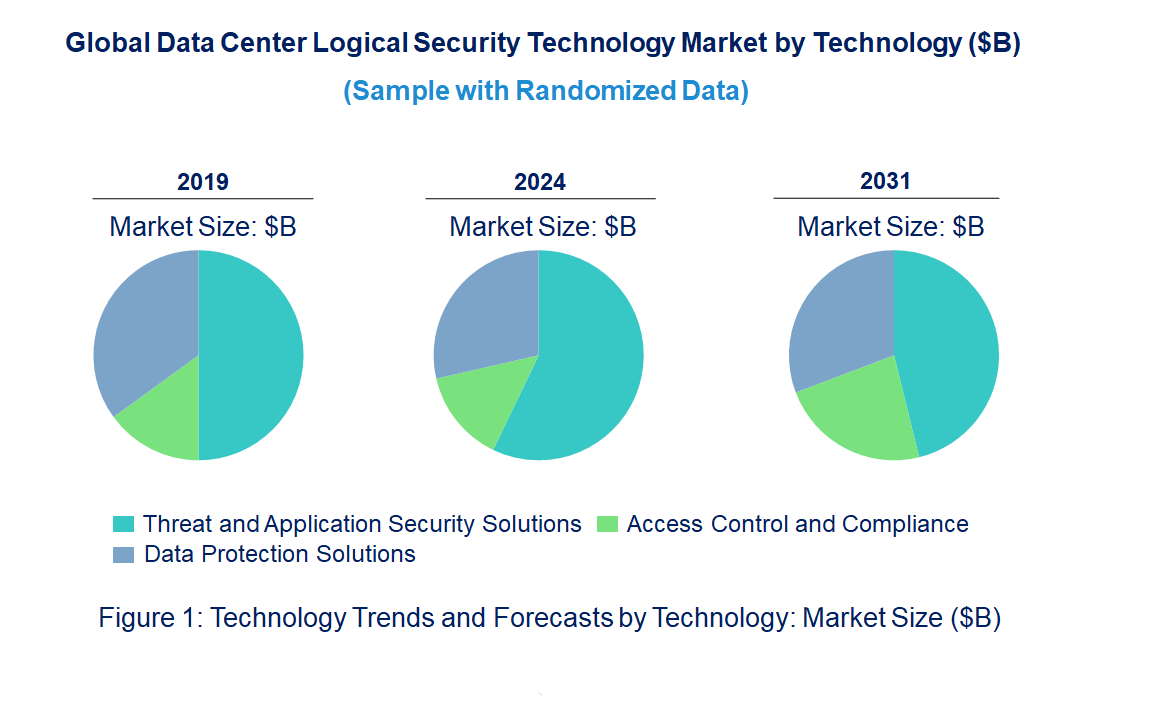
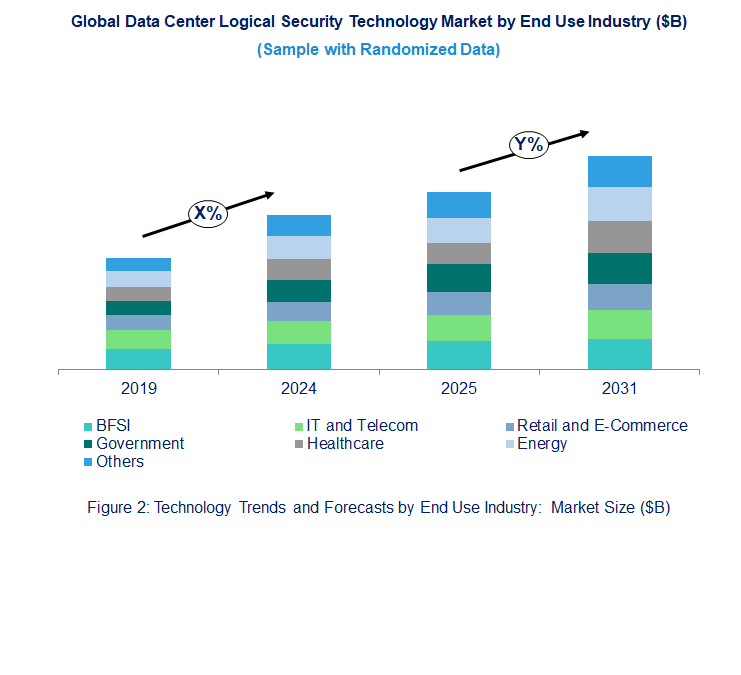
This market report covers trends, opportunities, and forecasts in the global data center logical security market to 2031 by technology (threat and application security solutions, access control and compliance, and data protection solutions), end use industry (bfsi, it and telecom, retail and e-commerce, government, healthcare, energy, and others), and region (North America, Europe, Asia Pacific, and the Rest of the World)
We'll send your sample report shortly.
• Zero-Trust Security Models: In this model, no device or user is assumed to be trusted by default. It verifies every single access request continuously, thereby reducing vulnerabilities in the data center.
• AI and ML for Threat Detection: Artificial intelligence (AI) and machine learning (ML) have become integral parts of security solutions used to identify threats and respond in real-time. These technologies analyze large volumes of data, identify anomalies, and predict potential breaches in security before they occur.
• Cloud Security Integration: The shift of businesses to hybrid or completely cloud-based environments requires the integration of cloud security into data center security strategies. This trend enables unified security management across both on-premise and cloud infrastructures, ensuring consistent and efficient protection.
• Increased Use of Multi-Factor Authentication (MFA): MFA is becoming standard practice in data centers to enhance identity management. By requiring multiple verification factors such as biometrics, smart cards, or OTPs MFA strengthens data access controls and helps mitigate unauthorized access risks.
• Advanced Data Encryption Techniques: The growing volume of data stored and processed in data centers calls for advanced data encryption techniques that ensure the protection of data at rest, in transit, and during processing. End-to-end encryption has become standard to prevent data breaches, ensure compliance with privacy laws, and maintain security around sensitive data. Emerging trends in this market have helped organizations address the growing complexity of data center security solutions, making threat prevention, detection, and response processes more effective. As these technologies advance, they will continue to add layers of resilience and safety across industries with critical infrastructures.
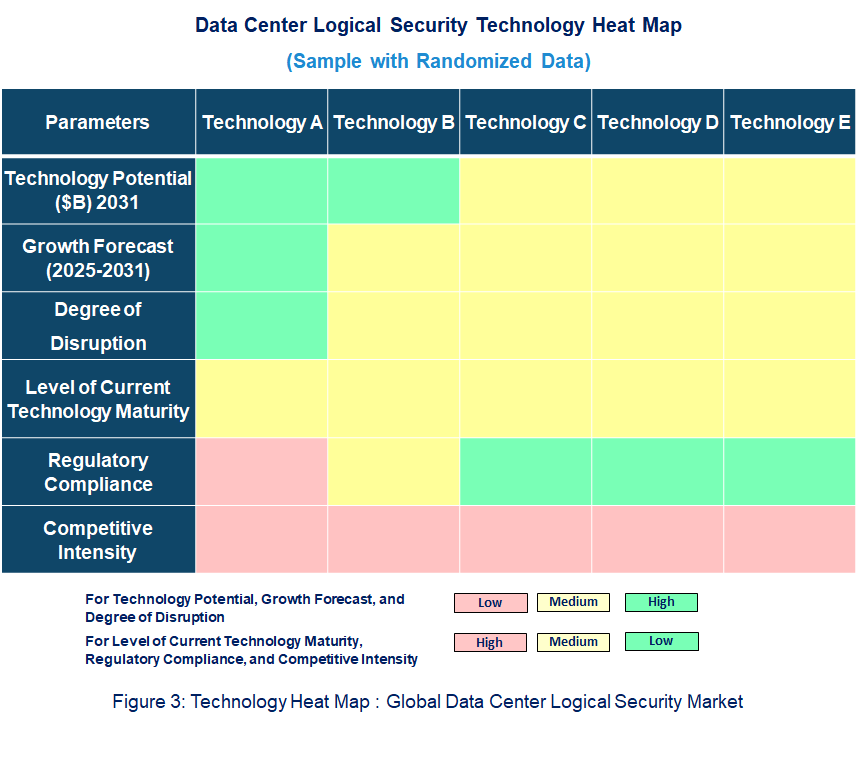
• Technology Potential: The potential for data center logical security technologies is vast, with the growing reliance on cloud computing, big data, and IoT. Advanced tools such as encryption, MFA, zero-trust security models, and AI for threat detection are pushing the boundaries of security improvement and automation.
• Degree of Disruption: As data breaches become more sophisticated, AI-driven and behavior-based security protocols are disrupting traditional security measures. These technologies can reduce risks of data loss and unauthorized access, thus increasing efficiency in detecting vulnerabilities.
• Level of Current Technology Maturity: The data center logical security market is mature, with the majority of solutions already integrated into mainstream infrastructure. However, those in the AI, machine learning, and blockchain-based security categories are still maturing and require further research before widespread adoption is feasible.
• Regulatory Compliance: Data centers must comply with global regulations like GDPR, HIPAA, and PCI-DSS. Strong security protocols are needed to protect sensitive information. Regulatory changes occur continuously, so data centers must adapt to maintain compliance. The data center logical security market is evolving quickly and has the potential to offer better protection against threats. However, it must also adapt to new security challenges and regulations.
• Cisco: Cisco has integrated AI-powered threat detection systems into its security offerings for data centers, enhancing proactive threat identification and automated incident response. Its advanced network segmentation solutions enable businesses to enforce stronger access controls and further minimize attack surfaces within their data centers.
• McAfee: McAfee focuses on developing integrated security solutions that combine endpoint protection with cloud and network security. Their latest innovations include enhanced data encryption and advanced threat intelligence platforms, designed to protect data centers from evolving cyber threats while maintaining compliance with global data protection regulations.
• HP: HP has been advancing its data center security solutions by incorporating secure hardware platforms with integrated security features, such as firmware protection and trusted execution environments (TEEs). These technologies help ensure that data centers are not vulnerable to hardware-based attacks and data manipulation.
• Juniper Networks: Juniper Networks has launched AI-based network security technologies that can detect and mitigate threats in real-time across large-scale data centers. Their solutions focus on enhancing network visibility, improving traffic flow, and detecting anomalies before they escalate into significant security issues.
• Fortinet: Fortinet provides scalable security offerings, including next-gen firewalls, secure SD-WAN, and advanced threat protection, to protect data center networks. Their security fabric integrates seamlessly with cloud environments, enabling hybrid data centers and distributed networks to be fully protected.
• Check Point Software Technologies: Check Point has expanded its offerings in advanced threat prevention and data protection solutions tailored to data centers. Their unified architecture brings next-gen firewall protections, intrusion prevention systems (IPS), and automated security policy enforcement across data centers.
• IBM: IBM has developed advanced identity and access management (IAM) solutions as well as AI-driven security platforms that leverage machine learning to identify and neutralize emerging threats in real-time. IBM's security solutions focus on the enterprise market, offering end-to-end data protection and compliance management across data center infrastructures.
• Dell Technologies: Dell Technologies has designed advanced encryption and secure access protocols within its data center hardware offerings. These security solutions enhance compliance with industry standards and strengthen resistance to sophisticated cyber threats in both physical and virtualized data center environments.
• EMC: EMC’s security solutions have progressed to cloud-native security capabilities, such as data encryption and access controls, integrated into on-premise, hybrid, and cloud-based data centers. Their solutions ensure scalability while maintaining robust security.
• Trend Micro: Trend Micro has developed AI-based threat intelligence platforms that integrate with data center security solutions to ensure real-time monitoring and rapid detection of cyberattacks. The company has gained popularity across industries like healthcare, finance, and government by protecting critical infrastructure.
• Increasing Cybersecurity Threats: As sophisticated cyberattacks, such as ransomware and advanced persistent threats (APTs), become more common, businesses are investing heavily in more robust data center security solutions. This growing need for protection is driving the adoption of advanced logical security systems.
• Cloud and Hybrid Environments: The shift to cloud and hybrid cloud architectures has led to increased complexity in securing these environments. This requires complete security solutions that can integrate on-premise and cloud-based data centers, fueling demand for innovative logical security solutions.
• Regulatory Compliance and Data Privacy Requirements: Governments across all regions are implementing increasingly stringent data protection regulations, such as GDPR and CCPA. These regulations mandate that organizations improve security measures to avoid liabilities, thus creating demand for compliant data center logical security solutions.
• Increased Focus on Digital Transformation: As organizations undergo digital transformation, data security has become a top priority. The need to protect critical infrastructure and sensitive data from breaches and attacks is driving investment in advanced security technologies, ensuring smooth data center operations. Challenges in the data center logical security market include:
• Hybrid/Multi-Cloud Complexity: Securing hybrid and multi-cloud environments remains challenging as managing security across diverse infrastructures is cumbersome. Businesses struggle to sustain consistent policies and compliance in such dispersed environments.
• High Cost of Implementation and Maintenance: Advanced logical security systems can be expensive to deploy, particularly for small and medium-sized enterprises (SMEs). The initial cost and subsequent maintenance and updates can be a significant barrier to widespread adoption.
• Skills Shortage and Talent Gap: There is a critical shortage of skilled cybersecurity professionals who can implement and manage complex data center security solutions. This talent gap hinders organizations' ability to deploy and maintain cutting-edge security systems. Emerging technological advancements, growing cybersecurity threats, and increasing regulatory pressure are all shaping the Data Center Logical Security Market. However, challenges related to hybrid security complexities, cost, and talent shortage need to be addressed, while opportunities in cloud environments and digital transformation should be leveraged. Overcoming these challenges will support future growth.
• Cisco
• Mcafee
• HP
• Juniper Networks
• Fortinet
• Check Point Software Technologies
• Technology Readiness by Technology Type for Data Center Logical Security Market: Threat and application security solutions are mature, with advanced detection capabilities. Access control solutions are widely adopted to manage user access and ensure compliance. Data protection solutions, including encryption and backups, are well-established but continue to evolve. Regulatory compliance remains critical across all technologies, and vendors must navigate complex standards to stay competitive in the market.
• Competitive Intensity and Regulatory Compliance of Different Technologies: The data center logical security market is highly competitive, with constant innovation in threat protection, access control, and data privacy. Regulatory compliance, including GDPR and HIPAA, intensifies competition as companies strive to meet industry standards. Each technology must adhere to strict regulations like ISO/IEC 27001 and PCI-DSS. Vendors face significant pressure to offer robust, compliant solutions to succeed in this crowded market.
• Different Technologies Disrupting the Data Center Logical Security Market: Threat and application security solutions, access control and compliance, and data protection are among the technologies disrupting the data center logical security market. They protect against evolving cyber threats with threat and application security, enhance user management and regulatory adherence with access control solutions, and safeguard sensitive data with encryption and backup systems through data protection technologies. Together, these solutions create security, reduce vulnerabilities, and streamline compliance in data centers, driving growth and operational efficiency.
• Threat and Application Security Solutions
• Access Control and Compliance
• Data Protection Solutions
• BFSI
• IT and Telecom
• Retail and E-Commerce
• Government
• Healthcare
• Energy
• Others
• North America
• Europe
• Asia Pacific
• The Rest of the World
• Latest Developments and Innovations in the Data Center Logical Security Technologies
• Companies / Ecosystems
• Strategic Opportunities by Technology Type


Choose a license that fits your team. Instant PDF delivery.
Prices exclude taxes. Instant delivery. Custom licensing available on request.
Market Report · May 18, 2026
Market Report · May 18, 2026
Market Report · May 18, 2026
Trusted partner for strategic intelligence and business growth


Receive a complimentary market analysis tailored to your industry. Our analysts will identify key growth opportunities and competitive dynamics specific to your business.

Market size, growth rate, and key trend analysis for your specific sector.

Top competitor positioning and market share analysis.

Strategic recommendations backed by data-driven insights.
Get curated market intelligence and competitive moves straight to your inbox.
By subscribing, you agree to receive our monthly insights. Unsubscribe anytime.
Receive a complimentary market analysis tailored to your industry. Our analysts will identify key growth opportunities and competitive dynamics specific to your business.
Market size, growth rate, and key trend analysis for your specific sector.
Top competitor positioning and market share analysis.
Strategic recommendations backed by data-driven insights.
Get curated market intelligence, emerging trends, and competitive moves straight to your inbox each month.
By subscribing, you agree to receive our monthly insights. Unsubscribe anytime.
We'll send your sample report shortly.