
Market Report · May 18, 2026

This market report covers trends, opportunities, and forecasts in the global cloud integration software market to 2031 by technology (cloud middleware, ipaas, api management, and enterprise service bus), end use (it & telecommunication, bfsi, healthcare, retail and e-commerce, manufacturing, and others), and region (North America, Europe, Asia Pacific, and the Rest of the World)
We'll send your sample report shortly.
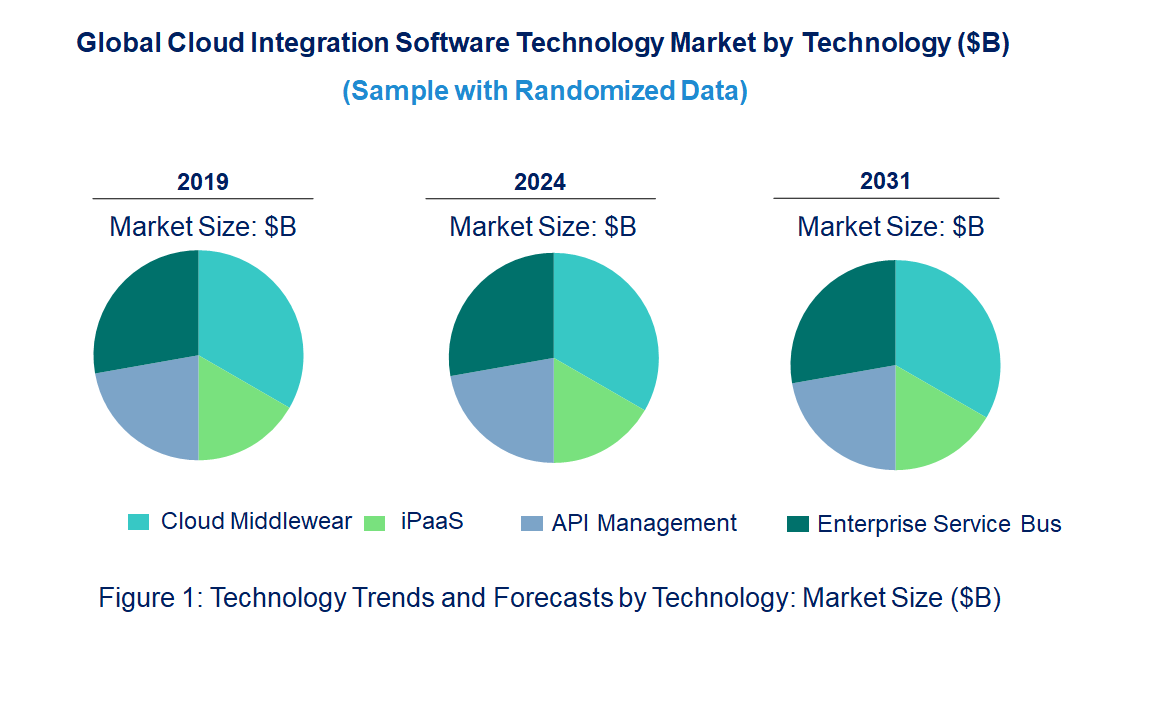
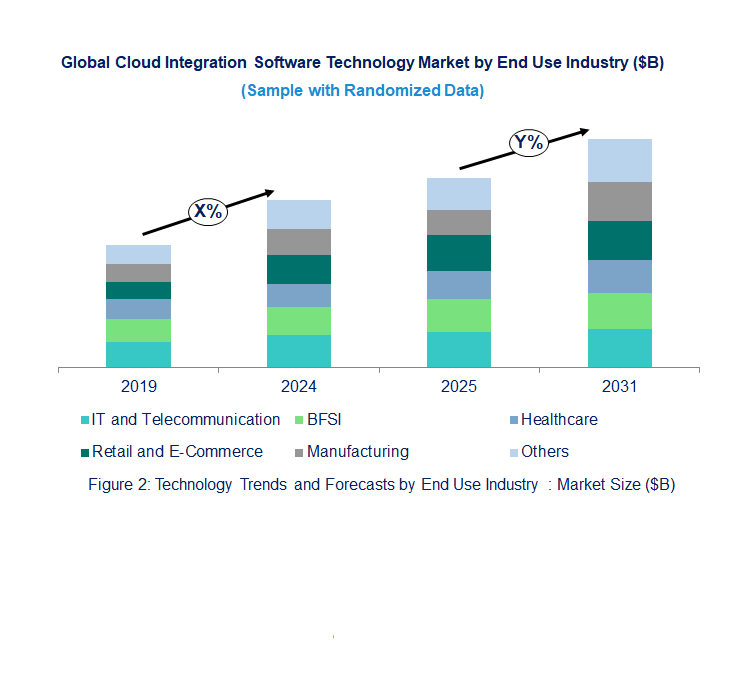
• Rise of iPaaS (Integration Platform as a Service): Businesses are increasingly adopting iPaaS solutions for faster, more flexible integration across cloud and on-premises environments. iPaaS enables quicker deployment and reduces the need for extensive coding.
• API-First Integration Approach: The use of APIs is expanding as companies focus on API management solutions, allowing for better scalability and interoperability across different platforms and systems.
• Adoption of Cloud Middleware: Cloud middleware technologies are being leveraged to simplify communication between disparate cloud applications, leading to more streamlined and efficient operations.
• Focus on Automation: Automation of integration processes using cloud integration tools like Boomi and Zapier is becoming a key trend, reducing manual errors and improving efficiency.
• Hybrid and Multi-Cloud Integration: As businesses move to hybrid cloud environments, integration solutions that support both public and private clouds are gaining importance, ensuring seamless operations across diverse infrastructures. These trends are reshaping the cloud integration software market by improving efficiency, flexibility, and the ability to scale operations seamlessly across different environments.
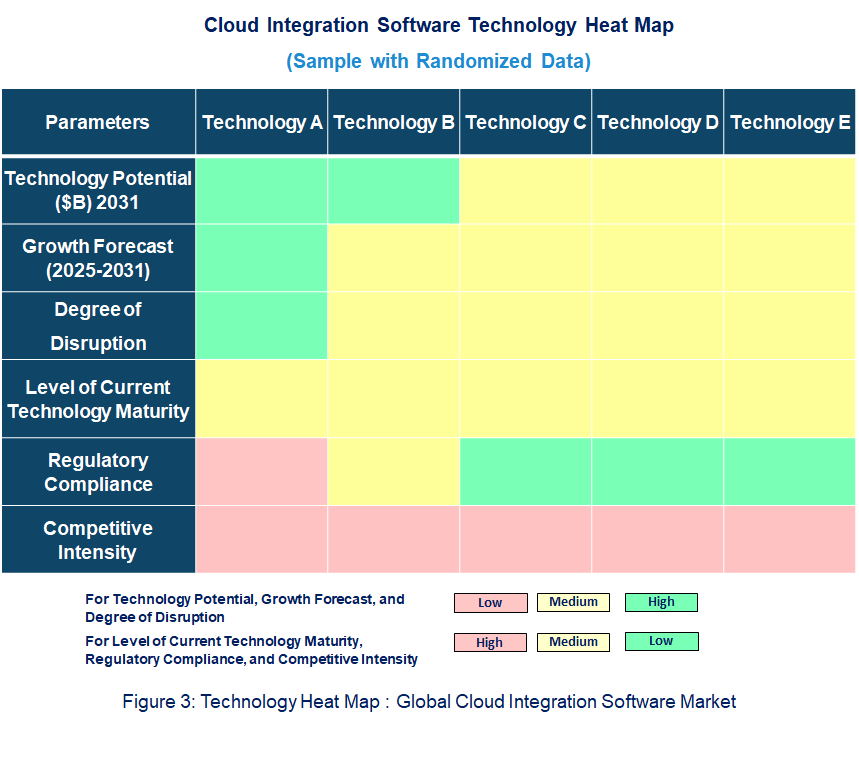
• Technology Potential: Cloud integration software holds immense potential for enabling businesses to integrate and streamline data across various cloud and on-premise platforms. The growing reliance on cloud infrastructure and hybrid environments increases the demand for robust integration solutions. These solutions offer businesses the ability to consolidate data, automate workflows, and ensure real-time access across different applications. As cloud computing continues to evolve, integration technologies are becoming more sophisticated, with the potential for AI-driven automation and machine learning to further enhance these solutions. This growing potential allows companies to improve operational efficiency, reduce costs, and accelerate innovation.
• Degree of Disruption: Cloud integration software has the potential to disrupt traditional business processes significantly. It replaces legacy systems that operate in silos, driving the adoption of integrated, cloud-based systems that enable faster decision-making and enhanced collaboration. Industries such as finance, healthcare, and retail experience the most disruption as they increasingly move to cloud environments. While this shift brings immense benefits, it also introduces challenges such as the complexity of adapting existing business processes. Organizations may face short-term disruptions as they transition to new, more agile systems, though the long-term impact is overwhelmingly positive.
• Level of Current Technology Maturity: Cloud integration software has reached a high level of technological maturity, with key solutions in the market offering well-established features such as APIs, data synchronization, and multi-cloud compatibility. Many organizations have successfully implemented these systems, resulting in greater operational efficiencies and improved data management. However, the market is still evolving, with emerging technologies such as AI and machine learning becoming increasingly integrated into cloud solutions. While most businesses can implement cloud integration software, large enterprises still face challenges with complexity and scale, requiring expertise and careful planning to deploy these solutions effectively.
• Regulatory Compliance: Regulatory compliance remains a critical component of the cloud integration software market, particularly as organizations move more of their data and applications to the cloud. As businesses adopt cloud solutions, they must ensure that their integration software meets data protection laws and industry-specific regulations, such as GDPR and HIPAA. Integration platforms must include features like data encryption, access control, and auditing capabilities to ensure compliance across diverse jurisdictions and industries. Failure to adhere to regulatory standards can lead to legal and reputational risks, making it crucial for cloud integration software providers to offer solutions that help businesses maintain regulatory compliance while securing sensitive data. In conclusion, cloud integration software is poised to continue transforming business operations by offering scalable, flexible, and cost-effective solutions. With its significant technology potential and disruptive influence, businesses across industries are benefiting from more seamless integrations. While the technology has reached maturity, it is still evolving with new capabilities that help organizations automate processes and manage complex data environments. Furthermore, as businesses increasingly operate in cloud-based systems, ensuring regulatory compliance is more critical than ever. The combination of these factors will shape the future growth and adoption of cloud integration software.
• Boomi: Boomi’s acquisition of new capabilities for AI-driven automation and integration tools has strengthened its position in the market, enabling faster, more intelligent integrations.
• Zapier Inc.: Zapier continues to innovate by enabling more integrations between diverse cloud applications, making it easier for businesses to automate workflows.
• Salesforce, Inc.: Salesforce’s cloud integration solutions have been enhanced with AI and machine learning features, providing more personalized and efficient customer experiences.
• IBM Corporation: IBM’s cloud integration solutions now feature more advanced data and analytics capabilities, catering to enterprises looking to integrate complex systems.
• Microsoft: Microsoft’s cloud offerings continue to expand with deeper integrations with Azure, offering a comprehensive solution for businesses using Microsoft’s ecosystem.
• WORKATO: WORKATO focuses on automation and no-code solutions, empowering businesses to integrate applications and automate workflows without requiring extensive coding skills.
• Oracle Corporation: Oracle’s cloud integration solutions have strengthened their presence with cloud-to-cloud and hybrid integrations, catering to diverse industries and businesses.
• Amazon Web Services (AWS): AWS offers scalable cloud integration tools that integrate well with its wide range of cloud services, positioning itself as a leader in the space. These developments indicate an increasing trend toward AI-powered, automation-driven, and flexible integration platforms that allow businesses to achieve greater agility and scalability.
• Digital Transformation: The increasing adoption of cloud-based solutions across industries is driving the demand for effective integration tools.
• Cost Efficiency: Cloud integration solutions help businesses reduce infrastructure costs and improve operational efficiency.
• Need for Scalability: As businesses grow, scalable integration solutions become critical for handling increased data and applications.
• Increasing Adoption of Hybrid Cloud Environments: The shift toward hybrid and multi-cloud environments is increasing the need for integration solutions that can seamlessly operate across both public and private clouds. Challenges facing the global cloud integration software market are:
• Data Security Concerns: As integration tools handle sensitive data, ensuring security and compliance with data protection regulations becomes critical.
• Complexity in Integration: Integrating various legacy systems and cloud applications can be complex and time-consuming for businesses, creating hurdles.
• Vendor Lock-In: Businesses often face challenges when trying to switch providers due to proprietary technologies, which can limit flexibility and lead to vendor lock-in. These drivers and challenges play a significant role in shaping the cloud integration software market, pushing companies to innovate while navigating regulatory and technological complexities.
• Boomi, Lp
• Zapier Inc.
• Salesforce, Inc.
• International Business Machines Corp.
• Microsoft
• Workato
• Technology Readiness by Technology Type: The competitive intensity and regulatory compliance levels differ among various cloud integration software technologies. iPaaS (Integration Platform as a Service) is highly mature and widely adopted for its scalability and ease of integration with cloud-native and hybrid IT environments. Cloud Middleware competes at a medium level and is used in traditional enterprise systems, offering robust integration but facing challenges with modern multi-cloud environments. API Management solutions are well-established and are integral for seamless communication across platforms, particularly in B2B environments, ensuring data flow security and regulatory compliance. Enterprise Service Bus (ESB) is more complex and commonly used in large-scale enterprises, typically for legacy systems integration, but may face limitations in adapting to agile, cloud-native applications. These technologies differ in their readiness to address business needs, with iPaaS leading the way in flexibility and rapid deployment for most use cases.
• Competitive Intensity and Regulatory Compliance: The cloud integration software market is competitive, with major players like IBM, Microsoft, and Oracle competing alongside newer iPaaS providers such as MuleSoft and Workato. iPaaS has emerged as a leading solution due to its scalability and flexibility, enabling businesses to connect cloud applications efficiently. Cloud Middleware and ESB, though mature, face increased competition from newer, more agile solutions. All of these technologies must comply with stringent regulations regarding data protection, especially when used in sectors like healthcare, finance, and e-commerce. iPaaS and API Management solutions are critical for compliance with global data protection laws such as GDPR and HIPAA, while Cloud Middleware and ESB often have to adhere to industry-specific standards. The need for regulatory compliance makes the technology offerings not only competitive but also highly specialized in meeting various compliance standards.
• Disruption Potential by Technology Type: iPaaS is the most disruptive technology in the cloud integration software market, providing businesses with the agility to scale and manage multiple cloud environments seamlessly. API Management is disrupting traditional integration tools by enabling real-time, secure data exchange between applications and services, fostering digital transformation. Cloud Middleware offers integration between cloud and on-premise systems, helping businesses transition to hybrid environments. While mature, it faces increasing competition from more flexible, cloud-native solutions. ESB offers a more structured approach to integration, with a focus on large enterprises and legacy systems. However, the increasing move toward cloud environments poses challenges, limiting its disruption potential. Overall, the disruptive potential of iPaaS and API Management solutions is shaping the future of cloud integration, with increased flexibility, scalability, and security driving businesses to adopt these technologies.
• Cloud Middleware
• iPaaS
• API Management
• Enterprise Service Bus
• IT & Telecommunication
• BFSI
• Healthcare
• Retail and E-Commerce
• Manufacturing
• Others
• North America
• Europe
• Asia Pacific
• The Rest of the World
• Latest Developments and Innovations in the Cloud Integration Software Technologies
• Companies / Ecosystems
• Strategic Opportunities by Technology Type


Choose a license that fits your team. Instant PDF delivery.
Prices exclude taxes. Instant delivery. Custom licensing available on request.
Market Report · May 18, 2026
Market Report · May 18, 2026
Market Report · May 18, 2026
Trusted partner for strategic intelligence and business growth


Receive a complimentary market analysis tailored to your industry. Our analysts will identify key growth opportunities and competitive dynamics specific to your business.

Market size, growth rate, and key trend analysis for your specific sector.

Top competitor positioning and market share analysis.

Strategic recommendations backed by data-driven insights.
Get curated market intelligence and competitive moves straight to your inbox.
By subscribing, you agree to receive our monthly insights. Unsubscribe anytime.
Receive a complimentary market analysis tailored to your industry. Our analysts will identify key growth opportunities and competitive dynamics specific to your business.
Market size, growth rate, and key trend analysis for your specific sector.
Top competitor positioning and market share analysis.
Strategic recommendations backed by data-driven insights.
Get curated market intelligence, emerging trends, and competitive moves straight to your inbox each month.
By subscribing, you agree to receive our monthly insights. Unsubscribe anytime.
We'll send your sample report shortly.