
Market Report · July 22, 2026

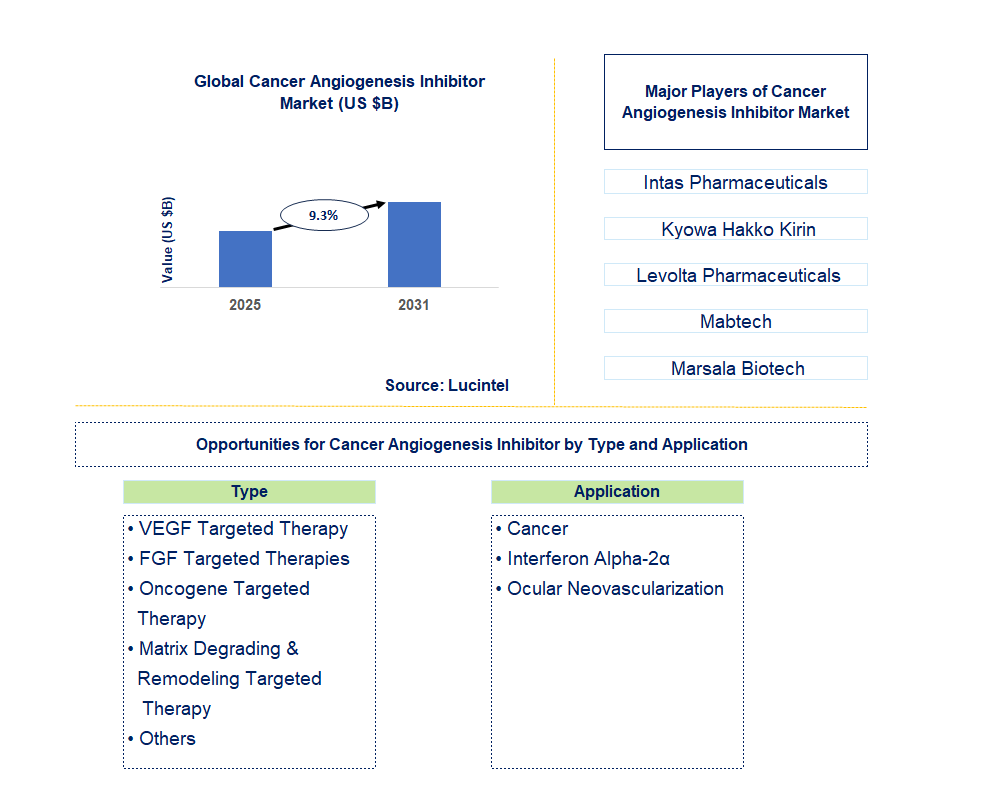
Key data points: The growth forecast = 7.4% annually for the next 7 years. Scroll below to get more insights. This market report covers Trends, opportunity and forecast in cancer angiogenesis inhibitor market to 2031 by type (VEGF targeted therapy, FGF targeted therapies, oncogene targeted therapy, matrix degrading & remodeling targeted therapy, and others), application (cancer, interferon alpha-2α, and ocular neovascularization), and region (North America, Europe, Asia Pacific, and the Rest of the World)
We'll send your sample report shortly.
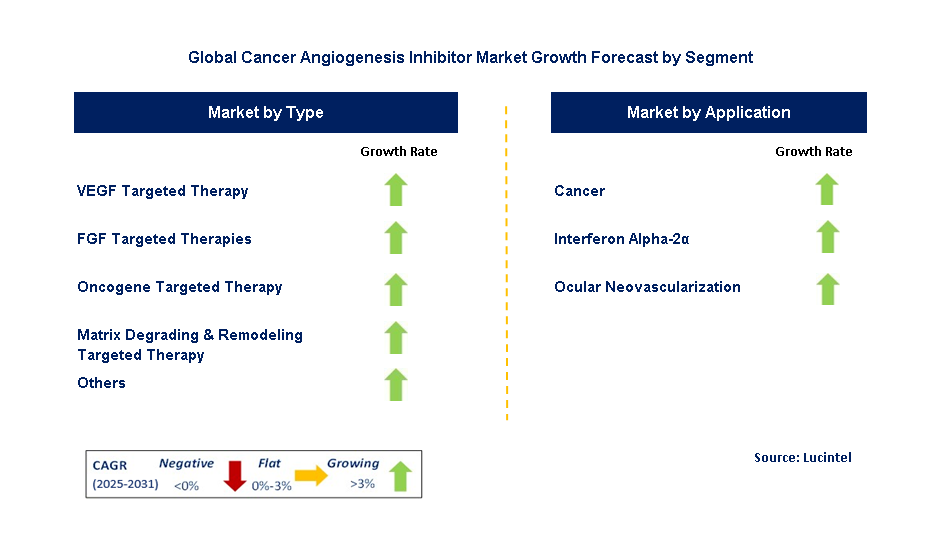
• Lucintel forecasts that, within the type category, oncogene targeted therapy is expected to witness the highest growth over the forecast period due to increasing adoption of precision oncology and advancements in biomarker.
• Within the application category, cancer is expected to witness the highest growth due to increasing global cancer prevalence and the critical role of angiogenesis in tumor growth.
• In terms of region, North America is expected to witness the highest growth over the forecast period. Gain valuable insights for your business decisions with our comprehensive 150+ page report. Sample figures with some insights are shown below.
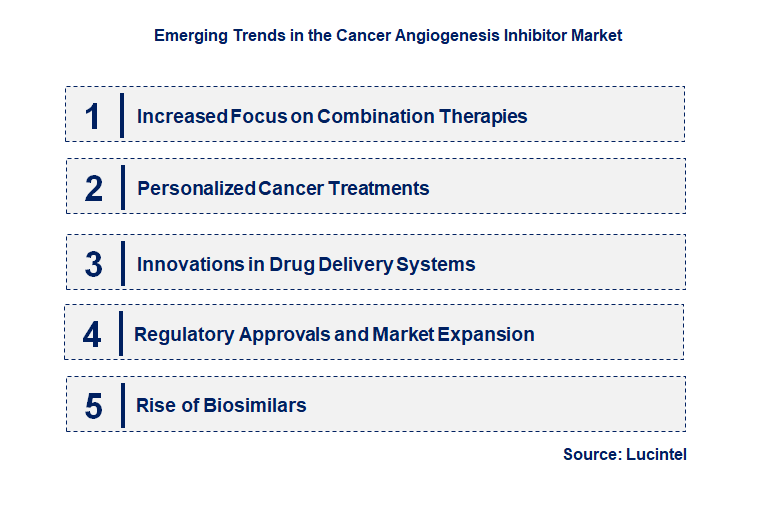
• Increased Focus on Combination Therapies: Combination therapies, where angiogenesis inhibitors are used alongside other cancer treatments, are becoming increasingly popular. These combinations improve the efficacy of treatments, especially when used in conjunction with immunotherapy or chemotherapy. The trend toward combining therapies is a response to the challenge of drug resistance and the need for more comprehensive cancer treatments.
• Personalized Cancer Treatments: As precision medicine continues to advance, the demand for personalized treatments that target specific genetic mutations within tumors is growing. Angiogenesis inhibitors are increasingly being tailored to individual patient profiles, improving the precision and effectiveness of treatments. This trend is driving innovation in molecular diagnostics and biomarker identification.
• Innovations in Drug Delivery Systems: New drug delivery systems are enhancing the effectiveness of angiogenesis inhibitors. Nanoparticles, liposomes, and other advanced methods are being developed to ensure that these drugs reach tumors more effectively, reducing side effects and improving outcomes. This trend is helping to make angiogenesis inhibitors more viable as part of a broader cancer treatment strategy.
• Regulatory Approvals and Market Expansion: The regulatory approval process for angiogenesis inhibitors is evolving, with more countries fast-tracking the approval of these therapies due to their potential benefits. As more inhibitors are approved for use, the global market expands, providing access to new patients in both developed and emerging markets.
• Rise of Biosimilars: The market for biosimilars biological products that are highly similar to approved branded products is expanding, particularly in countries with large cancer patient populations. The introduction of biosimilars is helping reduce the cost of angiogenesis inhibitors, making them more accessible to a broader patient base and increasing market penetration. In conclusion, the emerging trends in the cancer angiogenesis inhibitor market are significantly reshaping the landscape of cancer treatment. The growing focus on combination therapies, personalized medicine, and the development of biosimilars are enhancing the accessibility, efficacy, and cost-effectiveness of these treatments. Innovations in drug delivery systems are improving the precision and reducing side effects of angiogenesis inhibitors, while regulatory changes are expediting drug approvals and market access. Together, these trends are not only expanding the reach of angiogenesis inhibitors but are also fostering the development of more targeted and effective cancer therapies, offering promising solutions for patients worldwide.
• FDA Approvals of New Inhibitors: In recent years, the FDA has approved several new angiogenesis inhibitors, expanding the range of available treatments for cancers such as lung, kidney, and colorectal cancer. These approvals have helped to enhance the efficacy and availability of targeted therapies, driving market growth.
• Advancements in Combination Therapy Approaches: The use of angiogenesis inhibitors in combination with other therapies, such as immune checkpoint inhibitors, is rapidly gaining traction. This approach is leading to improved outcomes in patients who were previously resistant to single-agent therapies, expanding the utility of angiogenesis inhibitors.
• Global Expansion of Biosimilars: The introduction of biosimilars has significantly reduced the cost of angiogenesis inhibitors, increasing their accessibility in emerging markets. This has created new growth opportunities in regions like Asia-Pacific and Latin America, where cost-effective treatments are in high demand.
• Growing Focus on Targeted Therapies: As the demand for precision medicine grows, the development of more targeted angiogenesis inhibitors is gaining momentum. These drugs are designed to attack specific molecular targets within cancer cells, improving treatment specificity and reducing side effects.
• Increased Investment in Cancer Research: Increased funding for cancer research is driving innovation in angiogenesis inhibitor development. Public and private sector investments are fueling advancements in biotechnology and molecular diagnostics, leading to new and improved cancer treatments. In conclusion, recent developments in the cancer angiogenesis inhibitor market highlight the significant advancements in cancer treatment across key regions such as the United States, China, Germany, India, and Japan. These developments, driven by innovations in drug formulations, combination therapies, and personalized medicine, are reshaping the market landscape. The continued approval of new inhibitors, along with growing investments in research and biotechnology, is accelerating the availability and effectiveness of these therapies. As the market expands, challenges such as high treatment costs and drug resistance remain, but the overall outlook for cancer angiogenesis inhibitors remains optimistic, with promising growth opportunities ahead.
• Expanding Biosimilars Market: As the market for biosimilars grows, companies can capitalize on the demand for cost-effective alternatives to branded angiogenesis inhibitors. By entering the biosimilar market, companies can reach a larger patient base in developing regions, boosting global market share.
• Personalized Treatment Approaches: With the rise of personalized medicine, there is a growing opportunity to develop angiogenesis inhibitors tailored to individual genetic profiles. This can improve patient outcomes and minimize side effects, making it a key area for research and development.
• Combination Therapy Developments: Developing combination therapies involving angiogenesis inhibitors can increase their efficacy, especially in treating resistant cancers. By focusing on combination therapy, pharmaceutical companies can create more powerful treatment regimens, expanding their market footprint.
• Emerging Markets Growth: As cancer rates rise in emerging markets, there is a growing demand for affordable cancer treatments, including angiogenesis inhibitors. Companies can tap into these markets by offering cost-effective solutions, partnering with local healthcare providers, and navigating regulatory landscapes.
• Advanced Drug Delivery Systems: The development of advanced drug delivery systems that improve the bioavailability and targeting of angiogenesis inhibitors presents significant growth opportunities. This innovation can enhance the effectiveness of existing therapies and offer new ways to treat cancer with fewer side effects. In conclusion, the strategic growth opportunities in the cancer angiogenesis inhibitor market are driven by key trends such as the rise of biosimilars, combination therapies, and personalized treatments. Companies that focus on advancing drug delivery systems, targeting emerging markets, and investing in innovative combination therapies will likely see substantial market growth. Additionally, with increasing government and private sector investments in cancer research, the market is poised for continued expansion. However, overcoming challenges like high treatment costs and regulatory barriers will be crucial for ensuring broader patient access to these therapies. By aligning with these strategic trends, stakeholders can capitalize on the growing demand for effective cancer treatments.
• Intas Pharmaceuticals
• Kyowa Hakko Kirin
• Levolta Pharmaceuticals
• Mabtech
• Marsala Biotech
• Neumedicines
• Genentech
• Five Prime Therapeutics
• VEGF Targeted Therapy
• FGF Targeted Therapies
• Oncogene Targeted Therapy
• Matrix Degrading & Remodeling Targeted Therapy
• Others
• Cancer
• Interferon Alpha-2α
• Ocular Neovascularization
• North America
• Europe
• Asia Pacific
• The Rest of the World
• United States: The United States remains a global leader in the development and commercialization of cancer angiogenesis inhibitors. Key pharmaceutical companies, such as Genentech and Eli Lilly, have developed groundbreaking inhibitors like Avastin and Cyramza, which are used for treating various cancers, including colorectal, lung, and kidney cancer. Furthermore, the U.S. Food and Drug Administration (FDA) has approved several new angiogenesis inhibitors in recent years. The rapid adoption of targeted therapies and ongoing clinical trials highlight the country’s strong role in advancing angiogenesis inhibition research, with continuous improvements in drug delivery methods and combination therapies.
• China: China is rapidly expanding its presence in the global cancer angiogenesis inhibitor market, driven by both domestic demand and significant government investment in healthcare. Chinese pharmaceutical companies, such as Innovent Biologics and BeiGene, have made advancements in developing monoclonal antibodies and small molecules targeting angiogenesis. With a large patient population and a growing emphasis on cancer treatment, China is increasingly focusing on expanding its capabilities in biotechnology and clinical research. The Chinese government’s support through initiatives like the "Made in China 2025" policy is boosting innovation in this sector, enabling the country to become a key player in the global market.
• Germany: Germany, with its advanced healthcare system and strong pharmaceutical industry, continues to be at the forefront of the European market for cancer angiogenesis inhibitors. Major companies like Bayer and Boehringer Ingelheim have developed several successful angiogenesis inhibitors. The country’s strong emphasis on research and development in cancer therapies has facilitated the growth of the market. Moreover, Germany’s well-established healthcare infrastructure and clinical trial ecosystem contribute to the effective implementation of new therapies, making it a critical player in both the development and adoption of angiogenesis inhibitors across Europe.
• India: India’s role in the global cancer angiogenesis inhibitor market is increasingly significant, particularly due to the country’s vast and growing healthcare needs. With rising cancer incidence rates, India has become an important market for affordable cancer treatments, including angiogenesis inhibitors. Indian pharmaceutical companies like Biocon and Cipla are actively involved in the development and distribution of generic versions of angiogenesis inhibitors, making them more accessible to a large patient population. India’s emerging healthcare infrastructure and the government’s focus on improving healthcare access are helping to expand the availability of these therapies in the region.
• Japan: Japan has a strong healthcare system and a rapidly growing oncology market, making it a key player in the global cancer angiogenesis inhibitor market. Japanese pharmaceutical companies, such as Takeda and Eisai, have been instrumental in developing and commercializing angiogenesis inhibitors. Japan’s regulatory environment is conducive to clinical trials and drug approvals, further driving innovation in cancer therapies. With a high incidence of certain cancers and an aging population, Japan represents a significant market for advanced cancer treatments, including those targeting angiogenesis. The country’s emphasis on personalized medicine is also contributing to the growth of this market.


• Intas Pharmaceuticals
• Kyowa Hakko Kirin
• Levolta Pharmaceuticals
• Mabtech
• Marsala Biotech
• Neumedicines
• Genentech
• Five Prime Therapeutics Q5. Which cancer angiogenesis inhibitor market segment will be the largest in future? Answer: Lucintel forecasts that oncogene targeted therapy is expected to witness the highest growth over the forecast period due to increasing adoption of precision oncology and advancements in biomarker. Q6. In cancer angiogenesis inhibitor market, which region is expected to be the largest in next 5 years? Answer: North America is expected to witness the highest growth over the forecast period. Q7. Do we receive customization in this report? Answer: Yes, Lucintel provides 10% customization without any additional cost.


Choose a license that fits your team. Instant PDF delivery.
Prices exclude taxes. Instant delivery. Custom licensing available on request.
Market Report · July 22, 2026
Market Report · July 22, 2026
Market Report · July 22, 2026
Trusted partner for strategic intelligence and business growth


Receive a complimentary market analysis tailored to your industry. Our analysts will identify key growth opportunities and competitive dynamics specific to your business.

Market size, growth rate, and key trend analysis for your specific sector.

Top competitor positioning and market share analysis.

Strategic recommendations backed by data-driven insights.
Get curated market intelligence and competitive moves straight to your inbox.
By subscribing, you agree to receive our monthly insights. Unsubscribe anytime.
Receive a complimentary market analysis tailored to your industry. Our analysts will identify key growth opportunities and competitive dynamics specific to your business.
Market size, growth rate, and key trend analysis for your specific sector.
Top competitor positioning and market share analysis.
Strategic recommendations backed by data-driven insights.
Get curated market intelligence, emerging trends, and competitive moves straight to your inbox each month.
By subscribing, you agree to receive our monthly insights. Unsubscribe anytime.
We'll send your sample report shortly.