
Market Report · July 22, 2026

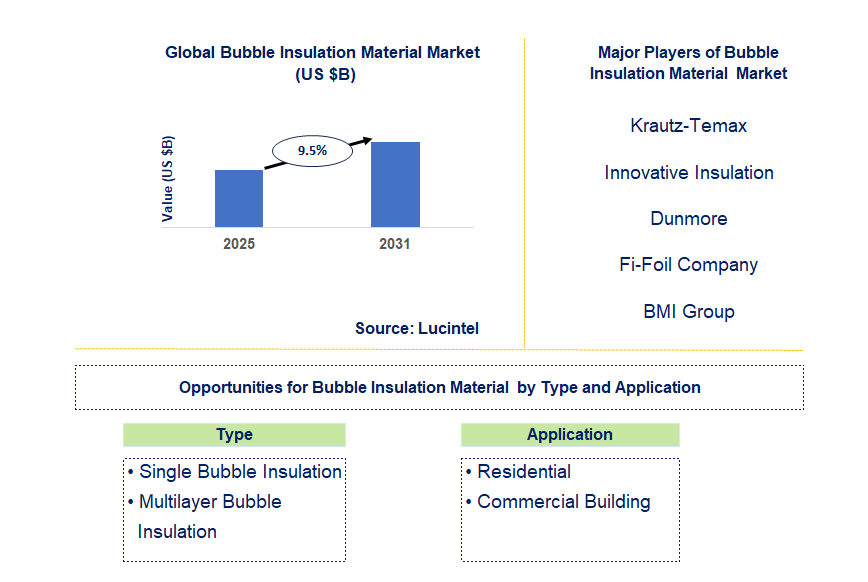
Key data points: The growth forecast = 9.5% annually for the next 7 years. Scroll below to get more insights. This market report covers Trends, opportunity and forecast in bubble insulation material market to 2031 by type (single bubble insulation and multilayer bubble insulation), application (residential and commercial building), and region (North America, Europe, Asia Pacific, and the Rest of the World)
We'll send your sample report shortly.
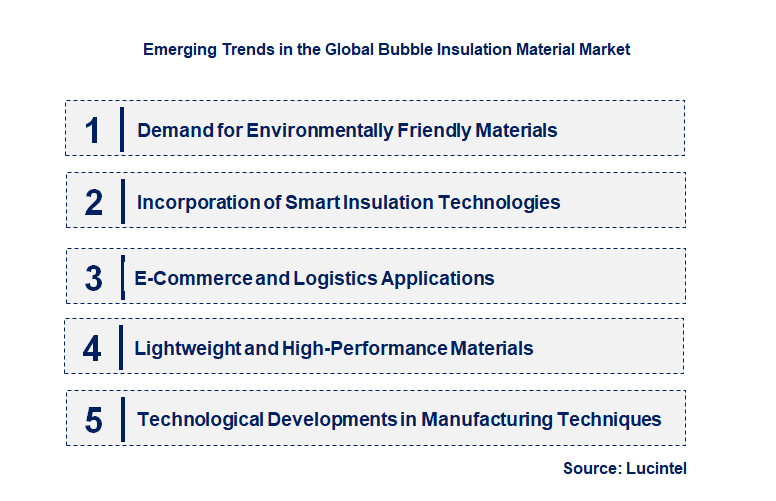
• Demand for Environmentally Friendly Materials: Consumers and industries are increasingly concerned about sustainability, so manufacturers have to come up with more eco-friendly materials for bubble insulation. These materials should be recyclable, thus lessening waste and helping in more sustainable construction practices. Material composition innovations include the use of biodegradable plastics or non-toxic additives. The shift towards sustainability is also well in agreement with government guidelines to utilize environmentally friendly materials more, especially in construction, packaging, and transportation. When eco-friendly bubble insulation is provided extensively, then there would be a high demand for them by various sectors such as construction, logistics, and automotive.
• Incorporation of Smart Insulation Technologies: Bubble insulation is increasingly being integrated with smart technologies to enhance its performance. These innovations entail embedding sensors in the insulation material, which track real-time temperature changes and energy usage. This information can be applied to predictive maintenance, energy optimization, and overall efficiency enhancement. In the construction industry, smart insulation is valuable for optimizing energy use in buildings. This trend is expected to further fuel the adoption of bubble insulation, especially in markets with strict energy efficiency standards, such as Germany and the United States.
• E-Commerce and Logistics Applications: The rapid growth of e-commerce and the logistics industry is driving demand for bubble insulation materials, especially in packaging applications. This rise in shipping all over the world has also brought a high demand for insulation materials to safeguard temperature-sensitive products, like food and pharmaceuticals. This makes bubble insulation a highly effective and cost-efficient method for maintaining required temperatures during transportation. As e-commerce grows, especially in emerging markets such as India and China, there will be an increasing demand for reliable and lightweight insulation materials, providing significant opportunities for manufacturers in the packaging sector.
• Lightweight and High-Performance Materials: The demand for lightweight materials with high-performance thermal insulation properties is growing, particularly in industries like automotive and construction. The automotive industry is now looking to reduce the weight of vehicles to enhance fuel efficiency, making bubble insulation a preferred choice for thermal management. Similarly, in the construction industry, lightweight insulation materials are favored for their ease of installation and transport. Innovations aimed at enhancing the performance of bubble insulation, such as improved thermal resistance and durability, are expected to drive its adoption in both existing and new applications.
• Technological Developments in Manufacturing Techniques: In the manufacture of bubble insulation materials, the technological advancements that have been developed will improve the quality of the product while reducing costs. Modern manufacturing techniques, including fully automated production lines and precision molding, allow manufacturers to produce more consistent, higher-quality products at a mass scale. Such technological developments improve not only the performance of the insulation but also its cost-effectiveness to be mass-adopted. Manufacturers can cater to the growing demand for cost-effective, high-performance bubble insulation materials in various sectors, such as construction, packaging, and automotive industries, as production techniques change. The trends emerging in the bubble insulation material market, including the shift toward eco-friendly materials, integration of smart technologies, growth in e-commerce applications, focus on lightweight materials, and advancements in production methods, are changing the market. These trends drive innovation, enhance product performance, and open new avenues in a range of industries. With sustainability and efficiency becoming paramount for the entire world, the bubble insulation material market will only grow further in line with increasing demand for high-performance, eco-friendly solutions.
• Advances in Material Composition: One of the most significant advancements made recently in the bubble insulation material market has been advancements in material composition. Manufacturers are continuously researching new materials that provide higher thermal resistance but have light weights and environmental aspects. Biodegradable and recyclable materials are more commonly integrated into insulation products because of the increasing emphasis on sustainable solutions. New types of plastic films and coatings are being developed to enhance the performance of bubble insulation materials, which makes them more resistant to moisture, UV light, and extreme temperatures, expanding their applications.
• Increased manufacturing capacity: In response to growing demand from different sectors, manufacturers of bubble insulation materials are expanding their production capacities. This includes the adoption of more automated and efficient production processes, which not only increase output but also reduce production costs. This scaling-up of manufacturing capabilities enables companies to offer more affordable, high-quality products. Additionally, increased production capacity supports the growing demand for insulation in key industries such as construction, packaging, and automotive. Manufacturing capabilities expansion is critical to keep pace with the growth of the market, especially in emerging economies like China and India.
• Growth in Packaging Applications: The packaging industry is one of the primary growth drivers for the bubble insulation material market. As global shipping, especially in e-commerce, is on the rise, there is an increasing demand for insulation materials that protect temperature-sensitive goods during transportation. Bubble insulation offers an affordable, lightweight, and efficient solution for maintaining the required temperatures, especially for pharmaceuticals, food, and beverages. Manufacturers are now focusing on producing specialized bubble insulation that meets industry-specific requirements, such as food-grade certifications or more durable, high-performance variants for extended shipping durations.
• Technological Innovations in Insulation Performance: Technological innovations are pushing the boundaries of bubble insulation material performance. For example, there are new coatings and treatments to enhance the thermal resistance, fire resistance, and durability of the material under extreme conditions. In fact, multi-layered products of bubble insulation are gaining markets as these products are said to offer better insulating capabilities, reducing energy consumption in residential as well as commercial buildings. These improvements have increased the usage of bubble insulation in energy-efficient buildings and made this an alternative source to traditional sources such as fiberglass.
• Regulatory Focus on Increasing Energy Efficiency: More stringent regulations across the globe from governments regarding increasing energy efficiency create more demand for high-performance insulating materials like bubble insulation. Regulations in countries such as Germany and the United States, which require energy-efficient construction practices, including the use of energy-efficient materials for insulation, are among the factors that contribute to the increasing demand for bubble insulation products. Manufacturers are now developing solutions that comply with these regulatory requirements, ensuring that their products help businesses meet sustainability and energy efficiency goals. Recent developments in the bubble insulation material market have been focused on enhancing material performance, expanding production capabilities, and meeting the increasing demand for energy-efficient and sustainable solutions. These developments are driving the adoption of bubble insulation across key industries, including construction, packaging, and automotive. As the market continues to grow, innovations in material composition, manufacturing techniques, and regulatory standards will further shape the future of bubble insulation products.
• Energy-Efficient Building Insulation: The demand for energy-efficient buildings is increasing the use of bubble insulation materials in the construction sector. Governments and industries are now concentrating on reducing energy consumption and carbon footprints, and building materials that enhance insulation efficiency are gaining popularity. Bubble insulation is light in weight and possesses excellent thermal resistance, making it a suitable choice for energy-efficient buildings. This can be an opportunity for manufacturers to produce products that are energy-efficient, which is now in high demand in commercial and residential construction.
• Temperature-Sensitive Packaging for E-Commerce: The rapid growth of e-commerce, especially in the food, pharmaceuticals, and electronics sectors, has created a growing demand for packaging materials that can maintain temperature control during transit. Bubble insulation is an affordable and effective way to protect temperature-sensitive goods. With the ongoing growth of the global e-commerce industry, there is an opportunity for manufacturers to develop niche solutions in specialized packaging using bubble insulation materials to cater to specific needs in emerging markets like India and China.
• Automotive Thermal Management: With the automotive industry growing and especially with the recent trend of electric vehicles, there is a demand for lightweight and high-performance materials that can be used for thermal management. Bubble insulation materials offer excellent thermal properties, which are vital for maintaining the right temperature within vehicle components. Manufacturers can explore opportunities in automotive applications, providing solutions that help reduce energy consumption and improve vehicle efficiency. This is a particularly promising area for growth as automakers prioritize sustainability and energy efficiency in their design and manufacturing processes.
• Advanced Industrial Insulation: The industrial industry has vast opportunities for growth of bubble insulation materials. These include high-temperature resistance and durability, where applications demand it. Such industries as oil and gas, manufacturing, and chemical processing rely on effective insulation solutions for maintaining temperature control and reducing energy costs. Because bubble insulation is highly resistant to heat and corrosion, it is the preferred choice for these applications. Manufacturers can create high-grade industrial-type bubble insulation products that can cater to the increasing needs of these industries.
• Eco-friendly Packaging Solutions: In line with the consumers’ growing preference for eco-friendly and recyclable packaging, the market for bubble insulation has a good prospect in sustainable packaging. In the face of environmental issues, companies are opting for other types of packaging materials that reduce waste and lower the environmental impact. Bubble insulation can be manufactured using recyclable materials, making it a perfect solution for companies looking to meet sustainability goals. This opportunity is particularly relevant in sectors like food and beverage, pharmaceuticals, and retail, where companies are under pressure to adopt more sustainable practices. The bubble insulation material market offers great growth opportunities across several applications, including energy-efficient buildings, e-commerce packaging, automotive thermal management, industrial insulation, and sustainable packaging solutions. Manufacturers can capitalize on these opportunities by innovating and developing products that meet the specific needs of each sector. As sustainability and energy efficiency remain top priorities for industries worldwide, bubble insulation will continue to play a key role in shaping the future of insulation materials.
• Krautz-Temax
• Innovative Insulation
• Dunmore
• Fi-Foil Company
• BMI Group
• SuperFoil
• Covertech Fabricating
• Soprema
• Insulapack
• Shiv Sales Corporation
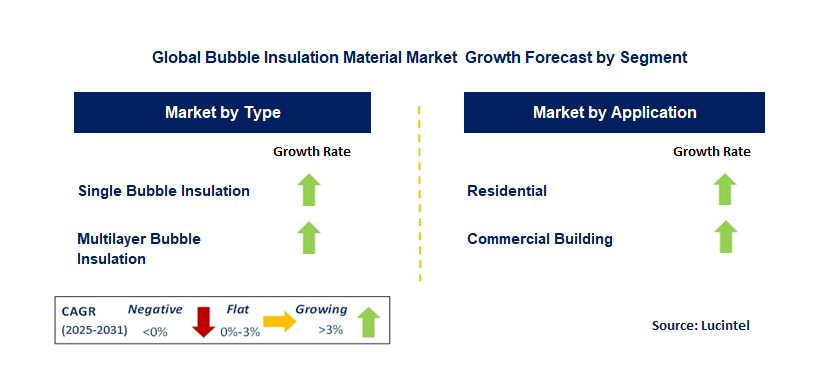
• Single Bubble Insulation
• Multilayer Bubble Insulation
• Residential
• Commercial Building
• North America
• Europe
• Asia Pacific
• The Rest of the World
• United States: In the United States, the market of the bubble insulation material has been increased by the energy-efficient building material requirement and sustainable construction practice push. The increasing number of regulations imposed on the consumption of energy for the residential and commercial buildings is leading to an increased uptake of advanced insulation material. Lightweight properties and easy-to-install products, which are advantages of bubble insulation products, increase their demand in the construction sector. Besides, the increasing usage of packaging in temperature control shipping solutions increases the demand in the packaging industry. The companies are more focused on product innovation in terms of eco-friendly bubble insulation, recyclable in nature.
• China: China is a large market for the global bubble insulation material market. The demand is increased as industries focus on enhanced energy efficiency, which saves construction costs. In particular, the construction and transportation sectors have seen a surge in the use of bubble insulation materials due to their ability to maintain temperature control while being cost-effective. The government’s emphasis on green building standards and energy efficiency is driving demand for these insulation solutions. Chinese manufacturers are innovating in new types of bubble insulation, which provide superior thermal performance while being lightweight and affordable, thus becoming an attractive product for the domestic as well as international markets.
• Germany: In Germany, the demand for bubble insulation material is closely linked to the country’s strong commitment to energy-efficient construction and sustainability. The construction industry is shifting toward green and low-energy buildings, so the bubble insulation material has emerged as a leader in the market due to its high thermal insulation properties and eco-friendliness. The favorable government policies of Germany, such as the Energy Saving Ordinance (EnEV), are favoring the growth of this market. The automotive industry is also a significant consumer of bubble insulation materials, especially for thermal management in electric vehicles. Manufacturers in Germany are focusing on producing high-quality, sustainable insulation solutions to meet these market needs.
• India: India’s bubble insulation material market is expanding as the country faces rapid urbanization and an increasing demand for energy-efficient solutions in construction. Emerging awareness about building energy conservation has increased demand in high-performance insulation material. Moreover, the country’s growing e-commerce and logistics industries have created a need for bubble insulation in packaging applications where goods are transported without altering their original shape. The government initiative to keep buildings sustainable and energy efficient would support the incorporation of bubble insulation materials into commercial as well as residential construction projects. Indian manufacturers also seem to produce low-cost, high-grade bubble insulation alternatives.
• Japan: As the country shifts focus toward a more sustainable world by building energy efficient homes and offices, the market for bubble insulation material is rapidly growing in Japan. Japan is known for a more advanced manufacturing sector that propels the development of newer insulation products. Perhaps the best area where bubble insulation is being implemented is in the construction and automotive industries, prized for their lightness, ease of installation, and excellent thermal insulation properties. On the part of the Japanese government, efforts in promoting energy-efficient, eco-friendly development schemes for urban centers have popularized the use of bubble insulation materials, with manufacturers offering products that meet strict performance standards and guidelines for environmental conservation.


• Krautz-Temax
• Innovative Insulation
• Dunmore
• Fi-Foil Company
• BMI Group
• SuperFoil
• Covertech Fabricating
• Soprema
• Insulapack
• Shiv Sales Corporation Q5. Which bubble insulation material market segment will be the largest in future? Answer: Lucintel forecasts that multilayer bubble insulation is expected to witness higher growth over the forecast period due to rising demand for energy-efficient, lightweight, and cost-effective insulation drives multilayer bubble insulation growth. Q6. In bubble insulation material market , which region is expected to be the largest in next 5 years? Answer: APAC is expected to witness the highest growth over the forecast period. Q7. Do we receive customization in this report? Answer: Yes, Lucintel provides 10% customization without any additional cost.


Choose a license that fits your team. Instant PDF delivery.
Prices exclude taxes. Instant delivery. Custom licensing available on request.
Market Report · July 22, 2026
Market Report · July 17, 2026
Market Report · July 17, 2026
Trusted partner for strategic intelligence and business growth


Receive a complimentary market analysis tailored to your industry. Our analysts will identify key growth opportunities and competitive dynamics specific to your business.

Market size, growth rate, and key trend analysis for your specific sector.

Top competitor positioning and market share analysis.

Strategic recommendations backed by data-driven insights.
Get curated market intelligence and competitive moves straight to your inbox.
By subscribing, you agree to receive our monthly insights. Unsubscribe anytime.
Receive a complimentary market analysis tailored to your industry. Our analysts will identify key growth opportunities and competitive dynamics specific to your business.
Market size, growth rate, and key trend analysis for your specific sector.
Top competitor positioning and market share analysis.
Strategic recommendations backed by data-driven insights.
Get curated market intelligence, emerging trends, and competitive moves straight to your inbox each month.
By subscribing, you agree to receive our monthly insights. Unsubscribe anytime.
We'll send your sample report shortly.