
Market Report · July 31, 2026

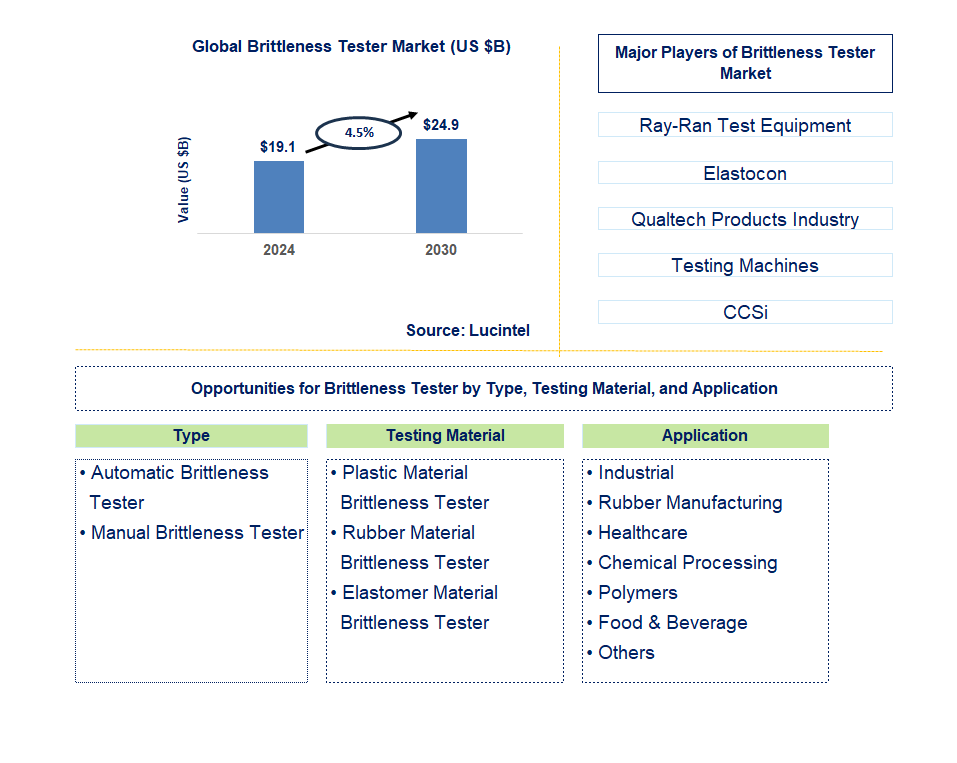
Key data points: The market size in 2030 = $24.9 billion, growth forecast = 4.5% annually for the next 6 years. Scroll below to get more insights. This market report covers trends, opportunities, and forecasts in the global brittleness tester market to 2030 by type (automatic brittleness tester and manual brittleness tester), testing material (plastic material brittleness tester, rubber material brittleness tester, and elastomer material brittleness tester), application (industrial, rubber manufacturing, healthcare, chemical processing, polymers, food & beverage, and others), and region (North America, Europe, Asia Pacific, and the Rest of the World)
We'll send your sample report shortly.
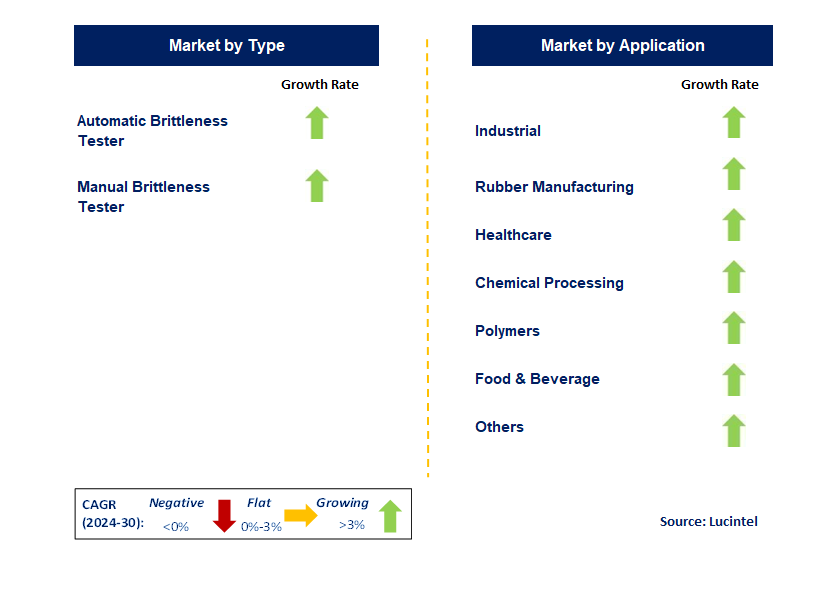
• Lucintel forecasts that, within the type category, automatic is expected to witness the higher growth over the forecast period due to precision and reduced labor requirements.
• Within the application category, industrial is expected to witness the highest growth.
• In terms of region, North America is expected to witness highest growth over the forecast period due to the availability of abundant, varied, and less expensive feedstock energy. Gain valuable insights for your business decisions with our comprehensive 150+ page report.
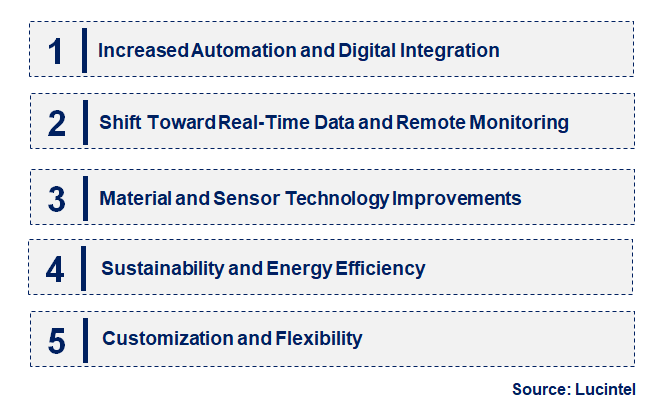
• Increased Automation and Digital Integration: Brittleness testing is becoming increasingly automated and digitalized. Current testing is advancing with the adoption of sophisticated automation features along with digital controls in the operating activities of current testers. This enables streamlined operations and enhances accuracy, minimizing human error and speeding up the tests. More effective data collection and analysis can also be achieved.
• Shift Toward Real-Time Data and Remote Monitoring: The landscape of brittleness testing has changed with the recent shift toward collecting real-time data and remote monitoring. IoT-enabled test equipment can be accessed remotely, providing direct access to pertinent testing data for real-time analysis and prompt decision-making. This will save a significant amount of time, ensure proactive maintenance, and facilitate adjustments.
• Material and Sensor Technology Improvements: Improvements in materials and sensor technology contribute to enhanced brittleness testing performance. New materials and high-resolution sensors have been developed, increasing testing accuracy and the durability of equipment. This has led to more precise detection of material properties and prolonged equipment life.
• Sustainability and Energy Efficiency: Sustainability and energy efficiency are highly emphasized in brittleness testers. Manufacturers are working on producing environmentally friendly models that consume minimal amounts of energy and are recyclable. These efforts align with global initiatives to reduce environmental impact and meet stringent regulatory requirements and consumer demands for greener technologies.
• Customization and Flexibility: Customization and flexibility in brittleness testers are increasingly sought after by industries wanting equipment tailored to meet their specific requirements. Modular and flexible systems allow for customization of testing parameters and configurations, making them suitable for various industries. In general, there is a growing trend in the market: automation, real-time data monitoring, advanced sensor technology, sustainability, and customization. These emerging trends are altering the Brittleness Tester market by pushing innovation while enhancing the precision and efficiency of testing procedures and aligning with the shifting needs of industry and the environment.
• Introduction of Automated Testing Systems: Automated brittleness testers have been introduced, improving testing efficiency and accuracy. They provide automatic testing systems that require less human intervention and reduce human error. Furthermore, they produce consistent results and allow for high throughput of test systems, catering to the requirements of industries that need to analyze large quantities of materials.
• Integration of Advanced Data Analytics: New brittleness testers now integrate powerful advanced data analytics capabilities. This integration allows for better analysis of the acquired data, resulting in insightful information regarding material performance and characteristics. Additional software tools can provide detailed reports and trend analyses to support informed decisions and quality control.
• Advancement in the Development of High-Resolution Sensors: High-resolution sensors integrated into brittleness testers have increased measurement accuracy. The higher resolution amplifies sensitivity, enhancing the detection characteristics of materials. This development promotes more accurate testing and quality control.
• Enhanced User Interfaces and Control Systems: New models include user-friendly interfaces along with improved control systems. These advancements make it easier to operate and set up brittleness testers, reducing training time and complexity in operation. Modern interfaces are intuitive and provide real-time feedback to streamline the process.
• Focus on Compact and Portable Designs: The development trend for brittleness testers has moved toward compact and portable designs. This is ideal for on-site testing and applications where space might be limited. The advantage of a portable model is flexibility and convenience, allowing tests to be carried out at different locations and under varying conditions. Recent innovations in the Brittleness Tester market include automated systems, advanced data analytics, high-resolution sensors, improved user interfaces, and portable designs. These developments enhance testing accuracy, efficiency, and versatility, thereby fulfilling the changing requirements of diverse industries.
• Expansion into Emerging Markets: The Asia-Pacific and Latin American markets are experiencing high growth. In these areas, where industrialization and manufacturing are increasing, the demand for safe material testing equipment is ever-growing. Expansion into new markets, utilizing customized solutions, can help reach new customer segments and drive growth.
• Development of Specialized Testing Solutions: Developing niche brittleness testers for areas such as aerospace or advanced materials creates growth opportunities through customized solutions that meet specific industry requirements. This targets clients seeking precise and tailored testing capabilities.
• Integration of Advanced Technologies: The integration of advanced technologies such as AI and machine learning in brittleness testers maximizes system functionality and sales appeal. It can increase testing accuracy and generate insights on predictive maintenance and data analysis, thus offering advanced solutions to meet complex industry needs.
• Sustainable Focus: This opportunity taps into the growing demand for sustainable and green testing solutions. By reducing energy consumption through recyclable materials, eco-friendly brittleness testers can align with global sustainability trends and attract environmentally conscious customers.
• Partnerships and Collaborations: Collaborating with industry leaders and research-oriented establishments provides access to new technologies and market insights. Such partnerships can lead to the development of innovative solutions through joint ventures and shared expertise, improving market presence. Emerging markets, testing specializations, innovative technologies, sustainability, and collaborations drive the Brittleness Tester market. These factors could serve as levers for innovation, market exploration, and competitive success.
• Technological Advancements: Technological advancements drive the development of more accurate and faster brittleness testers. Automation, advanced sensors, and data analytics enhance testing accuracy and speed according to the needs of various industries and support market growth.
• Better Quality Control: As the focus shifts to quality control and testing of materials in various sectors, including manufacturing, construction, and aerospace, the demand for brittleness testers rises. Such material reliability also ensures compliance with industry standards and regulations regarding safety.
• Expansion of Industrial Activities: Growing industrial activities, particularly in developing countries, enhance the demand for material testing equipment. Expansions and changes in the industry lead to higher adoption of reliable brittleness testing solutions, thus propelling market growth.
• Regulatory Compliance: Increased regulatory requirements concerning material performance and safety have led to the advent of advanced brittleness testers. Adherence to these industry standards ensures quality products and safe usage, supporting the market for high-quality testing solutions.
• Innovations in Test Methods and Technologies: Ongoing innovations in test methods and technology open new prospects for growth. Improvements in the design and functionality of tests enhance the performance of brittleness testers by offering superior solutions to varied testing requirements. Challenges in the brittleness tester market include:
• High Cost of Advanced Equipment: Advanced brittleness testing equipment is costly, making the process prohibitive for some manufacturers. The state-of-the-art technology is expensive and can limit market access, making it challenging for smaller players.
• Complexity of Technology Integration: Integrating new technologies into existing testing systems can be complex. Sophisticated technologies require specialized skills for integration, impacting performance efficiency and necessitating further training and support.
• Regulatory Diversity: The diversity of regulatory requirements across regions poses challenges for manufacturers. Multiple standards and regulations require resources and can complicate market entry and expansion. The Brittleness Tester market is influenced by drivers such as technological upgrades, demand for quality control, industrial expansion, regulatory compliance, and innovation. However, achieving market growth and success will depend on effectively addressing challenges related to equipment costs, technology integration, and regulatory variability.
• Ray-Ran Test Equipment
• Elastocon
• Qualtech Products Industry
• Testing Machines
• CCSi
• Gotech Testing Machines
• YASUDA SEIKI SEISAKUSHO
• Benz
• Nortest
• Ueshima Seisakusho
• Automatic Brittleness Tester
• Manual Brittleness Tester
• Plastic Material Brittleness Tester
• Rubber Material Brittleness Tester
• Elastomer Material Brittleness Tester
• Industrial
• Rubber Manufacturing
• Healthcare
• Chemical Processing
• Polymers
• Food & Beverage
• North America
• Europe
• Asia Pacific
• The Rest of the World
• United States: The development of technology for brittleness testing in the United States focuses on precision and automation. Newer models are designed with advanced digital control capabilities and data analysis, leading to higher accuracy and increased efficiency in material testing. With the integration of IoT, remote monitoring and analysis have improved testing protocols and operational efficiency.
• China: In China, the brittleness tester market is developing, oriented toward low-priced and accessible analysis. Recent achievements include the creation of affordable testing solutions for small, local manufacturers, as well as efforts toward international standardization for higher quality products and better compliance for both domestic sales and export markets.
• Germany: Germany has impressively advanced brittleness tester technology with high precision and long lifespan. Some of the latest developments focus on automated systems, resulting in higher testing speeds and accuracy. Improved software is also utilized for better data analytics and reporting, as quality control is taken seriously across Europe.
• India: The brittleness tester market in India is growing due to rising activity within the industrial sector and increasing quality requirements. Recently, India has begun developing robust, low-cost testing equipment aimed at various industries, emphasizing reliability and user-friendliness.
• Japan: The brittleness tester market in Japan is technologically advanced and innovative. Recent developments include the use of advanced materials and sophisticated engineering techniques to enhance testing equipment performance and longevity. Japanese manufacturers lead in incorporating high-resolution sensors and full automation, making testing accurate and efficient.


• Ray-Ran Test Equipment
• Elastocon
• Qualtech Products Industry
• Testing Machines
• CCSi
• Gotech Testing Machines
• YASUDA SEIKI SEISAKUSHO
• Benz
• Nortest
• Ueshima Seisakusho Q6. Which brittleness tester market segment will be the largest in future? Answer: Lucintel forecasts that automatic is expected to witness the higher growth over the forecast period due to precision and reduced labor requirements. Q7. In brittleness tester market, which region is expected to be the largest in next 6 years? Answer: North America is expected to witness highest growth over the forecast period due to the availability of abundant, varied, and less expensive feedstock energy. Q.8 Do we receive customization in this report? Answer: Yes, Lucintel provides 10% customization without any additional cost.


Choose a license that fits your team. Instant PDF delivery.
Prices exclude taxes. Instant delivery. Custom licensing available on request.
Market Report · July 31, 2026
Market Report · July 22, 2026
Market Report · July 20, 2026
Trusted partner for strategic intelligence and business growth


Receive a complimentary market analysis tailored to your industry. Our analysts will identify key growth opportunities and competitive dynamics specific to your business.

Market size, growth rate, and key trend analysis for your specific sector.

Top competitor positioning and market share analysis.

Strategic recommendations backed by data-driven insights.
Get curated market intelligence and competitive moves straight to your inbox.
By subscribing, you agree to receive our monthly insights. Unsubscribe anytime.
Receive a complimentary market analysis tailored to your industry. Our analysts will identify key growth opportunities and competitive dynamics specific to your business.
Market size, growth rate, and key trend analysis for your specific sector.
Top competitor positioning and market share analysis.
Strategic recommendations backed by data-driven insights.
Get curated market intelligence, emerging trends, and competitive moves straight to your inbox each month.
By subscribing, you agree to receive our monthly insights. Unsubscribe anytime.
We'll send your sample report shortly.