
Market Report · July 22, 2026

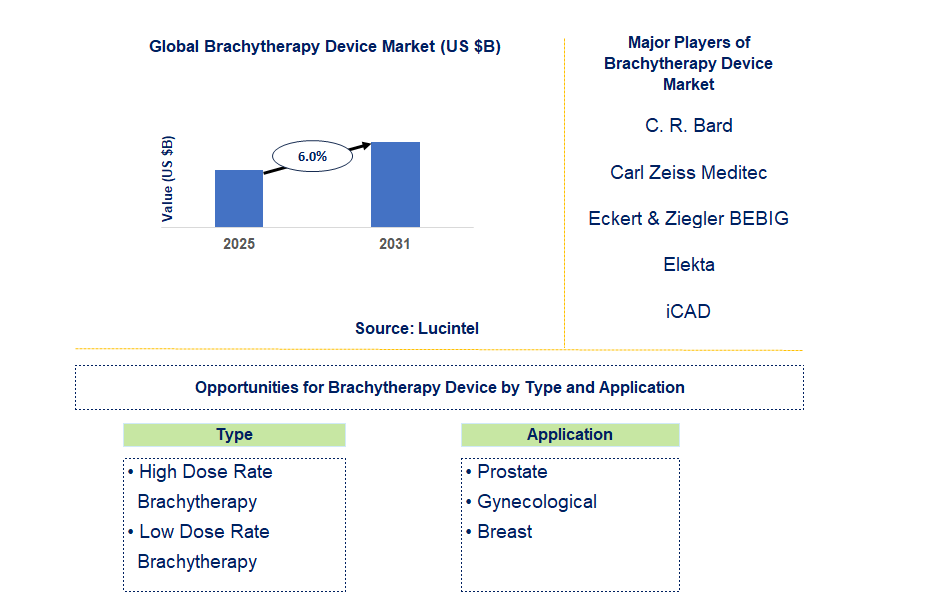
Key data points: The growth forecast = 6.0% annually for the next 7 years. Scroll below to get more insights. This market report covers trends, opportunities and forecasts in brachytherapy device market to 2031 by type (high dose rate brachytherapy and low dose rate brachytherapy), application (prostate, gynecological, and breast), and region (North America, Europe, Asia Pacific, and the Rest of the World)
We'll send your sample report shortly.
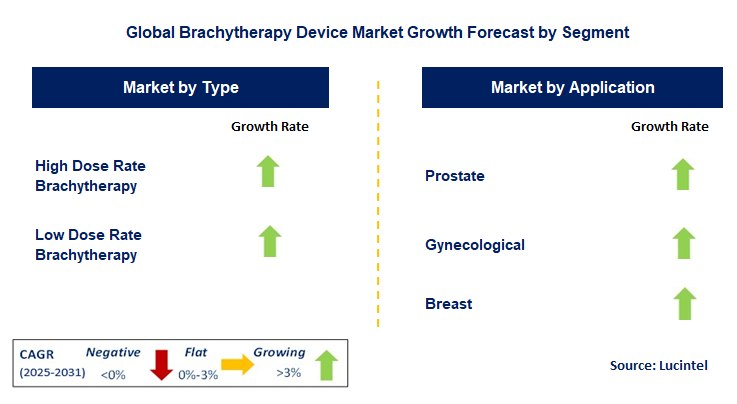
• Lucintel forecasts that, within the type category, high dose rate brachytherapy is expected to witness higher growth over the forecast period.
• Within the application category, prostate is expected to witness the highest growth.
• In terms of region, APAC is expected to witness the highest growth over the forecast period. Gain valuable insights for your business decisions with our comprehensive 150+ page report. Sample figures with some insights are shown below.
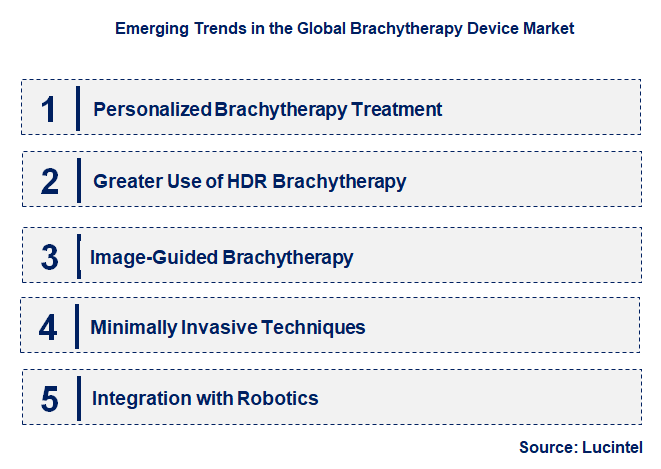
• Personalized Brachytherapy Treatment: Progress in imaging and dosimetry technology is making more individualized treatment choices available in brachytherapy. Individualized treatment plans, made to meet the unique needs of each patient, are improving the accuracy of radiation delivery. This is resulting in better clinical outcomes, such as increased cure rates and reduced side effects. Personalized treatments reduce the cost of healthcare by minimizing follow-up procedures.
• Greater Use of HDR Brachytherapy: High-dose rate (HDR) brachytherapy is gaining popularity because it can deliver more controlled and precise doses of radiation. HDR brachytherapy enables shorter treatment times, which enhances patient comfort and minimizes the risk of radiation exposure to tissues around the tumor. Therefore, HDR systems are finding use in more hospitals and clinics, thus increasing demand.
• Image-Guided Brachytherapy: Image-guided brachytherapy (IGBT) integrates imaging technologies with brachytherapy to enable healthcare professionals to accurately target tumors. IGBT enhances treatment accuracy by tracking the location of the sources of radiation during treatment. IGBT is increasingly being used in the treatment of prostate, cervical, and breast cancers, where targeting is essential to prevent damage to normal tissue.
• Minimally Invasive Techniques: There is increasing movement towards minimally invasive brachytherapy methods. These procedures minimize patient hospital stays and recovery time, which makes treatment easier. The move towards outpatient treatment is also fueling the growth of minimally invasive brachytherapy procedures. This trend is likely to expand as there is increased demand for less invasive treatments across the world.
• Integration with Robotics: The use of robotics within brachytherapy devices is improving the accuracy of radiation delivery. Robotic devices permit more automation, minimizing human error and streamlining the procedure. Robotics-based devices are also opening up remote treatment possibilities, allowing patients in remote or underserved communities to have easier access to quality care. These newer trends are transforming the brachytherapy device market by delivering higher precision, lower side effects, and better patient outcomes. The continued transition toward personalized, minimally invasive, and image-guided treatment is pressuring the market toward more efficient and patient-centric solutions. The increasing convergence of robotics and imaging technologies is fueling innovation, with brachytherapy being a leading feature of contemporary cancer treatment.
• Development of Hybrid Brachytherapy Systems: Hybrid systems, which integrate brachytherapy with external beam radiation treatment, are gaining popularity. Hybrid systems give a better, all-around treatment plan by addressing the tumor as well as the areas surrounding it. Hybrid devices allow for greater precision and lower exposure to healthy tissues, making the treatment more effective.
• Radioactive Source Advancements: Improvements in radioactive sources of brachytherapy, including the availability of new isotopes and source delivery systems, are enhancing treatment effectiveness. The creation of isotopes with shorter half-lives and increased energy helps decrease the overall dose of radiation to patients while sustaining therapeutic efficacy.
• Regulatory Approvals for New Devices: Over the past few years, numerous brachytherapy devices have been approved by regulatory bodies such as the FDA and European Medicines Agency. These approvals created a window of opportunity in the market for new technologies, allowing practitioners to access new treatment modalities. Efficient approval procedures have also hastened the launch of new innovative devices, which further fueled market growth.
• Miniaturization of Devices: Miniaturization of brachytherapy equipment has made it possible to have more flexible, transportable treatment. Smaller devices are especially good for prostate cancer therapies because they provide more comfort for patients and convenience for practitioners. This trend also promotes outpatient care models and the ability to recover faster.
• Greater Collaboration Between Manufacturers and Hospitals: Partnerships between manufacturers and healthcare organizations are facilitating the advancement of better and more affordable brachytherapy solutions. Through the exchange of knowledge and resources, these partnerships are enhancing the quality of care and broadening access to advanced brachytherapy technologies, especially in developing countries. These advances are rendering brachytherapy more effective, accessible, and efficient. The transition towards hybrid systems, new radioactive materials, and compact, portable devices is enhancing treatment accuracy and patient comfort. The regulatory framework is facilitating the quick availability of innovative devices, thereby expanding the market. These advances are also promoting stronger collaboration between manufacturers and healthcare practitioners, with more patients being able to benefit from cutting-edge brachytherapy technologies.
• Growth of Brachytherapy in Prostate Cancer Therapy: Prostate cancer is still among the most prevalent cancers worldwide, and the need for sophisticated treatment modalities such as brachytherapy is increasing. The fact that brachytherapy can provide targeted radiation with minimal side effects has made it a highly recommended option for patients suffering from prostate cancer. Growing the application of brachytherapy in this context offers enormous growth opportunities for device makers.
• Gynecological Cancer Applications Growth: Gynecologic cancers, including cervical and endometrial cancer, is another significant growth opportunity for brachytherapy equipment. The growing emphasis on targeted therapies that minimize radiation doses to neighboring tissues is stimulating demand for dedicated brachytherapy equipment in these applications. Improvements in imaging and treatment modalities are facilitating improved outcomes for gynecologic cancer patients.
• Increased Demand in Developing Markets: Growing markets in Asia-Pacific and Africa are a huge growth prospect for the Brachytherapy device market. With rising cancer incidence and strengthening healthcare infrastructure, advanced cancer therapy including brachytherapy is increasingly being sought after. Companies can leverage these markets by providing affordable devices that address the requirements of these markets.
• Technological Innovation in Personalized Therapies: Personalized medicine is an emerging field in oncology, and brachytherapy is being used with greater frequency to administer highly targeted doses of radiation according to individual patient characteristics. New imaging technologies and dosimetry are making more personalized brachytherapy therapies possible, providing new opportunities for manufacturers to create customized solutions.
• Growth in Outpatient Brachytherapy: As medical systems globally shift towards outpatient care paradigms, the demand for brachytherapy equipment for use in outpatient facilities is growing. The increased attention towards minimizing hospital stay and recovery time is fueling innovation around portable, easy-to-use brachytherapy equipment. Companies able to deliver these will realize substantial growth opportunities. These growth prospects represent the continued development of the brachytherapy market. By targeting high-priority applications like prostate and gynecological cancers, moving into developing regions, and capitalizing on technology innovations in tailored treatments, the industry is poised for substantial expansion. The trend towards outpatient treatment further bolsters the potential for the market for easy and effective brachytherapy devices.
• C. R. Bard
• Carl Zeiss Meditec
• Eckert & Ziegler BEBIG
• Elekta
• iCAD
• High Dose Rate Brachytherapy
• Low Dose Rate Brachytherapy
• Prostate
• Gynecological
• Breast
• North America
• Europe
• Asia Pacific
• The Rest of the World
• United States: The United States has witnessed considerable growth in the brachytherapy device market as a result of the heightened focus on research concerning prostate cancer and gynecologic cancers. New, more sophisticated brachytherapy devices have been approved by the FDA, including devices with the ability to utilize real-time imaging. This has resulted in improved precision and outcomes for patients, especially for localized cancers. Additionally, innovations in the creation of new isotopes for brachytherapy, including iodine-125 and palladium-103, are adding to diversification in treatments. The U.S. is also at the forefront in the use of advanced delivery systems, with more emphasis on robotic-assisted treatments to further reduce side effects and enhance targeting.
• China: China has also made remarkable progress in embracing brachytherapy devices because of its huge and aging population, which has contributed to the increasing incidence of cancer. The government is investing more in healthcare infrastructure, including cancer treatment technologies. Consequently, brachytherapy procedures have been on the rise in hospitals nationwide. Although the market is not yet mature, there has been a trend towards more sophisticated, minimally invasive methods. Chinese domestic manufacturers are starting to emerge, offering cheaper alternatives, which are slowly pushing up the rate of adoption of brachytherapy devices, particularly in urban China.
• Germany: Germany is still one of the foremost markets for brachytherapy devices in Europe due to its well-developed healthcare system and high adoption of advanced cancer therapy. New additions in Germany include new software technologies for planning and more advanced delivery systems, offering better accuracy in brachytherapy. The nation also has high reimbursement rates for healthcare, which provides easier access to advanced devices for hospitals and patients alike. Additionally, alliances among top German medical centers and device companies have led to innovations in brachytherapy devices that address the increasing need for customized treatment plans.
• India: The Indian market for brachytherapy devices is increasing steadily because of an increase in cancer cases, particularly prostate and cervical cancers. In spite of the challenges like high expenditure on treatment, there has been a growing use of brachytherapy because of its efficiency and comparatively low cost in comparison with external beam radiotherapy. The government‘s emphasis on healthcare development and better medical infrastructure is boosting the development of brachytherapy devices in government hospitals. Moreover, the Indian market is being penetrated by international firms, offering advanced technology at a lower price, thereby raising the rate of adoption.
• Japan: Japan has emerged as a prime contributor to the market for brachytherapy devices, with a massive incidence of cancer owing to the country‘s aged population. Japan‘s healthcare system is extremely well-developed, and there is an increasing uptake of brachytherapy devices, particularly for prostate treatments and gynecological purposes. Technological advances in brachytherapy technology, including the application of real-time images to enhance targeting, are leading to more effective and accurate treatments. Japan is also witnessing the implementation of robotic technology in brachytherapy treatments, which enhances the delivery of radiation and reduces side effects for patients.


• C. R. Bard
• Carl Zeiss Meditec
• Eckert & Ziegler BEBIG
• Elekta
• iCAD Q5. Which brachytherapy device market segment will be the largest in future? Answer: Lucintel forecasts that, within the type category, high dose rate brachytherapy is expected to witness higher growth over the forecast period. Q6. In brachytherapy device market, which region is expected to be the largest in next 5 years? Answer: In terms of region, APAC is expected to witness the highest growth over the forecast period. Q7. Do we receive customization in this report? Answer: Yes, Lucintel provides 10% customization without any additional cost.


Choose a license that fits your team. Instant PDF delivery.
Prices exclude taxes. Instant delivery. Custom licensing available on request.
Market Report · July 22, 2026
Market Report · July 22, 2026
Market Report · July 22, 2026
Trusted partner for strategic intelligence and business growth


Receive a complimentary market analysis tailored to your industry. Our analysts will identify key growth opportunities and competitive dynamics specific to your business.

Market size, growth rate, and key trend analysis for your specific sector.

Top competitor positioning and market share analysis.

Strategic recommendations backed by data-driven insights.
Get curated market intelligence and competitive moves straight to your inbox.
By subscribing, you agree to receive our monthly insights. Unsubscribe anytime.
Receive a complimentary market analysis tailored to your industry. Our analysts will identify key growth opportunities and competitive dynamics specific to your business.
Market size, growth rate, and key trend analysis for your specific sector.
Top competitor positioning and market share analysis.
Strategic recommendations backed by data-driven insights.
Get curated market intelligence, emerging trends, and competitive moves straight to your inbox each month.
By subscribing, you agree to receive our monthly insights. Unsubscribe anytime.
We'll send your sample report shortly.