
Market Report · July 22, 2026

Key data points: The growth forecast = 10.2% annually for the next 7 years. Scroll below to get more insights. This market report covers Trends, opportunity and forecast in bio-mems devices market to 2031 by type (gyroscopes, accelerometers, and others), application (neural implants, bionics, ent implants, and others), and region (North America, Europe, Asia Pacific, and the Rest of the World)
We'll send your sample report shortly.
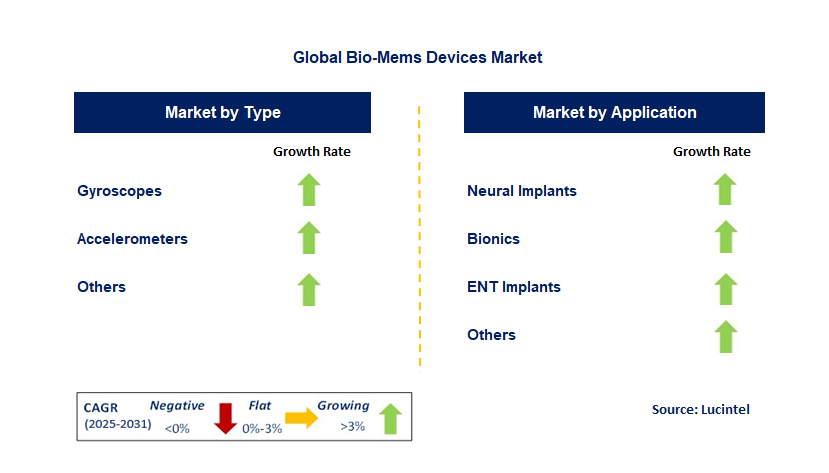
• Lucintel forecasts that, within the type category, accelerometer is expected to witness the highest growth over the forecast period.
• Within the application category, neural implants is expected to witness the highest growth.
• In terms of region, APAC is expected to witness the highest growth over the forecast period.
Gain valuable insights for your business decisions with our comprehensive 150+ page report. Sample figures with some insights are shown below.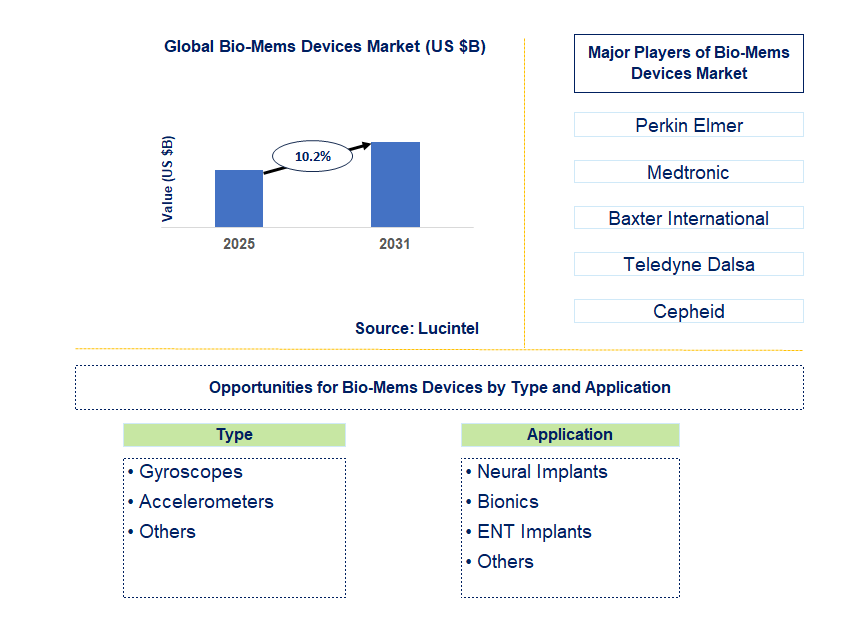
• Wearable Health Devices: Wearables incorporating Bio-MEMS technology are gaining popularity due to their ability to monitor a wide range of health metrics, such as blood glucose levels, heart rate, and oxygen saturation. These devices are offering patients real-time feedback and reducing the need for frequent visits to healthcare providers. The trend is contributing to personalized healthcare by allowing for continuous monitoring of vital signs.
• Integration of Bio-Sensing Technologies: The incorporation of bio-sensing elements in MEMS devices is enhancing diagnostic capabilities, enabling faster and more accurate detection of diseases. Bio-sensing MEMS devices are being used to monitor biomarkers in real-time, improving the diagnosis of chronic diseases like diabetes, cardiovascular conditions, and cancer. These sensors also offer point-of-care diagnostic solutions, improving accessibility in remote areas.
• Advancements in Drug Delivery Systems: Bio-MEMS devices are being developed for more efficient and precise drug delivery, offering new treatments for conditions such as cancer and diabetes. These devices are capable of controlled, sustained release of drugs, improving therapeutic outcomes and reducing side effects. The trend towards smart drug delivery systems is expected to grow significantly, addressing the need for personalized treatment regimens.
• Miniaturization of Devices: The trend of miniaturizing Bio-MEMS devices is driving the development of more compact and portable healthcare solutions. Smaller devices can be used in a wider range of applications, such as implantable sensors, portable diagnostic tools, and wearable health devices. This miniaturization makes Bio-MEMS technology more accessible and cost-effective for both developed and emerging markets.
• AI and Machine Learning Integration: The integration of artificial intelligence (AI) and machine learning (ML) with Bio-MEMS devices is advancing the field of personalized healthcare. AI-powered MEMS devices can analyze patient data in real-time, predict health risks, and provide tailored treatment recommendations. The use of AI in Bio-MEMS devices is helping improve decision-making and patient outcomes while streamlining healthcare processes.
The trends of wearable health devices, bio-sensing technologies, advanced drug delivery systems, miniaturization, and AI integration are reshaping the Bio-MEMS device market. These innovations are improving healthcare accessibility, enabling personalized treatments, and driving the development of more efficient, cost-effective solutions that will be crucial in the future of healthcare.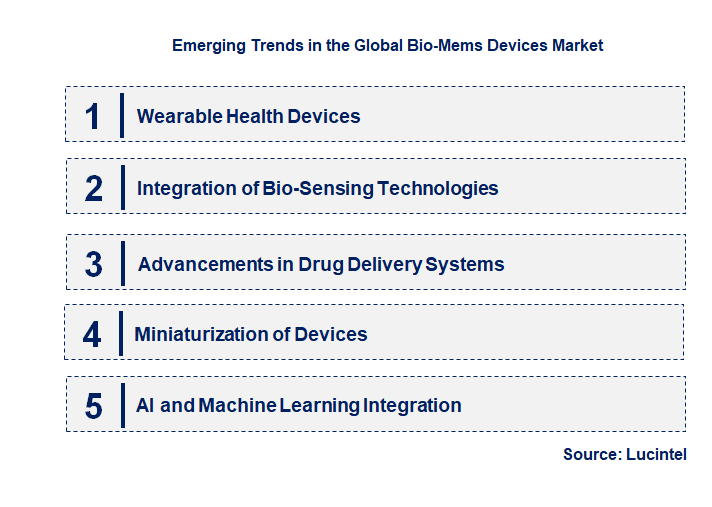
• Wireless Bio-Sensing Devices: Wireless bio-sensing devices have been developed to monitor patients remotely and in real-time. These devices, which integrate Bio-MEMS technology, can track various health parameters like glucose levels, heart rate, and blood oxygen levels. This innovation allows for continuous monitoring, reducing hospital visits and improving patient care through real-time data transmission to healthcare providers.
• Advanced Implantable Sensors: Implantable Bio-MEMS sensors are being used to monitor internal conditions such as blood pressure, glucose levels, and organ function. These devices are proving to be essential in the management of chronic diseases like diabetes and cardiovascular conditions. With miniaturization and biocompatibility improvements, these sensors are becoming more comfortable for long-term use, enhancing patient quality of life.
• Integration with IoT for Patient Monitoring: The integration of Bio-MEMS devices with the Internet of Things (IoT) is enhancing remote patient monitoring capabilities. IoT-connected Bio-MEMS devices can transmit data to healthcare providers, enabling more efficient care management and early detection of health issues. This development is particularly important in chronic disease management and elderly care, where continuous monitoring is crucial.
• Smart Drug Delivery Systems: Smart drug delivery systems using Bio-MEMS technology are being developed to provide targeted and controlled drug release. These systems are capable of delivering drugs based on specific triggers, such as blood glucose levels or pH changes. This innovation ensures more accurate dosing and reduces side effects, which is especially important for chronic conditions requiring ongoing treatment.
• Miniaturization for Enhanced Accessibility: Bio-MEMS devices are becoming increasingly miniaturized, allowing them to be used in a wider range of applications. Smaller, portable devices are now available for point-of-care diagnostics and home monitoring, offering greater accessibility to healthcare services. This trend is making Bio-MEMS technology more accessible in both developed and emerging markets.
Recent developments, such as wireless bio-sensing devices, implantable sensors, IoT integration, smart drug delivery systems, and miniaturization, are significantly enhancing the bio-MEM device market. These innovations are improving the efficiency, affordability, and accessibility of healthcare, particularly in chronic disease management, patient monitoring, and personalized treatment.• Wearable Health Monitoring: Wearable Bio-MEMS devices are a significant growth opportunity, driven by the demand for continuous health monitoring. These devices can track vital signs such as heart rate, glucose levels, and oxygen saturation, providing real-time data to patients and healthcare providers. With the rise in chronic diseases, wearables are becoming integral to personalized healthcare solutions.
• Remote Patient Monitoring: The use of Bio-MEMS devices in remote patient monitoring is growing as healthcare systems shift towards more accessible, home-based care. These devices can transmit real-time data to healthcare professionals, enabling early intervention and better management of chronic conditions. The increasing adoption of telemedicine is driving this trend, especially in rural and underserved areas.
• Smart Drug Delivery Systems: The development of smart drug delivery systems using Bio-MEMS technology offers a growth opportunity for the market. These systems allow for targeted drug release, minimizing side effects and improving treatment efficacy. With the rise in chronic conditions such as diabetes, smart drug delivery systems are expected to play a critical role in improving patient care.
• Miniaturized Implantable Devices: Miniaturization of Bio-MEMS devices for implantable sensors presents significant growth potential. Smaller, more efficient devices can be used for continuous monitoring of internal health parameters, offering better outcomes for patients with chronic conditions. As the need for less invasive medical devices grows, this segment is expected to expand rapidly.
• Diagnostics and Point-of-Care Testing: The application of Bio-MEMS technology in diagnostics and point-of-care testing presents a major opportunity. Devices that enable rapid, on-site diagnosis of diseases such as cancer, diabetes, and infectious diseases are in high demand. The ability to perform real-time diagnostics with minimal equipment is a major growth factor for Bio-MEMS devices.
Strategic growth opportunities in wearable health monitoring, remote patient monitoring, smart drug delivery systems, miniaturized implantable devices, and diagnostics are driving the expansion of the bio-MEM device market. These applications are improving patient outcomes, enhancing accessibility to healthcare, and driving the adoption of innovative healthcare solutions.• Perkin Elmer
• Medtronic
• Baxter International
• Teledyne Dalsa
• Cepheid
• Gyroscopes
• Accelerometers
• Others
• Neural Implants
• Bionics
• Ent Implants
• Others
• North America
• Europe
• Asia Pacific
• The Rest of the World
• United States: In the United States, the Bio-MEMS device market is flourishing, particularly in the fields of diagnostics and medical implants. Advances in wireless bio-sensing technology are enhancing patient monitoring systems, while the integration of MEMS devices in wearable health devices has gained momentum. The U.S. government and private investors are pouring resources into healthcare technology, with an emphasis on developing more cost-effective, patient-friendly Bio-MEMS devices that can provide real-time diagnostics and drug delivery solutions.
• China: China’s Bio-MEMS device market is expanding rapidly due to a surge in investment and government support for biotech and medical technology industries. The Chinese government has introduced several initiatives to boost the development of advanced healthcare technologies, including Bio-MEMS devices for diagnostics, monitoring, and drug delivery. Chinese firms are increasingly focusing on integrating Bio-MEMS technology into medical devices for use in both urban and rural healthcare settings, addressing the growing demand for affordable medical solutions.
• Germany: Germany is a key player in the European Bio-MEMS device market, with strong emphasis on innovation and medical technology development. Companies in Germany are focusing on miniaturizing Bio-MEMS devices for applications such as implantable sensors, wearables, and drug delivery systems. The country’s well-established healthcare sector, combined with government funding for biotech startups, is driving the adoption of MEMS technology in precision medicine and chronic disease management, offering new possibilities for personalized healthcare.
• India: India’s Bio-MEMS device market is growing, with a particular focus on affordable medical technologies and diagnostics. The demand for cost-effective healthcare solutions, driven by the country’s large population and the rise in chronic diseases, is encouraging the development of Bio-MEMS devices. Indian companies are working on innovative drug delivery systems and diagnostic devices to address the needs of the healthcare system, making Bio-MEMS technology more accessible in both urban and rural areas.
• Japan: Japan has a highly advanced Bio-MEMS device market, with a strong focus on integrating MEMS technology into healthcare solutions. Japanese companies are leading the development of miniature implantable devices, diagnostics, and drug delivery systems. The country’s aging population and advanced healthcare infrastructure create a significant demand for Bio-MEMS devices. Japan’s commitment to technological innovation is driving rapid growth in this market, particularly in the areas of remote monitoring and personalized healthcare solutions.


• Perkin Elmer
• Medtronic
• Baxter International
• Teledyne Dalsa
• Cepheid
Q5. Which bio-mems devices market segment will be the largest in future?

Choose a license that fits your team. Instant PDF delivery.
Prices exclude taxes. Instant delivery. Custom licensing available on request.
Market Report · July 22, 2026
Market Report · July 22, 2026
Market Report · July 22, 2026
Trusted partner for strategic intelligence and business growth


Receive a complimentary market analysis tailored to your industry. Our analysts will identify key growth opportunities and competitive dynamics specific to your business.

Market size, growth rate, and key trend analysis for your specific sector.

Top competitor positioning and market share analysis.

Strategic recommendations backed by data-driven insights.
Get curated market intelligence and competitive moves straight to your inbox.
By subscribing, you agree to receive our monthly insights. Unsubscribe anytime.
Receive a complimentary market analysis tailored to your industry. Our analysts will identify key growth opportunities and competitive dynamics specific to your business.
Market size, growth rate, and key trend analysis for your specific sector.
Top competitor positioning and market share analysis.
Strategic recommendations backed by data-driven insights.
Get curated market intelligence, emerging trends, and competitive moves straight to your inbox each month.
By subscribing, you agree to receive our monthly insights. Unsubscribe anytime.
We'll send your sample report shortly.