
Market Report · July 22, 2026

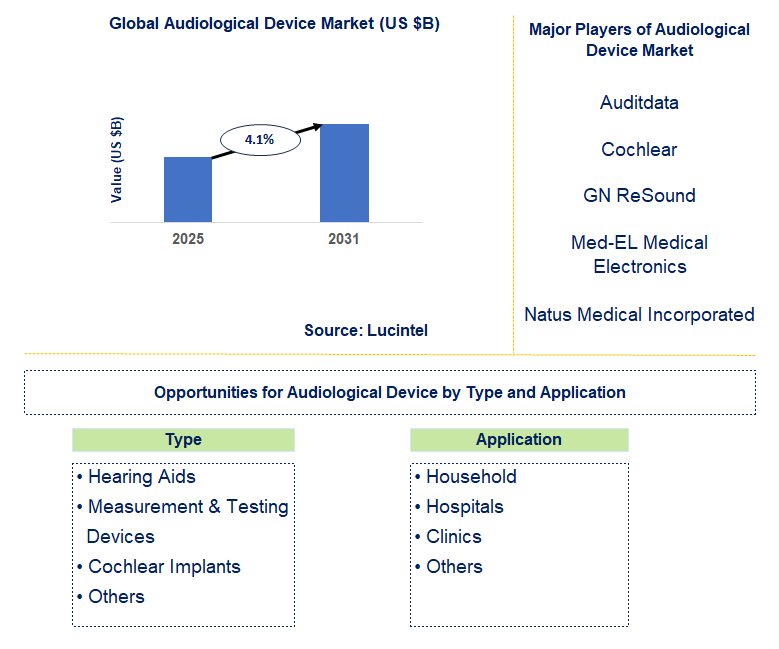
Key data points: The growth forecast = 4.1% annually for the next 7 years. Scroll below to get more insights. This market report covers trends, opportunities and forecasts in audiological device market to 2031 by type (hearing aids, measurement & testing devices, cochlear implants, and others), application (household, hospitals, clinics, and others), and region (North America, Europe, Asia Pacific, and the Rest of the World)
We'll send your sample report shortly.
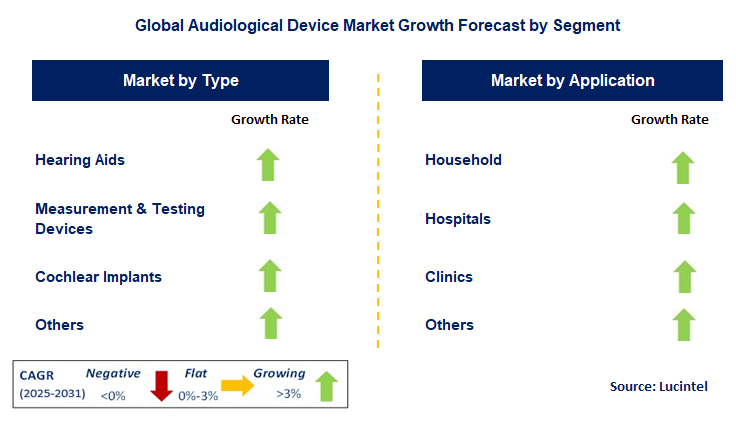
• Lucintel forecasts that, within the type category, hearing aid is expected to witness the highest growth over the forecast period.
• Within the application category, household is expected to witness the highest growth.
• In terms of region, APAC is expected to witness the highest growth over the forecast period. Gain valuable insights for your business decisions with our comprehensive 150+ page report. Sample figures with some insights are shown below.
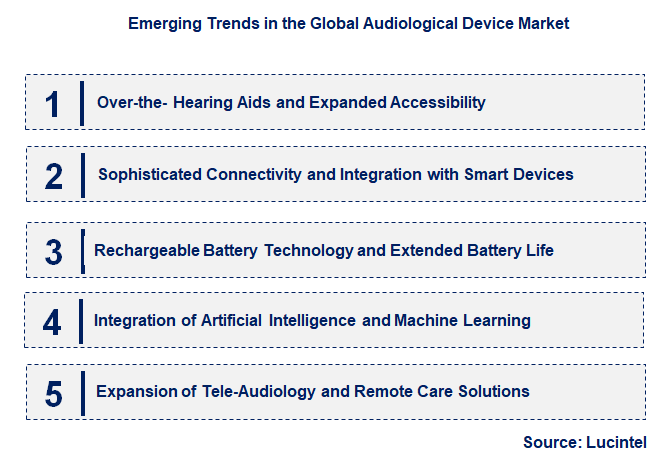
• Over-the- Hearing Aids and Expanded Accessibility: It is transforming the market, especially in nations such as the United States, by bringing simple hearing aids directly to the public without a prescription or specialist fitting. It is intended to reduce costs and bypass conventional restrictions for patients with mild to moderate hearing impairment. The effect is substantial: it opens up hearing care to the many who could not afford or obtain conventional devices previously, and encourages conventional manufacturers to get more competitive on price and usability.
• Sophisticated Connectivity and Integration with Smart Devices: This trend is centered on wireless connectivity with complete ease, mainly using Bluetooth Low Energy (BLE) technology, where hearing aids can be directly connected to smartphones, TVs, and other smart devices. This allows direct audio streaming of calls, music, and media to hearing aids, making hearing aids more universal personal audio devices. The effect is a significantly improved user experience with increased convenience, better sound quality for streamed audio, and the option to change hearing aid settings with simple smartphone apps, leading to increased adoption and satisfaction.
• Rechargeable Battery Technology and Extended Battery Life: This trend alleviates one of the major hassle points among hearing aid users: repeatedly replacing small disposable batteries. The universal adoption of lithium-ion rechargeable batteries provides ease of use, eliminates waste to the environment, and delivers a full day of power on a single charge. The result is a substantial benefit in terms of user convenience and long-term operating cost savings, enhancing the appeal and usability of hearing aids for the senior population who may have difficulty with small battery manipulation.
• Integration of Artificial Intelligence and Machine Learning: This trend is about integrating AI and machine learning algorithms into hearing aids to allow for intelligent sound processing. AI enables a device to process complex sound environments in real-time, distinguish between speech and background noise, and adjust settings automatically to provide the best listening experience. The result is a more natural, unforced hearing experience, especially in difficult listening environments such as restaurants, lowering cognitive burden on the user and delivering personalized sound amplification that dynamically adjusts to what they are experiencing.
• Expansion of Tele-Audiology and Remote Care Solutions: This trend uses online platforms and connectivity to deliver hearing healthcare remotely. This involves remote hearing screenings, virtual consultations, and even remote fitting and adjustment of hearing aids by audiologists. The effect is a much greater accessibility to hearing care, particularly for those in rural areas, those with mobility challenges, or those who need follow-up without having to make a personal visit. This trend increases the convenience, effectiveness, and perhaps lowers the cost of audiology services. These nascent trends are essentially redefining the audiological device market by increasing access to hearing technology, ease of use, and potency. The increase in OTC alternatives, combined with high-speed connectivity, rechargeable energy, AI-powered intelligence, and remote care features, is making hearing healthcare more democratic. This shift not only grows the market's reach to a larger population but also improves the overall quality of life for the hearing impaired through more individualized, convenient, and efficient solutions.
• FDA Authorization and Release of Over-the-Counter Hearing Aids: A critical recent advancement, particularly in the United States, is the FDA's creation of a regulatory class for OTC hearing aids. This enables adults with self-perceived mild-to-moderate hearing loss to buy hearing aids directly without a medical evaluation or prescription. The effect is dramatic, opening up access to hearing care by greatly reducing cost and barriers, which might expand the market to millions of underserved individuals and redefine traditional audiology service delivery models.
• Artificial Intelligence Integration for Improved Sound Processing: Recent advances have involved leading manufacturers incorporating advanced AI and machine learning processors into their hearing aids. Advanced AI and machine learning algorithms used in these intelligent systems process rich soundscapes in real-time, minimizing background noise and emphasizing speech clarity automatically. The result is a greatly enhanced listening experience, especially in difficult situations, enabling active engagement in conversations and less mental effort to hear, resulting in increased user satisfaction and penetration.
• Mass Use of Rechargeable Hearing Aid Technology: The transition from disposable batteries to built-in rechargeable lithium-ion batteries has become a common feature in most new hearing aid designs. This innovation provides users with a day's power on one charge, with easy charging cases. The effect is increased user convenience, obviating the cumbersome process of regularly changing small batteries, and environmental sustainability as it cuts down battery waste. This aspect greatly enhances the overall user experience and is popular across a wider age group.
• Expansion of Tele-Audiology Services and Remote Adjustments: The pandemic hastened tele-audiology platform development and implementation, enabling audiologists to provide remote consultations, hearing tests, and even remote adjustment of hearing aid settings. The growth is based on advanced connectivity and digital technology. The effect is greater accessibility to professional hearing care, particularly for those in remote communities or with mobility issues, making follow-up services more convenient and efficient, thus enhancing patient compliance and device efficacy.
• Introduction of Health Monitoring and Connectivity Features: Outside of core hearing amplification, more recent advancements are the addition of health monitoring functionalities (e.g., step tracking, heart rate monitoring, fall detection) and extended connectivity (e.g., direct streaming to smartphones, TVs, smart home systems) into hearing aids. The effect is turning hearing aids into multi-purpose wellness devices, which resonates with tech-evolved consumers and provides additional value, encouraging overall health and safety, thus extending the appeal of the market beyond hearing correction. These new advancements are collectively shaping the audiological device market by providing hearing solutions that are more integrated into users' lives, smarter, and accessible. The presence of OTC options, combined with AI-based sound processing, easy-to-recharge technology, increasing tele-audiology services, and built-in health features, is expanding market access and improving satisfaction. This continuous innovation is making sure audiological devices keep developing as a core aid to cure hearing loss and ensure overall health.
• Increasing Consumer Access and Affordability: The availability of OTC hearing aids represents a huge growth opportunity, especially for those with mild to moderate hearing loss, who have been underserved by conventional channels because of cost or accessibility issues. Strategic opportunities are to create easy-to-use, self-fitting products, combined with high-quality online support and transparent consumer education. This segment can potentially grow the overall market significantly by accessing a large, hitherto untouched population, generating volume sales, and competitive pricing.
• Using AI and Machine Learning for Customization: The growing demand for highly tailored hearing experiences represents a strong growth opportunity. Manufacturers can utilize AI and machine learning to create products that learn about personal preferences, adjust to certain listening conditions, and optimize sound processing according to real-time user input. Opportunities range from providing highly personalized settings, adaptive noise filtering, and personalized sound profiles based on unique hearing loss characteristics, thus improving customer satisfaction and premium sales.
• Increasing Access and Convenience for Patients: The fast expansion of tele-audiology presents a strategic window to provide hearing healthcare services remotely. These include virtual consultations, remote hearing tests, and remote fitting and adjustments of hearing aids. Opportunities exist in creating comprehensive tele-health platforms that operate to link patients with audiologists effectively, making professional care easily accessible across geographical locations. This framework can significantly enhance follow-up care, patient compliance, and treatment accessibility, particularly in underserved populations.
• Integration with Consumer Electronics and Health Monitoring: The move to embed hearing aids in other consumer devices, such as smartphones and smartwatches, and add health monitoring capabilities creates a novel growth opportunity. This creates hearing aids as multi-purpose "hearables" that, in addition to treating hearing loss, monitor health metrics, offer fitness guidance, or translate languages. Strategic opportunities include creating products with enticing additional benefits, attracting technology-forward consumers, and making hearing aids obligatory wellness tools.
• Early Intervention and Specialized Devices: Treating hearing loss in children from an early stage is imperative for their progress. This sector presents huge growth potential, especially for developing specialized audiological equipment specific to pediatric applications. This encompasses durable, kid-tested hearing aids, cochlear implants for smaller anatomies, and diagnostic equipment optimized for screening infants. Strategic emphasis on early detection initiatives, family support, and ongoing technological innovations in pediatric equipment can result in enhanced long-term results and a loyal market segment. These growth opportunities are significantly influencing the audiological device market by stimulating product innovation, service delivery innovation, and geographic expansion. The emphasis on OTC availability, individualized AI-based solutions, remote care models, consumer health tech integration, and specialized pediatric devices is propelling the market toward increased inclusivity, productivity, and high-functionality. Seizing these opportunities will not only power market growth but also drastically enhance the lives of millions who suffer from hearing loss across the globe.
• Auditdata
• Cochlear
• GN ReSound
• Med-EL Medical Electronics
• Natus Medical Incorporated
• Sonova Holding
• Advanced Bionics Corporation
• Phonak
• Sivantos Group
• Starkey Hearing Technologies
• Hearing Aids
• Measurement & Testing Devices
• Cochlear Implants
• Others
• Household
• Hospitals
• Clinics
• Others
• North America
• Europe
• Asia Pacific
• The Rest of the World
• United States: The United States market for audiological devices is driven by innovation to a great extent through the launch of over-the-counter (OTC) hearing aids. This regulatory shift seeks to promote affordability and availability for mild to moderate hearing impairment. Current advancements have been a push towards sophisticated digital functionality like the incorporation of artificial intelligence in sound processing for individualized performance, Bluetooth integration for hassle-free device pairing, and long-life rechargeable battery technologies. Telehealth offerings for remote audiology services are also a continued investment for expanded reach and convenience to patients.
• China: The market for audiological devices is growing rapidly, backed by its huge population of elderly citizens and rising government efforts toward enhanced hearing healthcare accessibility. Some of the latest changes include a high emphasis on local production to deliver lower-cost devices, alongside concurrent investment in research and development for high-end digital hearing aids with smart capabilities. There is an increasing uptake of tele-audiology solutions to close the gap in access to expert care, especially in rural communities. The market also witnesses heightened awareness initiatives to de-stigmatize the wearing of hearing aids.
• Germany: The audiological device market in Germany is dominated by a focus on sophisticated engineering and innovative technology. Recent trends include impressive progress in miniaturization, delivering unobtrusive and cosmetically attractive hearing aids. There is an ongoing emphasis on advanced sound processing algorithms improving speech clarity in the presence of ambient noise and creating a more natural listening experience. German companies are also investing in research for integrated health monitoring capabilities in hearing aids and developing strong professional audiology networks to enable comprehensive patient care.
• India: The Indian market for audiological devices is experiencing significant growth, driven largely by enormous unmet demand for hearing care and increasing disposable incomes. Recent trends include an expanding demand for cost-effective and durable digital hearing aids, especially in rural and semi-urban segments. There is a growing spread of local distributors and service centers to enhance accessibility. Although imported units remain prominent in the high-end market, local players are surfacing with affordable options. Tele-audiology is gaining popularity to ensure remote fittings and consultations and overcome geographical barriers to care.
• Japan: The audiological device market in Japan is fueled by its extremely aged population and high demand for technology and small form factors. Recent trends have been ongoing innovation in miniaturization, resulting in very discreet in-the-ear solutions. There is a great emphasis on creating hearing aids with sophisticated connectivity, such as direct streaming for smartphones and televisions, and functionality to improve sound clarity in challenging acoustic situations. Japanese companies are also looking into integration with smart home appliances and using AI for customized user experiences.


• Auditdata
• Cochlear
• GN ReSound
• Med-EL Medical Electronics
• Natus Medical Incorporated
• Sonova Holding
• Advanced Bionics Corporation
• Phonak
• Sivantos Group
• Starkey Hearing Technologies Q5. Which audiological device market segment will be the largest in future? Answer: Lucintel forecasts that, within the type category, hearing aid is expected to witness the highest growth over the forecast period. Q6. In audiological device market, which region is expected to be the largest in next 5 years? Answer: In terms of region, APAC is expected to witness the highest growth over the forecast period. Q7. Do we receive customization in this report? Answer: Yes, Lucintel provides 10% customization without any additional cost.


Choose a license that fits your team. Instant PDF delivery.
Prices exclude taxes. Instant delivery. Custom licensing available on request.
Market Report · July 22, 2026
Market Report · July 22, 2026
Market Report · July 22, 2026
Trusted partner for strategic intelligence and business growth


Receive a complimentary market analysis tailored to your industry. Our analysts will identify key growth opportunities and competitive dynamics specific to your business.

Market size, growth rate, and key trend analysis for your specific sector.

Top competitor positioning and market share analysis.

Strategic recommendations backed by data-driven insights.
Get curated market intelligence and competitive moves straight to your inbox.
By subscribing, you agree to receive our monthly insights. Unsubscribe anytime.
Receive a complimentary market analysis tailored to your industry. Our analysts will identify key growth opportunities and competitive dynamics specific to your business.
Market size, growth rate, and key trend analysis for your specific sector.
Top competitor positioning and market share analysis.
Strategic recommendations backed by data-driven insights.
Get curated market intelligence, emerging trends, and competitive moves straight to your inbox each month.
By subscribing, you agree to receive our monthly insights. Unsubscribe anytime.
We'll send your sample report shortly.