
Market Report · May 18, 2026

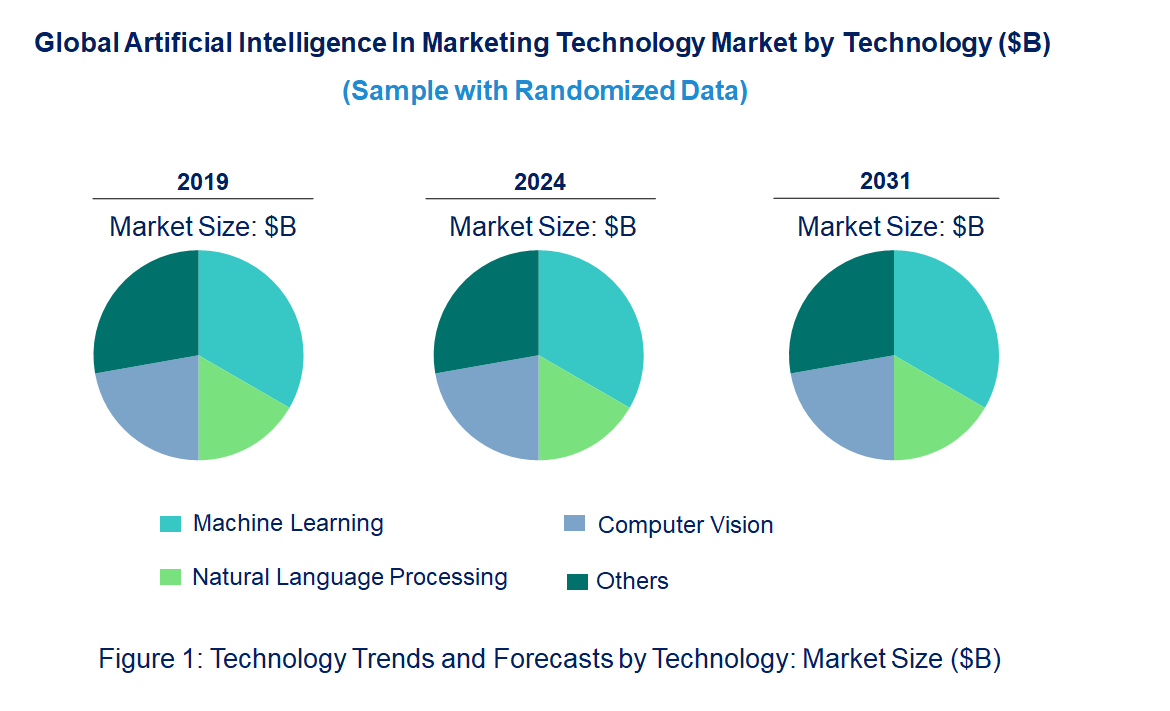
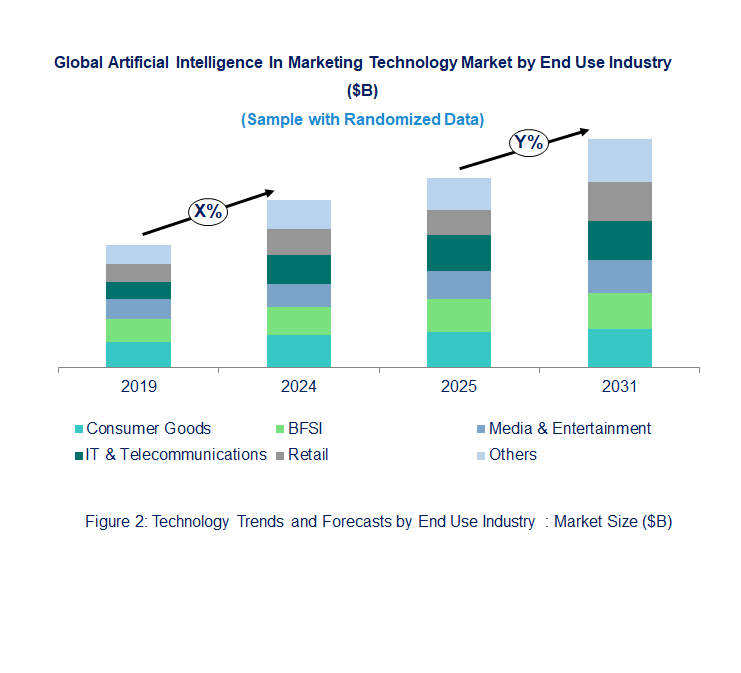
This market report covers trends, opportunities, and forecasts in the global artificial intelligence in marketing market to 2031 by technology (machine learning, natural language processing, computer vision, and others), end use industry (consumer goods, bfsi, media & entertainment, it & telecommunications, retail, and others), and region (North America, Europe, Asia Pacific, and the Rest of the World)
We'll send your sample report shortly.
• AI-powered personalization: AI technologies, including machine learning and NLP, have made hyper-personalized campaigns possible. The real-time analysis of data helps AI deliver relevant content, product recommendations, and customized experiences that delight customers and drive increased loyalty.
• Automated content creation and curation: AI enables brands to simplify content creation and curation. The integration of natural language generation (NLG) and machine learning allows marketers to automatically create high-quality emails, social media posts, and web pages without human intervention. This saves time and enhances scalability in content production.
• Voice and visual search integration: The increased adoption of voice assistants and visual search technologies is opening new marketing strategies. AI helps brands improve their digital footprint for voice and visual search, enabling customers to interact with content using voice commands or image recognition, making shopping easier and more enjoyable.
• Predictive analytics for customer insights: AI enables the processing of large volumes of customer data in real-time for predictive analytics, helping marketers forecast future customer behavior, purchasing trends, and market dynamics. This allows businesses to optimize campaigns and better target leads for higher conversion rates.
• AI-powered chatbots and customer support: AI-powered chatbots are revolutionizing customer service by offering 24/7 real-time assistance and personalized interactions. By automating customer support, brands enhance the user experience, resolve queries faster, and increase operational efficiency while reducing customer service costs. These trends are reshaping the way businesses approach marketing, making it more data-driven, personalized, and efficient. AI is streamlining marketing operations, improving customer experiences, and helping companies stay competitive in an increasingly dynamic digital landscape.
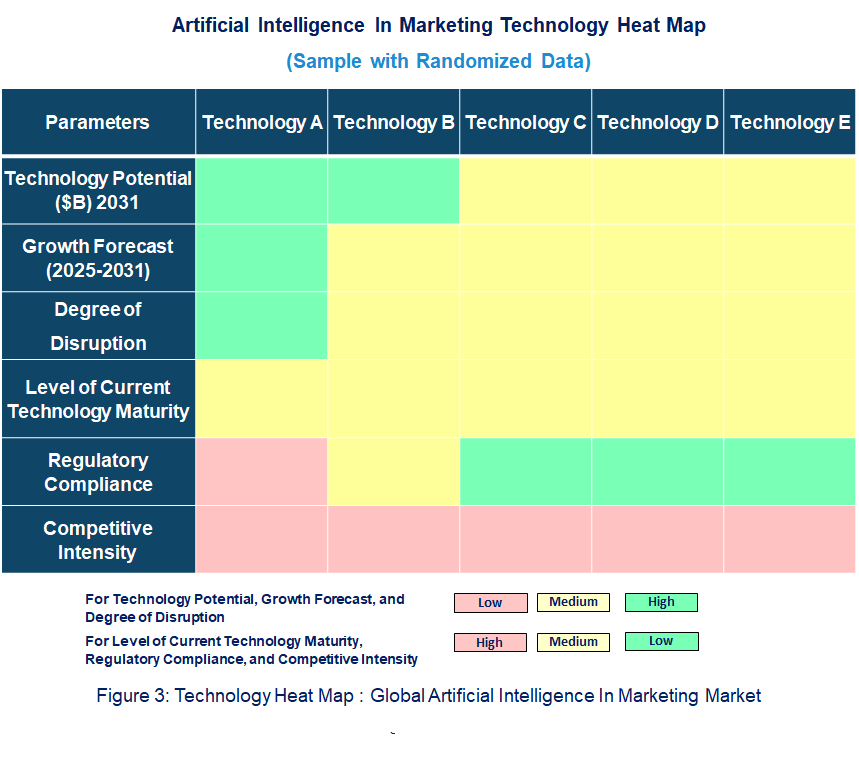
• Technology Potential: AI in marketing holds tremendous potential for extracting personalized customer experiences at scale. Machine learning algorithms can predict consumer behavior, and NLP can analyze sentiment from customer reviews and social media, enabling hyper-targeted advertising and providing real-time content optimization and predictive analytics. AI can also integrate with emerging technologies like augmented reality (AR) and virtual reality (VR), creating immersive marketing experiences that further engage customers.
• Level of Disruption: AI is highly disruptive in marketing, automating traditional tasks while enabling more targeted, data-driven approaches. From customer segmentation and targeted advertising to chatbots and content creation, AI is transforming how businesses interact with consumers, making marketing campaigns more efficient and effective.
• Technology Readiness: AI technologies in marketing are mature in areas such as data analysis, automation, and customer service, and remain at the cutting edge in NLP and advanced predictive analytics. These technologies are ready for widespread adoption across marketing practices.
• Regulatory Compliance: AI marketing must comply with privacy laws such as GDPR in the EU and CCPA in California to protect customer information and ensure transparency.
• Amazon Web Services (AWS): AWS has been at the forefront of AI innovation in marketing by offering solutions such as Amazon Personalize for personalized recommendations and Amazon Rekognition for image and video analysis. These AI-enabled tools help businesses maximize customer engagement, improve targeting, and drive conversions.
• Gravity Media: Gravity Media integrates AI into its broadcasting and content production services to offer better real-time sports content creation and advertising. Their AI tools enable advanced audience analysis, predictive content recommendations, and automated video editing, optimizing media delivery for marketing use.
• GrayMeta: GrayMeta applies AI to automate the analysis and tagging of media content. By using machine learning algorithms on video content, GrayMeta helps media companies improve content accessibility, streamline search functions, and better target marketing campaigns with advanced metadata tagging.
• IBM: IBM’s Watson is a leading AI marketing solution. IBM offers tools such as Watson Marketing and Watson Studio, which enable businesses to use machine learning and natural language processing for personalized content, predictive analytics, and customer journey optimization, leading to smarter marketing strategies.
• LMG (London Media Group): By using AI, London Media Group is increasing audience engagement and optimizing advertising strategies. AI helps the company create brand-specific, targeted content for distinct audience groups, improving the success of marketing campaigns and enhancing customer retention rates.
• Matchroom Sport: Matchroom Sport uses AI to personalize sports content for marketing purposes. By analyzing fan data, the company creates targeted advertising campaigns and enhances fan engagement through custom content delivery, increasing sponsorship and ticket sales.
• Synthesia: Specializing in AI-generated video content, Synthesia allows brands to create personalized marketing videos at scale. The deep learning algorithms used on their platform help generate lifelike avatars and speech, enabling marketers to design customized video messages for different customer segments efficiently.
• Veritone: Veritone is an AI-powered platform that marketers use to analyze multimedia content for advertising and marketing purposes. AI enables businesses to monitor brand mentions, track real-time campaigns, and maximize digital marketing strategies, leading to improved performance metrics.
• Pixellot: Pixellot uses AI to automatically produce sports broadcasts with computer vision, analyzing and creating dynamic video content for marketing. This technology enables sports teams and broadcasters to deliver real-time personalized experiences to audiences, boosting fan engagement and marketing opportunities.
• PlaySight Interactive: PlaySight uses AI to improve sports marketing by providing real-time video analysis and fan engagement capabilities. The company’s AI-driven platform helps marketers observe player performance and audience engagement, creating targeted marketing campaigns and enhancing the user experience. These developments demonstrate how leading players are leveraging AI to develop better marketing strategies, automate processes, and create more personalized experiences for consumers.
• Increased demand for tailored marketing: Consumers’ expectation for personalized experiences drives the adoption of AI technologies, allowing brands to offer highly targeted content, product recommendations, and offers. This demand for tailored marketing is driving the use of AI tools in the industry, improving customer satisfaction and boosting conversion rates.
• Advances in AI technologies: Continuous advancements in machine learning, NLP, and computer vision have expanded the capabilities of AI in marketing. AI helps brands automate processes, analyze large datasets, and deliver personalized content at scale, improving efficiency and effectiveness in marketing.
• Data-driven marketing insights: With AI-powered analytics tools, marketers can gain deeper insights into consumer behavior and preferences. Businesses can optimize marketing strategies using big data and predictive analytics, improve lead targeting, and make more informed decisions, leading to better results.
• Increased adoption of marketing automation: Businesses are increasingly adopting AI-based automation tools for content generation, campaign management, and customer support. These solutions reduce the need for manual effort, save time, and allow marketers to focus on more strategic initiatives, boosting productivity. Challenges in the Artificial Intelligence In Marketing include:
• Data privacy and security issues: AI in marketing requires the aggregation and analysis of large amounts of customer data, raising privacy and security concerns. Marketers must comply with regulations such as GDPR and ensure that customer data is securely handled to avoid legal and reputational risks.
• Expensive AI adoption: The adoption of AI technologies involves high initial costs, which can be a barrier for small and medium-sized businesses. The need for significant investment in AI tools and skilled talent for ongoing maintenance and updates can deter some companies from fully embracing AI.
• Integration of AI systems: Integrating AI systems with existing infrastructure is complex and time-consuming. Businesses often need specialized expertise to implement and manage AI solutions, which can increase costs and cause operational disruptions during the transition. Despite these challenges, AI in marketing continues to grow due to the increasing demand for personalized experiences, innovations in AI technology, data-driven insights, and greater automation. However, data privacy concerns, cost, and system integration complexity need to be addressed for successful growth and adoption of AI in marketing.
• Amazon Web Services
• Gravity Media
• Graymeta
• IBM
• LMG
• Matchroom Sport
• Technology Readiness by Technology Type for AI in Marketing Market: Machine Learning is highly mature and widely deployed, with established applications in recommendation systems, predictive analytics, and customer segmentation, making it the most ready technology for AI marketing. NLP is also well-developed, powering chatbots, voice search, sentiment analysis, and automated content generation, which are already integral to customer service and engagement. Computer Vision is rapidly advancing but still faces challenges around adoption, particularly in marketing automation for real-time image recognition and visual search, with increasing use in retail, advertising, and AR applications. Other AI technologies, such as deep learning and reinforcement learning, are emerging and offer advanced solutions for dynamic marketing strategies, but they are still in early-stage adoption for broader marketing use. While ML and NLP have achieved high readiness, Computer Vision and other AI technologies are still refining applications, with all technologies requiring compliance with data privacy regulations to ensure responsible deployment in consumer-facing marketing.
• Competitive Intensity and Regulatory Compliance: The competitive intensity in the AI marketing space is high, with major tech giants such as Google, Microsoft, and Amazon investing heavily in AI-driven marketing solutions. Machine learning and NLP are widely adopted across industries, shaping the competitive landscape. Computer vision and other AI technologies are catching up, especially in image and video recognition. As AI technologies grow in marketing, the need for regulatory compliance intensifies. Data privacy laws like GDPR and CCPA raise important questions about how businesses collect, process, and secure consumer data, while AI technologies, including machine learning, NLP, and computer vision, must adhere to these regulations to maintain consumer trust and ensure legal compliance.
• Disruption Potential of Different Technologies for AI in the Marketing Market: Machine learning, natural language processing, computer vision, and other AI technologies hold significant disruptive potential for marketers. Machine learning aids in personalizing marketing by analyzing vast datasets for predictive analytics, improving targeting, and customer engagement. NLP transforms communication by enabling automated customer support, content generation, and sentiment analysis, enhancing user experience. Computer vision is revolutionizing visual marketing through image recognition and visual search, creating innovative customer interactions in retail and advertising. Other AI technologies like deep learning and reinforcement learning contribute to dynamic pricing, optimized ad delivery, and content personalization, further enhancing marketing ROI. As AI technologies evolve, machine learning and NLP are likely to lead data-driven marketing, while computer vision and emerging AI techniques will further shape creative content and interactive customer experiences.
• Machine Learning
• Natural Language Processing
• Computer Vision
• Others
• Consumer Goods
• BFSI
• Media & Entertainment
• IT & Telecommunications
• Retail
• Others
• North America
• Europe
• Asia Pacific
• The Rest of the World
• Latest Developments and Innovations in the Artificial Intelligence In Marketing Technologies
• Companies / Ecosystems
• Strategic Opportunities by Technology Type


Choose a license that fits your team. Instant PDF delivery.
Prices exclude taxes. Instant delivery. Custom licensing available on request.
Market Report · May 18, 2026
Market Report · May 18, 2026
Market Report · May 18, 2026
Trusted partner for strategic intelligence and business growth


Receive a complimentary market analysis tailored to your industry. Our analysts will identify key growth opportunities and competitive dynamics specific to your business.

Market size, growth rate, and key trend analysis for your specific sector.

Top competitor positioning and market share analysis.

Strategic recommendations backed by data-driven insights.
Get curated market intelligence and competitive moves straight to your inbox.
By subscribing, you agree to receive our monthly insights. Unsubscribe anytime.
Receive a complimentary market analysis tailored to your industry. Our analysts will identify key growth opportunities and competitive dynamics specific to your business.
Market size, growth rate, and key trend analysis for your specific sector.
Top competitor positioning and market share analysis.
Strategic recommendations backed by data-driven insights.
Get curated market intelligence, emerging trends, and competitive moves straight to your inbox each month.
By subscribing, you agree to receive our monthly insights. Unsubscribe anytime.
We'll send your sample report shortly.