
Market Report · May 18, 2026

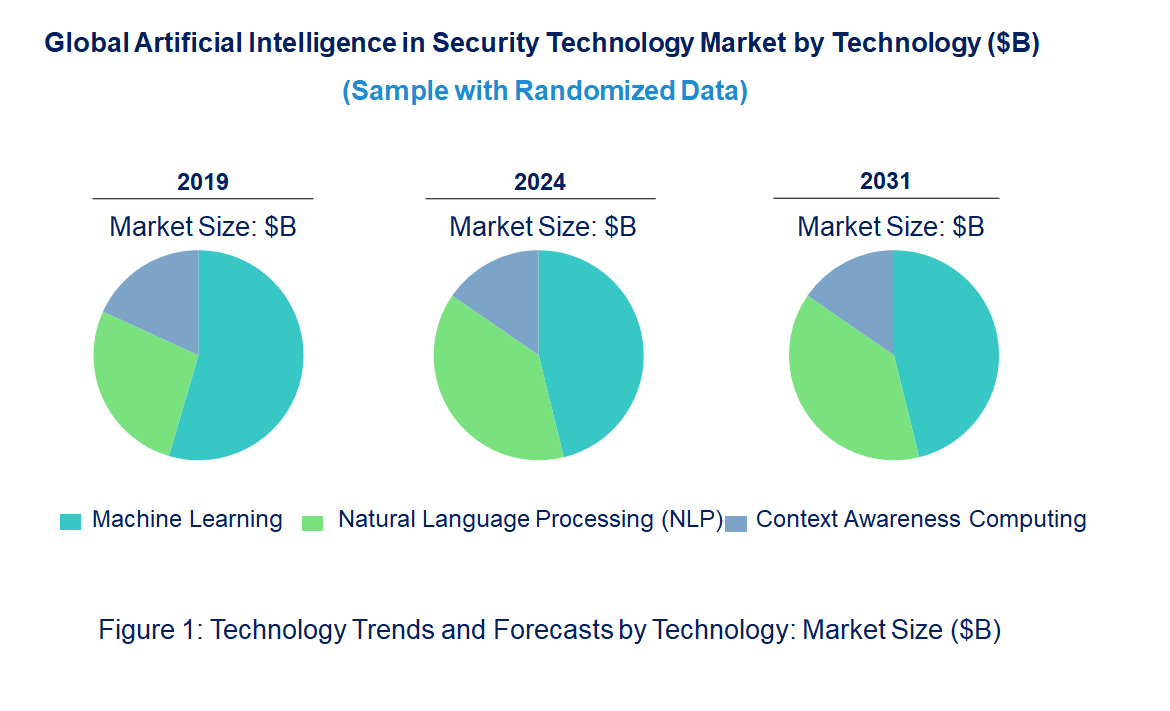
This market report covers trends, opportunities, and forecasts in the global artificial intelligence in security market to 2031 by technology (machine learning, natural language processing (nlp), and context awareness computing), end use industry (bfsi, retail, government & defense, manufacturing, infrastructure, enterprise, healthcare, and automotive & transportation), and region (North America, Europe, Asia Pacific, and the Rest of the World)
We'll send your sample report shortly.
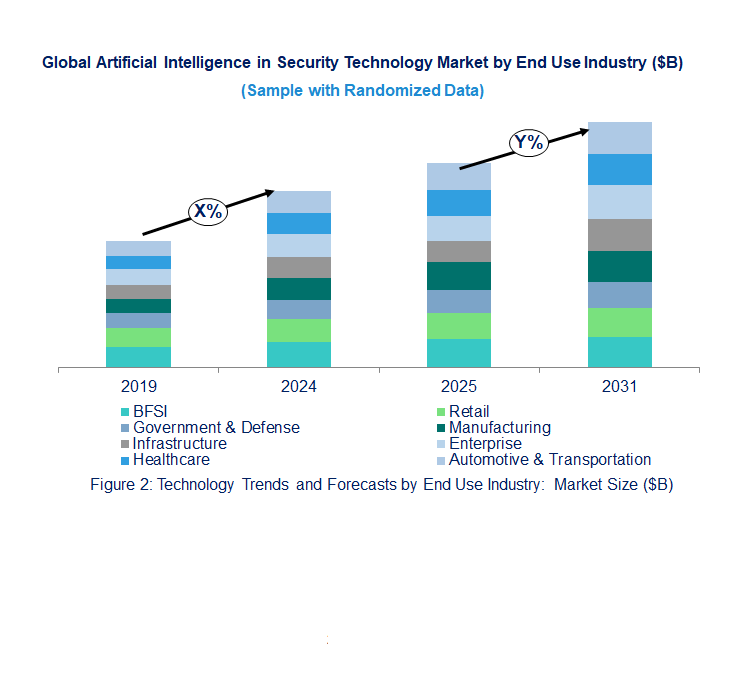
• AI-driven threat detection and prevention: AI systems increasingly identify and counter security threats early before causing harm. Machine learning algorithms go through data sets, find patterns in cyberattacks, and facilitate quicker identification and response to threats, thus preventing them from taking form. This is especially crucial in sectors such as BFSI and retail.
• NLP for Security Automation: NLP is now being integrated into security systems to automate incident response and threat detection. It allows security systems to understand human language and process it in real-time, automatically raising alerts, resolving security incidents faster, and improving communication between security teams in healthcare and government sectors.
• Context-Aware Security Solutions: AI-based context-awareness computing is being used to enhance security by understanding the context surrounding potential threats. These solutions are adaptive to changing security conditions, providing more accurate and relevant responses. This is particularly important for sectors such as manufacturing and transportation.
• Intelligent video surveillance: Video surveillance systems integrated with machine learning and AI capabilities enhance physical security by analyzing video feeds in real-time for anomalies, subject tracking, and security breach prevention. This trend is most prominent in retail, infrastructure, and government sectors, where video analytics improves monitoring and situational awareness.
• AI in Fraud Detection: AI is dramatically improving fraud detection systems in the BFSI industries. Machine learning models analyze financial transactions, detecting suspicious behavior and patterns that may indicate fraudulent activities. This is transforming the way financial institutions prevent fraud and protect their customers. These emerging trends in AI in the security market are more proactive, adaptive, and efficient. As these technologies evolve, AI is poised to revolutionize security operations by improving threat detection, automation, and response, enhancing the overall protection of critical assets and data across industries.
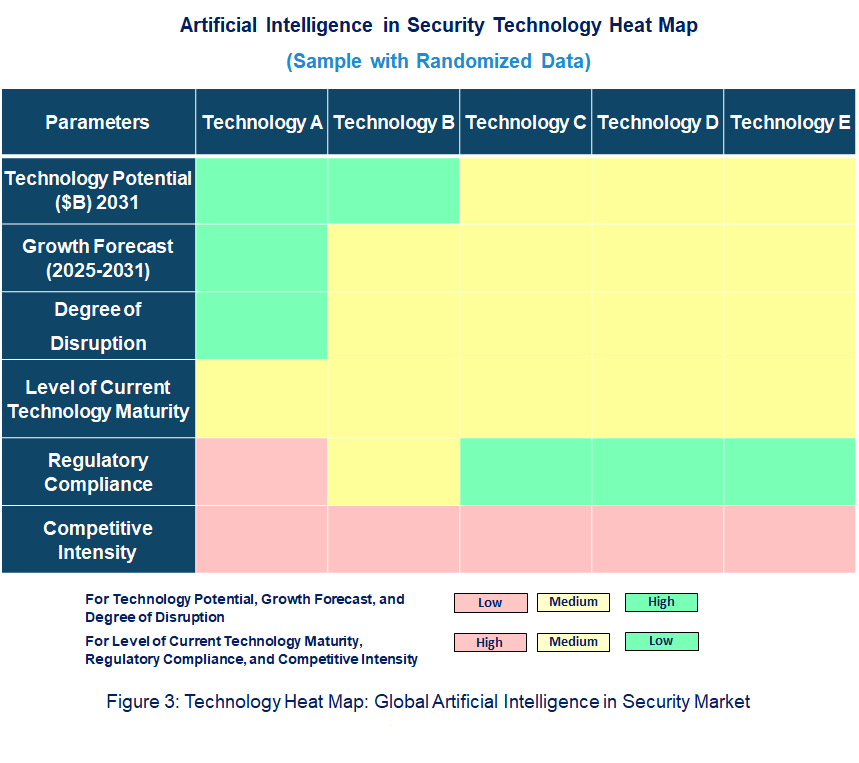
• Technology potential: AI in security offers immense potential to automate threat detection, predict attacks, and provide real-time surveillance. It can analyze vast amounts of data from sensors, cameras, and online sources to identify vulnerabilities, detect anomalies, and predict potential breaches, offering more proactive security measures.
• Degree of disruption: AI is highly disruptive to traditional security approaches. It replaces manual surveillance with intelligent systems that can autonomously monitor and respond to threats. In cybersecurity, AI enhances the ability to detect cyberattacks, malware, and fraud, reshaping how companies protect sensitive information and infrastructure.
• Level of current technology maturity: The technology maturity of AI in security is steadily advancing. AI-based tools for threat detection, facial recognition, and predictive analytics are widely implemented. However, challenges remain in improving accuracy, reducing false positives, and adapting AI models to ever-evolving threats.
• Regulatory compliance: AI in security faces strict regulatory scrutiny, particularly in areas like privacy, data protection, and ethical use of surveillance technologies. Regulations such as GDPR and local laws require companies to ensure AI systems respect privacy, ensure transparency, and avoid misuse of data.
• Acalvio Technologies: Acalvio Technologies specializes in AI-powered security solutions, specifically in deception technology. Its AI-based platform detects, analyzes, and mitigates advanced threats by deploying decoy systems that lure attackers into traps, improving incident response and threat mitigation.
• Amazon.com: AI powered by Cloud security is designed to solve companies’ issues and provide prevention techniques such as machine learning-based anomaly behavior detection. The company develops predictive security through AI for cloud environment protection around the world, using identity management for increased safety.
• Cylance: Cylance, a brand acquired by BlackBerry, specializes in AI-driven endpoint security solutions. Their software, based on machine learning, predicts and prevents malware attacks, providing proactive protection against zero-day threats. Their AI-powered solutions are used by enterprises across various industries, significantly reducing the risk of cybersecurity breaches.
• Darktrace Limited: Darktrace’s AI system is focused on detecting and responding to cyber threats. The system continuously evaluates network activity for possible threats, autonomously responding in real time to cyberattacks, and thus improving the security posture of various industries, including government and retail.
• IBM Corporation: IBM's Watson for Cyber Security uses AI to scan enormous amounts of unstructured data to identify potential threats and vulnerabilities. Through integration with machine learning and NLP, IBM enables organizations to enhance their security operations, detect sophisticated attacks, and improve incident response times across industries like healthcare and BFSI.
• Intel Corporation: Intel's AI technologies help enhance security through real-time threat detection and biometric authentication. Their deep learning algorithms are used in a variety of applications, including security chips, to protect data and privacy, especially in the automotive, healthcare, and enterprise sectors.
• Micron Technology: Micron provides AI-enabled memory solutions to increase the performance and security of data. By adding machine learning capabilities to its memory modules, Micron helps organizations better safeguard data in motion and at rest, which is vital for sectors like government, healthcare, and BFSI.
• Nvidia Corporation: Nvidia’s AI-driven solutions play a critical role in enhancing security through high-performance computing and deep learning. Nvidia’s GPUs are widely used in video surveillance, facial recognition, and real-time threat detection, transforming the security landscape in industries such as automotive, transportation, and infrastructure.
• Samsung Electronics Co.: Samsung is bringing AI into its security product line, including smart surveillance cameras and cybersecurity solutions. AI-driven video analytics and real-time threat monitoring are enhancing the efficacy of security systems in both the public and private sectors, especially in retail and infrastructure.
• Securonix: Securonix focuses on AI-powered security analytics to detect insider threats and advanced persistent threats (APTs). Using machine learning, their platform helps organizations monitor user behavior, identify vulnerabilities, and improve overall security posture in BFSI, government, and healthcare sectors. These developments by key players are advancing AI in the security market, enhancing the ability to detect, prevent, and respond to evolving cyber threats in real-time.
• Cybersecurity Risks: Rising cyberattacks: Soaring cyberattacks in both number and sophistication create an immense demand for AI-based security systems for quick and accurate detection of threats. AI-based technologies provide a proactive approach to security by reducing the risk and avoiding data breaches as well as vulnerabilities within the system.
• Automation of Security Operations: AI-driven security solutions automate routine tasks like threat detection, monitoring, and incident response, making operations more efficient and less prone to human errors. This allows security teams to focus on complex threats and improves the overall security operation.
• Integration with Existing Infrastructure: AI technologies are increasingly compatible with existing security infrastructure, making it easier for businesses to adopt AI-driven solutions without completely replacing the system. This reduces the cost and complexity of integrating AI into security frameworks, accelerating adoption across various sectors.
• Need for Compliance and Regulation: AI solutions help organizations comply with increasingly stringent data protection regulations and industry standards. By automating compliance checks and improving threat detection, AI technologies enable businesses to meet legal requirements and ensure the security of sensitive data, particularly in industries like healthcare and BFSI. Challenges in the artificial intelligence in security market include:
• Data Privacy Concerns: As AI systems process vast amounts of sensitive data, there has been growing concern about data privacy and how personal information might be mishandled. The key challenge in the adoption of AI-based security solutions is ensuring the secure handling of data while maintaining privacy.
• High Implementation Costs: Some AI-based security solutions may be expensive to develop and establish, especially for small businesses with fewer resources. These costs may include specialized hardware, software, and expertise, making it an infeasible option for many organizations, creating entry barriers in the sector.
• AI and Cybersecurity Talent Gap: There is a growing need for professionals skilled in both AI and cybersecurity. The shortage of talent in these fields can impede the development and effective deployment of AI-based security solutions. Training and recruitment efforts are essential to address this challenge. Rising cybersecurity threats, operational automation needs, and the integration of AI with existing infrastructure are driving the artificial intelligence in security market. Concerns over data privacy, implementation costs, and a shortage of skilled professionals remain major challenges. AI has transformed the security landscape in terms of better detection capabilities, automating operations, and improving compliance. This will change the way organizations secure their critical assets and data.
• Acalvio Technologies
• Amazon.Com
• Cylance
• Darktrace Limited
• IBM Corporation
• Intel Corporation
• Technology Readiness by Technology Type: In artificial intelligence in security market the machine learning (ML) is mature and widely used in security applications, with strong data privacy regulations. NLP is growing in surveillance automation, subject to data protection regulations. Context-aware computing is emerging in security and is still developing, with regulatory frameworks focusing on privacy and data security. ML is competitive, NLP is gaining traction, and context-aware computing is in the early adoption stage.
• Competitive Intensity and Regulatory Compliance: in AI technologies in security market machine learning faces high competition in threat detection and surveillance, with growing regulatory concerns about data privacy. NLP is competitive in automating surveillance but faces data protection challenges. Context-aware computing faces moderate competition in security applications, with increasing regulatory oversight on data security and privacy. AI in security is becoming more competitive, with a rising regulatory focus on privacy, security, and the ethical use of surveillance technologies.
• Disruption Potential by Technologies Type: Machine learning (ML) enhances threat detection and predictive analytics, improving real-time responses. Natural language processing (NLP) automates surveillance and threat analysis while analyzing data from various sources for security insights. Context-aware computing adapts security measures based on real-time data, enhancing situational awareness. Together, these technologies automate decision-making and improve the efficiency and accuracy of security systems, significantly disrupting traditional methods.
• Machine Learning
• Natural Language Processing (NLP)
• Context Awareness Computing
• BFSI
• Retail
• Government & Defense
• Manufacturing
• Infrastructure
• Enterprise
• Healthcare
• Automotive & Transportation
• North America
• Europe
• Asia Pacific
• The Rest of the World
• Latest Developments and Innovations in the Artificial Intelligence in Security Technologies
• Companies / Ecosystems
• Strategic Opportunities by Technology Type


Choose a license that fits your team. Instant PDF delivery.
Prices exclude taxes. Instant delivery. Custom licensing available on request.
Market Report · May 18, 2026
Market Report · May 18, 2026
Market Report · May 18, 2026
Trusted partner for strategic intelligence and business growth


Receive a complimentary market analysis tailored to your industry. Our analysts will identify key growth opportunities and competitive dynamics specific to your business.

Market size, growth rate, and key trend analysis for your specific sector.

Top competitor positioning and market share analysis.

Strategic recommendations backed by data-driven insights.
Get curated market intelligence and competitive moves straight to your inbox.
By subscribing, you agree to receive our monthly insights. Unsubscribe anytime.
Receive a complimentary market analysis tailored to your industry. Our analysts will identify key growth opportunities and competitive dynamics specific to your business.
Market size, growth rate, and key trend analysis for your specific sector.
Top competitor positioning and market share analysis.
Strategic recommendations backed by data-driven insights.
Get curated market intelligence, emerging trends, and competitive moves straight to your inbox each month.
By subscribing, you agree to receive our monthly insights. Unsubscribe anytime.
We'll send your sample report shortly.