
Market Report · May 18, 2026

This market report covers trends, opportunities, and forecasts in the global artificial intelligence in retail market to 2031 by technology (image and video analytics, machine learning, natural language processing, swarm intelligence, and chatbots), application (predictive merchandising, programmatic advertising, market forecasting, in-store visual monitoring and surveillance, location-based marketing, and others), and region (North America, Europe, Asia Pacific, and the Rest of the World)
We'll send your sample report shortly.
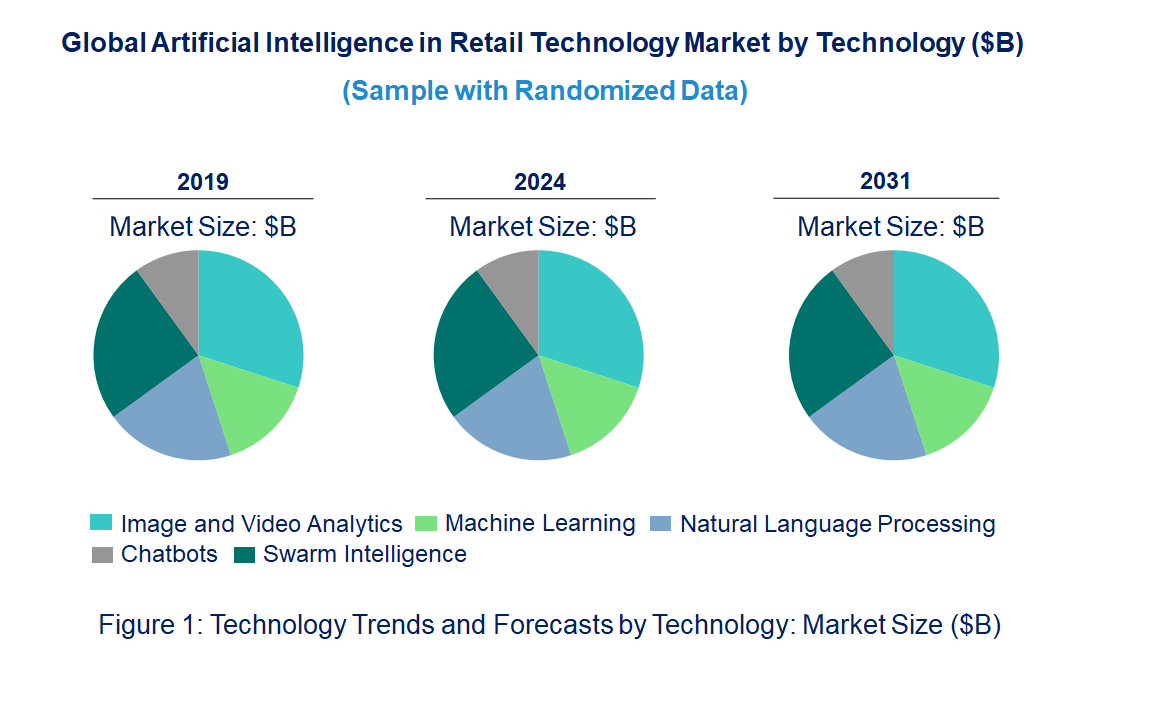
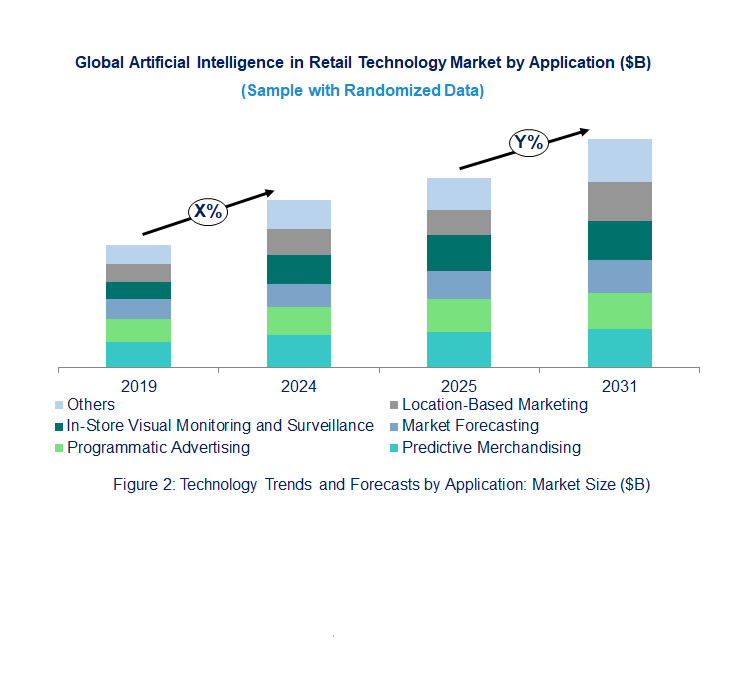
• Personalization by Machine Learning: AI-based machine learning algorithms are increasingly used to personalize the shopping experience based on customer data, behavior, and preferences. This results in more targeted recommendations and offers, thereby increasing customer satisfaction and conversion rates.
• AI-powered Chatbots and Virtual Assistants: Retailers are leveraging AI-powered chatbots and virtual assistants for advanced customer care. They provide an easy interface for consumers to search, check the status of a particular order, or troubleshoot in real time to avoid any interruptions in this omnichannel experience.
• Improved Predictive Merchandising: AI is helping retailers predict consumer demand more accurately through predictive merchandising tools. By analyzing vast amounts of historical data, AI enables retailers to optimize stock levels, avoid overstocking or understocking, and enhance sales forecasting.
• Visual Analytics for In-Store Insights: Retailers are now using AI-driven image and video analytics to monitor in-store traffic, customer behavior, and product interaction. This technology helps optimize the layout of the store, improve product placement, and enhance the overall in-store experience.
• Location-Based Marketing and Personalization: AI is enabling location-based marketing strategies, using customer location data to deliver personalized offers and promotions in real time. This enhances the relevance of marketing efforts and encourages impulse buys, particularly in physical retail environments. In conclusion, these emerging trends are transforming the retail industry by enhancing customer engagement, improving operational efficiencies, and enabling more data-driven decision-making processes. AI technologies are set to reshape the landscape by fostering a more personalized, efficient, and customer-centric retail experience.
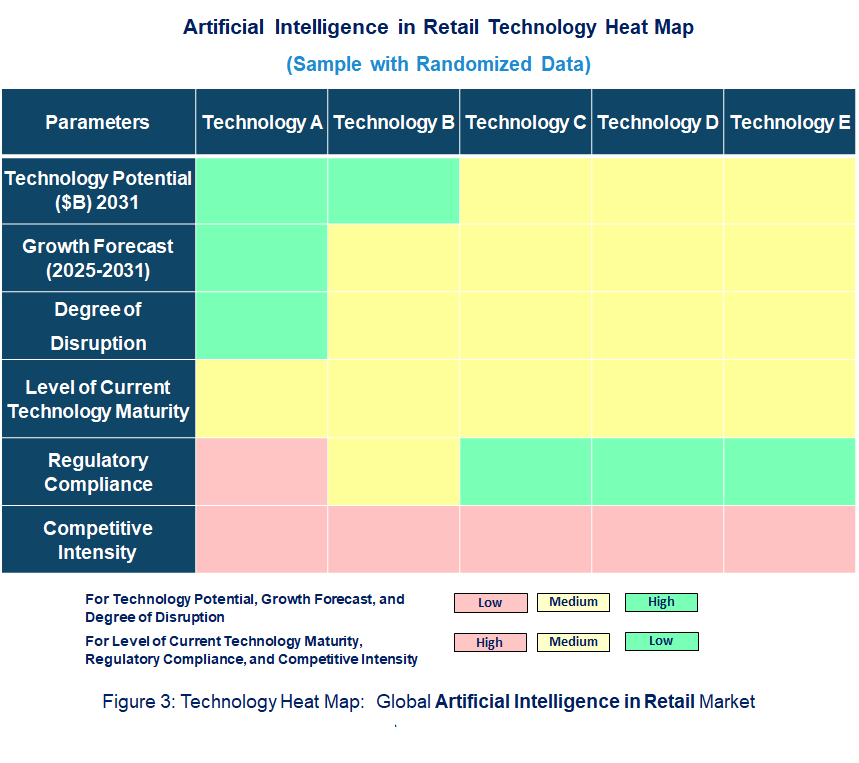
• Technology Potential: There are vast opportunities to enhance the retail business as AI provides individualized product recommendations, real-time prices, and personalized service interactions with customers via chatbots. AI improves and upgrades processes concerning inventory management, predictive demand analysis, and optimal supply chain management, leading to minimal waste.
• Degree of Disruption: AI is highly disruptive to retail, changing traditional business models. It enables retailers to step away from conventional ways of doing things by automating customer service, offering tailored experiences, and enabling real-time insights. This disrupts legacy retail systems and challenges businesses that are slow to adapt.
• Current Technology Maturity: Retail AI adoption is accelerating because recommendation engines, which use AI, are available today; personalized marketing that is also AI-based can be applied today; and even automated checkout systems are operational. Yet, though rapidly maturing, the technology's full potential remains to be fulfilled in areas such as deep learning and fully autonomous retail environments. With the advent of AI in retail, data privacy and consumer protection become areas of concern. Proper regulations across regions, such as GDPR in Europe, ensure retailers follow norms related to transparency, security, and ethical usage, particularly regarding customer data.
• IBM: IBM's AI-powered Watson is used by most retailers in customer service, merchandising, and personalized marketing. Their AI platform helps retailers understand customer sentiment, optimize product recommendations, and improve supply chain management, driving operational efficiency and enhancing customer experiences
• Microsoft: Retailers widely use Microsoft's Azure AI platform for inventory management, demand forecasting, and improving customer interactions. Through their cognitive services, Microsoft empowers retailers to utilize machine learning and natural language processing to automate tasks, improve sales forecasting, and provide personalized shopping experiences.
• SAP SE: The AI solutions for retail developed by SAP streamline business processes like supply chain management, predictive analytics, and personalized customer interactions. They enable retailers to optimize operations, improve product recommendations, and offer personalized offers to customers based on their preferences and past behaviors.
• Amazon Web Services (AWS): AWS provides AI tools for retailers that enable data-driven decisions, from predictive analytics to personalized shopping experiences. With services like Amazon Personalize, AWS enables retailers to deliver relevant content and recommendations based on customer data, improving customer satisfaction and increasing sales.
• Oracle: Oracle's AI solutions are enhancing retailers' inventory management, sales forecasting, and customer engagement. Through machine learning and predictive analytics, Oracle helps retailers operate efficiently, providing more personalized experiences to customers. All these developments allow retailers to stay competitive while optimizing their operations, improving customer satisfaction, and offering more personalized and engaging shopping experiences.
• Increased Demand for Personalization: AI technologies enable retailers to personalize shopping experiences by analyzing customer preferences, purchase history, and browsing behavior. This helps create more relevant offers, increasing customer engagement and boosting sales, particularly in industries such as fashion and consumer electronics.
• Improved Operational Efficiency: AI is streamlining retail operations through predictive analytics, inventory management, and automated customer service. By reducing inefficiencies and optimizing processes, AI helps retailers lower costs, improve stock accuracy, and enhance customer service, thus increasing profitability.
• Advancements in Data Analytics: The availability of big data and advancements in AI analytics are enabling retailers to make more data-driven decisions. AI tools can analyze vast amounts of customer data to predict trends, optimize marketing strategies, and enhance demand forecasting, allowing retailers to better serve their customers.
• Increasing Adoption of Omnichannel Retail: The rising digital presence of retailers requires the use of AI to integrate online and offline channels. AI provides great customer experiences across multiple devices, such as offering individualized recommendations and location-based offers while improving the overall journey a customer takes in retail and maximizing customer satisfaction. Challenges in the artificial intelligence in retail market include:
• Data Privacy and Security Issues: With the increase in the adoption of AI by retail establishments, concerns about consumer data privacy and security have arisen. Retailers should comply with various data protection regulations and keep sensitive customer information secure to ensure trust without facing legal issues.
• Implementation Costs: While AI offers many benefits, it comes with large implementation costs, especially for smaller retail firms. Specialized hardware, software, and personnel are required to develop the AI technologies, making implementation a significant investment for retailers.
• Integration with Existing Systems: Most retailers still rely on legacy systems, making it difficult to fully integrate with new AI solutions. The complexity and costs of integrating AI with current technologies are high, especially for companies with fewer resources. The artificial intelligence market in retail is experiencing rapid growth, driven by demand for personalization, improved efficiency, and data analytics advancements. However, challenges such as data privacy concerns, high implementation costs, and system integration complexities must be addressed to unlock AI’s full potential. Overall, AI technologies are transforming the retail landscape by enhancing customer experiences, improving operational efficiencies, and enabling data-driven decision-making, reshaping the future of retail.
• IBM
• Microsoft
• SAP SE
• Amazon Web Services
• Oracle
• Technology Readiness by Technology Type: Machine learning (ML) is mature and widely adopted for pricing and recommendations, with a focus on data privacy. Image and video analytics are advanced in customer analysis but face privacy concerns. NLP, developed for chatbots and sentiment analysis, has significant regulations for consumer data. Swarm intelligence is in the adoption stage for supply chain management. Chatbots are mature and governed by data protection laws. ML, NLP, and chatbots are competitive, while image and video analytics and swarm intelligence are gaining pace.
• Competitive Intensity and Regulatory Compliance: Machine learning (ML) is highly competitive in retail applications such as pricing and recommendations, which is furthered by data privacy issues. Image and video analytics face high competition in security and marketing, which are regulated concerning privacy and data security. Natural language processing (NLP) is competitive in customer service and regulated for data protection. Swarm intelligence is emerging in supply chain management, with minimal regulation. Chatbots are widely used but face data privacy and cybersecurity regulations. Regulatory focus is growing on data protection and ethical AI practices.
• Different AI Technologies’ Disruptive Potential in the Retail Market: Image and video analytics enhance retail with real-time inventory tracking and customer behavior analysis. Machine learning fosters personalized recommendations, pricing, and customer engagement. Natural language processing improves customer engagement through better search and auto-support for customers. Swarm intelligence in supply chain optimization leads to the elimination of long queues in contact centers. With these features, AI technology disrupts retail by providing efficiency improvements, personalization, and operational management.
• Image and Video Analytics
• Machine Learning
• Natural Language Processing
• Swarm Intelligence
• Chatbots
• Predictive Merchandising
• Programmatic Advertising
• Market Forecasting
• In-Store Visual Monitoring and Surveillance
• Location-Based Marketing
• Others
• North America
• Europe
• Asia Pacific
• The Rest of the World
• Latest Developments and Innovations in the Artificial Intelligence in Retail Technologies
• Companies / Ecosystems
• Strategic Opportunities by Technology Type


Choose a license that fits your team. Instant PDF delivery.
Prices exclude taxes. Instant delivery. Custom licensing available on request.
Market Report · May 18, 2026
Market Report · May 18, 2026
Market Report · May 18, 2026
Trusted partner for strategic intelligence and business growth


Receive a complimentary market analysis tailored to your industry. Our analysts will identify key growth opportunities and competitive dynamics specific to your business.

Market size, growth rate, and key trend analysis for your specific sector.

Top competitor positioning and market share analysis.

Strategic recommendations backed by data-driven insights.
Get curated market intelligence and competitive moves straight to your inbox.
By subscribing, you agree to receive our monthly insights. Unsubscribe anytime.
Receive a complimentary market analysis tailored to your industry. Our analysts will identify key growth opportunities and competitive dynamics specific to your business.
Market size, growth rate, and key trend analysis for your specific sector.
Top competitor positioning and market share analysis.
Strategic recommendations backed by data-driven insights.
Get curated market intelligence, emerging trends, and competitive moves straight to your inbox each month.
By subscribing, you agree to receive our monthly insights. Unsubscribe anytime.
We'll send your sample report shortly.