
Market Report · May 18, 2026

This market report covers trends, opportunities, and forecasts in the global artificial intelligence diagnostics market to 2031 by technology (machine learning, nlp, context-aware computing, and computer vision), end use industry (hospitals, diagnostic imaging centers, diagnostic laboratories, and others), and region (North America, Europe, Asia Pacific, and the Rest of the World)
We'll send your sample report shortly.
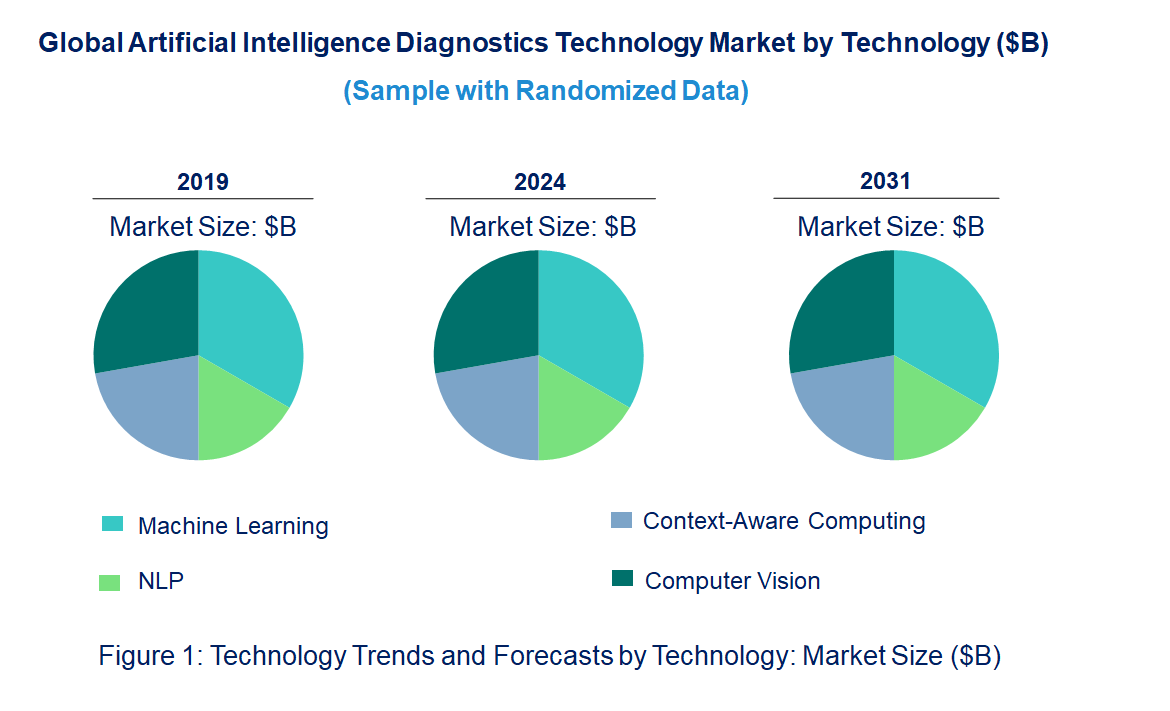
• Advancement in Machine Learning (ML) and Deep Learning (DL): The sophistication of ML and DL algorithms is dramatically improving diagnostic accuracy. These technologies enable AI systems to process vast amounts of data, recognize patterns, and provide insights that are difficult or impossible for human clinicians to detect, especially in fields like radiology and pathology.
• Integration of NLP: NLP is increasingly being used to analyze unstructured medical data, including EHRs and clinical notes. This enables AI systems to extract valuable insights and make more informed diagnostic recommendations, improving the efficiency of diagnostic workflows in hospitals and diagnostic laboratories.
• Context-Aware Computing for Personalized Diagnostics: Context-aware computing is enabling AI systems to offer more personalized diagnostic solutions by considering the individual patient’s medical history, lifestyle, and environmental factors. This trend is pushing AI diagnostics toward being more adaptive and personalized to the requirements of individual patients, with better outcomes for diagnosis.
• Growth of Computer Vision in Medical Imaging: Computer vision is increasingly finding applications in the AI diagnostics market, especially for analyzing medical imaging such as X-rays, MRIs, and CT scans. AI-powered computer vision systems can identify early symptoms of diseases like cancer, neurological disorders, and cardiovascular diseases with a very high degree of accuracy, thereby enhancing early detection rates.
• AI-Driven Decision Support Systems (DSS): The integration of AI into clinical decision support systems is revolutionizing the way healthcare professionals diagnose and treat diseases. These AI-driven DSS tools are helping doctors make faster, more accurate decisions by analyzing large volumes of patient data and providing evidence-based recommendations. These trends are driving significant improvements in the efficiency, accuracy, and patient care of diagnostics. By harnessing the power of machine learning, NLP, computer vision, and context-aware computing, the artificial intelligence diagnostics market is poised to revolutionize the healthcare industry, providing a more precise and personalized diagnostic solution.
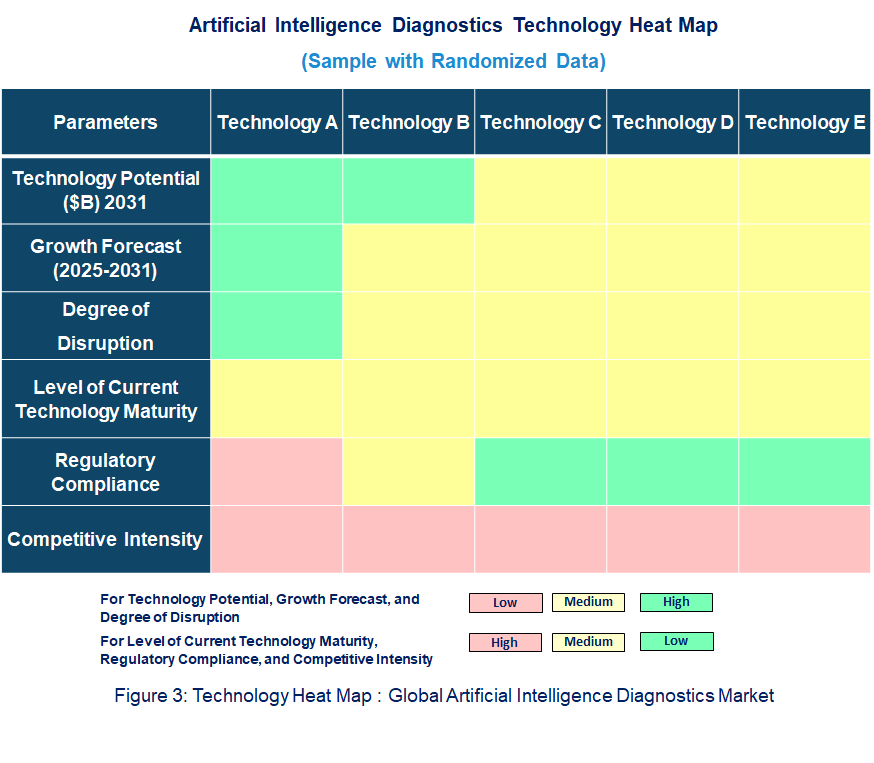
• Potential of Technology: AI diagnostics will prove to be a great enabler for healthcare by allowing early detection of diseases, giving personalized treatment plans, and enabling more efficient clinical workflows. AI is faster in computing vast datasets, identifying patterns, and making predictions as compared to traditional methods. With its integration into medical imaging and genomics, among other diagnostic tools, it will make a difference in the speed and accuracy of diagnosis of conditions like cancer, heart disease, and neurological disorders.
• Level of Disruption: AI diagnostics are very disruptive because they will allow a significant reduction in dependence on human expertise and substantial enhancement in capabilities to diagnose. It allows for automating routine tasks to free healthcare professionals for complex cases. It would then result in saving costs, making faster diagnoses, and leading to better care for the patients.
• Technology Maturity: AI diagnostic technologies are rapidly advancing but are still in the process of full-scale integration across healthcare systems. Some applications, such as radiology and pathology AI tools, are already in use, while others are still in development or undergoing clinical validation.
• Regulatory Compliance: AI diagnostics need to adhere to very stringent healthcare regulations, including FDA approvals in the U.S. and CE markings in Europe. These regulations will ensure that AI tools are safe, reliable, and accurate, addressing concerns regarding patient safety and data privacy.
• General Electric has developed AI-driven imaging solutions on the radiology front. They create AI-powered diagnostic imaging systems utilizing the deep learning algorithm to enhance image quality and offer automatic image analysis to allow their radiologists to see or diagnose conditions like tumors or fractures much better.
• Siemens has developed AI-based diagnostic tools for medical imaging, and its focus has been on improving the efficiency and accuracy of CT and MRI scans. Its AI systems enhance imaging workflows, shorten scan times, and facilitate the detection of diseases like cancer and cardiovascular conditions with greater precision.
• Aidoc Medical develops AI radiology solutions, including help for emergency scenarios. Its deep learning algorithms are what can make radiologists find intracranial hemorrhage in real-time, meaning diagnosis and treatment would move faster in high-stakes scenarios.
• AliveCor advances AI diagnostics in cardiology through the use of AI-powered ECG technology. Through its KardiaMobile, the company uses machine learning algorithms to detect abnormal heart rhythms, such as atrial fibrillation, in patients, thus providing them with timely insights into their cardiovascular health.
• Imagen Technologies focuses on applying AI and machine learning to enhance the analysis of medical images, especially in radiology. Their solutions help radiologists detect and diagnose various conditions, including breast cancer, more accurately and efficiently.
• VUNO provides AI-based diagnostic tools for healthcare professionals, which include radiological image analysis and early detection of diseases like pneumonia and tuberculosis. Their products are being used in hospitals and diagnostic imaging centers to improve the accuracy of diagnosis.
• IDx Technologies has developed AI-based diagnostic systems that use machine learning algorithms to detect diabetic retinopathy and other similar diseases. Their platform will provide real-time, accurate analysis of retinal images, thus improving early detection and treatment of eye diseases.
• NovaSignal Corporation is using AI to revolutionize neurological diagnostics, with a focus on detecting stroke signs. Their AI-powered system evaluates ultrasound data to provide real-time stroke diagnostics, thus reducing treatment time.
• Riverain Technologies, through AI-driven chest imaging solutions, detects lung diseases like pneumonia and cancer. Its software allows machine learning in the interpretation of chest X-rays for higher accuracy in diagnosis.
• Zebra Medical Vision uses AI algorithms to analyze medical imaging data and identify a wide range of conditions, including cardiovascular diseases and cancers. Their solutions help radiologists deliver faster and more accurate diagnoses, which ultimately improves patient outcomes. These new products from leading players like General Electric, Siemens, and more show how AI is transforming medical diagnostics. Accuracy, efficiency, and decision-making in real-time are thus being enhanced by such companies to shape the future of AI diagnostics.
• Advances in Machine Learning and Data Availability: The development of more sophisticated machine learning algorithms and the availability of large datasets for training these models are driving innovations in AI diagnostics. This enables AI systems to analyze complex medical data, including medical images and patient health records, with greater accuracy.
• Increasing Healthcare Costs: AI diagnostics are considered to be useful in controlling the increasing healthcare costs that have become a major area of concern. It is aimed at reducing healthcare costs because it simplifies diagnostic procedures, minimizes errors, and improves early disease detection. All these contribute to lowering the healthcare cost.
• Regulatory support for AI in healthcare: The FDA is approving AI-based diagnostic tools for clinical use. With growing regulatory support, healthcare providers are embracing AI-driven technologies more freely, thereby fueling the growth of the market. Challenges in the artificial intelligence diagnostics market include:
• Data Privacy and Security Concerns: Handling sensitive patient data using AI raises concerns about privacy and security. It is a big challenge to ensure that AI systems adhere to the norms of data protection like HIPAA.
• Integration into current healthcare systems is complex and costly, as AI-driven diagnostic tools may not be compatible with the infrastructure and will also cost a lot. Healthcare providers should ensure that AI-driven diagnostic tools are integrated into existing EHRs and current diagnostic workflows.
• Lack of Standardization: The lack of standardization in AI diagnostic tools can pose difficulties in its widespread adoption. Algorithm performance, data quality, and regulatory approval vary between algorithms, which may affect the effectiveness of AI systems and hinder their integration into clinical practice. In conclusion, these drivers and challenges are shaping the artificial intelligence diagnostics market by accelerating innovation while creating obstacles to adoption. The market is evolving in that the more AI technologies integrate into healthcare systems, there is the offering of increasingly accurate, efficient, and personalized diagnostic solutions. Yet, in realizing the full benefit of AI in diagnostics, a few challenges have to be tackled, including data privacy, issues of integration, and standardization.
• General Electric
• Siemens
• Aidoc Medical
• Alivecor
• Imagen Technologies
• Vuno
• Technology Readiness and Competitive Level for Different Technologies in Artificial Intelligence Diagnostics Market: Machine learning in AI diagnostics is very mature with vast usage in predictive analytics, disease risk modeling, and personalized treatment plans. Challenges, however, persist related to data privacy and interpretability in clinical settings. NLP is advancing rapidly and is increasingly used to process medical text data such as EHRs and clinical notes, but requires high accuracy and standardization to meet regulatory requirements. Context-aware computing, though still emerging, holds promise for real-time, patient-specific diagnostic support in complex environments like the ICU, though its adoption is hindered by the need for seamless integration with existing healthcare systems. Computer vision is one of the most advanced AI technologies in diagnostics, particularly in medical imaging, where significant progress has been made in automating image interpretation and improving diagnostic speed and accuracy. Computer vision tools face regulatory hurdles, particularly around the reliability and validation of image-based diagnoses. The competitive intensity in these technologies is high, particularly with the majors in healthcare and technology competing to win in diagnostics, and key applications include medical imaging, disease detection, treatment planning, and clinical decision support.
• Competitive Intensity and Regulatory Compliance in Artificial Intelligence Diagnostics Market: The competitive intensity in the AI diagnostics market is high, with rapid developments in machine learning, NLP, context-aware computing, and computer vision driving the demand for accurate and efficient diagnostic tools. Leading tech companies, startups, and healthcare institutions are racing to develop AI-powered solutions that can transform diagnostics in fields such as radiology, pathology, and patient monitoring. Regulatory compliance continues to be the most significant hurdle, especially in machine learning and computer vision applications, because it follows strict standards of the medical field. In the case of NLP, any application involving it will always experience regulatory scrutiny around data privacy or security, particularly if it involves sensitive patient information. Context-aware computing is also governed by standards to ensure the accuracy of any data input, ensure on-time processing, and promote patient safety. It is difficult yet challenging for AI diagnostics solutions to build up safety and trust due to the changing regulatory landscape.
• Disruption Potential of Different Technologies for Artificial Intelligence Diagnostics Market: The artificial intelligence diagnostics market is being heavily disrupted by the inclusion of technologies such as machine learning (ML), natural language processing (NLP), context-aware computing, and computer vision. ML enables predictive analytics and more accurate decision-making by studying huge datasets for patterns, thus transforming diagnostic accuracy. NLP enables AI to read and understand medical records, unstructured text, and speech data, enhancing clinical workflows and diagnostic accuracy. The provision of real-time situational awareness boosts AI. Computer vision is critical to medical imaging, allowing the automation of X-rays, MRIs, and other diagnostic image analysis, thereby hastening the diagnosis and outcome. Such integration can promise highly accurate, personalized diagnostics, potentially streamlining the delivery of healthcare and error reduction, reshaping the market.
• Machine Learning
• NLP
• Context-Aware Computing
• Computer Vision
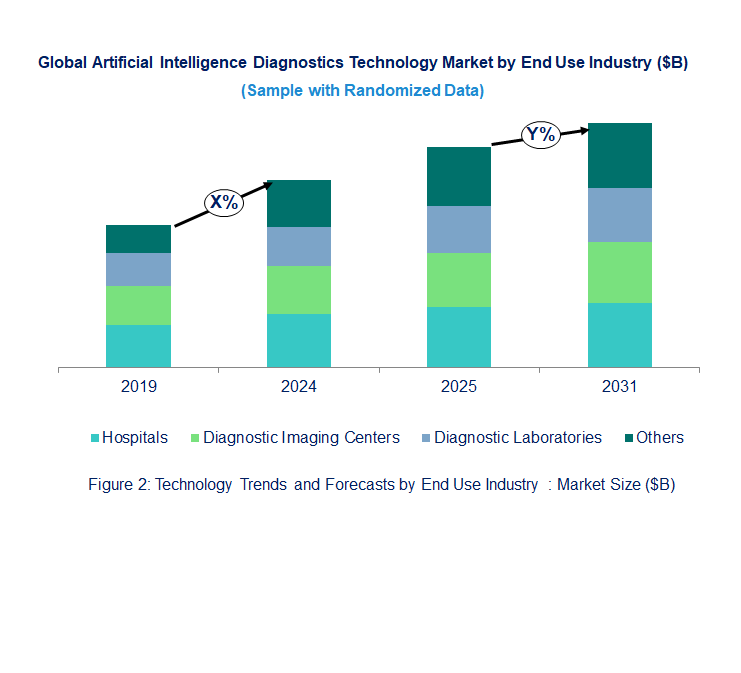
• Hospitals
• Diagnostic Imaging Centers
• Diagnostic Laboratories
• Others
• North America
• Europe
• Asia Pacific
• The Rest of the World
• Latest Developments and Innovations in the Artificial Intelligence Diagnostics Technologies
• Companies / Ecosystems
• Strategic Opportunities by Technology Type


Choose a license that fits your team. Instant PDF delivery.
Prices exclude taxes. Instant delivery. Custom licensing available on request.
Market Report · May 18, 2026
Market Report · May 18, 2026
Market Report · May 18, 2026
Trusted partner for strategic intelligence and business growth


Receive a complimentary market analysis tailored to your industry. Our analysts will identify key growth opportunities and competitive dynamics specific to your business.

Market size, growth rate, and key trend analysis for your specific sector.

Top competitor positioning and market share analysis.

Strategic recommendations backed by data-driven insights.
Get curated market intelligence and competitive moves straight to your inbox.
By subscribing, you agree to receive our monthly insights. Unsubscribe anytime.
Receive a complimentary market analysis tailored to your industry. Our analysts will identify key growth opportunities and competitive dynamics specific to your business.
Market size, growth rate, and key trend analysis for your specific sector.
Top competitor positioning and market share analysis.
Strategic recommendations backed by data-driven insights.
Get curated market intelligence, emerging trends, and competitive moves straight to your inbox each month.
By subscribing, you agree to receive our monthly insights. Unsubscribe anytime.
We'll send your sample report shortly.