
Market Report · July 22, 2026

Key data points: The growth forecast = 8.1% annually for the next 7 years. Scroll below to get more insights. This market report covers trends, opportunities and forecasts in anti-snoring device and snoring surgery market to 2031 by type (mandibular advancement devices, tongue stabilizing device, continuous positive airway pressure devices, and others), application (somnoplasty, uvulopalatopharyngoplasty surgery, tonsillectomy & adenoidectomy surgery, maxillo-mandibular & genioglossus advancement surgeries, and radiofrequency ablation surgery), and region (North America, Europe, Asia Pacific, and the Rest of the World)
We'll send your sample report shortly.
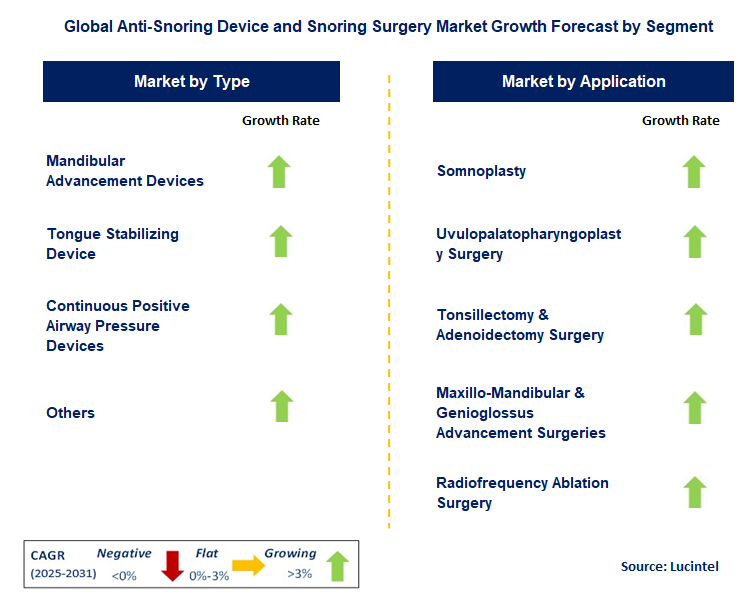
• Lucintel forecasts that, within the type category, the mandibular advancement device is expected to witness the highest growth over the forecast period.
• Within the application category, uvulopalatopharyngoplasty surgery is expected to witness the highest growth.
• In terms of region, APAC is expected to witness the highest growth over the forecast period. Gain valuable insights for your business decisions with our comprehensive 150+ page report. Sample figures with some insights are shown below.
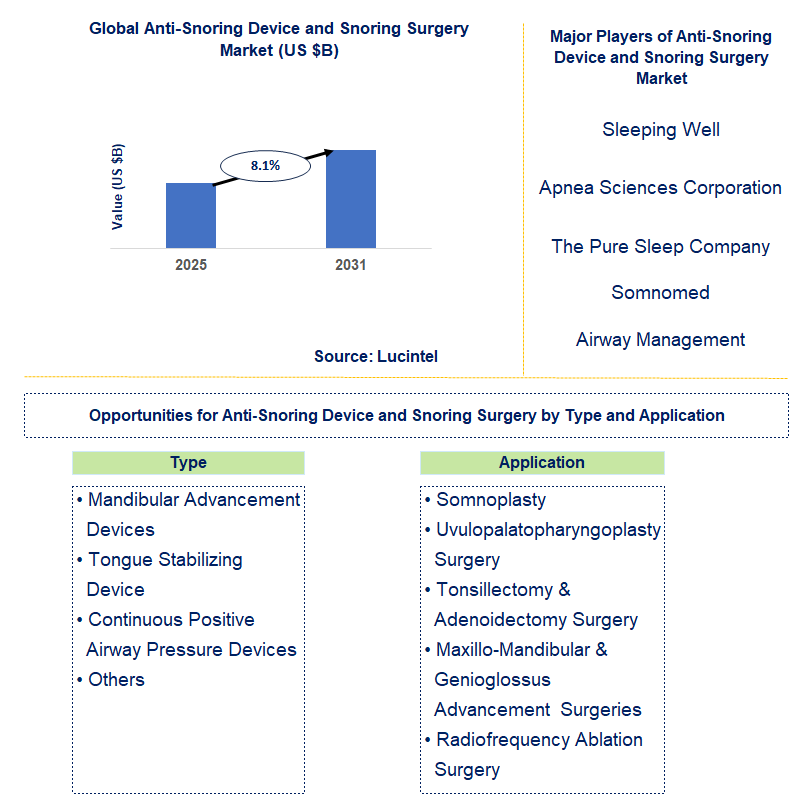
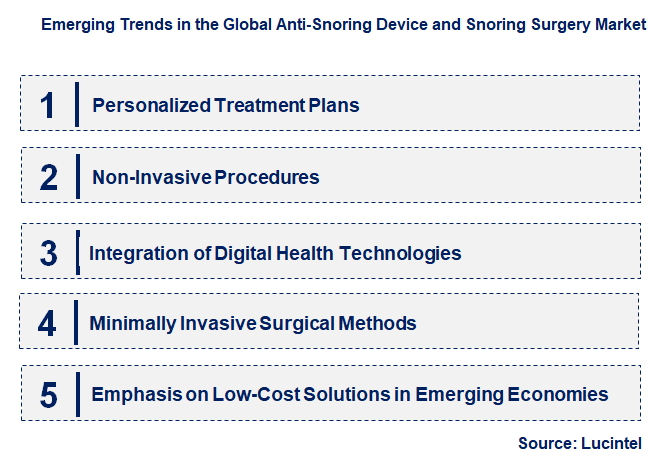
• Personalized Treatment Plans: More and more consumers are looking for tailored treatments that address their own unique snoring patterns. This is being helped along by the advances in sleep monitoring technologies, which give information used for custom-fitted treatment plans. The development of adjustable anti-snoring devices that can be programmed to suit the individual‘s requirements has boosted the success of these solutions. Personalized attention also enhances patient adherence to the treatment, which is critical to the long-term success of snoring and sleep apnea management.
• Non-Invasive Procedures: There is increasing demand for non-invasive solutions to snoring, fueled by consumer demand for less invasive and more comfortable alternatives. Mandibular advancement devices (MADs), nasal strips, and continuous positive airway pressure (CPAP) machines are becoming increasingly popular as options to surgery. Non-invasive procedures are perceived as more accessible, less expensive, and less daunting, appealing to a wider audience of consumers. This trend is likely to carry on because technology enhances the comfort and convenience of these devices.
• Integration of Digital Health Technologies: The growth of digital health technologies has revolutionized the anti-snoring device market. Wearable technology, smartphone apps, and sleep tracking systems are facilitating users to monitor their snoring patterns and get real-time feedback. All these advances enable better diagnosis and personalized treatment plans. With increasingly integrated digital health and conventional medical devices, patients can track their snoring and sleep apnea states more easily, enhancing treatment compliance and efficacy.
• Minimally Invasive Surgical Methods: Surgical interventions for snoring, including the Pillar procedure and laser-assisted uvulopalatoplasty (LAUP), are being developed into minimally invasive procedures. These operations reduce recovery time and side effects, making them more appealing to patients. Advances in technology are making surgical operations more precise, with more emphasis on minimizing tissue damage. This is prompting more patients to seek out surgery as a realistic treatment option for severe snoring and sleep apnea.
• Emphasis on Low-Cost Solutions in Emerging Economies: As emerging economies such as China and India witness increasing demand for snoring solutions, there is increased emphasis on affordable, low-cost treatments. Companies are modifying products to accommodate price sensitivity in these markets, providing low-cost anti-snoring devices without compromising on quality. Furthermore, the scope of online portals for buying these devices is increasing, making it possible for consumers in rural areas to access treatments. The emphasis on affordability is predicted to fuel market expansion in emerging markets, where healthcare access might be constrained. These new trends are transforming the anti-snoring device and snoring surgery market by enabling more personalized, affordable, and accessible treatments. Advances in digital health, non-surgical treatments, and minimally invasive procedures are driving a more patient-centric practice of treating snoring and sleep apnea. As trends go on to grow and develop further, the market is expected to experience growth and innovation, especially in emerging economies.
• Evolution of CPAP Technology: Continuous Positive Airway Pressure (CPAP) machines have also experienced major technological advancements, including quieter motors and compact, more accommodating designs. These developments enhance CPAP therapy by making it more friendly to use and less obtrusive, promoting patient compliance. Technologies such as auto-titrating CPAP machines that automatically adjust pressure based on the user‘s breathing patterns have also become available, enhancing treatment efficacy. Consequently, CPAP machines continue to be one of the most efficient ways of treating sleep apnea and snoring.
• Introduction of Soft Palate Implants: The invention of soft palate implants, including the Pillar procedure, is a step forward for minimally invasive snoring surgery. The implants are used to harden the soft palate, thereby limiting vibration that results in snoring. The procedure is quite short, with less recovery time and fewer complications than conventional surgery. The procedure is becoming popular because it is effective and has a lower risk profile, serving as an alternative for individuals who would rather undergo surgery than use non-invasive solutions.
• Laser-Assisted Snoring Surgery: Laser-Assisted Uvulopalatoplasty (LAUP) has become more precise and quicker in recovery times. The procedure uses a laser to shrink the uvula and the tissues around it, reducing snoring. More advanced laser technology reduces the pain and time of the operation, with shorter healing times. LAUP is gaining popularity in clinics because it offers a minimally invasive treatment for those who need more extreme treatments.
• Wearable Anti-Snoring Devices: The launch of wearable anti-snoring devices, such as smart wristbands and headbands, represents a new trend in offering a more convenient and comfortable way to correct snoring. The device employs sensors to monitor the occurrence of snoring and releases mild vibrations to remind the wearer to change position and thereby minimize snoring. This technology is attractive to users seeking non-invasive treatment that is easy to use. Wearable devices also offer instant feedback on sleep patterns, which adds a high level of personalization to treatment.
• AI-Driven Diagnosis and Treatment: Artificial Intelligence is increasingly being used to diagnose snoring and sleep apnea. AI algorithms are employed to interpret sleep data and make more accurate diagnoses, which enables more effective and personalized treatment plans. AI-driven devices are also being created to monitor and adapt snoring treatments in real time, offering a more adaptive strategy for managing sleep problems. This technology is likely to enhance patient outcomes and also grow the market for snoring devices and surgeries. Current advancements in the anti-snoring device and snoring surgery market are enhancing both efficacy and affordability of treatment methods. The emphasis on minimally invasive procedures, AI-based integration, and wearable technologies is enhancing the comfort and individuality of the treatments. These developments have the potential to fuel market growth by providing patients with a greater variety of options as well as enhancing their experience in dealing with snoring and sleep apnea.
• Telemedicine for Snoring Diagnosis: The increasing popularity of telemedicine presents a special opportunity for distant diagnosis and treatment of snoring. As more patients are looking for accessible and affordable options, doctors are providing virtual consultations, sleep tests, and follow-up visits. This approach removes access obstacles, especially for underprivileged or rural communities. As technology for telemedicine further improves, it should grow the scope of anti-snoring intervention and surgery, particularly in developing economies where health infrastructure might be poor.
• Artificial Intelligence Integration in Device Features: AI-based anti-snoring technology offers a compelling growth prospect. These devices implement machine learning to monitor sleep patterns and adapt treatment regimens automatically for optimal results. AI can also monitor patient progress and dynamically optimize treatment regimens through real-time data. The prospect of being able to provide more customized, dynamic solutions will significantly drive the demand for AI-based anti-snoring technology, particularly among consumers who want personalized, long-term answers to snoring and sleep apnea.
• Wearable Devices for Snoring Treatment: The increasing popularity of wearable technology, including smart wristbands, sleep masks, and headbands, is one of the market‘s most significant growth prospects. Wearables are easy to use, non-invasive, and becoming more and more effective in solving snoring. With ongoing advances in comfort levels, battery life, and analytics capabilities, wearable devices will be a mainstream solution for consumers wanting to solve snoring without surgery or recourse to conventional medical devices such as CPAP machines.
• Emphasis on Preventative Care and Education: As more people become aware of snoring and sleep apnea health issues, more preventive care solutions are being sought. This opens up opportunities for businesses to create education platforms, lifestyle management software, and early intervention programs that enable people to tackle snoring before it can develop into a major issue. Early diagnosis and active management may eliminate the need for surgery and ensure improved long-term health.
• Inexpensive Anti-Snoring Devices for Growing Markets: The expanding middle class in growing markets such as China, India, and Brazil offers a big market opportunity for inexpensive, high-quality anti-snoring devices. Suppliers are concentrating on making value-for-money solutions that appeal to these price-conscious markets without compromising on quality. As these markets grow further, demand for inexpensive, accessible snoring cures will grow, propelling the expansion of the global market. Strategic opportunities for growth in the anti-snoring device and snoring surgery market are coming through innovation in telemedicine, artificial intelligence-driven devices, wearables, preventive care, and affordable technologies for emerging markets. These opportunities provide new channels of growth for the market, especially as consumer demand for customized, affordable, and accessible treatments increases.
• Sleeping Well
• Apnea Sciences Corporation
• The Pure Sleep Company
• Somnomed
• Airway Management
• Theravent
• Tomed Dr. Toussaint
• Mandibular Advancement Devices
• Tongue Stabilizing Device
• Continuous Positive Airway Pressure Devices
• Others
• Somnoplasty
• Uvulopalatopharyngoplasty Surgery
• Tonsillectomy & Adenoidectomy Surgery
• Maxillo-Mandibular & Genioglossus Advancement Surgeries
• Radiofrequency Ablation Surgery
• North America
• Europe
• Asia Pacific
• The Rest of the World
• United States: There has been a strong trend towards the non-surgical anti-snoring devices, including mandibular advancement devices (MADs) and continuous positive airway pressure (CPAP) devices, in the United States. The snoring surgery market, particularly minimally invasive ones like the Pillar procedure, has increased in popularity. This is due to increasing concern regarding the side effects of conventional surgery. The FDA‘s clearance of new snoring therapies, such as soft palate implants, has also led to innovation. Greater awareness of sleep apnea, especially among geriatric populations, is fueling increased demand for anti-snoring devices and surgical interventions.
• China: The Chinese anti-snoring device and snoring surgery market is growing as a result of increasing awareness of sleep disorders, in conjunction with the country‘s developing healthcare infrastructure. More economical devices and surgeries are experiencing a growing trend. Chinese producers are targeting the manufacture of affordable, high-quality snoring devices for both domestic and global markets. In addition, growth in non-invasive treatment has accelerated due to increased awareness among consumers about the dangers of conventional surgery. The market will continue growing with development and improvement in the healthcare system.
• Germany: The German market for snoring surgery and anti-snoring devices has high levels of consumer knowledge and exposure to state-of-the-art treatments. There is a strong demand for non-surgical alternatives such as MADs and CPAP machines. Yet, surgeries such as UPPP and LAUP are prevalent for serious cases. Germany‘s healthcare system provides full insurance coverage for snoring treatment, allowing patients to more easily receive both medical devices and surgeries. The incorporation of digital health technologies, including sleep apps, is also improving the diagnosis and management of snoring.
• India: The market for snoring surgery and the anti-snoring device in India is presently in a growth stage, with a high rate of growing awareness and demand for low-cost treatments. Though conventional surgical treatments like UPPP are present, attention is being diverted towards non-invasive devices like nasal strips and MADs, owing to cost-effectiveness. Furthermore, telemedicine is also serving to promote access to snoring treatment. The growing middle class and rising investments in healthcare are likely to be drivers of growth for the market. The market still remains constrained by the availability of specialized care in rural areas.
• Japan: The market for anti-snoring devices in Japan is spurred by a growing population of seniors as well as sleep disorder awareness. Conventional surgery techniques such as palate surgery remain in practice, although the market for less invasive appliances is growing. CPAP devices and oral appliances are likely to see increased demand because of their comfort and efficiency. Japan has also witnessed growth in digital treatments, including sleep apnea tracking applications and devices, which have opened up more individualized treatment possibilities. This technological innovation, coupled with an increasing proportion of older people, is a key enabler for the expansion of the anti-snoring market.


• Sleeping Well
• Apnea Sciences Corporation
• The Pure Sleep Company
• Somnomed
• Airway Management
• Theravent
• Tomed Dr. Toussaint Q5. Which anti-snoring device and snoring surgery market segment will be the largest in future? Answer: Lucintel forecasts that, within the type category, the mandibular advancement device is expected to witness the highest growth over the forecast period. Q6. In anti-snoring device and snoring surgery market, which region is expected to be the largest in next 5 years? Answer: In terms of region, APAC is expected to witness the highest growth over the forecast period. Q7. Do we receive customization in this report? Answer: Yes, Lucintel provides 10% customization without any additional cost.


Choose a license that fits your team. Instant PDF delivery.
Prices exclude taxes. Instant delivery. Custom licensing available on request.
Market Report · July 22, 2026
Market Report · July 22, 2026
Market Report · July 22, 2026
Trusted partner for strategic intelligence and business growth


Receive a complimentary market analysis tailored to your industry. Our analysts will identify key growth opportunities and competitive dynamics specific to your business.

Market size, growth rate, and key trend analysis for your specific sector.

Top competitor positioning and market share analysis.

Strategic recommendations backed by data-driven insights.
Get curated market intelligence and competitive moves straight to your inbox.
By subscribing, you agree to receive our monthly insights. Unsubscribe anytime.
Receive a complimentary market analysis tailored to your industry. Our analysts will identify key growth opportunities and competitive dynamics specific to your business.
Market size, growth rate, and key trend analysis for your specific sector.
Top competitor positioning and market share analysis.
Strategic recommendations backed by data-driven insights.
Get curated market intelligence, emerging trends, and competitive moves straight to your inbox each month.
By subscribing, you agree to receive our monthly insights. Unsubscribe anytime.
We'll send your sample report shortly.