
Market Report · May 18, 2026

This market report covers trends, opportunities, and forecasts in the global agricultural pipes and tubes market to 2031 by material technology (polyethylene pipe, high density polyethylene, moderate density polyethylene, low density polyethylene, and others), pipe type (corrugated pipe, pe perforated pipe, column pipe, riser pipe, and drop pipe), and region (North America, Europe, Asia Pacific, and the Rest of the World)
We'll send your sample report shortly.
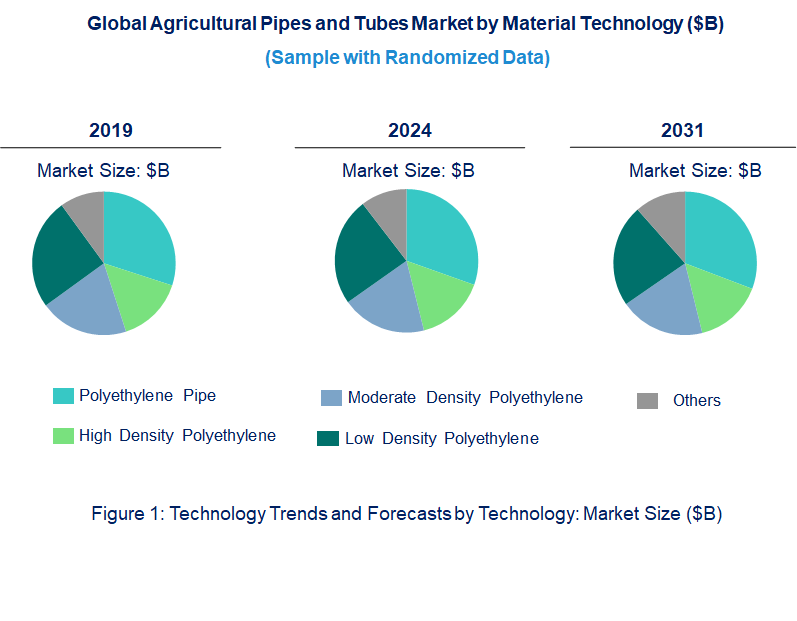
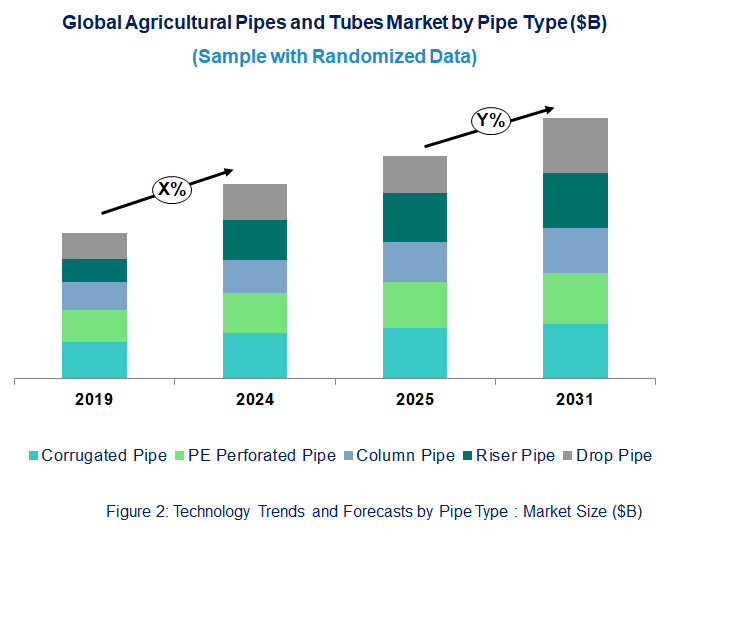
• Adoption of Polyethylene (PE) Materials: The shift toward polyethylene pipes, especially HDPE and LDPE, is growing due to their superior durability, flexibility, and resistance to environmental factors such as UV exposure and chemicals.
• Smart Irrigation Systems: With increased demand for water-efficient systems, smart irrigation technologies that integrate PE perforated pipes with sensors and automated controls are becoming more common.
• Increase in Sustainable Materials: Recycled polyethylene and other sustainable materials are being increasingly used in the agricultural pipes and tubes market to reduce environmental impact.
• Innovation in Pipe Types: The development of specialized pipe types such as riser pipes and drop pipes for specific agricultural applications is expanding, improving efficiency, and reducing installation and maintenance costs.
• Integration of IoT and Monitoring Technologies: The integration of IoT technologies with agricultural pipes and tubes is allowing for real-time monitoring of water flow, pipe integrity, and system performance, which improves maintenance and reduces wastage. These trends are transforming the agricultural pipes and tubes market by making irrigation systems more efficient, sustainable, and adaptable to the needs of modern farming.
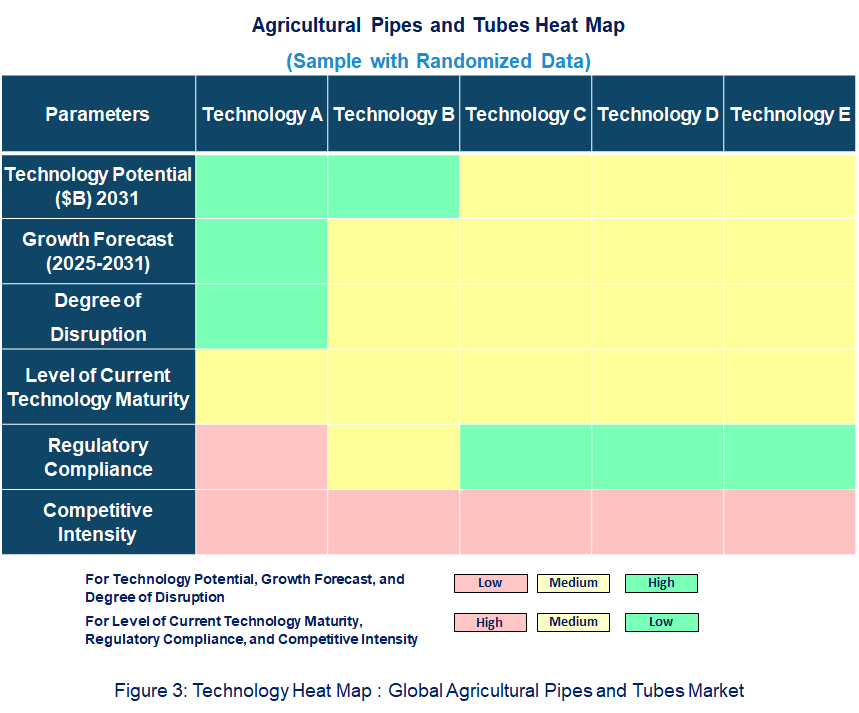
• Technology Potential: Material technology in agricultural pipes and tubes is evolving rapidly, offering enhanced durability, flexibility, and environmental resistance. Innovations in polymers such as high-density polyethylene (HDPE), low-density polyethylene (LDPE), and polyvinyl chloride (PVC) are central to these advancements. These materials provide corrosion resistance, UV stability, and ease of installation, crucial for irrigation and water management systems in agriculture. The integration of smart materials with embedded sensors for flow monitoring and leak detection represents the next wave of technological evolution. These innovations have the potential to revolutionize how water is distributed and conserved on farms, improving yields and promoting sustainable practices.
• Degree of Disruption: The disruption potential of advanced materials in agricultural piping is significant. As water efficiency becomes a global priority, especially in drought-prone regions, smart and durable piping systems can replace outdated metal and concrete infrastructure. The shift to lightweight, long-lasting polymer-based solutions can lower operational costs, reduce maintenance, and minimize water loss. Additionally, new materials compatible with precision agriculture and automated irrigation systems could further disrupt traditional irrigation practices by enabling data-driven water use.
• Level of Current Technology Maturity: The technology maturity level of materials used in agricultural pipes is moderately high. HDPE and PVC have been widely adopted for decades and are considered reliable, cost-effective solutions. However, newer developments—such as biodegradable polymers and nano-enhanced composites—are still in the early stages of commercial deployment. Smart piping technologies integrating IoT and data sensors are emerging but not yet standard in agricultural applications. Overall, while foundational materials are mature, the industry is transitioning toward smarter and more sustainable alternatives, which are currently in the pilot or early adoption phase.
• Regulatory Compliance: Regulatory compliance for technologies in agricultural pipes primarily revolves around water safety, environmental standards, and agricultural quality norms. Many countries have established guidelines regarding the types of plastics allowed for water conveyance to ensure non-toxicity and avoid contamination. Recycled plastics, while cost-effective, often face stricter scrutiny and certification requirements. Emerging technologies must also align with environmental regulations, especially regarding biodegradability, microplastics, and emissions during production and disposal. In regions like the EU and North America, regulatory frameworks are evolving to encourage sustainable materials, which is both a challenge and a catalyst for innovation in this space.
• BYJUS and Blackboard are creating educational platforms that teach farmers about the benefits of advanced materials like HDPE for irrigation and water management.
• Chegg and Coursera are offering online courses focusing on modern agricultural technologies, including the use of advanced pipe materials in farming.
• Google and Microsoft are leveraging their cloud-based solutions to optimize irrigation systems and integrate PE pipe networks with smart water management systems.
• edX and Udacity provide technical courses on automation and IoT in agriculture, including how agricultural pipes can be integrated with IoT sensors for real-time monitoring of water systems. These developments are enabling farmers to adopt new technologies, understand the advantages of modern pipe materials, and improve the efficiency and sustainability of agricultural water systems.
• Increasing Demand for Micro-Irrigation Systems: The adoption of micro-irrigation techniques like drip and sprinkler systems has surged as farmers seek to conserve water and improve yield. Pipes and tubes form the backbone of these systems, offering reliable water delivery across diverse crop types.
• Government Support for Agricultural Infrastructure: Governments globally are investing in rural irrigation infrastructure. Subsidies, grants, and technical support for irrigation projects are boosting the market for agricultural pipes and tubes, especially in water-stressed regions.
• Technological Advancements in Materials: Advances in pipe materials—such as HDPE and PVC—are improving durability, UV resistance, and flexibility. These features reduce maintenance and installation costs, making them more attractive to large and small-scale farmers alike.
• Shift Toward Precision Farming: Precision agriculture requires precise water and nutrient delivery, increasing demand for customizable and scalable piping solutions that integrate with IoT-enabled systems for real-time monitoring and control. Key Challenges
• High Initial Installation Costs: Despite long-term benefits, the upfront investment for high-quality pipes and irrigation systems is a barrier for small and marginal farmers, especially in developing regions.
• Fluctuating Raw Material Prices: Volatility in raw materials such as polyethylene and PVC affects production costs, making it difficult for manufacturers to maintain stable pricing and margins.
• Limited Awareness in Underdeveloped Regions: Lack of awareness and technical knowledge among farmers in remote areas impedes adoption, despite the availability of government incentives and modern irrigation products.
• Maintenance and Clogging Issues: In regions with poor water quality or sediment-heavy water sources, clogging and frequent maintenance of pipes are recurring issues that reduce system efficiency and lifespan. Emerging markets in Asia, Africa, and Latin America present significant growth potential as governments push for modernized agriculture. Increased awareness that the agricultural pipes and tubes market is poised for robust growth, driven by technological advancements, government initiatives, and rising demand for efficient irrigation. While challenges like high costs and maintenance issues persist, emerging opportunities especially in smart and sustainable farming are reshaping the landscape and expanding the market’s global footprint.
• Diamond Plastic Corporation
• Prinsco Inc.
• Pipelife International Gmbh
• Flo-Tek Group
• Jain Irrigation System Ltd.
• Technology Readiness & Key Applications: Sensor and monitoring devices are highly mature and widely deployed for environmental sensing, pest detection, and yield estimation. Robot hardware is advancing in maturity, applied in fruit picking, seeding, and weeding tasks. Automated and controlled systems are nearing full maturity for applications such as autonomous tractors, drone spraying, and greenhouse automation. Software services are rapidly evolving, supporting data visualization, predictive analytics, and real-time decision support. Each technology plays a critical role across planting, monitoring, and harvesting, with readiness driven by integration capabilities, accuracy, and adaptability to diverse farming conditions.
• Competitive Intensity & Regulatory Compliance: Sensor and monitoring devices face high competitive intensity, with many players offering weather, soil, and crop monitoring solutions. Hardware sees growing competition, especially from startups and agri-tech firms focusing on robotic harvesting. Automated systems face moderate competition but higher regulatory scrutiny, particularly regarding safety, data security, and autonomous vehicle operation on farms. Software services experience strong competition in platform capabilities and analytics features, with lower direct regulation but increasing focus on data privacy and interoperability standards. Regulatory compliance overall varies by region but increasingly targets environmental impact, data handling, and machinery safety.
• Disruption Potential: In the agricultural robots market, automated and controlled systems have the highest disruption potential, transforming operations through autonomous tractors, drones, and precision machinery. Agricultural robot hardware—like robotic arms and harvesting machines—also shows strong disruption, especially in addressing labor shortages. Sensor and monitoring devices are moderately disruptive by enabling data-driven insights for crop health and soil monitoring. Software services, while less visible, are crucial enablers, offering platforms for AI-based decision-making and fleet management, amplifying the effectiveness of hardware and sensors. Together, these technologies are reshaping farm productivity, sustainability, and labor efficiency.
• Polyethylene Pipe
• High Density Polyethylene
• Moderate Density Polyethylene
• Low Density Polyethylene
• Others
• Corrugated Pipe
• PE Perforated Pipe
• Column Pipe
• Riser Pipe
• Drop Pipe
• North America
• Europe
• Asia Pacific
• The Rest of the World
• Latest Developments and Innovations in the Agricultural Pipes and Tubes Technologies
• Companies / Ecosystems
• Strategic Opportunities by Technology Type


Choose a license that fits your team. Instant PDF delivery.
Prices exclude taxes. Instant delivery. Custom licensing available on request.
Market Report · May 18, 2026
Market Report · May 18, 2026
Market Report · May 18, 2026
Trusted partner for strategic intelligence and business growth


Receive a complimentary market analysis tailored to your industry. Our analysts will identify key growth opportunities and competitive dynamics specific to your business.

Market size, growth rate, and key trend analysis for your specific sector.

Top competitor positioning and market share analysis.

Strategic recommendations backed by data-driven insights.
Get curated market intelligence and competitive moves straight to your inbox.
By subscribing, you agree to receive our monthly insights. Unsubscribe anytime.
Receive a complimentary market analysis tailored to your industry. Our analysts will identify key growth opportunities and competitive dynamics specific to your business.
Market size, growth rate, and key trend analysis for your specific sector.
Top competitor positioning and market share analysis.
Strategic recommendations backed by data-driven insights.
Get curated market intelligence, emerging trends, and competitive moves straight to your inbox each month.
By subscribing, you agree to receive our monthly insights. Unsubscribe anytime.
We'll send your sample report shortly.