
Market Report · May 18, 2026

This market report covers trends, opportunities, and forecasts in the global 5g high frequency pcb market to 2031 by technology (layer 4-16, layer 16-32, and more than 32 layers), application (communication, automotive, medical, aerospace, and others), and region (North America, Europe, Asia Pacific, and the Rest of the World)
We'll send your sample report shortly.
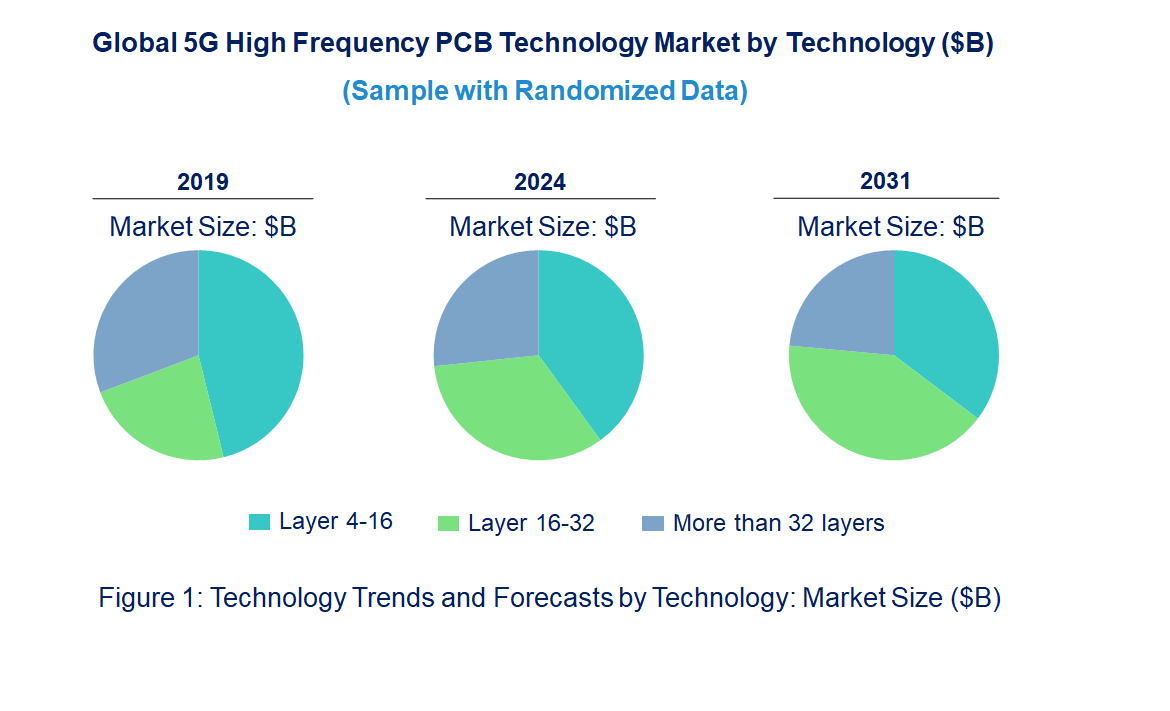
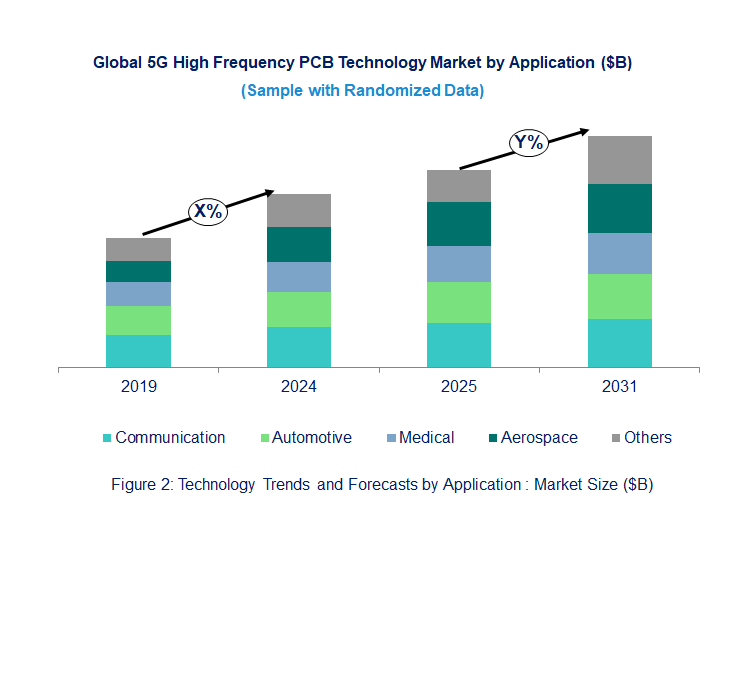
• Migration to Multi Layer PCBs: With the increase of 5G network and increased requirement for high speed data transfer, there is an evident trend towards the shift to PCBs having layers between 16-32. Multi layer PCBs serve the needed complexity and capability for the high frequency signal transmission without compromising signal integrity in compact designs, thus 5G infrastructure needs such multi layer PCBs.
• High-Frequency Materials: With 5G technology requiring higher transmission speeds and lower latency, the usage of advanced high-frequency materials in PCB manufacturing is increasing. Materials such as PTFE (polytetrafluoroethylene), Rogers, and other low-loss substrates are becoming more common because they can support higher signal frequencies with minimal interference.
• Miniaturization and Integration: The trend toward miniaturization is accelerating, particularly in consumer electronics, automotive, and medical devices. The need for smaller, more powerful PCBs to accommodate 5G’s high-frequency requirements is driving innovations in integration. Multi-functional PCBs with embedded passive components and advanced packaging are becoming standard.
• Demand from Automotive and Medical Applications: The automotive industry is shifting towards connected vehicles, ADAS, and autonomous driving. This will create a demand for reliable, high-frequency PCBs. In the medical sector, the demand for 5G-enabled devices and remote monitoring systems is increasing, thereby increasing the demand for specialized high-frequency PCBs.
• Focus on Thermal Management Solutions: As devices and infrastructures associated with 5G tend to become more complex and consume much more power, thermal management issues become a significant concern. With the PCBs destined for 5G applications requiring greater heat dissipation qualities than before to avoid overheating and maintain performance levels, advancements in PCB design related to improved heat dissipation and cooling solutions will increase. The latest trends are moving the 5G high frequency PCB market toward more sophisticated and advanced multi-layer designs with higher-performance materials. High-frequency, miniaturized, and thermally efficient PCBs, which find a place in high-growth sectors like telecom, automotive, and medical, have made their impact on PCB technology to advance the boundaries of PCB and reshape the market.
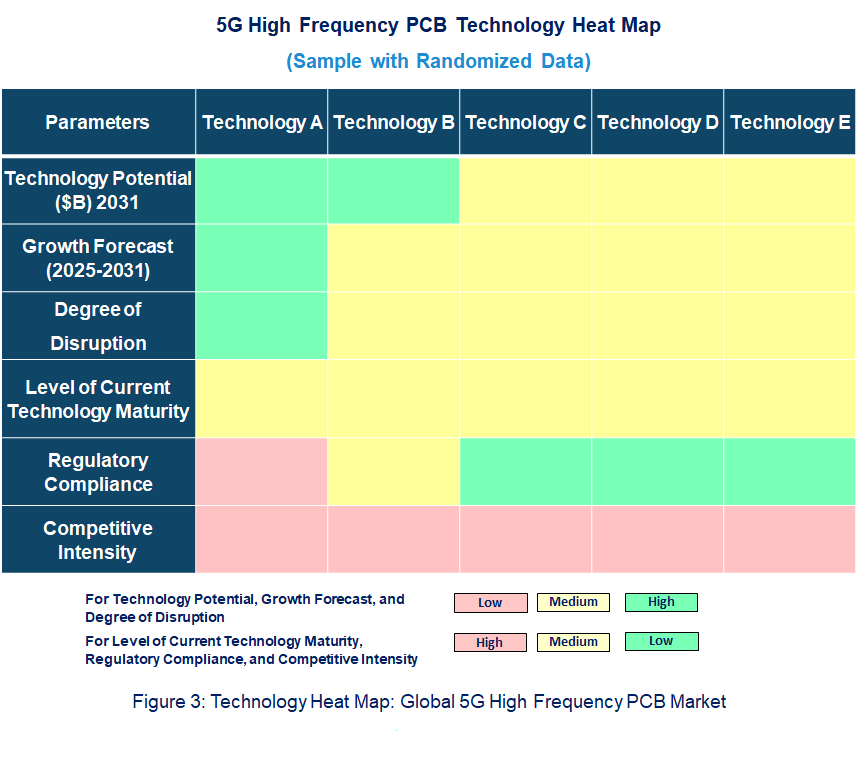
• Technology Potential: The potential for 5G High Frequency PCBs is huge, as they form the backbone of the infrastructure supporting 5G networks. With 5G’s promise of faster speeds, greater bandwidth, and more reliable connectivity, high-frequency PCBs are pivotal in meeting the demands of industries like telecommunications, automotive for V2X communication, healthcare for remote patient monitoring, and industrial IoT. The continued rollout of 5G networks globally drives the demand for more advanced, reliable, and scalable PCB solutions.
• Degree of Disruption: This technology is highly disruptive as it makes possible all of the high-performance, low-latency features that underpin 5G; they are going to play a key role in enabling the expansion of IoT, smart cities, autonomous vehicles, and much more. With wide-scale deployments of 5G happening across several industries, the high-frequency PCBs lie at the center of this revolution.
• Technology Maturity: The technology is mature but still evolving to support even higher frequencies and more compact designs for 5G. Manufacturers are constantly improving material properties, such as low-loss substrates and thermal management, to meet 5G’s stringent requirements.
• Regulatory Compliance: High Frequency PCBs of 5G must be compliant with all global standards such as RoHS, REACH, and industry-specific telecommunication regulations to ensure safety, environmental sustainability, and signal integrity in 5G devices. It will make these PCBs safe for inclusion in the broader 5G ecosystem.
• Nippon Mektron: Nippon Mektron has been focusing on developing high-frequency PCBs with increased layer counts and improved material properties to meet the growing demands of 5G applications. Their advanced PCBs offer excellent signal integrity, which is critical for 5G infrastructure, particularly in base stations and mobile devices.
• Samsung Electro-Mechanics: Samsung Electro-Mechanics has made significant advancements in multi-layer PCB technology for 5G applications. The company has developed high-density interconnect (HDI) PCBs with advanced materials capable of handling higher frequencies, improving signal quality in high-speed 5G communication networks.
• Young Poong Electronics: Young Poong Electronics is increasing the manufacturing capacity for high-frequency, multi-layer PCBs. Young Poong Electronics has also targeted the application of advanced materials, including PTFE-based substrates, crucial for the low-loss characteristic of the 5G infrastructure, automotive, and aerospace applications.
• Daeduck: It takes the innovation of PCB to higher levels, as it specializes in high frequency substrates suited for use in 5G. Its products, rather, address signal integrity along with less signal loss through high speed data transmission- a paramount requirement for network performance.
• Ibiden: Ibiden has developed innovative PCB solutions that meet the strict demands of 5G telecommunications. Their advanced multi-layer PCBs support faster speeds, lower latency, and higher bandwidth, making them a key player in the next-generation 5G infrastructure market.
• AT&S: AT&S has been advancing PCB technology based on 5G applications to integrate high-frequency materials into PCBs while improving their thermal management. Multilayer PCBs capable of ensuring 5G frequencies could be supported for automotive or industrial applications and are used in demanding environments.
• Hannstar Board: Hannstar Board designed innovative high-frequency PCB designs based on higher signal integrity and minimal crosstalk. Such types of PCBs are mainly used in 5G base stations and wireless communication devices, where high-speed data transmission is highly essential.
• Shennan Circuits: Shennan Circuits has been enhancing its PCB technology for 5G communication networks, focusing on reducing signal loss and providing superior reliability for high-frequency applications. Their work on developing multi-layer, low-loss PCBs is essential for 5G network infrastructure.
• Zhen Ding Tech: Zhen Ding Tech has developed advanced high-frequency PCBs, especially for 5G applications. Their focus was on low-loss materials and designs that provided optimal signal integrity, which is crucial to 5G base stations and mobile devices.
• TTM Technologies: TTM Technologies has heavily invested in developing multi-layer PCBs for 5G. TTM Technologies focuses on high frequency material and precision manufacturing; the company has become the lead supplier of the constituent component required to establish 5G network infrastructure. These companies are creating innovation in the 5G high frequency PCB market with leading-edge multi-layer designs, improved materials, and advanced thermal management solutions. Their drive to develop high-performance PCBs is crucial for enhancing the growth of 5G technology in the Telecommunications, Automotive, and medical sectors.
• 5G Network Rollout: One of the biggest drivers of the PCB market is the global deployment of 5G networks. There is an immense rise in demand for high-frequency, multi-layer PCBs that can support high-speed data transfer, low latency, and increased bandwidth.
• Miniaturization of Electronic Devices: Consumer electronics, automotive components, and medical devices continue to shrink in size. Thus, there is an increased demand for smaller high-performance PCBs that can handle 5G frequencies. This trend has made it a challenge for PCB manufacturers to innovate and produce more compact designs with higher layer counts.
• Increased Automotive Electronics Integration: The automotive industry is adopting 5G technology for advanced driver-assistance systems (ADAS), infotainment systems, and connected vehicles. This is driving the need for robust, high-frequency PCBs that can support complex electronic systems within vehicles.
• Advancements in Medical Devices: The Healthcare industry is increasingly adopting 5G-enabled medical devices for telemedicine, remote monitoring, and diagnostics. This resulted in higher demand for 5G high-frequency PCBs, as such applications require rapid data transfer. Challenges in the 5G high frequency PCB market are:
• High Manufacturing Costs: It is often expensive to produce high-frequency, multi-layer PCBs because of the expensive materials and advanced manufacturing processes that are required. This increases the overall production cost, thus limiting the accessibility of such PCBs, especially to smaller players in the market.
• Complexity of PCB Designs Because more layers and higher frequency devices are demanded, the designs are pretty hard and challenging for the making and manufacturing of PCBs. Therefore, advanced engineering or more precision in manufacturing necessitate an increase in the time and costs required and act as barriers against scaling.
• Material Constraints: The sourcing and development of high-performance materials to withstand the demands of 5G frequencies with low signal loss, durability, and heat resistance are an ongoing challenge. Long-term growth in the market will depend on the development of such materials. The rapid rollout of 5G networks, coupled with the demand for miniaturized electronics and automotive applications, is driving growth in the 5G high frequency PCB market. But challenges like high manufacturing cost, design complexity, and material constraints have to be overcome for the market to continue its growth and competitiveness in the market.
• Nippon Mektron
• Samsung Electro-Mechanics
• Young Poong Electronics
• Daeduck
• Ibiden
• AT&S
• Technology Readiness and Competitive Level for Layer 4-16, Layer 16-32, and more than 32 Layers in 5G High Frequency PCB Market: Layer 4-16 PCBs are mature and widely used in high-volume, cost-sensitive applications. Layer 16-32 PCBs are gaining ground in telecom infrastructure, while more than 32-layer PCBs are used in advanced, high-performance systems. The competitive level is highest for Layer 4-16, with cost efficiency being key. Regulatory standards are strict for all layers, especially for high-performance PCBs in telecom, where signal integrity and reliability are critical.
• Competitive Intensity and Regulatory Compliance of Layer 4-16, Layer 16-32, and More than 32 Layers for 5G High Frequency PCB Market: The 5G PCB market is competitive in nature. Low-cost applications have a large share of Layer 4-16 PCBs, but Layer 16-32 PCBs are gradually penetrating complex telecom systems, while over 32-layer PCBs are targeting the high-performance sector, like data centers. It requires a lot of regulatory compliance for the higher-layer PCB, mainly in terms of signal integrity and electromagnetic interference standards. More complicated in manufacture, this adds up to regulatory challenges and market entry barriers for the higher-layer design.
• Disruption Potential of Layer 4-16, Layer 16-32, and More than 32 Layers for 5G High Frequency PCB Market: Layer 4-16 PCBs are widely used in standard 5G devices. It provides a balance of cost and performance for smartphones and consumer electronics. Layer 16-32 PCBs are used for more complex telecom systems. This improves signal integrity for base stations and routers. PCBs with more than 32 layers provide extreme performance for high-density applications like data centers and satellite communications. As 5G and beyond technologies advance, higher-layer PCBs will disrupt the market, offering advanced capabilities for next-gen telecom infrastructure.
• Layer 4-16
• Layer 16-32
• More than 32 layers
• Communication
• Automotive
• Medical
• Aerospace
• Others
• North America
• Europe
• Asia Pacific
• The Rest of the World
• Latest Developments and Innovations in the 5G High Frequency PCB Technologies
• Companies / Ecosystems
• Strategic Opportunities by Technology Type


Choose a license that fits your team. Instant PDF delivery.
Prices exclude taxes. Instant delivery. Custom licensing available on request.
Market Report · May 18, 2026
Market Report · May 18, 2026
Market Report · May 18, 2026
Trusted partner for strategic intelligence and business growth


Receive a complimentary market analysis tailored to your industry. Our analysts will identify key growth opportunities and competitive dynamics specific to your business.

Market size, growth rate, and key trend analysis for your specific sector.

Top competitor positioning and market share analysis.

Strategic recommendations backed by data-driven insights.
Get curated market intelligence and competitive moves straight to your inbox.
By subscribing, you agree to receive our monthly insights. Unsubscribe anytime.
Receive a complimentary market analysis tailored to your industry. Our analysts will identify key growth opportunities and competitive dynamics specific to your business.
Market size, growth rate, and key trend analysis for your specific sector.
Top competitor positioning and market share analysis.
Strategic recommendations backed by data-driven insights.
Get curated market intelligence, emerging trends, and competitive moves straight to your inbox each month.
By subscribing, you agree to receive our monthly insights. Unsubscribe anytime.
We'll send your sample report shortly.