
Market Report · May 18, 2026

This market report covers trends, opportunities, and forecasts in the global 5g core market to 2031 by technology (network function virtualization, software defined radio, and network slicing), end use industry (telecom operators and enterprises), and region (North America, Europe, Asia Pacific, and the Rest of the World)
We'll send your sample report shortly.
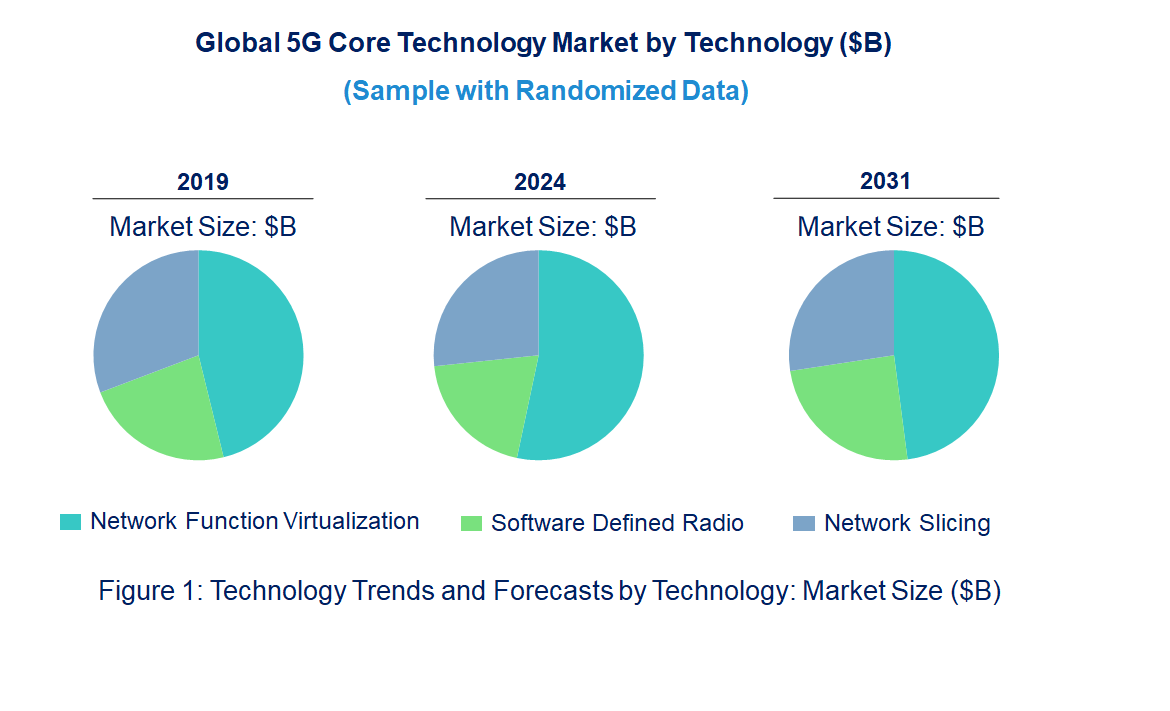
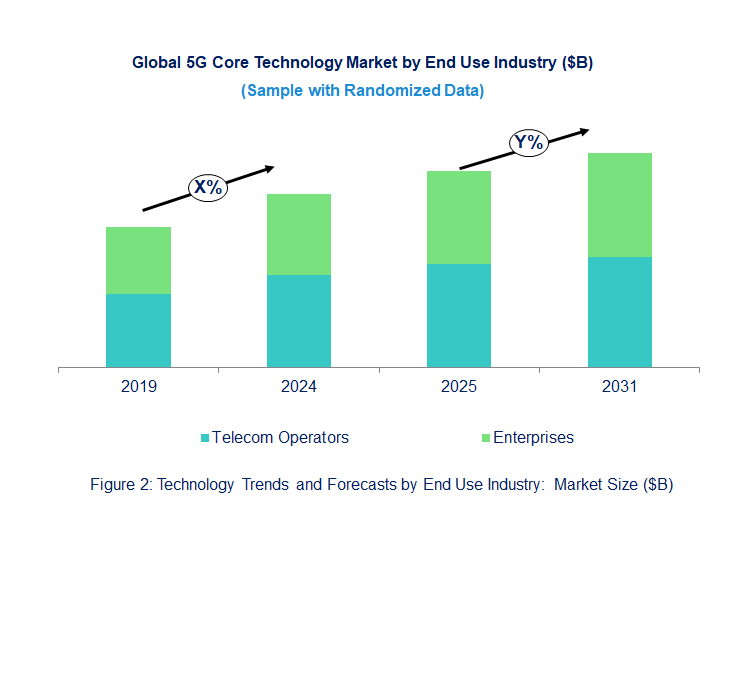
• Cloud-Native Network Architecture: The shift to cloud-native network architectures is one of the most prominent trends in the 5G core market. Cloud-native technologies bring more flexibility, scalability, and efficiency to telecom operators in terms of deployment and management of their networks. This transition enhances the ability to quickly adapt to changing network demands, optimize resources, and reduce operational costs.
• Network Slicing: With network slicing, telecom operators can create several virtual networks aligned with particular applications and users' needs. This is essential for 5G, as it allows the division of resources to provide specific, low-latency, and high-throughput services. Network slicing supports autonomous vehicles, IoT, and smart cities, enhancing the service quality for diverse industries.
• Integration of Artificial Intelligence and Machine Learning: AI and machine learning are leading the 5G core network by automating network management processes, improving predictive analytics, and optimizing resource allocation. These technologies help improve the 5G network's efficiency in managing traffic, enhancing fault detection speed, predictive maintenance, and many other processes, thus reducing operational costs and enhancing customer satisfaction.
• Edge Computing: Edge computing is increasingly growing in the 5G core market by bringing the process of computation and data storage closer to the user. Processing data at the edge of the network can result in a drastic reduction of latency, improve service delivery, and enable real-time applications such as AR and VR. This trend is necessary for use cases that demand ultra-low latency, like industrial automation and healthcare applications.
• Open-RAN (Open Radio Access Networks): Open-RAN will transform the 5G core market by creating open and cost-efficient infrastructures within networks. This will enable telecom operators to integrate different vendors and diverse hardware and software for networking. It leads the shift of this industry as operators will be able to deploy networks more quickly due to their lower dependence on traditional vendors. The 5G core market is being transformed by emerging trends such as cloud-native architectures, network slicing, AI/ML integration, edge computing, and Open-RAN. These trends not only enhance the performance and efficiency of 5G networks but also open up newer use cases and applications for various industries. As this 5G core infrastructure evolves, these trends will continue to drive innovation, making networks more agile, scalable, and capable of meeting the increased demand for advanced services.
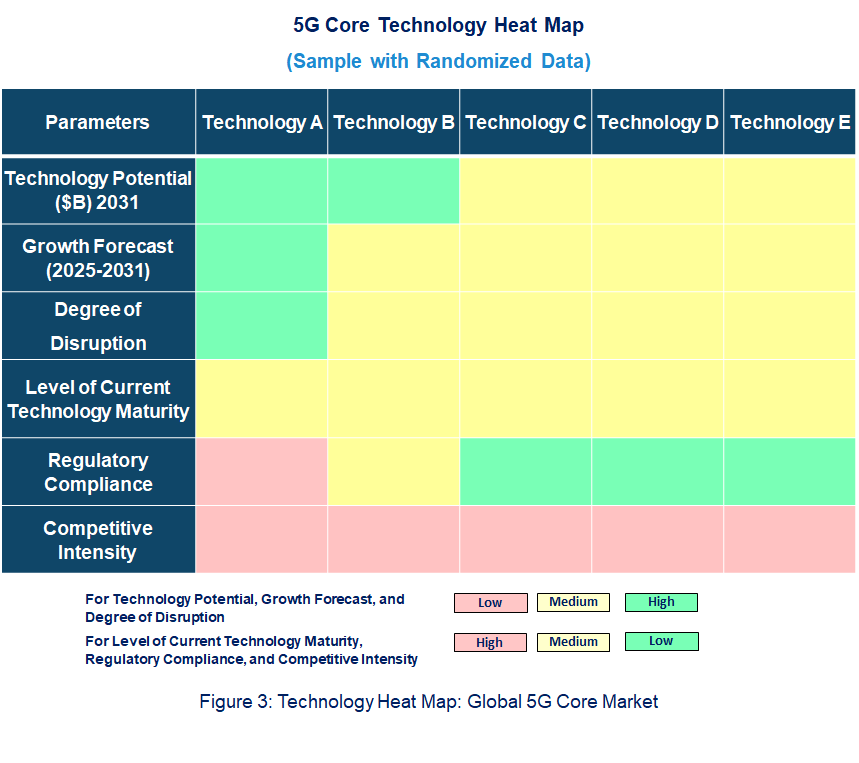
• Technology Potential: The technology potential of the 5G core market is immense, as it enables faster data speeds, low latency, and high capacity. With the integration of cloud-native architectures, network slicing, and AI-driven solutions, the 5G core is expected to revolutionize industries such as healthcare, automotive, and manufacturing, supporting new use cases like autonomous vehicles, IoT, and smart cities.
• Degree of Disruption: The degree of disruption is high, as the 5G core market is shifting from traditional network infrastructures to more flexible, cloud-native, and open solutions. The integration of new technologies such as edge computing and Open-RAN is disrupting the telecom industry by reducing vendor lock-in, enabling faster deployment, and lowering costs.
• Level of Current Technology Maturity: The maturity of 5G core technologies is progressing rapidly. While some components like network slicing and AI integration are in advanced stages, others, such as Open-RAN and edge computing, are still evolving, with ongoing trials and deployments.
• Regulatory Compliance: Regulatory compliance remains a challenge as telecom operators must ensure that their 5G networks meet local and international standards for security, privacy, and data protection.
• Telefonaktiebolaget LM Ericsson: Ericsson has strengthened its stance in the 5G core market by launching a cloud-native 5G core. This development enables network managers to manage their respective networks more efficiently, optimizing resources and scaling out with demand. Ericsson's focus on automation and orchestration is driving greater operational efficiency and faster time-to-market for its customers.
• Nokia Corporation: Nokia has expanded its 5G core portfolio by launching its cloud-native 5G core software platform. The new platform is built to support 5G services for various industries, providing scalability and flexibility while integrating with network slicing and edge computing. Nokia's partnerships with telecom operators worldwide are accelerating the roll-out of 5G services.
• Huawei Technologies: Huawei continues to be a major player in the 5G core market with its robust 5G core solution. The company has focused on integrating AI and machine learning with its core infrastructure, allowing telecom providers to automate network management, optimize resources, and improve fault detection. Huawei’s 5G core technology is critical in enabling ultra-low latency and high capacity for applications like autonomous vehicles and IoT.
• Samsung Electronics: Samsung has made significant progress in the 5G core market with its cloud-based 5G Core network solution. Its platform helps telecom operators optimize network management and reduce deployment costs, supporting greater scalability and flexibility for both enterprise and consumer markets. The inclusion of AI in network operations further improves automation and predictive analytics.
• Cisco Systems: Cisco has continued to provide end-to-end 5G solutions, from core to edge, enabling operators to provide agile, flexible, and secure networks. Improvements at Cisco in terms of its 5G core come through service provider solutions that leverage network virtualization and automation, improving efficiency and accelerating 5G services globally.
• Hewlett-Packard Enterprise Company: Hewlett Packard Enterprise (HPE) has been a forerunner in the 5G core market, delivering cloud-native, open solutions that allow telecom operators to modernize their core networks. HPE's offerings focus on simplifying the deployment of 5G services, with high-performance infrastructure that supports network slicing and edge computing for greater scalability and lower latency.
• Oracle Corporation: Oracle has contributed to the 5G Core Market with its cloud-based solutions, offering telecom operators faster, more flexible networks. The company's 5G core platform relies on its database, AI, and analytics capabilities to help service providers roll out, manage, and optimize their 5G networks while supporting various use cases.
• Athonet: Athonet focuses on providing lightweight, private 5G core solutions aimed at enterprises. Its solutions enable seamless private 5G network deployments that are scalable, secure, and customizable. Athonet’s focus on providing cost-effective, high-performance 5G core technologies is crucial for industries that require reliable, low-latency networks.
• Mavenir: Mavenir is a strong player in the 5G Core Market, developing cloud-native 5G core solutions that emphasize the shift toward more agile, software-defined networks, moving away from traditional infrastructure-based telecom. Mavenir's platform supports service providers with automation, real-time data analytics, and network optimization, enabling quicker deployment and better network performance for end-users.
• Affirmed Networks: Affirmed Networks, now a subsidiary of Microsoft, has developed a fully virtualized 5G core solution, enabling the deployment of cloud-native 5G networks by telecom operators. Its solution offers greater flexibility, efficiency, and scalability, helping operators introduce new services rapidly, reduce costs, and improve network performance. These recent trends and developments in the 5G core market indicate that market leaders are focused on providing flexible, scalable, and efficient 5G infrastructure solutions. By integrating advanced technologies such as AI, cloud-native architecture, network slicing, and edge computing, these players are shaping the future of telecom networks to be more agile, cost-effective, and capable of meeting the growing demand for 5G services across industries.
• Cloud-Native Architecture: Moving toward cloud-native architecture is enhancing scalability, flexibility, and efficiency in the 5G core market. Telecom operators can scale their networks quickly, reduce operational costs, and provide services with improved efficiency. The transition helps deploy advanced services while supporting rapid network expansion.
• Network Slicing: Network slicing allows telecom operators to create customized virtual networks tailored to specific services or industries. This is essential for applications requiring low latency, such as autonomous vehicles and IoT. Optimizing resource allocation with network slicing drives more efficient use of 5G networks and enhances service quality for diverse use cases.
• AI and Machine Learning: The integration of AI and machine learning in the 5G core network supports automation, predictive maintenance, and resource optimization. These technologies enhance network management capabilities, speeding up decision-making, lowering operational costs, and improving data traffic handling efficiency.
• Edge Computing: Edge computing enables computation near the data source, reducing latency while supporting real-time applications such as AR, VR, and industrial automation. These changes facilitate ultra-low-latency use cases, enhancing the performance and service delivery of 5G networks. This is especially valuable for industries like healthcare and manufacturing.
• Industry-Specific Solutions: Telecom operators are increasingly tailoring 5G core solutions to meet the specific needs of industries. This trend accelerates the deployment of 5G technologies in sectors that require high performance, reliability, and security, fostering innovation and expanding market opportunities. Challenges in the 5G core market are:
• High Deployment Costs: Deploying 5G core networks involves considerable upfront investments in infrastructure, technology, and talent. The high cost of 5G infrastructure deployment is a challenge, particularly for smaller telecom operators and businesses seeking to implement 5G technology.
• Data Security and Privacy Issues: With more data being processed and transmitted, ensuring the security and privacy of user data becomes more complex. This presents cybersecurity risks that telecom operators must address while ensuring compliance with regulatory requirements, potentially delaying the rollout of 5G services.
• Regulatory and Compliance Issues: The 5G Core Market faces challenges in navigating the regulatory landscape. Rules and standards for spectrum allocation, network operation, and data privacy vary across regions, making it difficult for global telecom operators to implement a consistent solution across markets.
• Integration Complexity: Integrating 5G core technologies with legacy networks and existing infrastructure is a technical challenge. Telecom operators must ensure seamless interoperability between new and old systems to avoid service disruptions and optimize network performance. The 5G core market is driven by advancements in cloud-native architecture, network slicing, AI integration, edge computing, and industry-specific solutions. These developments provide faster, more efficient, and customizable networks for a wide variety of applications. However, challenges such as high deployment costs, security concerns, regulatory compliance, and integration complexity must be addressed to fully realize the potential of 5G networks.
• Telefonaktiebolaget LM Ericsson
• Nokia Corporation
• Huawei Technologies
• Samsung Electronics
• Cisco Systems
• Hewlett Packard Enterprise Company
• Technology Readiness of Network Function Virtualization, Software Defined Radio, and Network Slicing for the 5G Core Market: Network Function Virtualization (NFV), Software Defined Radio (SDR), and Network Slicing each demonstrate varying levels of technology readiness in the 5G core market. NFV is relatively mature, with wide adoption already underway, allowing telecom operators to virtualize their network functions and improve operational efficiency. SDR, although less mature, is rapidly evolving, offering software-driven flexibility that enables reconfigurable radio access networks for 5G. Its readiness is growing, but full implementation is still limited to specific use cases. Network slicing, one of the most transformative technologies for 5G, is in the early stages of deployment, with ongoing development focused on creating customized, isolated virtual networks. Each technology presents unique challenges in terms of integration with legacy systems, regulatory compliance, and competitive pressures. NFV has a solid competitive edge due to its mature implementation, while SDR is facing a fast-paced competitive environment, with firms racing to deliver reconfigurable wireless solutions. Network slicing, though highly promising, is constrained by both technological and regulatory hurdles, particularly in terms of spectrum management and policy-making. The readiness of these technologies is shaped by ongoing innovation, industry collaboration, and compliance with regulatory frameworks.
• Competitive Intensity and Regulatory Compliance of Network Function Virtualization, Software Defined Radio, and Network Slicing for the 5G Core Market: The competitive intensity within the 5G core market is high, driven by the growing adoption of technologies like Network Function Virtualization (NFV), Software Defined Radio (SDR), and Network Slicing. NFV enables cost-effective, agile networks, creating opportunities for telecom operators to deliver on-demand services. SDR’s flexibility allows rapid adoption of different wireless technologies, intensifying competition as players seek to capture market share. Network slicing adds a layer of customization, enabling operators to offer tailored services, further intensifying competition. However, these technologies also face regulatory challenges, particularly in spectrum allocation, data privacy, and interoperability. Compliance with varying regional regulations on network operations and security is critical, as regulatory bodies are developing new frameworks to accommodate the advanced capabilities of 5G. Operators must navigate complex regulatory landscapes to ensure their services meet legal requirements and avoid delays in deployment. The race to innovate while adhering to regulatory guidelines creates a competitive, yet challenging, environment for companies in the 5G Core Market.
• Disruption Potential of Network Function Virtualization, Software Defined Radio, and Network Slicing for the 5G Core Market: The 5G core market is experiencing significant disruption through the adoption of Network Function Virtualization (NFV), Software Defined Radio (SDR), and Network Slicing. NFV transforms network architecture by decoupling hardware from software, enabling cost-effective, scalable network management. SDR enables the software-controlled radio technology to provide flexible, reconfigurable wireless systems, driving the evolution of 5G. Network slicing, on the other hand, allows operators to create custom virtual networks optimized for specific use cases, offering tailored services with low latency and high throughput. These technologies collectively enhance efficiency, reduce costs, and enable innovative applications such as autonomous vehicles, IoT, and smart cities. They also facilitate quicker deployment, dynamic resource management, and improved network performance, leading to greater agility and innovation in telecom networks. The disruptive potential of these technologies is reshaping the industry, making it more adaptable and capable of meeting diverse demands. The integration of these technologies also sets the foundation for future 5G services, enhancing the overall network experience for consumers and businesses alike.
• Network Function Virtualization
• Software Defined Radio
• Network Slicing
• Telecom Operators
• Enterprises
• North America
• Europe
• Asia Pacific
• The Rest of the World
• Latest Developments and Innovations in the 5G Core Technologies
• Companies / Ecosystems
• Strategic Opportunities by Technology Type


Choose a license that fits your team. Instant PDF delivery.
Prices exclude taxes. Instant delivery. Custom licensing available on request.
Market Report · May 18, 2026
Market Report · May 18, 2026
Market Report · May 18, 2026
Trusted partner for strategic intelligence and business growth


Receive a complimentary market analysis tailored to your industry. Our analysts will identify key growth opportunities and competitive dynamics specific to your business.

Market size, growth rate, and key trend analysis for your specific sector.

Top competitor positioning and market share analysis.

Strategic recommendations backed by data-driven insights.
Get curated market intelligence and competitive moves straight to your inbox.
By subscribing, you agree to receive our monthly insights. Unsubscribe anytime.
Receive a complimentary market analysis tailored to your industry. Our analysts will identify key growth opportunities and competitive dynamics specific to your business.
Market size, growth rate, and key trend analysis for your specific sector.
Top competitor positioning and market share analysis.
Strategic recommendations backed by data-driven insights.
Get curated market intelligence, emerging trends, and competitive moves straight to your inbox each month.
By subscribing, you agree to receive our monthly insights. Unsubscribe anytime.
We'll send your sample report shortly.