
Market Report · July 16, 2026

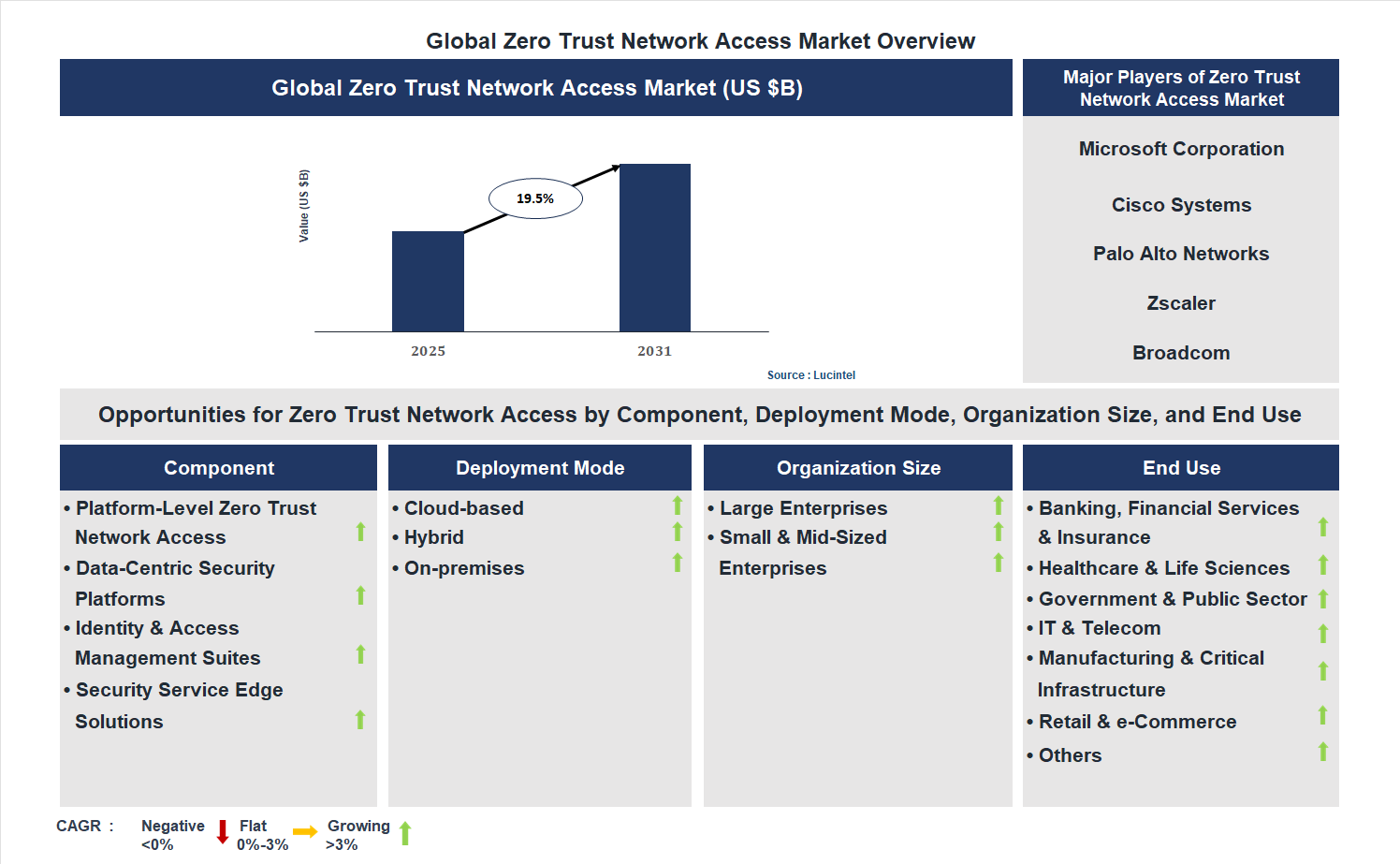
Key data points: The growth forecast = 19.5% annually for the next 7 years. Scroll below to get more insights. This market report covers trends, opportunities and forecasts in zero trust network access market to 2031 by component (platform-level zero trust network access, data-centric security platforms, identity & access management suites, and security service edge solutions), deployment mode (cloud-based, hybrid, and on-premises), organization size (large enterprises and small & mid-sized enterprises), end use (banking, financial services & insurance, healthcare & life sciences, government & public sector, IT & telecom, manufacturing & critical infrastructure, retail & e-commerce, and others), and region (North America, Europe, Asia Pacific, and the Rest of the World)
We'll send your sample report shortly.
• Lucintel forecasts that, within the component category, identity & access management suite is expected to witness higher growth over the forecast period.
• Within the end use category, IT & telecom is expected to witness the highest growth.
• In terms of region, APAC is expected to witness the highest growth over the forecast period. Gain valuable insights for your business decisions with our comprehensive 150+ page report. Sample figures with some insights are shown below.
• Growing Adoption of Zero Trust Architecture: Organizations are increasingly implementing Zero Trust frameworks to enhance security. This trend is driven by the rising sophistication of cyberattacks and the need to minimize insider threats. Zero Trust architecture enforces strict identity verification, continuous monitoring, and least-privilege access, reducing the attack surface. As a result, companies are shifting from traditional perimeter defenses to more granular, identity-based security models, which improve overall resilience and compliance with regulatory standards.
• Integration with Cloud and SaaS Platforms: The proliferation of cloud computing and SaaS applications is significantly influencing ZTNA deployment. Businesses require secure, seamless access to cloud resources from any location or device. ZTNA solutions are increasingly integrating with cloud platforms, enabling secure remote access without exposing internal networks. This trend enhances agility, supports hybrid work models, and reduces reliance on VPNs, which are often less secure. It also facilitates better scalability and management of distributed IT environments, making ZTNA essential for modern cloud-first strategies.
• Increased Focus on User Experience and Accessibility: As security measures become more sophisticated, organizations are also prioritizing user experience to ensure productivity and compliance. ZTNA solutions are evolving to offer frictionless access through single sign-on (SSO), adaptive authentication, and seamless device onboarding. This trend reduces user frustration, encourages adoption, and minimizes security risks associated with shadow IT. By balancing security with usability, companies can foster a more secure and efficient digital workspace, especially important in remote and hybrid work settings.
• Rise of AI and Machine Learning in Threat Detection: Advanced analytics powered by AI and machine learning are transforming ZTNA security capabilities. These technologies enable real-time threat detection, anomaly identification, and automated response, significantly enhancing security posture. AI-driven ZTNA solutions can adapt to emerging threats faster than traditional methods, providing proactive defense mechanisms. This trend not only improves security accuracy but also reduces operational costs by automating routine security tasks, allowing security teams to focus on strategic initiatives.
• Regulatory Compliance and Data Privacy Emphasis: Increasing regulatory requirements, such as GDPR, HIPAA, and CCPA, are driving the adoption of ZTNA solutions that support compliance. Organizations are deploying ZTNA to ensure secure data access, audit trails, and user authentication, aligning with legal standards. This trend emphasizes data privacy and security, influencing product development and deployment strategies. As compliance becomes a critical factor, ZTNA providers are enhancing features like detailed logging, encryption, and access controls to meet diverse regulatory demands, thereby boosting market growth. In summary, these trends are fundamentally reshaping the zero trust network access market by promoting more secure, flexible, and user-friendly access solutions. The integration with cloud platforms, emphasis on user experience, and adoption of AI-driven security are enabling organizations to better defend against cyber threats while supporting digital transformation initiatives. As regulatory pressures increase, ZTNA solutions are becoming indispensable for ensuring compliance and safeguarding sensitive data. Collectively, these developments are driving innovation, expanding market opportunities, and redefining how organizations approach network security in a rapidly evolving digital landscape.

• Adoption of AI and Machine Learning: Integration of AI and ML in ZTNA solutions enhances threat detection and response capabilities, enabling real-time security monitoring and reducing false positives. This advancement improves overall security posture and operational efficiency, making ZTNA more adaptive and intelligent.
• Increased Cloud Integration: Growing reliance on cloud services has prompted ZTNA providers to develop seamless integrations with major cloud platforms. This development ensures secure, scalable, and flexible access to cloud resources, supporting remote work and hybrid environments effectively.
• Expansion of Zero Trust Frameworks: Major vendors are expanding their Zero Trust frameworks to include comprehensive identity and access management, endpoint security, and data protection. This holistic approach strengthens security across all network layers and simplifies deployment for enterprises.
• Regulatory and Compliance Drivers: Stringent data protection regulations like GDPR and CCPA are pushing organizations to adopt ZTNA solutions to ensure compliance. This trend increases market demand as companies seek to meet legal requirements and avoid penalties.
• Growth of Managed Security Services: The rise of managed security service providers (MSSPs) offering ZTNA solutions is making advanced security more accessible to small and medium-sized enterprises. This development broadens market reach and accelerates adoption across diverse industry sectors. In summary, these developments are significantly impacting the zero trust network access market by enhancing security capabilities, increasing adoption across various sectors, and supporting the shift towards cloud and remote work environments. The market is becoming more sophisticated, scalable, and aligned with regulatory standards, positioning it as a vital component of modern cybersecurity strategies.
• Enterprise Security: Strengthening organizational defenses : ZTNA provides a zero-trust approach that minimizes internal and external threats, enabling organizations to secure sensitive data and critical infrastructure effectively. This leads to reduced breach risks and enhances overall security posture.
• Cloud Services: Securing cloud environments : As cloud adoption accelerates, ZTNA offers secure, seamless access to cloud applications and data. It ensures that only authorized users can access cloud resources, reducing vulnerabilities and supporting compliance.
• Remote Workforce Management: Enabling secure remote work : The rise of remote work necessitates secure access solutions. ZTNA facilitates secure, reliable connectivity for remote employees, improving productivity while maintaining security standards.
• IoT Security: Protecting interconnected devices : The proliferation of IoT devices increases attack surfaces. ZTNA provides granular access control and continuous monitoring, safeguarding IoT ecosystems from cyber threats.
• Data Protection: Ensuring data integrity and privacy : ZTNA solutions help organizations enforce strict data access policies, prevent unauthorized data exfiltration, and ensure compliance with data privacy regulations. In summary, these growth opportunities are significantly impacting the zero trust network access market by driving adoption across diverse applications. They enable organizations to enhance security, support digital transformation, and meet evolving regulatory requirements, thereby fueling market expansion and innovation.
• Increasing Cybersecurity Threats: The rise in sophisticated cyberattacks, data breaches, and insider threats compels organizations to adopt Zero Trust models. Traditional perimeter-based security is no longer sufficient, prompting a shift towards Zero Trust principles that verify every access request. This heightened threat landscape accelerates demand for ZTNA solutions, ensuring secure remote access and safeguarding sensitive data. As cyber threats evolve, organizations recognize the need for robust, adaptive security frameworks, making ZTNA a critical component of modern cybersecurity strategies.
• Growing Remote Workforce and Digital Transformation: The surge in remote work due to the COVID-19 pandemic has transformed organizational access needs. Employees require secure, seamless access to corporate resources from various locations and devices. Digital transformation initiatives further necessitate flexible, scalable security solutions that support cloud-based applications and services. ZTNA offers granular access control, identity verification, and continuous monitoring, making it ideal for supporting remote workforces and digital workflows. This trend significantly boosts market growth as organizations seek to secure distributed environments without compromising user experience.
• Increasing Adoption of Cloud Services: The proliferation of cloud computing has shifted enterprise infrastructure towards cloud-based platforms, demanding new security paradigms. Traditional security models are inadequate for protecting cloud resources, leading to the adoption of Zero Trust architectures that provide secure, identity-based access controls. ZTNA solutions facilitate secure connectivity to cloud applications, ensuring data integrity and compliance. As cloud adoption accelerates across industries, the market for ZTNA solutions expands correspondingly, driven by the need for scalable, cloud-native security frameworks.
• Regulatory and Compliance Requirements: Stringent data privacy laws and security standards such as GDPR, HIPAA, and CCPA compel organizations to enhance their security measures. Zero Trust principles align well with compliance mandates by enforcing strict access controls, continuous monitoring, and audit trails. Implementing ZTNA helps organizations demonstrate compliance, reduce risk of penalties, and protect customer data. Regulatory pressures thus serve as a significant driver, encouraging enterprises to adopt advanced security solutions that meet evolving legal requirements and industry standards.
• Technological Advancements and Innovation: Continuous innovations in cybersecurity technologies, including AI, machine learning, and automation, enhance ZTNA capabilities. These advancements enable real-time threat detection, adaptive access controls, and improved user experiences. Vendors are integrating these technologies into ZTNA solutions, making them more effective and easier to deploy. The ongoing evolution of security tools fosters a competitive market environment, encouraging adoption and development of next-generation ZTNA solutions. This technological progress sustains market growth and addresses emerging security challenges efficiently. The challenges in the zero trust network access market are:
• High Implementation and Operational Costs: Deploying ZTNA solutions involves significant investment in infrastructure, software, and skilled personnel. Many organizations, especially small and medium-sized enterprises, find these costs prohibitive. Additionally, ongoing maintenance, updates, and staff training add to the financial burden. These costs can delay or deter adoption, particularly in budget-constrained environments. Overcoming cost barriers requires vendors to offer scalable, cost-effective solutions and demonstrate clear ROI to encourage broader adoption across diverse organizational sizes.
• Complex Integration with Existing Infrastructure: Integrating ZTNA solutions into legacy systems and existing security frameworks can be complex and time-consuming. Compatibility issues, data migration challenges, and the need for extensive customization often hinder seamless deployment. This complexity can lead to operational disruptions and increased deployment timelines. Organizations require comprehensive planning and expertise to ensure smooth integration, which can be resource-intensive. Overcoming these challenges is crucial for widespread adoption, necessitating user-friendly solutions and robust support from vendors.
• Evolving Cyber Threats and Attack Techniques: As cyber threats become more sophisticated, attackers develop new methods to bypass security measures, including Zero Trust architectures. Constantly evolving attack vectors demand continuous updates and enhancements to ZTNA solutions. Organizations face the challenge of staying ahead of these threats, which requires ongoing investment in threat intelligence, security analytics, and staff training. Failure to adapt quickly can leave vulnerabilities open, undermining trust in ZTNA systems. Addressing this challenge involves leveraging advanced technologies and fostering proactive security strategies. A synthesis of these drivers and challenges indicates that the zero trust network access market is poised for substantial growth driven by technological innovation, regulatory compliance, and the increasing need for secure remote access. However, high costs, integration complexities, and evolving threats pose significant hurdles. Success in this market will depend on vendors’ ability to deliver cost-effective, easy-to-deploy solutions that adapt to emerging security challenges. Organizations must balance investment with strategic planning to harness the benefits of ZTNA while mitigating associated risks, ultimately shaping a more secure digital environment.
• Microsoft Corporation
• Cisco Systems
• Palo Alto Networks
• Zscaler
• Broadcom
• Okta
• Fortinet
• Check Point Software Technologies
• CrowdStrike Holdings
• IBM Corporation
• Platform-level Zero Trust Network Access
• Data-centric Security Platforms
• Identity & Access Management Suites
• Security Service Edge Solutions
• Cloud-based
• Hybrid
• On-premises
• Large Enterprises
• Small & Mid-sized Enterprises
• Banking, Financial Services & Insurance
• Healthcare & Life Sciences
• Government & Public Sector
• IT & Telecom
• Manufacturing & Critical Infrastructure
• Retail & e-Commerce
• Others
• North America
• Europe
• Asia Pacific
• The Rest of the World
• United States: The U.S. market has seen rapid adoption of ZTNA solutions, driven by major tech firms and government agencies prioritizing cybersecurity. Innovations include AI-powered threat detection and integrated cloud security platforms. Regulatory frameworks like CISA guidelines are encouraging enterprises to implement Zero Trust models, leading to increased investments in secure remote access. The rise of remote work has further accelerated market growth, with many organizations adopting ZTNA to safeguard sensitive data and ensure compliance.
• China: China’s ZTNA market is expanding as government initiatives promote cybersecurity resilience amid rising cyber threats. Domestic vendors are gaining prominence by offering localized, scalable solutions tailored to regulatory requirements. The government’s focus on critical infrastructure security has spurred investments in Zero Trust architectures. Additionally, partnerships between local firms and international technology providers are fostering innovation, with emphasis on integrating ZTNA with broader cybersecurity ecosystems to enhance national security.
• Germany: Germany’s market is characterized by a strong emphasis on data privacy and compliance with GDPR, influencing ZTNA deployment strategies. Enterprises are increasingly adopting Zero Trust solutions to meet stringent regulatory standards and protect sensitive customer data. Innovations include integration with existing security frameworks and enhanced user authentication methods. The German government is also promoting cybersecurity awareness, encouraging organizations to adopt Zero Trust principles to mitigate evolving cyber threats and ensure operational continuity.
• India: The Indian ZTNA market is witnessing rapid growth driven by digital transformation initiatives and increasing cyberattacks. Both public and private sectors are investing in Zero Trust solutions to secure remote workforces and critical infrastructure. Local vendors are developing cost-effective, scalable solutions tailored to regional needs. The government’s push for a digital economy and cybersecurity reforms are further propelling market expansion, with a focus on enhancing national cybersecurity posture through Zero Trust architectures.
• Japan: Japan’s market is advancing with a focus on integrating ZTNA into broader cybersecurity strategies, especially in sectors like manufacturing and finance. The adoption of Zero Trust principles is supported by government policies aimed at strengthening cybersecurity resilience. Innovations include the deployment of biometric authentication and AI-driven security analytics. Japanese organizations are increasingly prioritizing Zero Trust to protect intellectual property and sensitive data, aligning with global trends and ensuring compliance with international security standards.


• Microsoft Corporation
• Cisco Systems
• Palo Alto Networks
• Zscaler
• Broadcom
• Okta
• Fortinet
• Check Point Software Technologies
• CrowdStrike Holdings
• IBM Corporation Q5. Which zero trust network access market segment will be the largest in future? Answer: Lucintel forecasts that, within the component category, identity & access management suite is expected to witness higher growth over the forecast period. Q6. In zero trust network access market, which region is expected to be the largest in next 5 years? Answer: In terms of region, APAC is expected to witness the highest growth over the forecast period. Q7. Do we receive customization in this report? Answer: Yes, Lucintel provides 10% customization without any additional cost.


Choose a license that fits your team. Instant PDF delivery.
Prices exclude taxes. Instant delivery. Custom licensing available on request.
Market Report · July 16, 2026
Market Report · May 18, 2026
Market Report · May 18, 2026
Trusted partner for strategic intelligence and business growth


Receive a complimentary market analysis tailored to your industry. Our analysts will identify key growth opportunities and competitive dynamics specific to your business.

Market size, growth rate, and key trend analysis for your specific sector.

Top competitor positioning and market share analysis.

Strategic recommendations backed by data-driven insights.
Get curated market intelligence and competitive moves straight to your inbox.
By subscribing, you agree to receive our monthly insights. Unsubscribe anytime.
Receive a complimentary market analysis tailored to your industry. Our analysts will identify key growth opportunities and competitive dynamics specific to your business.
Market size, growth rate, and key trend analysis for your specific sector.
Top competitor positioning and market share analysis.
Strategic recommendations backed by data-driven insights.
Get curated market intelligence, emerging trends, and competitive moves straight to your inbox each month.
By subscribing, you agree to receive our monthly insights. Unsubscribe anytime.
We'll send your sample report shortly.