
Market Report · May 18, 2026

This market report covers trends, opportunities, and forecasts in the global wi-fi router market to 2031 by technology (single band, dual band, and tri band), application (residential, commercial, healthcare, colleges & universities, retail, manufacturing, sports & leisure, and others), and region (North America, Europe, Asia Pacific, and the Rest of the World)
We'll send your sample report shortly.
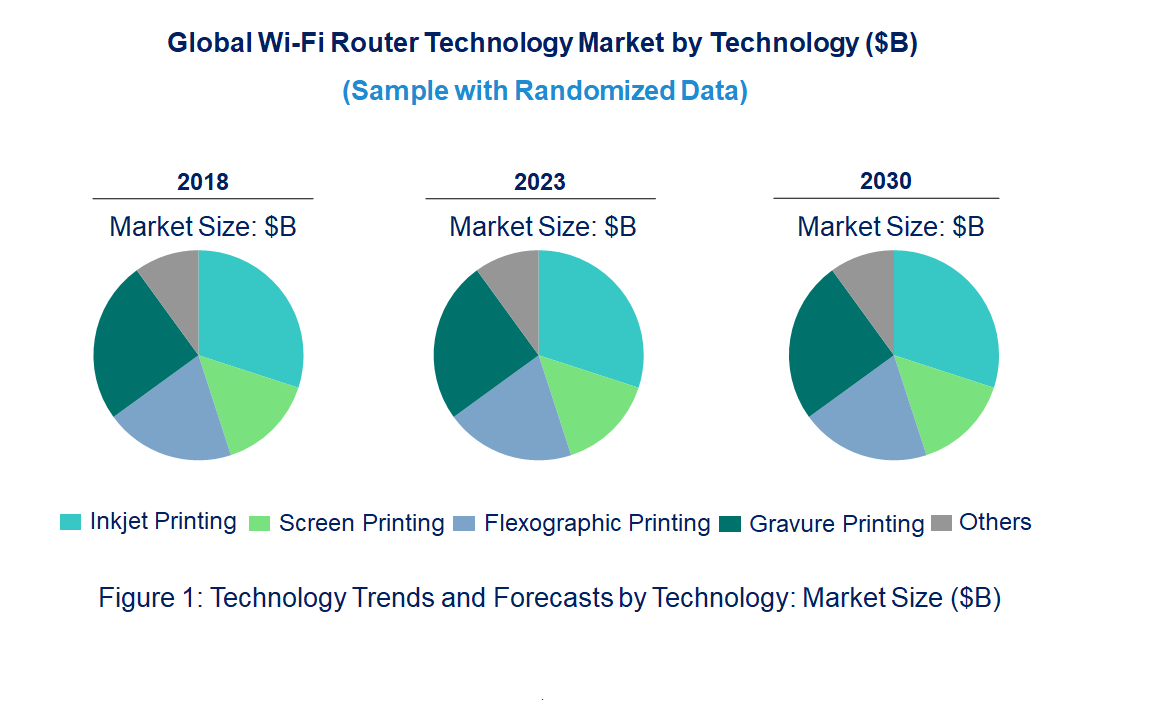
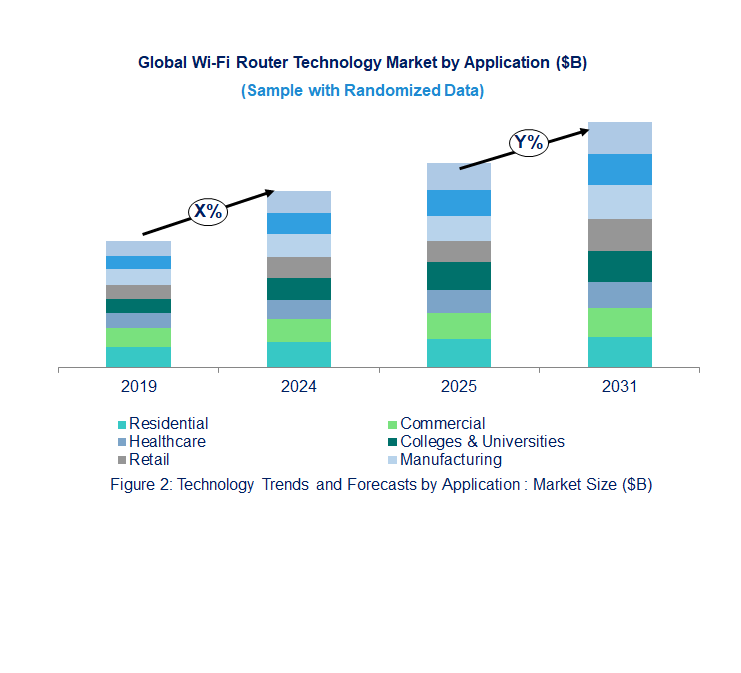
• Wi-Fi 6 (802.11ax) and Wi-Fi 6E: The adoption of Wi-Fi 6 and the extended Wi-Fi 6E spectrum, including the 6 GHz band, is growing quickly. These technologies provide higher speed, better efficiency in densely populated environments, and reduced latency, making them suitable for high-demand applications such as streaming, gaming, and smart homes.
• Increased usage of tri-band routers: With more devices in homes and workplaces, the popularity of tri-band routers is rising. These routers use an additional 5 GHz band, dispersing the load over three bands: 2.4 GHz, 5 GHz, and 6 GHz. This helps prevent congestion and improves overall network performance.
• Smart home integration: Wi-Fi routers are increasingly being integrated into smart home ecosystems to support multiple IoT devices. The demand for seamless connectivity between devices such as smart speakers, thermostats, cameras, and appliances is driving the development of advanced security, faster speeds, and enhanced range in routers.
• Mesh network adoption to provide better coverage: The need for better coverage in large homes and business areas has led to the rise of mesh networking solutions. A mesh Wi-Fi system connects multiple access points to create a single wide-area network that delivers optimal internet throughout the entire building.
• Security and privacy features: With growing concern about cybersecurity, manufacturers of wi-fi routers are including security features such as WPA3 encryption, automatic firmware updates, and built-in VPN support. These features are essential for protecting personal data and ensuring safe browsing, particularly in connected environments like smart homes and businesses. These emerging trends are changing the Wi-Fi router market by improving connectivity, speed, and security while supporting smart homes, IoT applications, and high-demand services. As these technologies advance, the market will shift toward more sophisticated, efficient, and secure wi-fi networks for both residential and commercial purposes.
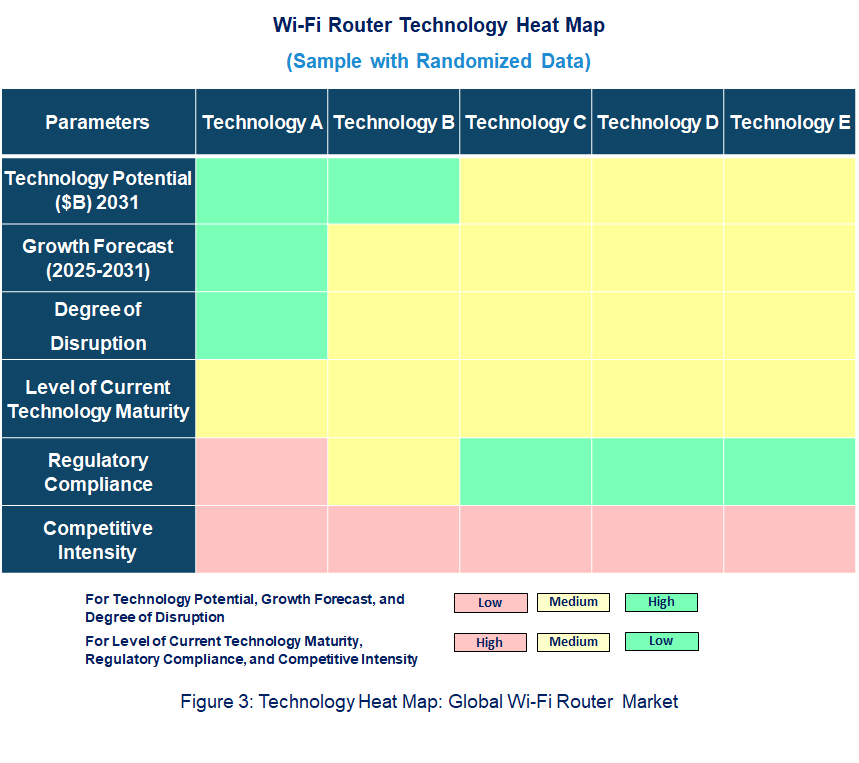
• Technology Potential: Wi-Fi router technology has immense potential with the development of Wi-Fi 6 and the soon-to-be-released Wi-Fi 7. These new standards promise faster speeds, improved efficiency, lower latency, and better performance in crowded environments, addressing the rising bandwidth demand from modern devices and applications. Advances in mesh networking systems further improve the coverage and reliability of home and business networks.
• Disruption Level: Wi-Fi routers are already disrupting wired networks since they offer flexible, scalable, and low-cost access to the internet. As Wi-Fi technologies continue to evolve, this trend could further reduce the use of traditional broadband connections, especially with the advent of 5G and hybrid networking.
• State of Maturity of Current Technology: Wi-Fi routers are highly mature, and commonly found in homes and businesses, though newer technologies like Wi-Fi 6/6E are still in the process of widespread adoption. Manufacturers are working to improve compatibility and make these technologies more accessible.
• Regulatory Compliance: Wi-Fi routers must comply with global regulatory standards for radiofrequency (RF) emissions and spectrum allocation, including regulations from the FCC and ITU, to ensure safe and effective operation. In the future, the promise of faster, more reliable networks will be coupled with challenges in regulatory compliance and the adoption of new technologies.
• Cisco: Cisco has launched various Wi-Fi 6 and Wi-Fi 6E routers. These routers provide faster speeds, improve network traffic management, and scale well both for enterprise and home use. By integrating advanced security tools like Cisco Umbrella and secure management capabilities, Cisco enhances defense against emerging cyber threats.
• AT&T: AT&T has released several Wi-Fi 6-enabled routers that offer faster and more reliable home internet connections. Their rollout of advanced mesh Wi-Fi systems, such as the AT&T Smart Wi-Fi Extender, enables seamless connectivity across large homes and multi-floor buildings, improving overall internet performance.
• Verizon: Verizon rolled out Wi-Fi 6 routers as part of its Fios Internet service. The company claims that these routers support broader bandwidths and better management of multiple devices. Verizon is also integrating smart router management through an app to enhance the user experience.
• Comcast: Comcast's Xfinity xFi platform supports Wi-Fi 6 and mesh Wi-Fi systems, allowing users to manage home networks, prioritize devices, and monitor internet speeds. Ensuring optimal performance is the core focus of Comcast’s smart routers, which provide seamless Wi-Fi coverage and help customers customize their internet experience through an accessible app.
• Charter Communications: Charter Communications (Spectrum) has introduced Wi-Fi 6 routers in its internet service offerings, providing faster speeds and improved performance for high-usage households and businesses. The company also offers Spectrum Advanced Wi-Fi, giving users greater control over home network performance, including parental controls, device management, and security features.
• Lumen Technologies: Lumen has expanded its portfolio to include enterprise-grade Wi-Fi solutions that integrate Wi-Fi 6 with high-performance mesh networking. Their routers are designed for large-scale commercial spaces, providing secure internet connectivity for businesses, educational institutions, and public spaces.
• Viasat: Focusing on high-speed satellite internet for rural areas, Viasat has introduced Wi-Fi 6 routers for its satellite-based internet services. These routers manage high-bandwidth demand in remote locations by ensuring reliable, high-performance connectivity for residential and small business customers.
• Netgear: Netgear has become a top Wi-Fi 6 router provider, with advanced mesh Wi-Fi systems like the Orbi series, which is ideal for large homes and high-demand users. Their focus on gaming routers, such as the Nighthawk Pro Gaming series, ensures low latency, high-speed internet connectivity for gamers and content creators. The developments mentioned above highlight key markets that are adapting significantly to the growing demand for faster operations, increased connectivity, and improved network management products. These innovations aim to improve residential internet connection efficiency.
• Growing demand for high-speed internet access: With more reliance on streaming services, working from home, and online gaming, there is a growing demand for high-speed, reliable Wi-Fi networks. This drives demand for advanced Wi-Fi technologies such as Wi-Fi 6, mesh networks, and tri-band routers.
• Expanding smart home market: With the increasing number of smart homes and IoT devices, there is a greater need for Wi-Fi routers that can support stable, high-speed internet connections for many connected devices. This has led to the creation of routers with better coverage and greater device-handling capacities.
• Advancements in Wi-Fi technology: The introduction of Wi-Fi 6 and Wi-Fi 6E technologies has improved internet speeds, efficiency, and the number of connected devices. This has contributed to the market by providing more reliable and faster connections for consumers and businesses.
• Increasing growth in remote work and online learning: The growing need for high-performance Wi-Fi routers to support multiple users and devices performing simultaneously has led to higher demand for mesh networks and Wi-Fi 6 routers that provide superior performance and connectivity in diverse environments. Challenges in the Wi-Fi router market include:
• Expensive: Wi-Fi 6 and mesh networking systems offer impressive performance benefits, but they also come at a premium price. This makes it difficult for consumers and businesses in emerging markets, who are looking for value, to overcome the cost barrier.
• Interference and network congestion: Although Wi-Fi technology has improved, network congestion and interference from neighboring networks remain a problem, especially in densely populated areas. This can reduce speed and performance, preventing consumers from fully benefiting from newer Wi-Fi standards.
• Security risks with increased connectivity: As the number of connected devices in homes and businesses grows, so does the risk of vulnerability. Routers need robust security features to prevent cyber threats; otherwise, this may hinder the adoption of new technologies. The prospects for the Wi-Fi router market remain strong due to the increasing demand for Wi-Fi internet services, the evolution of smart homes, and advancements in Wi-Fi technology. However, challenges such as high purchase costs, network congestion, and security issues must be addressed to widen adoption.
• Cisco
• AT&T
• Verizona
• Comcast
• Charter Communications
• Lumen Technology
• Technology Readiness by Technology Type: Single-band technology is mature, widely adopted, and cost-effective, but limited in high-density environments. Dual-band technology is well-established, offering a balance of performance and cost, with widespread adoption in homes and small businesses. Tri-band routers, based on the 5 GHz and 6 GHz bands, are newer, premium products that offer high-speed performance but require more advanced technology and regulatory compliance. Readiness varies according to technology type, adoption, cost, and the need for bandwidth-intensive applications.
• Competitive Intensity and Regulatory Compliance: The market for wi-fi router at the global level is increasing, single-band routers are highly competitive due to their low price, while dual-band routers face moderate competition in the mid-range. Tri-band routers, positioned as premium products, are less competitive in price but increasingly in demand in niche markets. Regulatory compliance is more stringent for dual- and tri-band routers, especially regarding the use of 5 GHz and 6 GHz frequencies. As Wi Fi technologies advance, spectrum regulations and compliance for higher speeds are becoming critical concerns.
• Disruption Potential of Various Technologies Type: Single-band routers, limited to 2.4 GHz, are less disruptive due to performance limitations in crowded environments. Dual-band routers, offering both 2.4 GHz and 5 GHz frequencies, improve flexibility, reduce interference, and cater to higher demand, making them more disruptive. Tri-band routers, with an additional 5 GHz or 6 GHz band, deliver faster speeds and greater stability, appealing to high-demand users like gamers and businesses. These technologies have disrupted the market by addressing congestion and improving network performance across various price points.
• Single Band
• Dual Band
• Tri Band
• Residential
• Commercial
• Healthcare
• Colleges & Universities
• Retail
• Manufacturing
• Sports & leisure
• Others
• North America
• Europe
• Asia Pacific
• The Rest of the World
• Latest Developments and Innovations in the Wi-Fi Router Technologies
• Companies / Ecosystems
• Strategic Opportunities by Technology Type


Choose a license that fits your team. Instant PDF delivery.
Prices exclude taxes. Instant delivery. Custom licensing available on request.
Market Report · May 18, 2026
Market Report · May 18, 2026
Market Report · May 18, 2026
Trusted partner for strategic intelligence and business growth


Receive a complimentary market analysis tailored to your industry. Our analysts will identify key growth opportunities and competitive dynamics specific to your business.

Market size, growth rate, and key trend analysis for your specific sector.

Top competitor positioning and market share analysis.

Strategic recommendations backed by data-driven insights.
Get curated market intelligence and competitive moves straight to your inbox.
By subscribing, you agree to receive our monthly insights. Unsubscribe anytime.
Receive a complimentary market analysis tailored to your industry. Our analysts will identify key growth opportunities and competitive dynamics specific to your business.
Market size, growth rate, and key trend analysis for your specific sector.
Top competitor positioning and market share analysis.
Strategic recommendations backed by data-driven insights.
Get curated market intelligence, emerging trends, and competitive moves straight to your inbox each month.
By subscribing, you agree to receive our monthly insights. Unsubscribe anytime.
We'll send your sample report shortly.