
Market Report · July 15, 2026

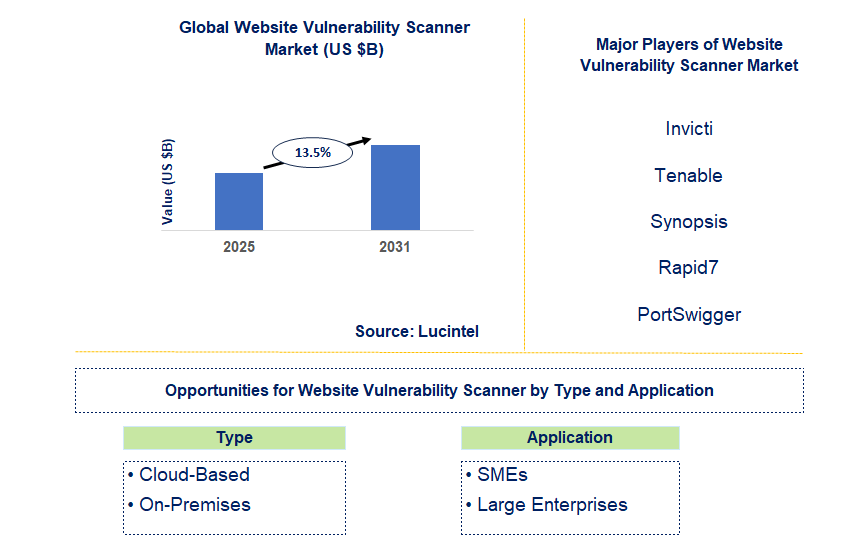
Key data points: The growth forecast = 13.5% annually for the next 7 years. Scroll below to get more insights. This market report covers Trends, opportunity and forecast in website vulnerability scanner market to 2031 by type (cloud-based and on-premises), application (SMEs and large enterprises), and region (North America, Europe, Asia Pacific, and the Rest of the World)
We'll send your sample report shortly.
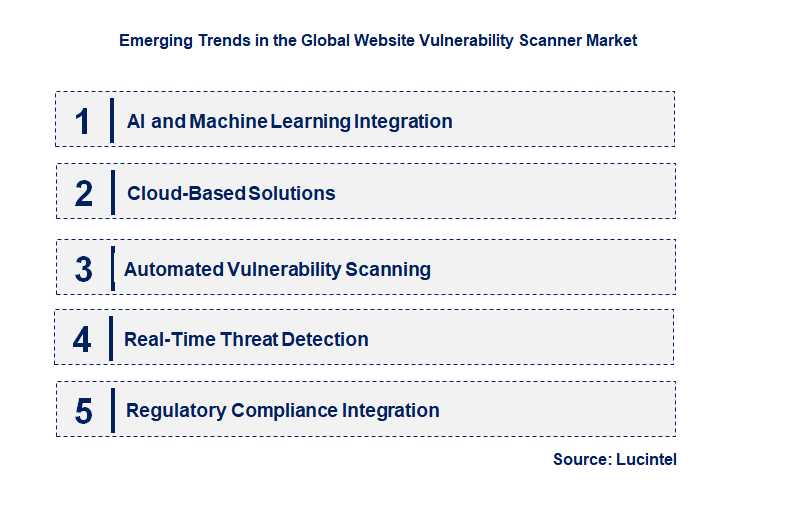
• AI and Machine Learning Integration: AI and machine learning technologies are increasingly being integrated into website vulnerability scanners to enhance their efficiency. These technologies allow scanners to identify complex and previously unknown vulnerabilities, enabling businesses to address potential threats more proactively. The ability to learn from previous attacks and improve detection capabilities is significantly improving the accuracy and speed of vulnerability scanning tools.
• Cloud-Based Solutions: Cloud-based website vulnerability scanners are increasingly becoming popular due to their scalability, flexibility, and cost-effectiveness. This kind of solution will enable businesses to scan their websites regularly without making heavy investments in infrastructure. In addition, cloud-based scanners can be accessed from anywhere, making them perfect for businesses with remote teams or global operations. The trend is likely to continue as more companies move toward cloud computing and digital transformation.
• Automated Vulnerability Scanning: There is now a lot of automation in website vulnerability scanners. Automated scanning tools help businesses scan their websites for vulnerabilities on a regular basis with little to no human intervention. This development helps with efficiency as well as minimizing the impact of human errors and addresses the occurrence of more vulnerabilities in actual time because the cyber threats involved are becoming increasingly sophisticated.
• Real-Time Threat Detection: Real-time scanning and threat detection are fast becoming the most critical features of modern website vulnerability scanners. The ability to detect threats as they occur allows businesses to respond quickly and mitigate potential damage. This trend is becoming increasingly important as cyberattacks are becoming more frequent and sophisticated. Real-time scanning is helping businesses to be more proactive in their security measures, reducing the risk of data breaches and other cyber incidents.
• Regulatory Compliance Integration: With increasing data protection regulations across the globe, website vulnerability scanners are now designed to help businesses comply with standards such as GDPR, CCPA, and other regional laws. Such tools are usually equipped with features that automatically check for compliance with regulatory requirements, thereby avoiding penalties and protecting customer data. This trend is expected to grow as more countries introduce stricter data protection laws. These emerging trends, such as AI integration, automation, cloud solutions, real-time detection, and regulatory compliance, are transforming the website vulnerability scanner market. They are driving the demand for more efficient, proactive, and comprehensive security solutions, helping businesses stay ahead of cyber threats.
• AI-Powered Scanning Tools: AI-powered vulnerability scanners are revolutionizing the way businesses detect and address vulnerabilities on their websites. These tools use machine learning algorithms to identify patterns and predict potential threats, making them more effective at identifying vulnerabilities that traditional scanners may miss. This development is improving the accuracy and speed of vulnerability detection, making it easier for businesses to stay ahead of cyber threats.
• Cloud-Based Vulnerability Scanners: Cloud-based website vulnerability scanners are gaining popularity because they are flexible and scalable. These tools enable businesses to run vulnerability scans without the need to maintain expensive on-premises infrastructure. Cloud solutions are particularly attractive to SMEs that may not have the resources to invest in traditional security tools. This development is democratizing access to website vulnerability scanning, making it more accessible to businesses of all sizes.
• Increased Focus on Compliance Features: As regulatory pressures build up, compliance features in vulnerability scanners are increasing, which support businesses in observing data protection legislation. The feature allows scanners to automatically check the vulnerability that exposes sensitive customer information to businesses to be in compliance with GDPR and CCPA. Thus, this increases the completeness of vulnerability scanning tools while ensuring that companies are both safe and compliant legally.
• Real-Time Vulnerability Alerts: Real-time alerts are becoming a standard feature in website vulnerability scanners, helping businesses detect and respond to threats as they occur. These alerts enable businesses to quickly address vulnerabilities before they can be exploited by cybercriminals. Real-time monitoring is becoming essential in today’s fast-paced digital environment, where cyber threats are evolving rapidly. Recent innovations of AI-powered tools, cloud-based scanners, compliance features, and real-time alerts have made the website vulnerability scanners more efficient and available. This innovation is quite necessary to handle cyber threats with constant change as they help in securing a business website against vulnerabilities and complying with the requirements of various regulatory compliances.
• E-commerce industry: The growth for the sector through website vulnerability scanner: as transactions increase along with the exposure of customer information being shared through their online shopping accounts, an online business's opportunity to attack comes from such web pages. Websites will help a company guard client information, including transaction details through secure websites with vulnerability scanners; thus, growing the need with e-commerce developing.
• Banking and Financial Services: High security levels are required in banking and financial services because of the sensitive nature of the data involved. Website vulnerability scanners can protect a financial institution's online platform against data breaches, cyberattacks, and frauds. The greater the use of digitalized financial services, the higher the demand will be for security scanning solutions.
• Health Industry: There is also much room for expansion in the healthcare industry, due to the greater dependency on web platforms for patients' information handling. As a result of heightened cyber-attacks aimed at health-related information, medical institutions must keep their websites and systems secure. Vulnerability website scanners can aid in identifying system vulnerabilities, therefore keeping patient data secure and safe under healthcare legislations such as HIPAA.
• Cloud-Based Services: With an increased number of companies relying on cloud-based platforms, the demand for vulnerability scanners that can monitor and protect these environments is on the rise. Cloud-based vulnerability scanners can identify vulnerabilities in cloud-based applications, including helping companies to secure their data and avoid cyberattacks. This is a huge opportunity since the use of cloud-based services will continue to accelerate.
• Government and Public Sector: Government and public sector entities are also rapidly investing in cyber security for safeguarding national security and sensitive data of the public. Vulnerability scanners are also playing a pivotal role in the vulnerability identification process against government websites and systems. Growing demand from government sectors to provide cybersecurity, owing to increasing interest in it by governments, provides a substantial opportunity for growth. In these strategic growth opportunities, including e-commerce, banking, healthcare, cloud services, and public sectors, a tremendous potential can be seen for the website vulnerability scanner market. As business entities in these areas look for increasing security and compliance, demand will continue to rise for the sophisticated scanning tools.
• Invicti
• Tenable
• Synopsis
• Rapid7
• PortSwigger
• OpenText
• Checkmarx
• Veracode
• Qualys
• BreachLock
• Cloud-Based
• On-Premises
• SMEs
• Large Enterprises
• North America
• Europe
• Asia Pacific
• The Rest of the World
• United States: In the US, the website vulnerability scanner market has been growing at a significant rate as businesses and government agencies are getting more conscious about cybersecurity. Recently, the trend of using AI-powered vulnerability scanners has been increased, which have improved the efficiency and accuracy of the scanner. Additionally, data protection regulations like CCPA and GDPR have been forcing companies to invest more in securing their websites and identifying vulnerabilities. The need for advance tools that will scan websites on vulnerabilities in real time and correct those issues as well is increasing by the day.
• China: This is also evident in China as the market has been growing largely because of this country's development of e-commerce and digital infrastructures. Several Chinese companies are increasingly adopting new advanced website security solutions, with some vulnerability scanners integrating AI and machine learning capabilities. The Chinese government’s emphasis on cybersecurity has led to the development of local security solutions that comply with national regulations. As the country continues to push for digital transformation, website vulnerability scanning tools are becoming crucial for businesses to protect sensitive data and maintain compliance with cybersecurity laws.
• Germany: Germany has become one of the leaders in the website vulnerability scanner market due to its intense focus on data protection and cybersecurity. The GDPR that has been enforced in Germany has greatly influenced the adoption of website vulnerability scanners because businesses need to ensure their websites are compliant with these stringent regulations. Advanced scanning solutions are now being widely adopted by German companies, including automated reporting and real-time threat detection. As cyber threats are becoming more sophisticated, Germany's cybersecurity market is on the forefront, and the demand for advanced vulnerability scanning tools is growing.
• India: The Indian website vulnerability scanner market has experienced a rapid growth rate due to the expanding digital landscape and growing awareness of cybersecurity. As the number of cyberattacks on businesses, especially in e-commerce and banking sectors, is increasing, Indian companies are adopting website vulnerability scanners to safeguard sensitive data and prevent security breaches. In addition, India's digital transformation drive and increasing adoption of cloud-based services are driving the need for stronger security solutions. Artificial intelligence and machine learning in these tools are assisting businesses in better vulnerability detection and faster threat mitigation.
• Japan: The website vulnerability scanner market in Japan has been growing steadily, with support from the well-established digital infrastructure and strong cybersecurity initiatives in the country. The government's efforts to improve the security of the cyber world have seen more investment in advanced website vulnerability scanners. The manufacturing, finance, and technology sectors are some of the most prominent Japanese companies that are utilizing these tools to improve their security posture. The integration of AI and automation in website vulnerability scanners has also become a core trend in Japan, enhancing their efficiency and precision in identifying vulnerabilities and protecting valuable online assets.


• Invicti
• Tenable
• Synopsis
• Rapid7
• PortSwigger
• OpenText
• Checkmarx
• Veracode
• Qualys
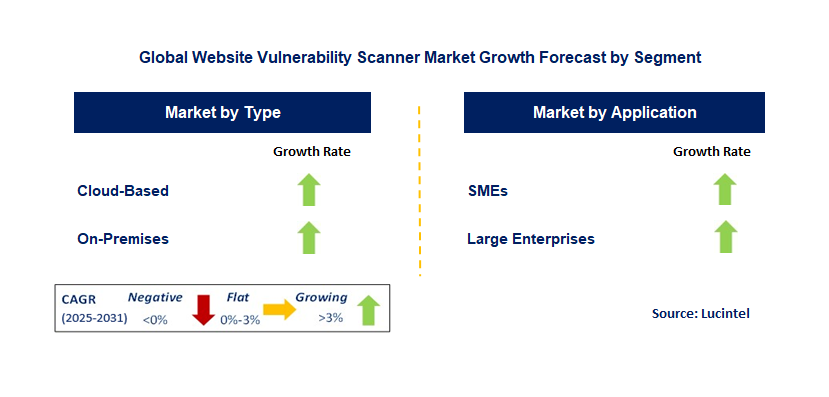
• BreachLock Q5. Which website vulnerability scanner market segment will be the largest in future? Answer: Lucintel forecasts that, within the type category, cloud-based is expected to witness higher growth over the forecast period due to real-time updates and maintenance, cost-effectiveness. Q6. In website vulnerability scanner market, which region is expected to be the largest in next 5 years? Answer: In terms of region, North America is expected to witness the highest growth over the forecast period. Q7. Do we receive customization in this report? Answer: Yes, Lucintel provides 10% customization without any additional cost.


Choose a license that fits your team. Instant PDF delivery.
Prices exclude taxes. Instant delivery. Custom licensing available on request.
Market Report · July 15, 2026
Market Report · June 26, 2026
Market Report · June 24, 2026
Trusted partner for strategic intelligence and business growth


Receive a complimentary market analysis tailored to your industry. Our analysts will identify key growth opportunities and competitive dynamics specific to your business.

Market size, growth rate, and key trend analysis for your specific sector.

Top competitor positioning and market share analysis.

Strategic recommendations backed by data-driven insights.
Get curated market intelligence and competitive moves straight to your inbox.
By subscribing, you agree to receive our monthly insights. Unsubscribe anytime.
Receive a complimentary market analysis tailored to your industry. Our analysts will identify key growth opportunities and competitive dynamics specific to your business.
Market size, growth rate, and key trend analysis for your specific sector.
Top competitor positioning and market share analysis.
Strategic recommendations backed by data-driven insights.
Get curated market intelligence, emerging trends, and competitive moves straight to your inbox each month.
By subscribing, you agree to receive our monthly insights. Unsubscribe anytime.
We'll send your sample report shortly.