
Market Report · July 15, 2026

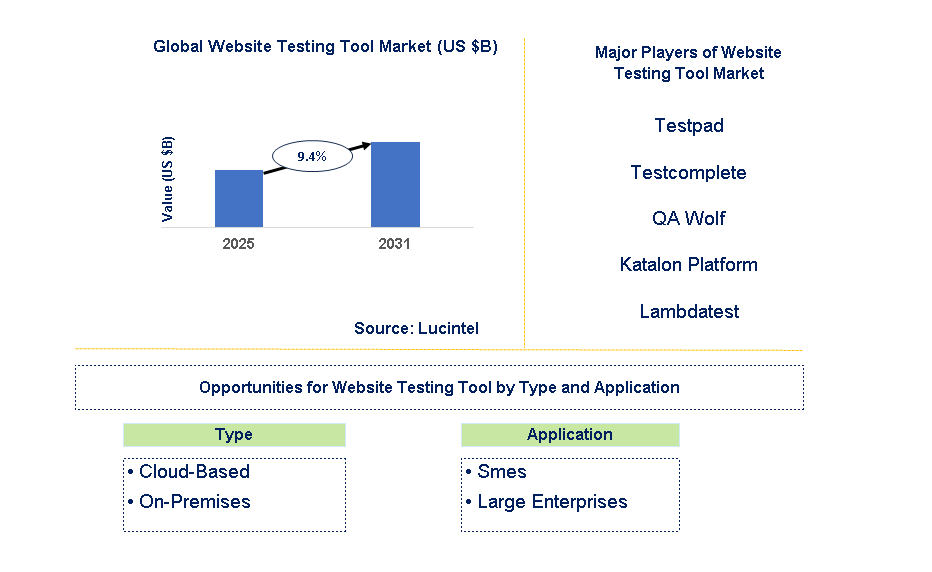
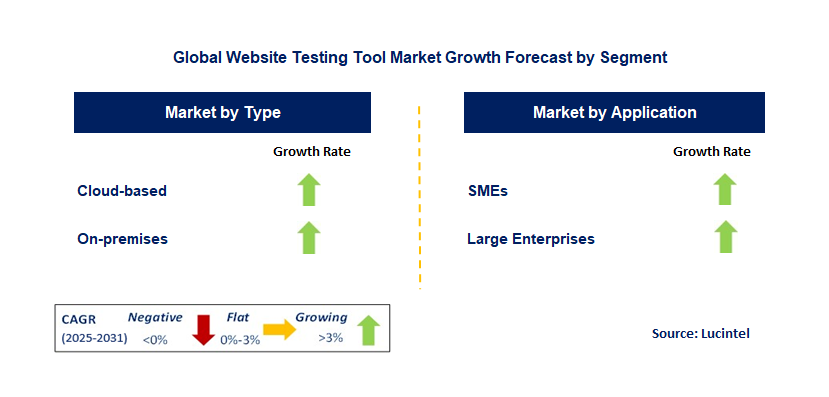
Key data points: The growth forecast = 9.4% annually for the next 7 years. Scroll below to get more insights. This market report covers Trends, opportunity and forecast in website testing tool market to 2031 by type (cloud-based and on-premises), application (SMEs and large enterprises), and region (North America, Europe, Asia Pacific, and the Rest of the World)
We'll send your sample report shortly.
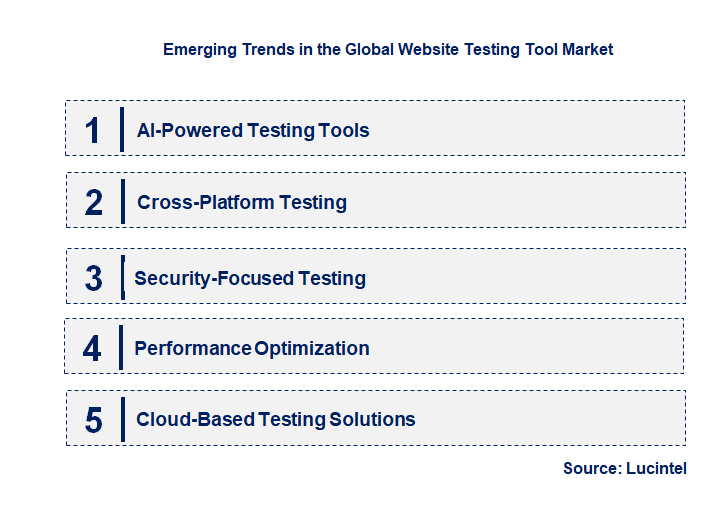
• AI-Powered Testing Tools: Artificial intelligence is being integrated into website testing tools to automate error detection and enhance testing accuracy. AI tools can predict potential issues, reducing manual testing and allowing for more comprehensive and faster website evaluations.
• Cross-Platform Testing: With the growing variety of devices and browsers, cross-platform testing has become essential. Companies are investing in tools that ensure their websites function seamlessly across all platforms, including mobile, desktop, and different web browsers, to deliver a consistent user experience.
• Security-Focused Testing: As cybersecurity threats increase, website testing tools are focusing on identifying vulnerabilities and ensuring compliance with data protection regulations like GDPR. Tools now include security testing features that help businesses secure their websites against data breaches and cyberattacks.
• Performance Optimization: With the rise of e-commerce and digital services, website performance is a top priority. Testing tools are now designed to evaluate website speed, load times, and user interaction, enabling businesses to enhance website performance and reduce bounce rates.
• Cloud-Based Testing Solutions: Cloud computing is transforming the website testing landscape, offering scalability, flexibility, and ease of access. Cloud-based testing tools allow businesses to perform tests from anywhere, reduce infrastructure costs, and manage multiple test environments simultaneously. These trends are driving innovation in the website testing tool market, providing businesses with more efficient, secure, and scalable solutions. The integration of AI, cross-platform compatibility, and cloud technologies will continue to evolve the market, making website testing faster and more effective.
• AI-Powered Automation: The integration of artificial intelligence into testing tools has revolutionized the website testing process. AI-driven tools now offer automated error detection, predictive analytics, and faster testing cycles, helping businesses detect issues before they impact users and optimize website performance.
• Cross-Browser and Mobile Testing: As mobile internet usage continues to rise, testing tools have evolved to support multi-browser and mobile testing. These tools ensure that websites work seamlessly across all devices and platforms, helping businesses reach a wider audience and deliver consistent user experiences.
• Enhanced Security Testing Features: With data breaches and cyberattacks becoming more frequent, website testing tools are focusing on security. New tools now include features that detect security vulnerabilities, such as cross-site scripting (XSS) and SQL injection, ensuring websites are secure and compliant with regulations like GDPR.
• Real-Time Performance Monitoring: Website testing tools are now offering real-time performance monitoring capabilities. This allows businesses to track website performance continuously, detecting any issues related to load times, speed, and user interaction, leading to optimized website functionality and reduced bounce rates.
• Cloud-Based Testing Solutions: Cloud-based website testing solutions are becoming increasingly popular due to their scalability and flexibility. These solutions allow businesses to run tests on multiple environments simultaneously, making it easier to handle large-scale testing and manage resources efficiently. These developments are significantly impacting the website testing tool market, making it more automated, secure, and performance-driven. By incorporating AI, cloud-based solutions, and enhanced security features, the industry is poised for continued innovation and growth.
• Integration of AI and Machine Learning: Companies can leverage AI and machine learning technologies to create smarter website testing tools. By automating error detection and providing predictive analytics, AI can streamline testing processes and improve the accuracy of website evaluations.
• Mobile-Optimized Testing Solutions: With mobile internet usage at an all-time high, there is a growing demand for testing tools optimized for mobile devices. By focusing on mobile-friendly testing solutions, companies can tap into the growing mobile-first market and help businesses ensure seamless experiences for their mobile users.
• Security Testing for Compliance: As data privacy laws like GDPR become more stringent, there is a significant opportunity for website testing tools that focus on security and compliance. Companies can develop tools that identify vulnerabilities and ensure websites meet the necessary regulatory standards.
• Cloud-Based Testing Platforms: Cloud computing continues to be a key growth opportunity for the website testing tool market. Cloud-based platforms offer scalability and flexibility, allowing businesses to perform testing across multiple environments without the need for expensive infrastructure.
• Tailored Testing Solutions for Specific Industries: Offering specialized testing solutions for industries like e-commerce, finance, and healthcare presents a growth opportunity. These industries have unique needs, such as performance optimization, security, and compliance, and specialized testing tools can help businesses meet these requirements. These growth opportunities demonstrate the evolving demands of the website testing tool market. By focusing on AI, mobile optimization, security, and cloud-based solutions, companies can tap into new market segments and provide more targeted solutions that meet the specific needs of various industries.
• Testpad
• Testcomplete
• QA Wolf
• Katalon Platform
• Lambdatest
• Intruder
• Selenium
• Cloud-Based
• On-Premises
• Smes
• Large Enterprises
• North America
• Europe
• Asia Pacific
• The Rest of the World
• United States: In the United States, the website testing tool market has embraced automation and AI-driven solutions. Businesses are increasingly adopting these tools to ensure seamless user experiences across multiple devices and browsers. Real-time performance testing, load testing, and usability evaluations are among the popular services being utilized to enhance website quality and efficiency.
• China: The Chinese website testing market is expanding rapidly, driven by the country's booming e-commerce industry. Testing tools are being integrated with AI and machine learning to automate error detection and improve website optimization. With growing demand for high-quality digital services, companies in China are investing heavily in advanced testing platforms for mobile and desktop applications.
• Germany: In Germany, the website testing market is seeing a shift towards security-focused testing tools. As companies prioritize data privacy and security, testing solutions are now focusing on identifying vulnerabilities in websites and ensuring compliance with GDPR regulations. Furthermore, companies are looking for tools that provide detailed performance analytics and integrated cybersecurity features.
• India: India is witnessing growth in the website testing tool market, particularly among SMEs and startups. With the rise of mobile internet usage, India’s demand for mobile-optimized website testing tools has surged. Businesses are investing in tools that support multi-browser and multi-device testing, particularly for mobile applications, to ensure a seamless user experience.
• Japan: In Japan, the website testing market is evolving with an emphasis on AI-powered testing and predictive analytics. Companies are increasingly using automation tools for load testing, performance monitoring, and error detection. Japan’s strong technology infrastructure has led to the adoption of sophisticated tools designed for both local and global website performance analysis.


• Testpad
• Testcomplete
• QA Wolf
• Katalon Platform
• Lambdatest
• Intruder
• Selenium Q5. Which website testing tool market segment will be the largest in future? Answer: Lucintel forecasts that cloud-based is expected to witness higher growth over the forecast period. Q6. In website testing tool market, which region is expected to be the largest in next 5 years? Answer: APAC is expected to witness the highest growth over the forecast period. Q7. Do we receive customization in this report? Answer: Yes, Lucintel provides 10% customization without any additional cost.


Choose a license that fits your team. Instant PDF delivery.
Prices exclude taxes. Instant delivery. Custom licensing available on request.
Market Report · July 15, 2026
Market Report · June 26, 2026
Market Report · June 24, 2026
Trusted partner for strategic intelligence and business growth


Receive a complimentary market analysis tailored to your industry. Our analysts will identify key growth opportunities and competitive dynamics specific to your business.

Market size, growth rate, and key trend analysis for your specific sector.

Top competitor positioning and market share analysis.

Strategic recommendations backed by data-driven insights.
Get curated market intelligence and competitive moves straight to your inbox.
By subscribing, you agree to receive our monthly insights. Unsubscribe anytime.
Receive a complimentary market analysis tailored to your industry. Our analysts will identify key growth opportunities and competitive dynamics specific to your business.
Market size, growth rate, and key trend analysis for your specific sector.
Top competitor positioning and market share analysis.
Strategic recommendations backed by data-driven insights.
Get curated market intelligence, emerging trends, and competitive moves straight to your inbox each month.
By subscribing, you agree to receive our monthly insights. Unsubscribe anytime.
We'll send your sample report shortly.