
Market Report · June 29, 2026

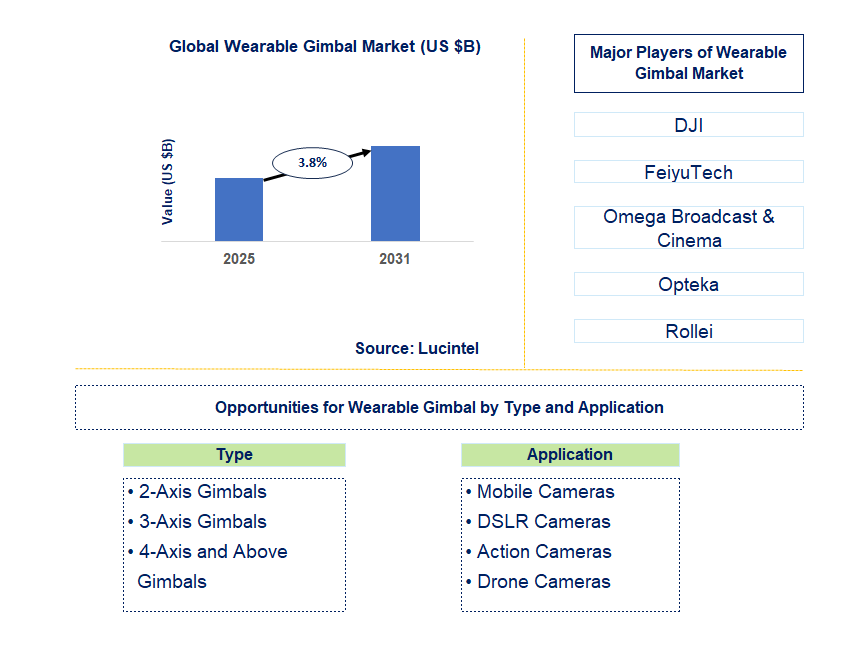
Key data points: The growth forecast = 3.8% annually for the next 7 years. Scroll below to get more insights. This market report covers Trends, opportunity and forecast in wearable gimbal market to 2031 by type (2-axis gimbals, 3-axis gimbals, and 4-axis and above gimbals), application (mobile cameras, dslr cameras, action cameras, and drone cameras), and region (North America, Europe, Asia Pacific, and the Rest of the World)
We'll send your sample report shortly.
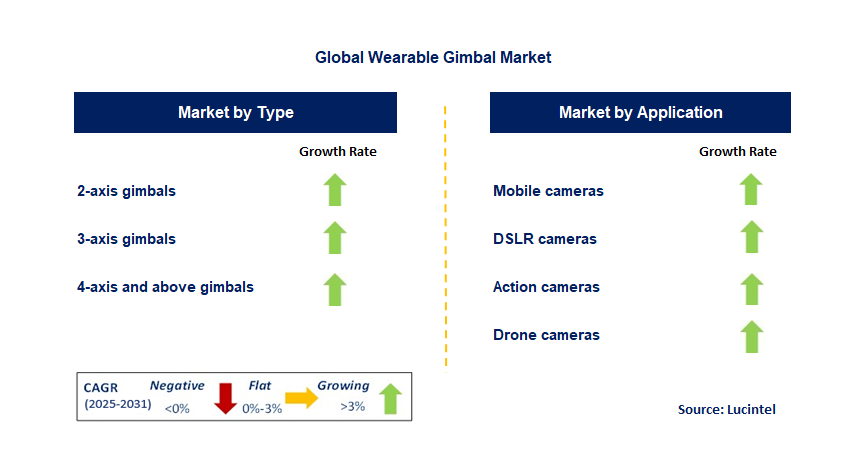
• Lucintel forecasts that, within the type category, 3-axis gimbals is expected to witness the highest growth over the forecast period.
• Within the application category, action cameras is expected to witness the highest growth.
• In terms of region, APAC is expected to witness the highest growth over the forecast period. Gain valuable insights for your business decisions with our comprehensive 150+ page report. Sample figures with some insights are shown below.
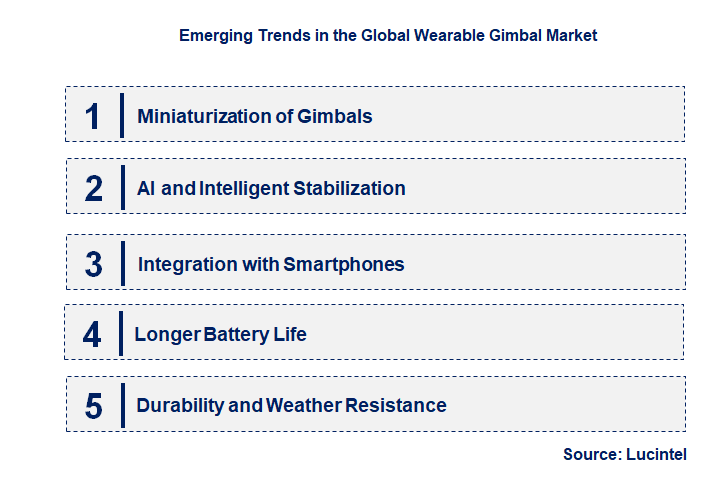
• Miniaturization of Gimbals: The trend toward miniaturization of wearable gimbals is allowing users to carry more compact devices while still maintaining high-quality stabilization and performance. Smaller designs allow gimbals to be more portable, making them ideal for travel bloggers, athletes, and outdoor enthusiasts.
• AI and Intelligent Stabilization: AI-powered stabilization technology is becoming a key trend in wearable gimbals. This advanced feature allows for automatic and more precise adjustments in real-time, resulting in smoother footage even in dynamic or shaky environments. It’s improving the overall quality of content created by users, particularly in action-packed sports or outdoor filming.
• Integration with Smartphones: Many wearable gimbals are now designed to integrate seamlessly with smartphones, making them more versatile for users. This trend enhances the functionality of smartphones in content creation, providing an easy-to-use solution for vloggers and influencers who need stable video recording without heavy equipment.
• Longer Battery Life: As demand for longer shooting sessions increases, wearable gimbals are focusing on enhanced battery life. Newer models offer extended operational times, which is crucial for professional content creators who require stability over long periods, especially during outdoor events or travel.
• Durability and Weather Resistance: Wearable gimbals are becoming more rugged and weather-resistant, enabling users to shoot in harsh outdoor conditions. The trend for durable devices is particularly strong in markets like sports and adventure content creation, where devices need to withstand extreme environments like water, dust, and rough terrains. These emerging trends in miniaturization, AI stabilization, smartphone integration, battery life improvement, and durability are revolutionizing the wearable gimbal market. They are enhancing the user experience, expanding the possibilities for content creation, and making gimbals more accessible to both professionals and amateurs across the globe.
• Advanced Stabilization Technology: Wearable gimbals are now equipped with advanced 3-axis stabilization systems, offering smoother footage even in high-motion environments. This has significantly improved the marketability of these devices for professional filmmakers, social media influencers, and sports enthusiasts, who rely on stable video for high-quality content creation.
• Wireless and Bluetooth Connectivity: Recent models of wearable gimbals are incorporating wireless and Bluetooth features, allowing users to control the gimbal remotely via smartphones or tablets. This innovation enhances the ease of use, providing greater flexibility in dynamic shooting conditions, especially for solo content creators or those filming high-action scenes.
• Modular and Customizable Designs: Manufacturers are introducing modular wearable gimbals, allowing users to customize the device based on their specific needs, such as changing handles or adding additional accessories. This trend caters to both amateur and professional users who require a flexible solution for various filming scenarios.
• AI-Powered Follow Features: Many new gimbals incorporate AI-powered tracking features, allowing the device to automatically follow subjects or objects. This is especially useful for dynamic and sports-related filming, as the gimbal can adjust to keep the subject in the frame without manual intervention.
• Affordable Consumer Models: As demand for wearable gimbals grows, affordable consumer-grade models are entering the market. These models, such as the DJI Osmo Mobile, offer professional-grade stabilization at a lower price, making wearable gimbals accessible to a wider audience, including casual content creators and hobbyists. These recent developments, such as advanced stabilization, wireless connectivity, customizable designs, AI-powered tracking, and affordable consumer models, are reshaping the wearable gimbal market. They are making high-quality video capture more accessible, improving performance, and driving growth across various industries.
• Content Creation and Vlogging: The booming influencer and vlogging industry offers a significant growth opportunity for wearable gimbals. With social media platforms like YouTube, Instagram, and TikTok driving content creation, gimbals that offer stability, ease of use, and portability are in high demand.
• Sports and Adventure Filming: As extreme sports and adventure filming gain popularity, wearable gimbals are becoming essential for capturing stable, high-quality footage. Gimbals designed for rugged outdoor environments, offering weather resistance and durability, are in strong demand, especially for sports enthusiasts and action filmmakers.
• Travel and Tourism Industry: The travel industry is another key application area, where consumers use wearable gimbals to capture smooth and professional-looking footage during their journeys. As travel bloggers and influencers grow in number, wearable gimbals are becoming an indispensable tool for documenting travel experiences.
• Professional Filmmaking and Cinematography: The professional film and television production market presents a significant growth opportunity, as filmmakers and cinematographers seek lightweight, portable solutions for stabilization. Wearable gimbals designed to work with cameras and smartphones are revolutionizing low-budget filmmaking by providing high-quality stabilization in compact, cost-effective formats.
• Live Streaming: With the growth of live streaming for events, social media, and e-commerce, the demand for wearable gimbals in this sector is expanding. Gimbals that offer real-time stabilization and wireless streaming capabilities are essential for content creators who require professional-quality footage during live broadcasts. The wearable gimbal market is poised for substantial growth, driven by strategic opportunities in content creation, sports and adventure filming, travel, professional filmmaking, and live streaming. As these applications expand, the market for wearable gimbals will continue to evolve, offering solutions for a variety of consumer and professional needs.
• DJI
• FeiyuTech
• Omega Broadcast & Cinema
• Opteka
• Rollei
• 2-Axis Gimbals
• 3-Axis Gimbals
• 4-Axis And Above Gimbals
• Mobile Cameras
• Dslr Cameras
• Action Cameras
• Drone Cameras
• North America
• Europe
• Asia Pacific
• The Rest of the World
• United States: In the United States, the wearable gimbal market is evolving rapidly with brands like GoPro, DJI, and Zhiyun leading the charge. The demand for portable, high-performance gimbals in sports and content creation is increasing, driven by vlogging, live streaming, and action sports. Key advancements include the development of lightweight gimbals with advanced stabilization technology, improved battery life, and enhanced user interfaces. As social media platforms grow, these innovations are fueling the U.S. market.
• China: China is a significant player in the wearable gimbal market, with numerous companies like DJI and FeiyuTech focusing on producing cost-effective yet high-quality gimbals. Chinese manufacturers have introduced innovative models with unique features such as AI-based stabilization and greater compatibility with smartphones and action cameras. The increasing popularity of social media influencers and the demand for professional-quality videos have driven the expansion of this market in China, particularly in the vlogging and adventure sports sectors.
• Germany: Germany’s wearable gimbal market is growing steadily, with a focus on high-precision, robust, and durable designs. German manufacturers, such as Moza and FeiyuTech, are at the forefront of creating gimbals that cater to professional filmmakers and content creators. These products emphasize superior image stabilization, ergonomic designs, and compatibility with a wide range of cameras. The demand for such devices is bolstered by Germany’s thriving creative industries and its strong consumer interest in adventure sports.
• India: In India, the wearable gimbal market is expanding as consumers increasingly invest in content creation for social media platforms. Brands like DJI and Zhiyun are gaining popularity due to their affordable yet high-performance gimbals, catering to both amateur and professional users. India’s growing mobile and internet penetration is fueling the demand for portable video equipment, as more users engage in vlogging, travel, and adventure sports, creating a promising market for wearable gimbals.
• Japan: Japan’s wearable gimbal market is characterized by high demand for cutting-edge, lightweight gimbals with advanced features. Japanese companies, such as Sony and Panasonic, have capitalized on the need for stable video capture in action and travel-related content. With a strong focus on technology and innovation, Japanese manufacturers continue to push boundaries in terms of compactness, stabilization, and battery life. The market is driven by both consumer interest in content creation and the professional demand for high-quality video production.


• DJI
• FeiyuTech
• Omega Broadcast & Cinema
• Opteka
• Rollei Q5. Which wearable gimbal market segment will be the largest in future? Answer: Lucintel forecasts that 3-axis gimbals is expected to witness the highest growth over the forecast period. Q6. In wearable gimbal market, which region is expected to be the largest in next 5 years? Answer: APAC is expected to witness the highest growth over the forecast period. Q7. Do we receive customization in this report? Answer: Yes, Lucintel provides 10% customization without any additional cost.


Choose a license that fits your team. Instant PDF delivery.
Prices exclude taxes. Instant delivery. Custom licensing available on request.
Market Report · June 29, 2026
Market Report · May 18, 2026
Trusted partner for strategic intelligence and business growth


Receive a complimentary market analysis tailored to your industry. Our analysts will identify key growth opportunities and competitive dynamics specific to your business.

Market size, growth rate, and key trend analysis for your specific sector.

Top competitor positioning and market share analysis.

Strategic recommendations backed by data-driven insights.
Get curated market intelligence and competitive moves straight to your inbox.
By subscribing, you agree to receive our monthly insights. Unsubscribe anytime.
Receive a complimentary market analysis tailored to your industry. Our analysts will identify key growth opportunities and competitive dynamics specific to your business.
Market size, growth rate, and key trend analysis for your specific sector.
Top competitor positioning and market share analysis.
Strategic recommendations backed by data-driven insights.
Get curated market intelligence, emerging trends, and competitive moves straight to your inbox each month.
By subscribing, you agree to receive our monthly insights. Unsubscribe anytime.
We'll send your sample report shortly.