
Market Report · July 15, 2026

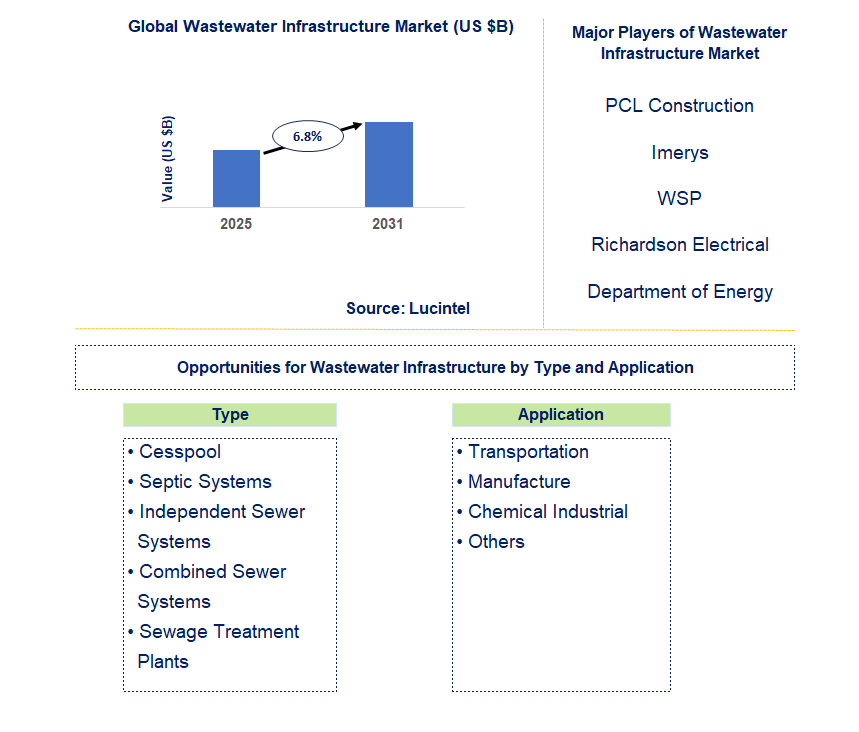
Key data points: The growth forecast = 6.8% annually for the next 7 years. Scroll below to get more insights. This market report covers Trends, opportunity and forecast in wastewater infrastructure market to 2031 by type (cesspool, septic systems, independent sewer systems, combined sewer systems, and sewage treatment plants), application (transportation, manufacture, chemical industrial, and others), and region (North America, Europe, Asia Pacific, and the Rest of the World)
We'll send your sample report shortly.
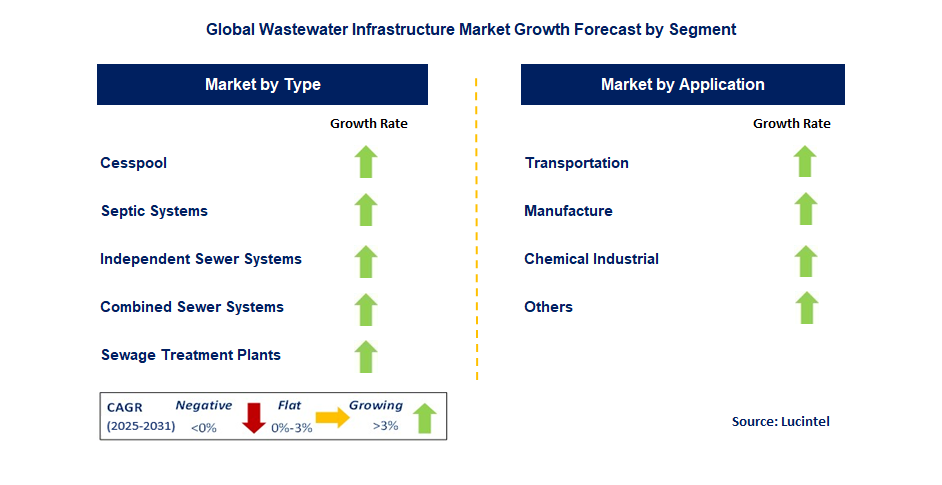
• Lucintel forecasts that, within the type category, cesspool is expected to witness the highest growth over the forecast period.
• Within the application category, transportation is expected to witness the highest growth.
• In terms of region, APAC is expected to witness the highest growth over the forecast period. Gain valuable insights for your business decisions with our comprehensive 150+ page report. Sample figures with some insights are shown below.
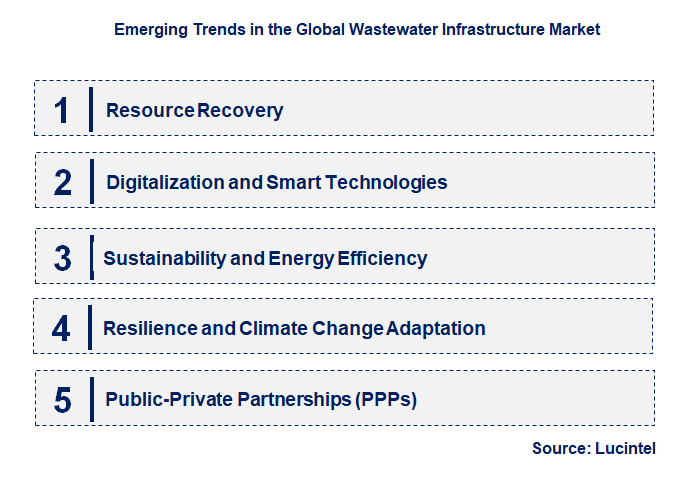
• Resource Recovery: Wastewater, including water, energy, and nutrients, is increasingly viewed as a valuable resource. Treatment plants are designed to recover these resources, reduce waste, and generate revenue. This includes technologies for water reuse, biogas production, and nutrient recovery. Resource recovery promotes a circular economy approach and reduces the environmental footprint of wastewater treatment.
• Digitalization and Smart Technologies: Digital solutions, such as sensors, data analytics, and AI, are being integrated into wastewater infrastructure to optimize operations and improve efficiency. Smart monitoring systems can detect leaks, predict equipment failures, and optimize treatment processes. Digitalization enables data-driven decision-making and improves the overall performance of wastewater systems.
• Sustainability and Energy Efficiency: Sustainability is a key driver in the wastewater infrastructure market. Treatment plants are being designed to reduce energy consumption, minimize greenhouse gas emissions, and use renewable energy sources. There is also a growing focus on reducing the environmental impact of wastewater treatment processes and promoting water conservation.
• Resilience and Climate Change Adaptation: Wastewater infrastructure is being designed to be more resilient to the impacts of climate change, such as increased flooding and extreme weather events. This includes building more robust treatment plants, implementing flood control measures, and developing decentralized treatment systems. Resilience is crucial for ensuring the long-term reliability of wastewater services.
• Public-Private Partnerships (PPPs): PPPs are increasingly being used to finance and manage wastewater infrastructure projects. These partnerships bring together the expertise and resources of the public and private sectors, enabling more efficient and innovative solutions. PPPs can accelerate infrastructure development and improve service delivery. These emerging trends are reshaping the wastewater infrastructure market by driving the adoption of more sustainable, efficient, and resilient solutions. Resource recovery, digitalization, sustainability, resilience, and PPPs are transforming how wastewater is treated and managed. These advancements are leading to improved water quality, reduced environmental impact, and more reliable wastewater services for communities around the world.
• Enhanced Resource Recovery from Wastewater: Wastewater is increasingly viewed as a valuable resource, including water, energy, and nutrients. Treatment plants are being designed and upgraded to recover these resources, reducing waste and generating revenue. This includes technologies for water reuse (for irrigation or industrial purposes), biogas production (for energy generation), and nutrient recovery (for fertilizer production). Enhanced resource recovery promotes a circular economy approach and reduces the environmental footprint of wastewater treatment.
• Digitalization and Smart Management of Wastewater Systems: Digital solutions, such as sensors, data analytics, and AI, are being integrated into wastewater infrastructure to optimize operations and improve efficiency. Smart monitoring systems can detect leaks early, predict equipment failures, and optimize treatment processes in real-time. Digitalization enables data-driven decision-making, reduces operational costs, and improves the overall performance and reliability of wastewater systems.
• Increased Public-Private Partnerships (PPPs) for Wastewater Projects: Public-private partnerships are increasingly used to finance and manage wastewater infrastructure projects. These partnerships bring together the expertise and resources of the public and private sectors, enabling more efficient and innovative solutions. PPPs can accelerate infrastructure development, improve service delivery, and share the financial burden of large-scale projects.
• Focus on Sustainability and Resilience in Wastewater Infrastructure: Sustainability is a key driver in the wastewater infrastructure market. Treatment plants are being designed and operated to reduce energy consumption, minimize greenhouse gas emissions, and use renewable energy sources. There is also a growing focus on building more resilient infrastructure that can withstand the impacts of climate change, such as increased flooding and extreme weather events.
• Integration of Advanced Wastewater Treatment Technologies: Advanced treatment technologies, such as membrane filtration, advanced oxidation processes, and biological nutrient removal, are being increasingly adopted to remove pollutants more effectively and meet stricter water quality standards. These technologies can remove micropollutants, pharmaceuticals, and other emerging contaminants, ensuring the production of high-quality treated water suitable for reuse or discharge into the environment. These recent developments significantly impact the wastewater infrastructure market by driving the adoption of more sustainable, efficient, and resilient solutions. The focus on resource recovery, digitalization, PPPs, sustainability, and advanced treatment technologies transforms how wastewater is treated and managed. These advancements lead to improved water quality, reduced environmental impact, and more reliable wastewater services for communities worldwide.
• Wastewater Treatment Plant Modernization: Upgrading existing wastewater treatment plants with advanced technologies, such as membrane filtration, biological nutrient removal, and advanced oxidation processes, offers a significant growth opportunity. Modernization improves treatment efficiency, removes emerging contaminants, and enables water reuse, addressing both water quality and water scarcity issues. This leads to better environmental protection and more sustainable water management.
• Development of Decentralized Wastewater Treatment Systems: Decentralized wastewater treatment systems, including packaged treatment plants and constructed wetlands, are gaining popularity, especially in developing countries and rural areas. These systems offer cost-effective and flexible solutions for treating wastewater at the source, reducing the need for large and expensive centralized systems. Decentralized systems improve sanitation access and reduce environmental impact.
• Water Reuse and Recycling: Increasing water scarcity is driving the demand for water reuse and recycling technologies. Treating wastewater to a level suitable for irrigation, industrial use, or even potable reuse offers a substantial growth opportunity. This reduces pressure on freshwater resources and creates a more sustainable water supply. Water reuse promotes water conservation and enhances water security.
• Sludge Treatment and Resource Recovery: Wastewater sludge is a valuable resource, including biogas for energy production, nutrients for fertilizer, and biosolids for soil amendment. Developing advanced sludge treatment and resource recovery technologies offers a significant growth opportunity. This reduces waste, generates revenue, and promotes a circular economy approach.
• Smart Wastewater Management Systems: Integrating digital technologies, such as sensors, data analytics, and AI, into wastewater infrastructure creates opportunities for smart management systems. These systems can optimize treatment plant operations, detect leaks, predict equipment failures, and improve overall system efficiency. Smart systems reduce operational costs and enhance system reliability. These growth opportunities significantly impact the wastewater infrastructure market by driving innovation and investment in new technologies and solutions. The focus on plant modernization, decentralized systems, water reuse, sludge treatment, and innovative management transforms how wastewater is managed. These trends lead to more sustainable, efficient, and resilient wastewater systems, improving public health, environmental protection, and water security.
• PCL Construction
• Imerys
• WSP
• Richardson Electrical Company
• Department of Energy
• Murphy Group
• Tritech Group
• Sundt
• Clark Construction Company
• CISA
• Cesspool
• Septic Systems
• Independent Sewer Systems
• Combined Sewer Systems
• Sewage Treatment Plants
• Transportation
• Manufacture
• Chemical Industrial
• Others
• North America
• Europe
• Asia Pacific
• The Rest of the World
• United States: The US faces a significant wastewater infrastructure gap, with many treatment plants and sewer systems nearing the end of their lifespan. Recent developments include increased federal funding for water infrastructure projects, advancements in treatment technologies (like membrane filtration and anaerobic digestion), and the use of data analytics for optimized operations. There's also a growing focus on stormwater management and green infrastructure to reduce runoff and improve water quality.
• China: China has made significant investments in wastewater infrastructure in recent decades, but rapid urbanization and industrialization have created new challenges. The government is prioritizing wastewater treatment and promoting the use of advanced technologies to improve water quality. Recent developments include large-scale construction of new treatment plants, the implementation of stricter discharge standards, and a focus on sludge treatment and resource recovery.
• Germany: Germany has a well-developed wastewater infrastructure system, but ongoing investments are needed to maintain high standards and meet future demands. Recent developments include the use of advanced treatment technologies to remove micropollutants, a focus on energy efficiency in treatment plants, and the implementation of smart monitoring systems. There's also a strong emphasis on water reuse and resource recovery.
• India: India faces significant wastewater infrastructure challenges, with many areas lacking access to basic sanitation and treatment facilities. The government is implementing various programs to improve wastewater management, including the construction of new treatment plants, the rehabilitation of existing systems, and the promotion of decentralized treatment solutions. There is a growing focus on developing cost-effective and sustainable solutions suitable for the Indian context.
• Japan: Japan has a highly developed wastewater infrastructure system, but aging infrastructure requires ongoing maintenance and upgrades. Recent developments include the use of advanced treatment technologies to remove nutrients and other pollutants, a focus on energy efficiency and resource recovery in treatment plants, and the implementation of sophisticated monitoring and control systems. There's also a strong emphasis on disaster preparedness and resilience in wastewater infrastructure design.


• PCL Construction
• Imerys
• WSP
• Richardson Electrical Company
• Department of Energy
• Murphy Group
• Tritech Group
• Sundt
• Clark Construction Company
• CISA Q5. Which wastewater infrastructure market segment will be the largest in future? Answer: Lucintel forecasts that cesspool is expected to witness the highest growth over the forecast period. Q6. In wastewater infrastructure market, which region is expected to be the largest in next 5 years? Answer: APAC is expected to witness the highest growth over the forecast period. Q7. Do we receive customization in this report? Answer: Yes, Lucintel provides 10% customization without any additional cost.


Choose a license that fits your team. Instant PDF delivery.
Prices exclude taxes. Instant delivery. Custom licensing available on request.
Market Report · July 15, 2026
Market Report · May 18, 2026
Market Report · May 18, 2026
Trusted partner for strategic intelligence and business growth


Receive a complimentary market analysis tailored to your industry. Our analysts will identify key growth opportunities and competitive dynamics specific to your business.

Market size, growth rate, and key trend analysis for your specific sector.

Top competitor positioning and market share analysis.

Strategic recommendations backed by data-driven insights.
Get curated market intelligence and competitive moves straight to your inbox.
By subscribing, you agree to receive our monthly insights. Unsubscribe anytime.
Receive a complimentary market analysis tailored to your industry. Our analysts will identify key growth opportunities and competitive dynamics specific to your business.
Market size, growth rate, and key trend analysis for your specific sector.
Top competitor positioning and market share analysis.
Strategic recommendations backed by data-driven insights.
Get curated market intelligence, emerging trends, and competitive moves straight to your inbox each month.
By subscribing, you agree to receive our monthly insights. Unsubscribe anytime.
We'll send your sample report shortly.