
Market Report · May 18, 2026

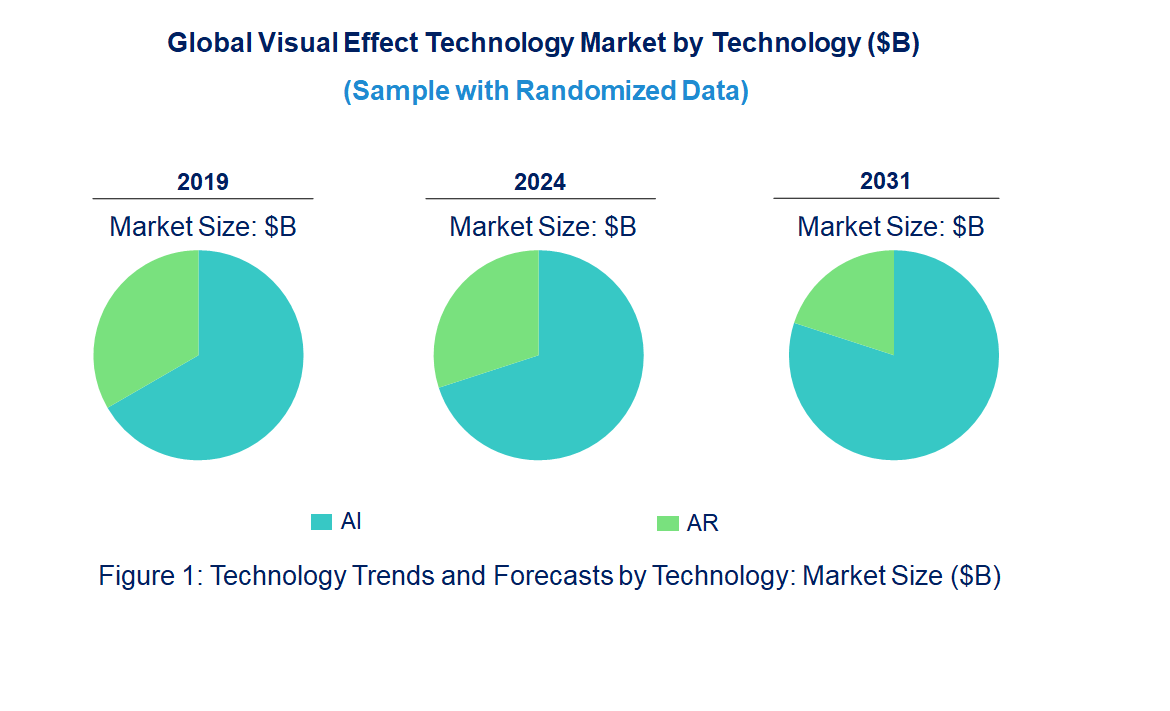
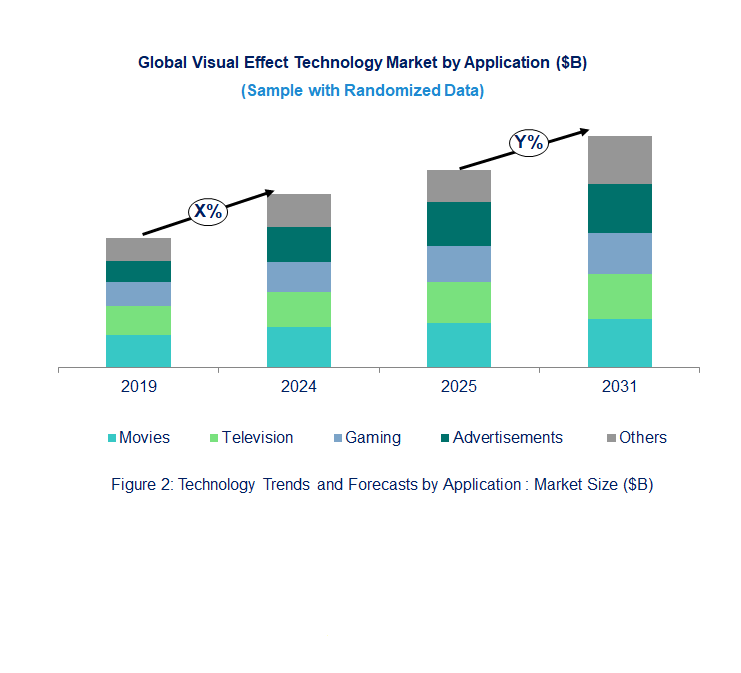
This market report covers trends, opportunities, and forecasts in the global visual effect market to 2031 by technology (ai and ar), application (movies, television, gaming, advertisements, and others), and region (North America, Europe, Asia Pacific, and the Rest of the World)
We'll send your sample report shortly.
• AI-Powered Visual Effects: AI-driven tools are transforming the VFX industry by automating complex tasks such as motion capture, facial recognition, and 3D model generation. These AI-powered algorithms have reduced production times, minimized costs, and enhanced the realism and quality of visual effects. Additionally, AI is enabling content personalization, allowing for unique visual experiences created in real time based on audience interaction.
• AR/Virtual Reality Integration: The integration of VFX with augmented reality (AR) and virtual reality (VR) is changing how content is presented to audiences. AR allows for interactive storytelling, enabling viewers to engage with the content more vividly in movies and television. VR, particularly in gaming, fully immerses players in virtual worlds, while adding virtual elements to the real world enhances interaction. This trend is driving the demand for VFX studios to incorporate AR and VR technologies to remain competitive.
• Cloud-Based VFX Production: Cloud computing is revolutionizing the VFX production pipeline by enabling remote collaboration and scalable computing power. VFX studios can now access significant processing power without the need to invest in expensive hardware, streamlining workflows and reducing costs. Cloud-based platforms offer faster turnaround times and enable global teams to collaborate on large-scale projects, improving efficiency and creativity.
• Real-Time Rendering and Game Engines: Real-time rendering, powered by advanced game engines such as Unreal Engine and Unity, has transformed the VFX industry. These technologies allow VFX artists to see their work as it is being created, speeding up the production process. Real-time rendering is particularly influential in live-action filmmaking, gaming, and virtual productions, where quick feedback loops are crucial for delivering high-quality content.
• Virtual Production and LED Wall Technology: Virtual production, powered by LED wall technology, is changing how films and television shows are shot. Large LED screens allow actors to perform in front of real-time, immersive, dynamic backgrounds, reducing the need for green-screen techniques. This trend decreases post-production editing, reduces costs, and enhances the realism of scenes, making it a highly sought-after technology for high-budget productions. The emerging trends in the visual effects market, AI-powered visual effects, AR/VR integration, cloud-based production, real-time rendering, and virtual production technologies are reshaping how visual content is created and experienced. These technologies are making VFX production faster, more cost-effective, and more immersive, enabling filmmakers, game developers, and advertisers to push the boundaries of creativity. As these trends continue to evolve, the VFX market will undergo further transformations, creating new opportunities for innovation and collaboration across industries.
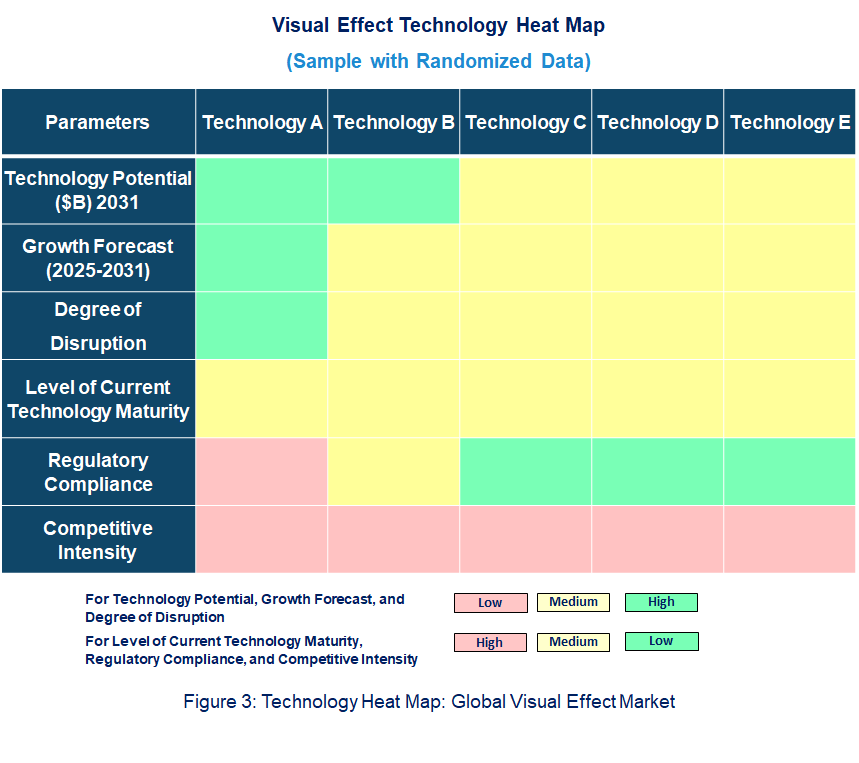
• Technology Potential: The potential of technologies in the VFX market is immense, as advancements like AI and real-time rendering can significantly enhance visual quality, reduce production time, and improve cost efficiency. These innovations are opening up new opportunities for immersive experiences across film, gaming, and advertising.
• Degree of Disruption: Technologies such as AI, AR, and cloud computing are highly disruptive in the VFX industry. AI algorithms automate tasks like motion capture and 3D modeling, while AR and VR create entirely new ways for audiences to interact with content. Cloud platforms enable scalable, collaborative workflows, fundamentally altering production processes.
• Level of Current Technology Maturity: The maturity of these technologies varies. AI and cloud computing are already well-integrated into VFX workflows, while AR/VR and real-time rendering are still evolving but rapidly gaining traction, particularly in gaming and virtual production.
• Regulatory Compliance: Regulatory compliance in VFX technologies is becoming increasingly important, particularly concerning data privacy and the environmental impact of cloud computing. While there are no major global regulations specifically for VFX, companies must adhere to standards in data handling, emissions, and sustainability.
• Adobe Inc.: Adobe has made significant strides in integrating artificial intelligence and machine learning across its creative software, including Adobe After Effects and Adobe Premiere Pro. Its AI platform, Adobe Sensei, streamlines workflows by automating tasks such as rotoscoping and object removal. The company’s cloud-based collaborative tools, including Adobe Creative Cloud, enable teams to work remotely, making VFX studios and artists worldwide more productive.
• Animal Logic: Animal Logic is continuously advancing the boundaries of animation and VFX, contributing to significant productions like The LEGO Movie and Peter Rabbit. The company has embraced real-time rendering and virtual production technologies, which increase efficiency in film production. Along with cutting-edge platforms like Unreal Engine, Animal Logic is now able to deliver highly detailed, interactive digital environments in just minutes.
• Cinesite: Cinesite has expanded its capabilities in virtual production, real-time rendering, and digital effects. Recent work on Avengers: Endgame and The Irishman demonstrates the company’s ability to seamlessly integrate VFX into live-action shots, making them undetectable at the edges. Cloud-based production tools have enabled Cinesite to increase collaboration across geographies, reduce VFX production time, and maintain high standards.
• Digital Domain: Digital Domain remains a leader in AI and advanced simulation technologies for VFX, delivering cutting-edge visual effects for blockbuster films like Avengers: Infinity War and The Fate of the Furious. The company’s investment in AI-driven tools for automating complex tasks such as facial capture and performance modeling has significantly reduced production timelines while increasing the realism of digital characters.
• Framestore: Framestore continues to lead in innovative VFX, with notable work on films like Gravity and The Martian. Cloud-based and AI-driven workflows have positioned the company to deliver high-quality visual effects during actual production. Virtual production techniques have also been widely implemented, especially for VR experiences and high-budget television productions, enhancing interactivity for viewers. These trends demonstrate that key players in the VFX market are adopting and developing innovations to stay ahead of the competition. Through AI, cloud computing, real-time rendering, and virtual production, companies like Adobe, Animal Logic, Cinesite, Digital Domain, and Framestore are transforming the visual effects landscape, making productions faster, more immersive, and of higher quality. With these innovations, the development of VFX is set to flourish even further in the future.
• Technological Advancements: Recent breakthroughs in AI, machine learning, and cloud computing are transforming VFX workflows. AI is automating tasks such as motion capture and facial recognition, making production faster and more cost-effective. These advancements allow for more realistic visual effects, driving the market’s growth and pushing the boundaries of creativity.
• Immersive Content Needs: With the increasing popularity of VR, AR, and high-definition content, demand for VFX is at an all-time high. The film, gaming, and advertising industries continue to fuel this demand, requiring VFX studios to rapidly develop new tools and techniques. This accelerates innovation and expands the boundaries of interactive content.
• Increased Cloud-based Production: Cloud computing enables VFX studios to work remotely, share assets, and scale computing power, speeding up production and reducing costs. It provides access to virtually unlimited storage and processing power, greatly improving operational efficiency and opening new opportunities for global collaboration. Challenges in the visual effect market are:
• Cost and Time Efficiency: As VFX production becomes increasingly complex, studios are focusing on optimizing workflows to save time and reduce costs. Real-time rendering technologies, AI-based automation, and virtual production techniques have become key enablers, reducing the need for expensive hardware and cutting post-production timelines.
• Regulatory and Environmental Issues: VFX studios face pressure to comply with growing regulatory standards concerning environmental impact and sustainability. As cloud-based systems and energy-efficient technologies gain prominence, studios must balance technological advancements with sustainable practices. The demand for eco-friendly tools and practices is also growing within the market. Several key drivers technological advancements, the increasing demand for immersive content, the shift to cloud-based production, and the need for cost and time efficiency, are shaping the VFX market. However, challenges such as regulatory requirements and environmental concerns need to be addressed. Despite these challenges, innovation continues to thrive. VFX companies are motivated to adopt new technologies aggressively, leading to an exponentially growing market with rapidly evolving production capabilities, highly immersive experiences, and significant growth opportunities across industries.
• Adobe Inc
• Animal Logic
• Cinesite
• Digital Domain
• Framestore
• Technology Readiness by Technology Type in the Visual Effect Market: The readiness of AI and AR in the VFX market is advanced, but they are not at the same level of maturity. AI, particularly in machine learning, has reached a high level of readiness for automating motion capture, facial recognition, and even creative tasks like content generation. As AI is increasingly adopted across studios, it creates competition to integrate AI-driven efficiencies. AR, however, lags in consumer usage primarily due to technical limitations in hardware and challenges in seamlessly integrating with real-world environments. Both technologies foster competition as studios leverage their capabilities for distinct benefits: AI enhances workflow efficiency, while AR provides richer user experiences. Both, however, face challenges with regulatory compliance—AI raises concerns about data privacy and ethics, while AR must adhere to location-based security regulations. Key applications for AI include film production, gaming, and animation, while AR is most impactful in interactive advertising, live events, and gaming. Both technologies promise to continue evolving, with increasing collaboration and integration within the VFX industry.
• Competitive Intensity and Regulatory Compliance of AI and AR in the Visual Effects Market: The competition in the VFX market is intensified by the rapid adoption of AI and AR, with companies racing to integrate these technologies for better productivity and differentiation. AI-based solutions offer significant advantages in speed, precision, and cost-effectiveness, prompting studios to heavily invest in machine learning and automation tools. AR, by enabling highly interactive and immersive experiences, is reshaping entertainment and marketing. However, regulatory compliance presents challenges, especially with AI, due to the increasing use of deep learning and data privacy concerns. AR’s usage in public spaces or digital platforms also raises security and privacy issues that require a regulatory framework. As both technologies continue to disrupt the VFX industry, it will be important for companies to stay compliant with data protection laws and industry standards to ensure ethical innovation.
• Disruption Potential of AI and AR in the Visual Effects Market: AI and AR cause significant disruption in the VFX market by automating tasks and enabling interactive experiences. AI technologies, such as machine learning and deep learning, have automated motion capture, facial recognition, and scene generation, accelerating production cycles and improving visual quality with greater accuracy. This optimization of workflows minimizes labor costs and reduces expenses. On the other hand, AR enhances audience experiences by providing immersive, interactive content, allowing users to engage directly with virtual elements. This technology is particularly powerful in industries like gaming, live events, and advertising, offering a more personalized and engaging viewer experience. As AI continues to evolve, it will drive further automation and innovation, while the growing integration of AR into the real world will enhance storytelling, transforming both production processes and end-user experiences.
• AI
• AR
• Movies
• Television
• Gaming
• Advertisements
• Others
• North America
• Europe
• Asia Pacific
• The Rest of the World
• Latest Developments and Innovations in the Visual Effect Technologies
• Companies / Ecosystems
• Strategic Opportunities by Technology Type


Choose a license that fits your team. Instant PDF delivery.
Prices exclude taxes. Instant delivery. Custom licensing available on request.
Market Report · May 18, 2026
Market Report · May 18, 2026
Market Report · May 18, 2026
Trusted partner for strategic intelligence and business growth


Receive a complimentary market analysis tailored to your industry. Our analysts will identify key growth opportunities and competitive dynamics specific to your business.

Market size, growth rate, and key trend analysis for your specific sector.

Top competitor positioning and market share analysis.

Strategic recommendations backed by data-driven insights.
Get curated market intelligence and competitive moves straight to your inbox.
By subscribing, you agree to receive our monthly insights. Unsubscribe anytime.
Receive a complimentary market analysis tailored to your industry. Our analysts will identify key growth opportunities and competitive dynamics specific to your business.
Market size, growth rate, and key trend analysis for your specific sector.
Top competitor positioning and market share analysis.
Strategic recommendations backed by data-driven insights.
Get curated market intelligence, emerging trends, and competitive moves straight to your inbox each month.
By subscribing, you agree to receive our monthly insights. Unsubscribe anytime.
We'll send your sample report shortly.