
Market Report · July 15, 2026

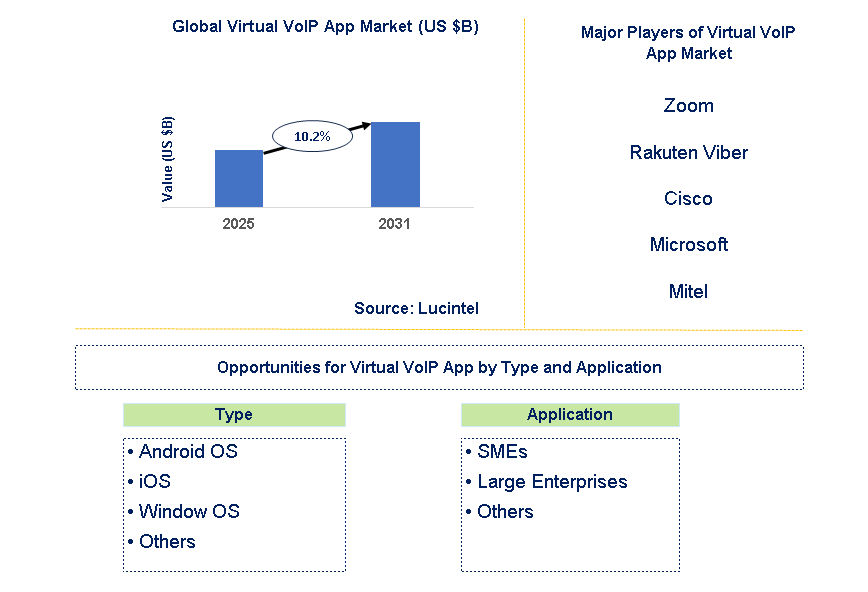
Key data points: The growth forecast = 10.2% annually for the next 7 years. Scroll below to get more insights. This market report covers Trends, opportunity and forecast in virtual VoIP app market to 2031 by type (android OS, iOS, window OS, and others), application (smes, large enterprises, and others), and region (North America, Europe, Asia Pacific, and the Rest of the World)
We'll send your sample report shortly.
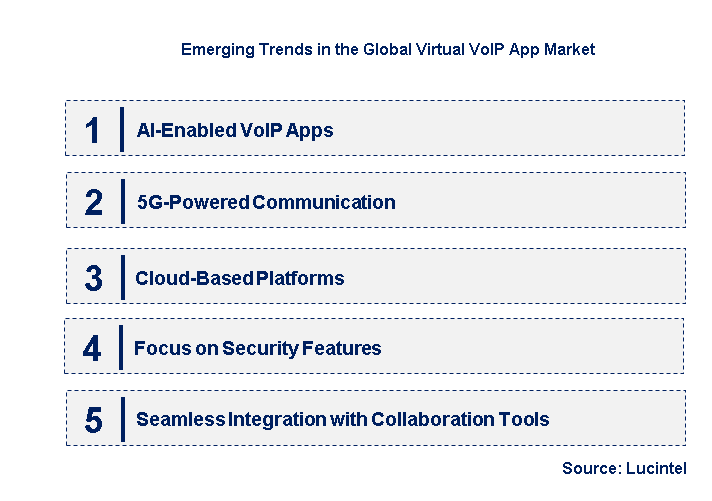
• AI-Enabled VoIP Apps: AI capabilities like predictive analytics, sentiment analysis, and intelligent call routing are transforming VoIP apps. These features improve user experience and enhance operational efficiency for businesses.
• 5G-Powered Communication: The rollout of 5G networks is enabling high-quality, low-latency communication on virtual VoIP apps. This trend is enhancing real-time communication experiences, particularly for video and voice calls.
• Cloud-Based Platforms: The shift to cloud-based VoIP apps is gaining traction, offering flexibility, scalability, and cost efficiency. This trend supports remote work and ensures uninterrupted communication across devices.
• Focus on Security Features: Enhanced encryption protocols, multi-factor authentication, and advanced cybersecurity measures are becoming standard in VoIP apps, addressing rising concerns over data breaches.
• Seamless Integration with Collaboration Tools: Virtual VoIP apps are increasingly integrated with platforms like Slack, Microsoft Teams, and Google Workspace. This trend is streamlining business communication and boosting team productivity. These trends signify the growing sophistication and adaptability of virtual VoIP apps, meeting the needs of a diverse and evolving market.
• Introduction of AI Features: Virtual VoIP apps now offer AI-powered features like voice recognition, automated transcription, and sentiment analysis, improving user engagement and productivity.
• Integration with IoT Devices: IoT integration is enhancing the functionality of virtual VoIP apps, enabling users to connect seamlessly with smart devices in homes and offices.
• Focus on Regional Customization: Developers are launching region-specific VoIP apps that cater to local languages, cultural preferences, and regulatory requirements, broadening their customer base.
• Rising Popularity of Freemium Models: VoIP app providers are adopting freemium pricing strategies, allowing users to access basic features for free while charging for advanced tools, expanding their reach in price-sensitive markets.
• Enhanced Collaboration Features: Apps are integrating features like file sharing, video conferencing, and task management to create comprehensive communication solutions. These developments are driving the adoption of virtual VoIP apps, enabling businesses and individuals to access innovative communication tools that meet their diverse needs.
• Remote Work Solutions: Virtual VoIP apps optimized for remote teams are becoming essential, enabling seamless collaboration and communication for distributed workforces.
• Virtual Healthcare Communication: Telemedicine is leveraging VoIP apps to provide secure and instant communication between healthcare providers and patients, improving access to medical services.
• E-Learning Platforms: VoIP apps are facilitating real-time interaction in virtual classrooms, enhancing engagement and accessibility for learners across regions.
• Customer Support Services: Businesses are integrating VoIP apps with AI-driven support tools to provide quick, efficient, and personalized customer service experiences.
• Smart Home and Office Connectivity: VoIP apps are increasingly integrated into IoT ecosystems, offering advanced connectivity options for smart homes and offices. These growth opportunities highlight how virtual VoIP apps are transforming diverse sectors by delivering tailored, efficient, and scalable communication solutions.
• Zoom
• Rakuten Viber
• Cisco
• Microsoft
• Mitel
• RingCentral
• Avaya
• Twilio
• Meta
• 8X8
• Android OS
• iOS
• Window OS
• Others
• SMEs
• Large Enterprises
• Others
• North America
• Europe
• Asia Pacific
• The Rest of the World
• United States: The United States is seeing widespread adoption of virtual VoIP apps due to the hybrid work trend. Companies are integrating apps with CRM and collaboration tools to streamline workflows. The rising popularity of Unified Communications as a Service (UCaaS) platforms has further boosted the adoption of these apps, enabling seamless, scalable, and cost-effective communication solutions.
• China: China’s VoIP app market is expanding rapidly, driven by advancements in 5G technology and government-backed digitalization initiatives. Local tech companies are developing innovative, budget-friendly apps targeting SMEs. Enhanced AI-powered functionalities, such as predictive analytics and voice recognition, are further improving communication efficiency and user experience in this market.
• Germany: Germany is transitioning towards GDPR-compliant VoIP solutions, prioritizing data security. Enterprises are rapidly shifting to virtual VoIP apps integrated with enterprise-grade collaboration platforms to enhance security and efficiency. This growth is particularly evident in sectors such as finance and healthcare, which require secure communication systems to meet regulatory standards.
• India: India’s virtual VoIP app market is growing due to affordable internet access and increased mobile penetration. Companies are adopting localized apps to cater to regional language needs. Virtual VoIP apps are also gaining traction in education and healthcare for virtual consultations and remote learning, providing cost-efficient communication options across the nation.
• Japan: Japan is witnessing increased adoption of virtual VoIP apps as part of its focus on smart technologies and IoT integration. Enterprises are leveraging advanced app features, such as AI-enabled call analytics, to improve customer service. Additionally, the demand for smart office solutions has created new opportunities for VoIP app providers in the region.


• Zoom
• Rakuten Viber
• Cisco
• Microsoft
• Mitel
• RingCentral
• Avaya
• Twilio
• Meta
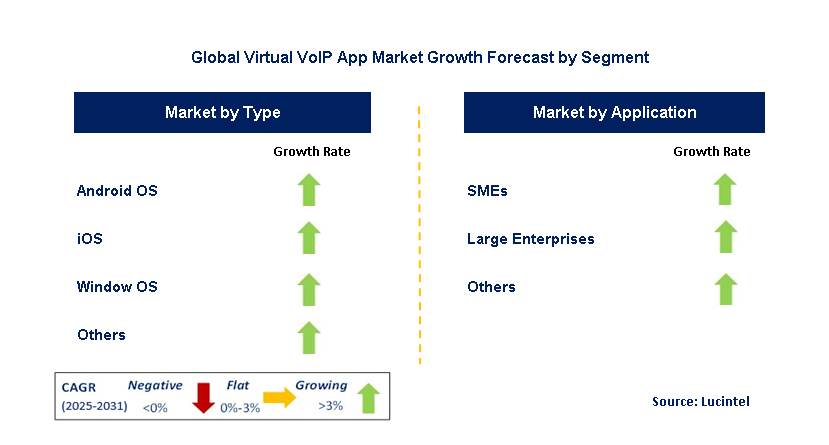
• 8X8 Q5. Which virtual VoIP app market segment will be the largest in future? Answer: Lucintel forecasts that android OS is expected to witness the highest growth over the forecast period. Q6. In virtual VoIP app market, which region is expected to be the largest in next 5 years? Answer: APAC is expected to witness the highest growth over the forecast period. Q7. Do we receive customization in this report? Answer: Yes, Lucintel provides 10% customization without any additional cost.


Choose a license that fits your team. Instant PDF delivery.
Prices exclude taxes. Instant delivery. Custom licensing available on request.
Market Report · July 15, 2026
Market Report · June 26, 2026
Market Report · June 24, 2026
Trusted partner for strategic intelligence and business growth


Receive a complimentary market analysis tailored to your industry. Our analysts will identify key growth opportunities and competitive dynamics specific to your business.

Market size, growth rate, and key trend analysis for your specific sector.

Top competitor positioning and market share analysis.

Strategic recommendations backed by data-driven insights.
Get curated market intelligence and competitive moves straight to your inbox.
By subscribing, you agree to receive our monthly insights. Unsubscribe anytime.
Receive a complimentary market analysis tailored to your industry. Our analysts will identify key growth opportunities and competitive dynamics specific to your business.
Market size, growth rate, and key trend analysis for your specific sector.
Top competitor positioning and market share analysis.
Strategic recommendations backed by data-driven insights.
Get curated market intelligence, emerging trends, and competitive moves straight to your inbox each month.
By subscribing, you agree to receive our monthly insights. Unsubscribe anytime.
We'll send your sample report shortly.