
Market Report · July 16, 2026

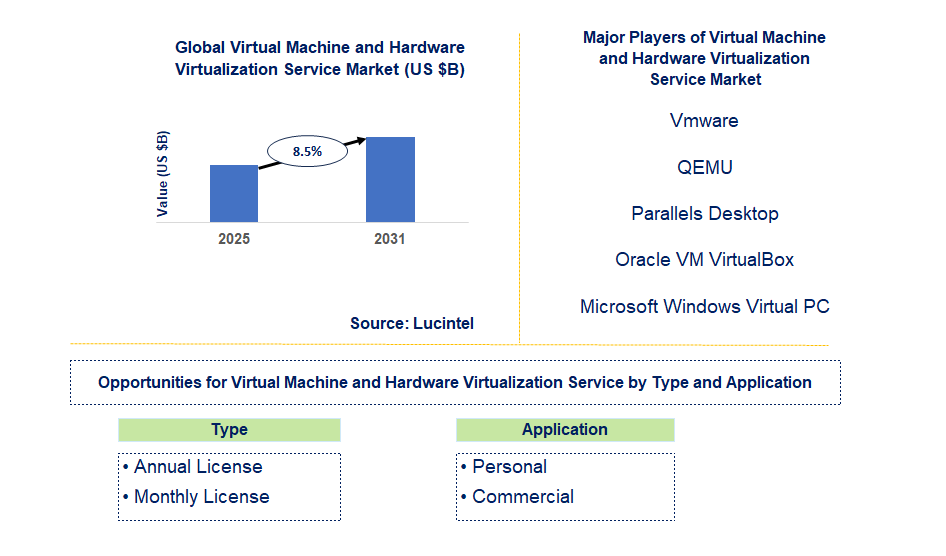
Key data points: The growth forecast = 8.5% annually for the next 7 years. Scroll below to get more insights. This market report covers Trends, opportunity and forecast in virtual machine and hardware virtualization service market to 2031 by type (annual license and monthly license), application (personal and commercial), and region (North America, Europe, Asia Pacific, and the Rest of the World)
We'll send your sample report shortly.
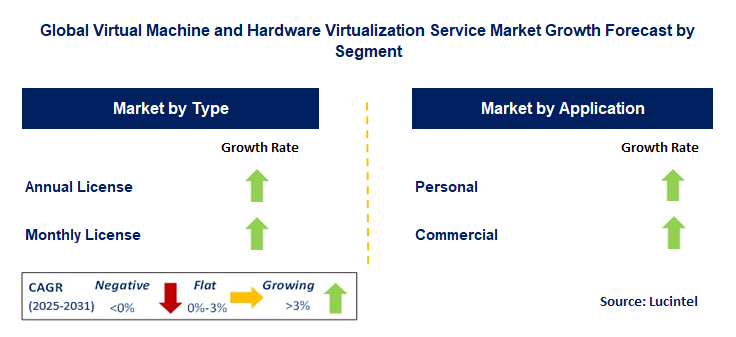
• Lucintel forecasts that, within the type category, annual license is expected to witness higher growth over the forecast period.
• Within the application category, personal is expected to witness higher growth.
• In terms of region, APAC is expected to witness the highest growth over the forecast period. Gain valuable insights for your business decisions with our comprehensive 150+ page report. Sample figures with some insights are shown below.
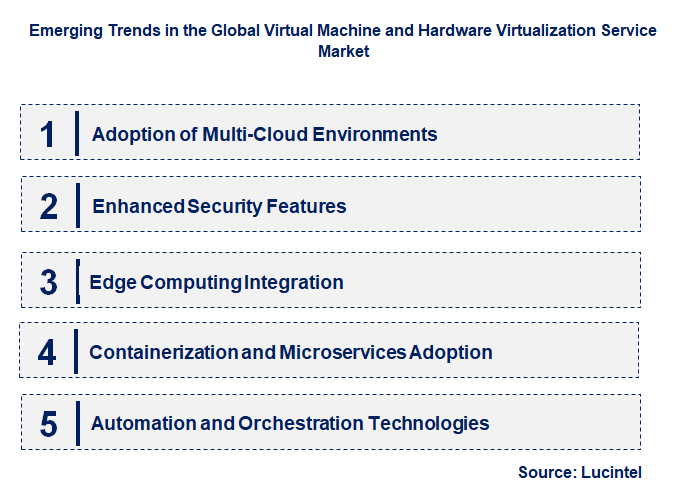
• Adoption of Multi-Cloud Environments: Organizations are increasingly adopting multi-cloud strategies to avoid vendor lock-in and enhance flexibility. Multi-cloud environments leverage different public and private cloud platforms, each offering unique advantages for specific workloads. This trend is driving demand for virtualization services that enable seamless integration and migration between different cloud platforms. Virtual machine and hardware virtualization services are essential in this multi-cloud approach, as they allow organizations to create consistent, portable environments across various clouds, thus improving scalability and flexibility while reducing costs and downtime.
• Enhanced Security Features: Security concerns in virtualized environments are prompting increased focus on strengthening security measures. As businesses rely more on virtual machines and cloud services, ensuring data integrity and privacy becomes a top priority. Advanced security features, such as micro-segmentation, secure boot, and encryption, are becoming critical components of virtualization services. Hardware-based security solutions, such as Trusted Platform Module (TPM) and hardware security modules (HSMs), are also being integrated into virtualization infrastructures to provide enhanced protection. These innovations help mitigate risks associated with multi-tenant environments, ensuring safer operations for organizations.
• Edge Computing Integration: Edge computing, where data processing occurs closer to the data source, is complements cloud and virtualization services. This trend is driven by the need for low-latency processing in applications such as IoT and real-time analytics. Virtualization services are adapting to this shift by providing more efficient management of distributed computing resources. Virtual machines are now being deployed closer to the edge of the network, offering enhanced performance, faster response times, and reduced network congestion. This integration allows organizations to optimize both cloud and edge infrastructures, creating a hybrid model that supports real-time decision-making.
• Containerization and Microservices Adoption: The shift toward containerization and microservices architectures is transforming the way virtualization services are delivered. Containers offer a lightweight, portable solution for deploying applications with less overhead than traditional virtual machines. By utilizing containerization technologies like Docker and Kubernetes, businesses can achieve faster deployment times, greater scalability, and more efficient resource utilization. This trend is closely linked to virtual machine and hardware virtualization services, as they now support container orchestration platforms, enabling seamless hybrid cloud environments that combine the benefits of VMs and containers for maximum flexibility and efficiency.
• Automation and Orchestration Technologies: Automation and orchestration are becoming key features in virtualized environments to streamline management and improve operational efficiency. Virtualization services are increasingly incorporating AI-driven automation tools to handle tasks like provisioning, load balancing, and resource scaling. This reduces manual intervention, accelerates response times, and optimizes resource usage. Virtual machines, coupled with automation and orchestration frameworks, enable self-healing systems that can automatically detect and resolve issues, ensuring consistent performance and minimizing downtime. Automation also helps businesses better manage the complexity of hybrid and multi-cloud environments, making virtualization solutions more scalable and efficient. The virtual machine and hardware virtualization service market is being reshaped by several emerging trends, including the rise of multi-cloud environments, enhanced security measures, edge computing integration, containerization, and the adoption of automation technologies. These trends are driving the evolution of virtualization services, allowing businesses to enhance flexibility, scalability, and security in their IT infrastructures. As the demand for more efficient, cost-effective, and secure solutions grows, virtualization services will continue to play a critical role in the digital transformation of organizations across industries.
• Cloud-Native Virtualization Solutions: Cloud-native solutions are becoming a significant development in the virtualization space, particularly with the rise of containerization technologies like Kubernetes and Docker. These solutions provide enterprises with greater flexibility, scalability, and management of resources. Virtualization platforms are being integrated with container management services, allowing businesses to deploy and manage applications more efficiently. This shift is especially impactful in cloud environments, where businesses seek to maximize cost savings while ensuring rapid deployment and performance. The adoption of cloud-native virtualization is enabling organizations to improve service delivery and accelerate their digital transformation journeys.
• AI and Machine Learning Integration: Artificial intelligence (AI) and machine learning (ML) integration into virtualization platforms is transforming resource management and optimizing performance. AI-powered virtualization solutions can predict resource utilization patterns, automatically allocate resources, and optimize workloads in real-time, which leads to better efficiency and cost management. By implementing AI and ML, virtualized environments can better respond to dynamic workloads, improving system uptime and reducing human intervention. This development enhances the performance of data centers and cloud platforms by minimizing latency, ensuring more reliable service delivery, and providing predictive maintenance capabilities, ultimately boosting operational efficiency.
• Hybrid and Multi-Cloud Virtualization Adoption: Hybrid and multi-cloud architectures have been gaining traction as companies seek to balance on-premises infrastructure with cloud services. Virtualization platforms that support multi-cloud environments allow businesses to run applications across different cloud providers and on-premises systems, optimizing performance and cost-effectiveness. This flexibility enables organizations to avoid vendor lock-in while enhancing service availability. As hybrid cloud solutions become more prevalent, virtualization tools are increasingly being developed to support seamless migration between public and private clouds, allowing enterprises to scale more efficiently and ensure compliance with data residency requirements while maintaining business continuity.
• Edge Computing and Virtualization: Edge computing is revolutionizing the virtualization landscape by moving data processing closer to where it is generated, reducing latency and bandwidth consumption. Virtualization services are being tailored to support edge infrastructure, enabling businesses to process real-time data more efficiently. The combination of virtualization and edge computing is particularly impactful in industries like IoT, automotive, and telecommunications, where low latency and high-speed processing are critical. By enabling localized processing at the edge, virtualization allows enterprises to optimize their network architecture, ensuring faster response times and better resource utilization in distributed environments.
• Enhanced Security Features in Virtualization Platforms: Security has become a major concern as businesses scale their virtualization platforms, especially with increasing cyber threats targeting cloud environments. Recent developments in virtualization services focus on enhancing security features such as virtual network segmentation, secure hypervisors, and advanced encryption mechanisms. These innovations aim to protect sensitive data and ensure compliance with regulations like GDPR and HIPAA. Security-focused virtualization tools enable businesses to safeguard their virtualized environments against malware, data breaches, and other threats, allowing for secure multi-tenancy and ensuring business continuity. This development is essential in promoting the widespread adoption of virtualization technologies across industries. The recent developments in the virtual machine and hardware virtualization service market are setting the stage for more efficient, secure, and scalable IT infrastructures. From the rise of cloud-native virtualization solutions to the integration of AI, multi-cloud adoption, edge computing, and enhanced security features, these trends are enabling businesses to optimize their operations and accelerate digital transformation. As these technologies continue to evolve, organizations will be better equipped to meet the demands of modern IT environments, delivering improved performance, cost savings, and security across a wide range of applications and industries.
• Cloud Infrastructure Optimization: As businesses continue to migrate to the cloud, optimizing cloud infrastructure is a major growth opportunity for virtualization services. Virtual machines are used to ensure efficient resource allocation and flexibility within cloud environments. The ability to dynamically scale resources based on demand makes cloud infrastructure more cost-effective and agile. Virtualization services are key to improving the management of cloud environments, providing automated provisioning, self-healing capabilities, and on-demand scaling. This growth opportunity allows businesses to maximize their cloud investments while minimizing overhead and reducing risks associated with resource mismanagement.
• Edge Computing for Real-Time Data Processing: Edge computing is a rapidly growing area where virtualization services have a significant role to play. By deploying virtualized environments closer to data sources, businesses can process data in real-time, reducing latency and improving the speed of decision-making. Virtual machines and hardware virtualization platforms can be extended to edge devices, enabling distributed computing environments. This offers opportunities in applications such as IoT, autonomous vehicles, and smart cities, where low-latency and real-time processing are critical. By providing efficient virtualized edge computing solutions, providers can tap into high-demand sectors that require real-time data handling.
• Multi-Cloud and Hybrid Cloud Deployments: Organizations are increasingly adopting multi-cloud and hybrid cloud strategies to optimize their IT infrastructures and avoid vendor lock-in. Virtualization services are crucial for enabling seamless integration across multiple clouds, allowing businesses to manage workloads and applications across different providers. By offering flexible and scalable solutions, virtualization platforms can help businesses leverage the strengths of different cloud environments while maintaining centralized control and consistent management. This growth opportunity helps organizations maximize performance and resilience, ensuring they can migrate workloads efficiently between private and public clouds without disruptions.
• Containerization and Microservices Architecture: The growing adoption of containerization and microservices is transforming how applications are deployed, managed, and scaled. Virtualization services play a key role in supporting containerized environments by providing the necessary infrastructure for orchestration platforms like Kubernetes. Containers offer lightweight and portable alternatives to traditional virtual machines, enabling faster application deployment and scalability. By integrating with containerization tools, virtualization services enable businesses to streamline their DevOps pipelines and improve operational agility. This growth opportunity allows companies to address the need for flexible, scalable, and resilient IT architectures, reducing the complexity of traditional virtualization.
• Automated IT Management and Orchestration: Automation is an essential aspect of virtualization, especially in large-scale environments where manual management can be error-prone and inefficient. The integration of AI and machine learning with virtualization platforms is creating new opportunities for automated IT management. Virtual machines can be provisioned, scaled, and monitored automatically, reducing human intervention and enhancing system performance. Orchestration technologies enable seamless management across hybrid and multi-cloud environments, allowing businesses to dynamically adjust resources based on workload demands. This growth opportunity enhances operational efficiency and allows organizations to better manage the complexity of modern IT environments with minimal manual effort. The virtual machine and hardware virtualization service market is experiencing significant growth opportunities across key applications, including cloud infrastructure optimization, edge computing, multi-cloud and hybrid cloud deployments, containerization, and automation. These opportunities are reshaping the way businesses manage their IT resources, offering increased flexibility, scalability, and efficiency. As the demand for innovative and agile IT solutions grows, virtualization services will continue to play a central role in enabling organizations to optimize their IT infrastructures, improve performance, and reduce operational costs. These trends position virtualization services as a critical component of the digital transformation journey for businesses worldwide.
• Vmware
• QEMU
• Parallels Desktop
• Oracle VM VirtualBox
• Microsoft Windows Virtual PC
• CrossOver
• WineHQ
• Annual License
• Monthly License
• Personal
• Commercial
• North America
• Europe
• Asia Pacific
• The Rest of the World
• United States: The U.S. has seen considerable growth in the virtual machine and hardware virtualization service market, particularly with the increasing demand for cloud computing and data center optimization. Major players such as VMware, Microsoft, and Amazon Web Services (AWS) continue to advance their virtualization offerings, integrating AI and machine learning for enhanced performance and management. Additionally, the growing adoption of hybrid cloud solutions has spurred the need for better resource management and virtualization services. The U.S. government’s push towards advanced cloud infrastructure, including virtual private clouds (VPCs) and containerization, is also accelerating the growth of this market.
• China: The Chinese virtual machine and hardware virtualization service market has experienced rapid growth due to its massive digital transformation efforts and increasing data center investments. Companies like Alibaba Cloud and Huawei are leading the charge with enhanced virtualization platforms aimed at cloud-native services and AI workloads. The Chinese government’s focus on increasing cloud adoption, including infrastructure as a service (IaaS) and platform as a service (PaaS) offerings, has boosted the demand for virtualized computing resources. As China strives to enhance its technology infrastructure, cloud virtualization has become central to the country’s digital strategy and innovation.
• Germany: The German virtualization market is driven by its strong industrial base and the increasing need for efficient computing in sectors like automotive, manufacturing, and finance. Key players such as Deutsche Telekom and SAP are in charge of integrated virtualized solutions for enterprise customers. There is also a growing interest in edge computing, with virtualization helping to optimize real-time data processing closer to the source. Furthermore, Germany’s focus on cybersecurity regulations has led to the development of more secure virtualization platforms, ensuring compliance with stringent data privacy and security standards such as GDPR.
• India: The Indian virtual machine and hardware virtualization service market is expanding rapidly, driven by the growing adoption of cloud computing services and digital transformation across various industries. Companies like Infosys, Wipro, and Tata Consultancy Services (TCS) are enhancing their virtualization offerings to support the rapid migration of enterprises to the cloud. The increasing demand for remote work solutions, coupled with the rise of e-commerce and fintech, has accelerated the need for virtualized computing environments. Additionally, India’s cost-effective labor and growing data center infrastructure are contributing to the country’s attractiveness as a global hub for virtualization services.
• Japan: In Japan, the virtual machine and hardware virtualization service market is being shaped by the country’s focus on advanced technologies, including robotics, IoT, and AI. Companies like Fujitsu and NTT Communications are investing heavily in virtualization solutions to optimize operations and enhance cloud services. Japan’s enterprises are increasingly adopting hybrid and multi-cloud strategies, making virtualization an essential component of their IT infrastructure. The government’s push for digital transformation, combined with a strong focus on automating business processes, is driving the demand for virtualization solutions that can scale effectively while ensuring high performance and security.


• Vmware
• QEMU
• Parallels Desktop
• Oracle VM VirtualBox
• Microsoft Windows Virtual PC
• CrossOver
• WineHQ Q5. Which virtual machine and hardware virtualization service market segment will be the largest in future? Answer: Lucintel forecasts that annual license is expected to witness higher growth over the forecast period. Q6. In virtual machine and hardware virtualization service market, which region is expected to be the largest in next 5 years? Answer: APAC is expected to witness the highest growth over the forecast period. Q7. Do we receive customization in this report? Answer: Yes, Lucintel provides 10% customization without any additional cost.


Choose a license that fits your team. Instant PDF delivery.
Prices exclude taxes. Instant delivery. Custom licensing available on request.
Market Report · July 16, 2026
Market Report · May 18, 2026
Market Report · May 18, 2026
Trusted partner for strategic intelligence and business growth


Receive a complimentary market analysis tailored to your industry. Our analysts will identify key growth opportunities and competitive dynamics specific to your business.

Market size, growth rate, and key trend analysis for your specific sector.

Top competitor positioning and market share analysis.

Strategic recommendations backed by data-driven insights.
Get curated market intelligence and competitive moves straight to your inbox.
By subscribing, you agree to receive our monthly insights. Unsubscribe anytime.
Receive a complimentary market analysis tailored to your industry. Our analysts will identify key growth opportunities and competitive dynamics specific to your business.
Market size, growth rate, and key trend analysis for your specific sector.
Top competitor positioning and market share analysis.
Strategic recommendations backed by data-driven insights.
Get curated market intelligence, emerging trends, and competitive moves straight to your inbox each month.
By subscribing, you agree to receive our monthly insights. Unsubscribe anytime.
We'll send your sample report shortly.