
Market Report · May 18, 2026

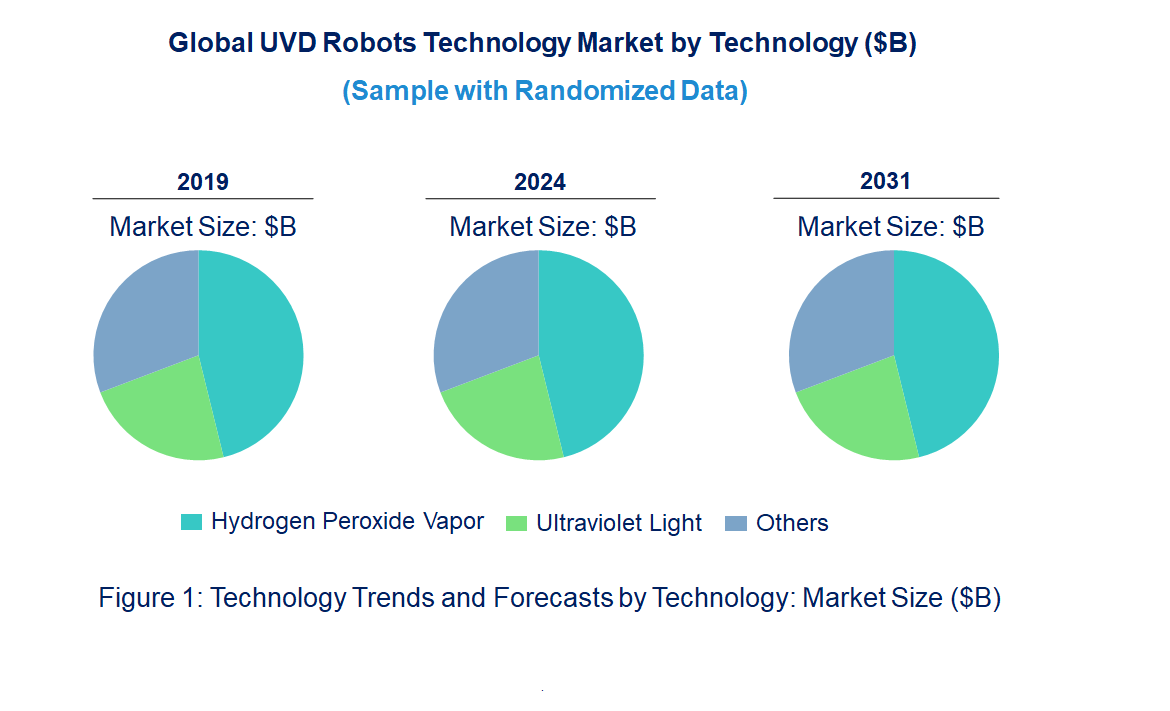
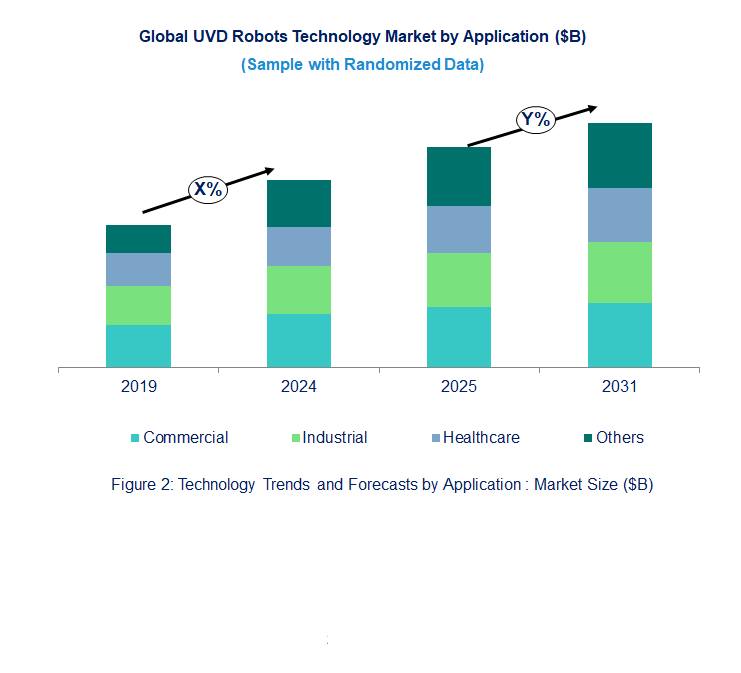
This market report covers trends, opportunities, and forecasts in the global uvd robots market to 2031 by technology (hydrogen peroxide vapor, ultraviolet light, and others), application (commercial, industrial, healthcare, and others), and region (North America, Europe, Asia Pacific, and the Rest of the World)
We'll send your sample report shortly.
• Artificial Intelligence and Machine Learning: AI algorithms of UVD robots navigate through complex environments autonomously while optimizing their cleaning routes. Their machine learning improves decision-making to adapt in real-time. It ensures more efficient and thorough disinfection coverage across large and intricate facilities.
• Advanced Autonomous Navigation and Mapping: Advancements in LIDAR, sensors, and computer vision technologies enable UVD robots to map and navigate spaces with exceptional accuracy. This ensures full coverage of disinfection areas without manual intervention, even in challenging layouts like hospitals, factories, and hotels.
• Energy Efficiency and Sustainability Focus: Manufacturers are developing more energy-efficient UV disinfection solutions that minimize electricity consumption and environmental impact. Sustainable designs and eco-friendly materials are being emphasized, reflecting a commitment to greener cleaning technologies.
• Modular and Scalable Design Solutions: UVD robots are increasingly designed with modular components, making it possible for facilities to customize and scale disinfection operations according to the size and specific requirements of the environment. This adaptability ensures a cost-effective and efficient deployment in different sectors and spaces.
• Collaborative Human-Robot Integration: New UVD robots work in a safe collaboration with human staff by incorporating advanced proximity sensors and communication technologies. This reduces the risks associated with the operation, and the robots can work side by side with humans without compromising safety and efficiency. These new trends in UVD robot technology represent the shift toward more autonomous, intelligent, and eco-friendly disinfection solutions. With improvements in the integration of AI, better navigation, modular designs, and sustainable practices, UVD robots are becoming an indispensable tool for industries worldwide to create safer, cleaner, and more efficient environments.
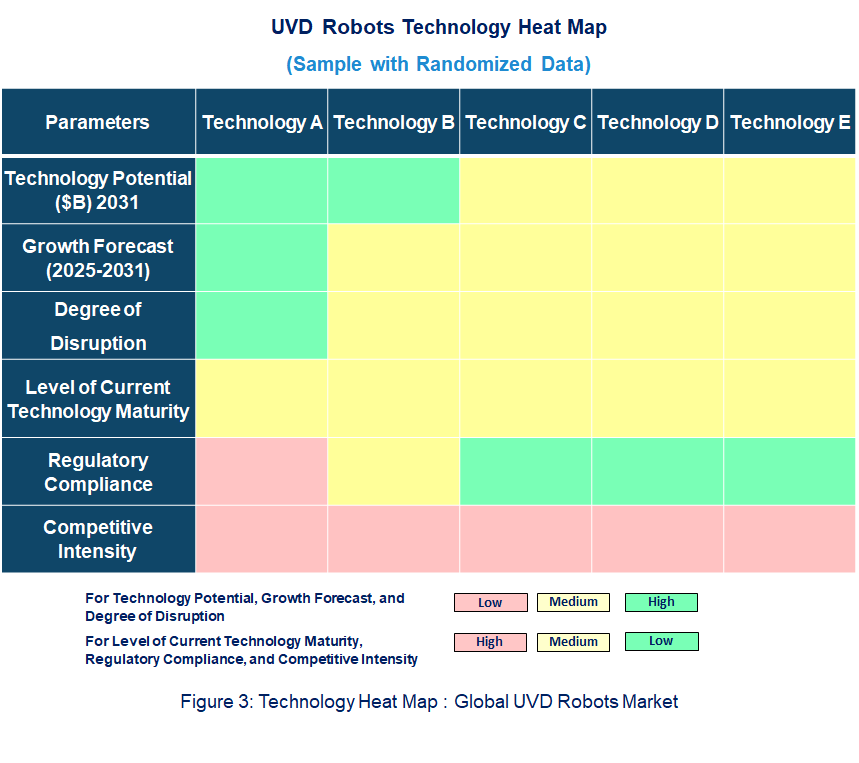
• Technology Potential: UVD robots can make a huge difference by ensuring comprehensive, autonomous cleaning of spaces that require such stringent hygiene standards. Also, with AI and machine learning, they can operate continually to improve efficiency and adaptability, making their operation possible in hospitals, factories, airports, hotels, and schools.
• Level of Disruption: UVD robots are disrupting old methods of cleaning by replacing a lot of manual labor and chemical disinfectants with automated, efficient, and safer robotic systems. Such robots can cover large areas autonomously with UV disinfection, reducing time, labor costs, and exposures while enhancing effectiveness and safety.
• Technology Maturity: The current UVD robot technology is mature enough for wide commercial use, with proven applications in critical sectors such as healthcare and hospitality. Continuous improvements in AI, mapping, and sensor technologies enhance their efficiency, navigation, and adaptability across diverse environments.
• Regulatory Compliance: UVD robots follow rigid rules in hygiene and safety conditions and are regulated under all the EPA, CE, and FDA standards, conforming to RoHS standards for minimal chemical exposure while using them and operating on ecological levels, reflecting health and environmental safety across industries.
• TMiRob: TMiRob continues to enhance its autonomous disinfection robots for healthcare facilities. Their latest models come with advanced navigation systems and AI-driven algorithms that ensure comprehensive disinfection of hospitals and clinical spaces, reducing the risks of cross-infection and operational downtime.
• Xenex: Xenex has developed mobile UV disinfection systems that combine high-intensity pulsed xenon technology. Their solutions offer fast, cost-effective disinfection in large-scale healthcare, education, and commercial environments while ensuring better light coverage and thorough cleaning.
• Pudu Technology: The company extends its portfolio into UV-equipment delivery robots that effectively integrate disinfecting and delivering services. Its integration increases operational efficiency and hygiene in hotels, restaurants, and corporate houses.
• Qianxi Robotics Catering: Qianxi Robotics focuses on UV disinfection solutions specifically for catering services and restaurants, as well as customized robots featuring cleaning as well as disinfecting facilities to ensure that hygiene conditions are maintained well across all food preparation venues.
• Keenon Robotics: Keenon Robotics incorporates advanced UV cleaning modules into delivery and service robots, which ensures multi-functional cleaning capabilities in commercial spaces like offices, malls, and hotels.
• Robotemi: Robotemi is advancing human-robot interactions with service robots that incorporate UV disinfection technology. Their robots assist in hospitality and retail while maintaining safety, cleanliness, and service efficiency.
• CloudMinds: CloudMinds leads innovations in UV disinfection robots connected through the clouds. The system allows real-time monitoring, collection of data, and remote control. They assure hassle-free cleaning within large commercial and healthcare spaces.
• Orion Star Technology: The Orion Star specializes in module-based disinfecting robots using navigation systems guided by AI, as well as sterilizing equipment involving UV to increase the efficiency of applications such as in schools, factories, and offices.
• Siasun Robotics: Siasun Robotics integrates UV disinfection technology with industrial robots for large-scale cleaning operations. Their solutions are particularly suited for factories, warehouses, and manufacturing facilities, ensuring high efficiency and thorough disinfection. These recent developments are marked by the continuous innovation that can be seen in the field of UVD robots, improvements in AI, mapping, modular design, and adaptability. Companies are investing in scalable, cost-effective, and eco-friendly solutions that offer higher efficiency, better coverage, and increased safety, ultimately transforming disinfection processes across healthcare, hospitality, retail, and industrial markets.
• Increasing Demand in Healthcare Facilities: UVD robots are in high demand, considering the need for strict hygiene and infection control in hospitals. These robots provide quicker and more efficient disinfection and reduce the risk of hospital-acquired infections to make environments safer for both patients and healthcare workers.
• Expansion in the Commercial and Hospitality Sector: Hotels, restaurants, and commercial spaces are embracing UVD robots to ensure hygiene standards. Their capability of cleaning large areas independently improves operational efficiency and keeps guests satisfied by providing a cleaner, safer environment.
• AI and Machine Learning Integration: AI-powered UVD robots adjust their cleaning routes and environments in real-time to complex environments. Machine learning enables continuous improvement in efficiency and disinfection accuracy, allowing for higher adaptability across various industries and facility layouts.
• Environmental Sustainability Initiatives: UVD robots are now increasingly designed with energy-efficient technologies, which decrease their carbon footprint. This aligns with global sustainability initiatives, offering eco-friendly disinfection solutions that are both cost-effective and environmentally responsible.
• Technological Customization and Scalability: Modular designs and scalable robot systems enable customization based on the size of facilities and the application. This allows businesses within different industries to invest in cost-effective, customized solutions for disinfection needs without losing out on efficiency and performance. Challenges
• Integration with Existing Systems and Environments: UVD robots often need to integrate with existing building management systems (BMS) or health monitoring systems to operate efficiently. Ensuring seamless communication between the robotic middleware, building infrastructure, and other devices (e.g., lighting, air conditioning) can be complex. Compatibility issues between different systems may hinder the robot's ability to function optimally, requiring custom solutions.
• Real-Time Data Processing and Decision-Making: UVD robots must process real-time data from their sensors (e.g., cameras, UV light intensity, environmental conditions) to navigate, avoid obstacles, and ensure effective disinfection. Middleware must handle this data quickly and reliably without introducing latency, ensuring that the robot can adapt in real-time to dynamic environments while maintaining safety and performance. The UVD robots technology market is rapidly evolving because opportunities in the healthcare, hospitality, retail, and commercial sectors are rising. In the future, AI advancement, eco-friendly design, modular scalability, and operational efficiency will help shape the future of automated disinfection. This, in turn, ensures safer, more cost-effective, and sustainable cleaning solutions across industries in the global market.
• Tmirob
• Xenex
• Pudu Technology
• Qianxi Robotics Catering
• Keenon Robotics
• Robotemi
• Technology Readiness by Technology Type and Key Applications: Laser hydrogen peroxide v, vapor technology is highly mature in controlled industrial environments, thereby offering deep disinfection of huge manufacturing plants and laboratories. It is very appropriate for healthcare facilities where pathogen elimination is very critical. Ultraviolet Light technology is largely adopted in commercial and consumer se, sectors with effective sanitizing of offices, retail stores, and schools. The disinfection cycles are relatively fast, and the cost efficiency, along with environmental compatibility, make it favorable. Hybrid Technologies are constantly developed, combining Hydrogen Peroxide Vapor and UV Light, which provide flexibility and deep cleaning while overcoming each technology's limitations. Other technologies are designed for dynamic spaces that require fast turnarounds and high levels of cleanliness, such as hotels and transportation hubs. Other emerging disinfection technologies focus on customization and scalability, thus ensuring compatibility with robotics and modular installations. Continuous research and development efforts enhance their adaptability and efficiency across sectors. These technologies are integrated into commercial cleaning machines and robotics, ensuring compatibility with automated systems. Their readiness ensures widespread scalability and adaptability in healthcare, hospitality, manufacturing, and retail. Technological upgrades prioritize efficiency, speed, eco-friendliness, and compliance, shaping disinfection operations worldwide
• Competitive Intensity and Regulatory Compliance: The competition for hydrogen peroxide vapor, ultraviolet light, and other disinfection technologies is cutthroat, as companies attempt to provide faster, more efficient, and less costly solutions. Hydrogen peroxide vapor can deeply sterilize but needs expensive specialized equipment, while UV Light provides fast disinfection at less infrastructure cost. Hybrid technologies are also being developed to benefit from several approaches. Compliance with strict safety and environmental standards, such as EPA, FDA, RoHS, and CE, is essential to maintaining market presence. Regulations require safe chemical handling, limits on UV intensity, and eco-friendly production methods. Disruptive companies focus on environmental responsibility and non-toxic solutions to meet global compliance requirements. Manufacturers are constantly innovating to reduce energy consumption and improve operational efficiency. Development is accelerated by collaboration between technology providers and research institutions, ensuring higher standards of safety and efficiency. As competition increases, adherence to regulation becomes a strategic differentiator; companies invest in certifications and eco-friendly designs to gain an edge over others. This ensures that products are safe and effective across healthcare, hospitality, and industrial markets.
• Disruption Potential of Different Technologies: Hydrogen peroxide vapor (HPV) and ultraviolet (UV) light technologies are changing the market for UVD robots through scalable, efficient, and safer disinfection solutions. HPV technology provides deep sterilization in enclosed environments with no pathogens in hospitals and manufacturing plants. UV light provides fast, cost-effective disinfection with no chemical residues, ideal for open spaces like offices and retail stores. More recent innovations of hybridization are being created in combination, integrating UV with chemical-based disinfection methods. Disruption of conventional cleaning methodology through replacement with robotics automation and hazardous chemical utilization, while also providing an all-electric system, follows remote full automation. In a series of these technologies, equal measures of efficiency, costs, and safety make possible varied environmental applications and usage in diverse environments. There are efficiencies from reducing downtime and increasing overall operations that enable cost savings. Hygiene standards are becoming tighter, right in healthcare, hospitality, and commercial sectors, hence compelling the adoption. Widespread deployment lowers human contact with harmful disinfectants.
• Hydrogen Peroxide Vapor
• Ultraviolet Light
• Others
• Commercial
• Industrial
• Healthcare
• Others
• North America
• Europe
• Asia Pacific
• The Rest of the World
• Latest Developments and Innovations in the UVD Robots Technologies
• Companies / Ecosystems
• Strategic Opportunities by Technology Type


Choose a license that fits your team. Instant PDF delivery.
Prices exclude taxes. Instant delivery. Custom licensing available on request.
Market Report · May 18, 2026
Market Report · May 18, 2026
Market Report · May 18, 2026
Trusted partner for strategic intelligence and business growth


Receive a complimentary market analysis tailored to your industry. Our analysts will identify key growth opportunities and competitive dynamics specific to your business.

Market size, growth rate, and key trend analysis for your specific sector.

Top competitor positioning and market share analysis.

Strategic recommendations backed by data-driven insights.
Get curated market intelligence and competitive moves straight to your inbox.
By subscribing, you agree to receive our monthly insights. Unsubscribe anytime.
Receive a complimentary market analysis tailored to your industry. Our analysts will identify key growth opportunities and competitive dynamics specific to your business.
Market size, growth rate, and key trend analysis for your specific sector.
Top competitor positioning and market share analysis.
Strategic recommendations backed by data-driven insights.
Get curated market intelligence, emerging trends, and competitive moves straight to your inbox each month.
By subscribing, you agree to receive our monthly insights. Unsubscribe anytime.
We'll send your sample report shortly.