
Upcycled Ingredient Market
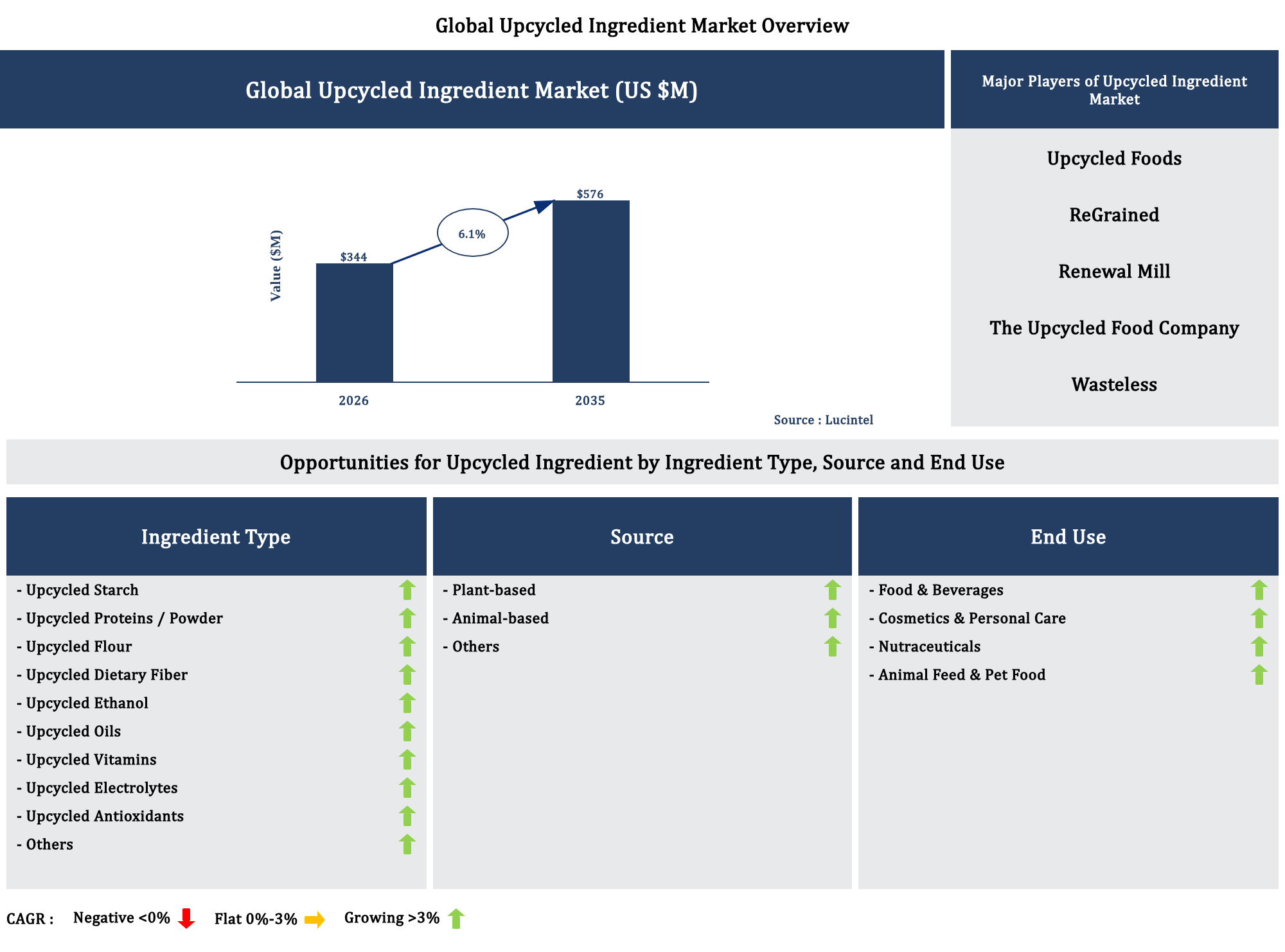
The future of the global upcycled ingredient market looks promising with opportunities in the food & beverage, cosmetics & personal care, nutraceutical, and animal feed & pet food markets. The global upcycled ingredient market is expected to reach an estimated $576 million by 2035 with a CAGR of 6.1% from 2026 to 2035. The major drivers for this market are the increasing demand for sustainable food ingredients, the rising focus on food waste reduction, and the growing adoption of circular economy practices.
Gain valuable insights for your business decisions with our comprehensive 150+ page report. Sample figures with some insights are shown below.
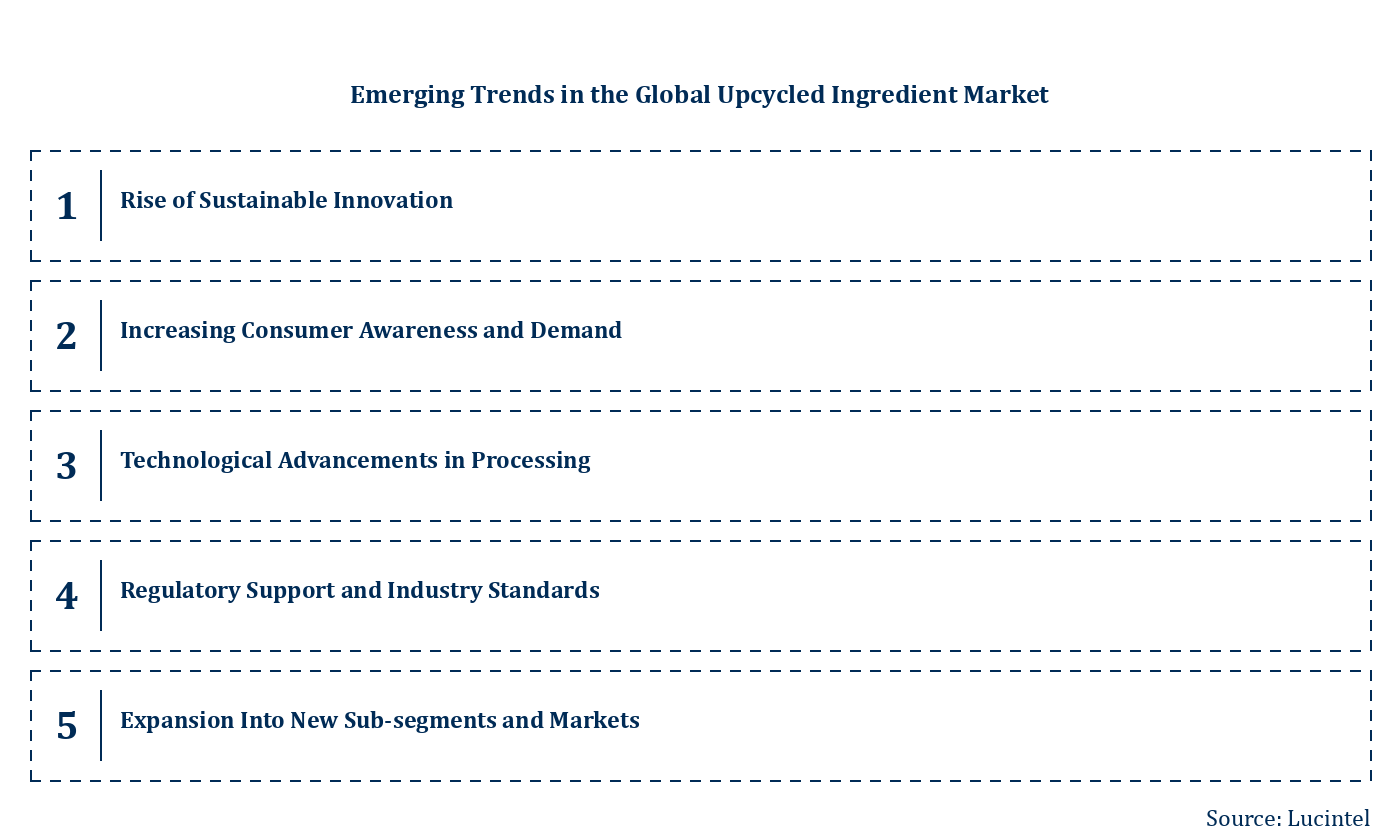
Emerging Trends in the Upcycled Ingredient Market
The upcycled ingredient market is experiencing rapid growth driven by increasing consumer demand for sustainable and environmentally friendly products. As the food and beverage industry shifts towards eco-conscious practices, innovative solutions are emerging to reduce waste and promote circular economy principles. This market is characterized by the integration of waste materials into new, high-quality ingredients, offering both environmental benefits and unique product offerings. The following trends highlight the key developments shaping this evolving landscape, reflecting technological advancements, consumer preferences, and regulatory support that are collectively transforming the industry.
These trends are collectively reshaping the upcycled ingredient market by fostering innovation, increasing consumer engagement, and establishing supportive regulatory frameworks. The shift towards sustainable practices is not only reducing environmental impact but also creating new business opportunities. Technological advancements are improving product quality and scalability, while expanding into new sub-segments broadens market potential. As these developments continue, the market is poised for significant growth, driven by a global commitment to sustainability and resource efficiency. This evolution is transforming waste into valuable resources, redefining industry standards, and paving the way for a more sustainable future.
Recent Developments in the Upcycled Ingredient Market
The upcycled ingredient market is experiencing rapid growth driven by increasing consumer demand for sustainable products and innovative food solutions. Companies are focusing on transforming food by-products into valuable ingredients, reducing waste, and promoting environmental responsibility. This shift is creating new opportunities across various sectors, including food manufacturing, cosmetics, and nutraceuticals. As awareness about sustainability rises, market players are investing in research and development to expand product offerings and meet evolving consumer preferences.
These developments are significantly transforming the upcycled ingredient market by expanding application areas, fostering technological innovation, and strengthening regulatory frameworks. The combined effect is driving market growth, encouraging sustainable practices, and meeting the rising consumer demand for eco-friendly, health-oriented products. As a result, the market is poised for continued expansion and increased competitiveness.
Strategic Growth Opportunities in the Upcycled Ingredient Market
The upcycled ingredient market is experiencing rapid growth driven by increasing consumer demand for sustainable products and environmental consciousness. Innovations in food processing and waste reduction are creating new opportunities for manufacturers to develop eco-friendly ingredients. As industries seek to minimize waste and improve resource efficiency, upcycled ingredients are becoming integral to product formulations across food, beverage, and cosmetic sectors. This evolving landscape offers significant potential for market expansion, driven by regulatory support, consumer preferences, and technological advancements.
The overall impact of these growth opportunities is a dynamic, expanding market that aligns sustainability with consumer preferences. As technological, regulatory, and industry collaborations strengthen, the upcycled ingredient market is poised for substantial growth, offering innovative solutions that benefit the environment, manufacturers, and consumers alike.
Upcycled Ingredient Market Drivers and Challenges
The upcycled ingredient market is influenced by a variety of technological, economic, and regulatory factors that shape its growth trajectory. Innovations in food processing and sustainable practices drive demand for upcycled ingredients, while economic shifts such as rising consumer awareness and environmental concerns further propel market expansion. Regulatory frameworks aimed at reducing food waste and promoting sustainability also play a crucial role. However, challenges such as high production costs, lack of consumer awareness, and regulatory hurdles can impede growth. Understanding these drivers and challenges is essential for stakeholders to navigate the evolving landscape and capitalize on emerging opportunities within the market.
The factors responsible for driving the upcycled ingredient market include:-
The challenges facing the upcycled ingredient market include:-
The upcycled ingredient market is driven by technological advancements, consumer sustainability preferences, supportive regulations, increased R&D investments, and industry expansion. However, high costs, consumer awareness gaps, and regulatory uncertainties pose significant challenges. Addressing these issues through innovation, education, and policy development will be critical for sustainable growth. Overall, the market holds substantial potential for contributing to food waste reduction and promoting sustainable food systems, provided these drivers and challenges are effectively managed.
List of Upcycled Ingredient Market Companies
Companies in the market compete on the basis of product quality offered. Major players in this market focus on expanding their manufacturing facilities, R&D investments, infrastructural development, and leverage integration opportunities across the value chain. Through these strategies upcycled ingredient market companies cater increasing demand, ensure competitive effectiveness, develop innovative products & technologies, reduce production costs, and expand their customer base. Some of the upcycled ingredient market companies profiled in this report include-
Upcycled Ingredient Market by Segment
The study includes a forecast for the global upcycled ingredient market by ingredient type, source, end use, and region.
Country Wise Outlook for the Upcycled Ingredient Market
The upcycled ingredient market has experienced significant growth driven by increasing consumer demand for sustainable and eco-friendly food options, regulatory support, and innovations in food processing technologies. As sustainability becomes a central focus globally, countries are adopting new strategies to incorporate upcycled ingredients into their food systems, reducing waste and promoting circular economy principles. This trend is particularly prominent in major economies with advanced food industries, where technological advancements and consumer awareness are accelerating market expansion. The following summarizes recent developments in the United States, China, Germany, India, and Japan within this evolving market landscape.
Features of the Upcycled Ingredient Market
Top 5 Companies
Table of Contents
List of Figures
List of Tables
Methodology
Lucintel has been in the business of market research and management consulting since 2000 and has published over 1000 market intelligence reports in various markets / applications and served over 1,000 clients worldwide. This study is a culmination of four months of full-time effort performed by Lucintel's analyst team. The analysts used the following sources for the creation and completion of this valuable report:
- In-depth interviews of the major players in this market
- Detailed secondary research from competitors' financial statements and published data
- Extensive searches of published works, market, and database information pertaining to industry news, company press releases, and customer intentions
- A compilation of the experiences, judgments, and insights of Lucintel's professionals, who have analyzed and tracked this market over the years.
Extensive research and interviews are conducted across the supply chain of this market to estimate market share, market size, trends, drivers, challenges, and forecasts. Below is a brief summary of the primary interviews that were conducted by job function for this report.

Thus, Lucintel compiles vast amounts of data from numerous sources, validates the integrity of that data, and performs a comprehensive analysis. Lucintel then organizes the data, its findings, and insights into a concise report designed to support the strategic decision-making process. The figure below is a graphical representation of Lucintel's research process.

Buy Now
Choose a license that fits your team. Instant PDF delivery.
Prices exclude taxes. Instant delivery. Custom licensing available on request.
Frequently Asked Questions
What is the upcycled ingredient market size?
What is the growth forecast for upcycled ingredient market?
What are the major drivers influencing the growth of the upcycled ingredient market?
What are the major segments for upcycled ingredient market?
Who are the key upcycled ingredient market companies?
Some of the key upcycled ingredient companies are as follows:
- Upcycled Foods
- ReGrained
- Renewal Mill
- The Upcycled Food Company
- Wasteless
- Karma
- FoodLoop
Which upcycled ingredient market segment will be the largest in future?
In upcycled ingredient market, which region is expected to be the largest in next 9 years?
Do we receive customization in this report?
Key Questions
- • What are some of the most promising, high-growth opportunities for the upcycled ingredient market by ingredient type (upcycled starch, upcycled proteins / powder, upcycled flour, upcycled dietary fiber, upcycled ethanol, upcycled oils, upcycled vitamins, upcycled electrolytes, upcycled antioxidants, and others), source (plant-based, animal-based, and others), end use (food & beverages, cosmetics & personal care, nutraceuticals, and animal feed & pet food), and region (North America, Europe, Asia Pacific, and the Rest of the World)?
- • Which segments will grow at a faster pace and why?
- • Which region will grow at a faster pace and why?
- • What are the key factors affecting market dynamics? What are the key challenges and business risks in this market?
- • What are the business risks and competitive threats in this market?
- • What are the emerging trends in this market and the reasons behind them?
- • What are some of the changing demands of customers in the market?
- • What are the new developments in the market? Which companies are leading these developments?
- • Who are the major players in this market? What strategic initiatives are key players pursuing for business growth?
- • What are some of the competing products in this market and how big of a threat do they pose for loss of market share by material or product substitution?
- • What M&A activity has occurred in the last 6 years and what has its impact been on the industry?


