
Market Report · May 18, 2026

This market report covers trends, opportunities, and forecasts in the global twin high port count wavelength selective switch market to 2031 by technology (less than 16 ports, 16-32 ports, and more than 32 ports), application (all optical network, add/drop multiplexer, and others), and region (North America, Europe, Asia Pacific, and the Rest of the World)
We'll send your sample report shortly.
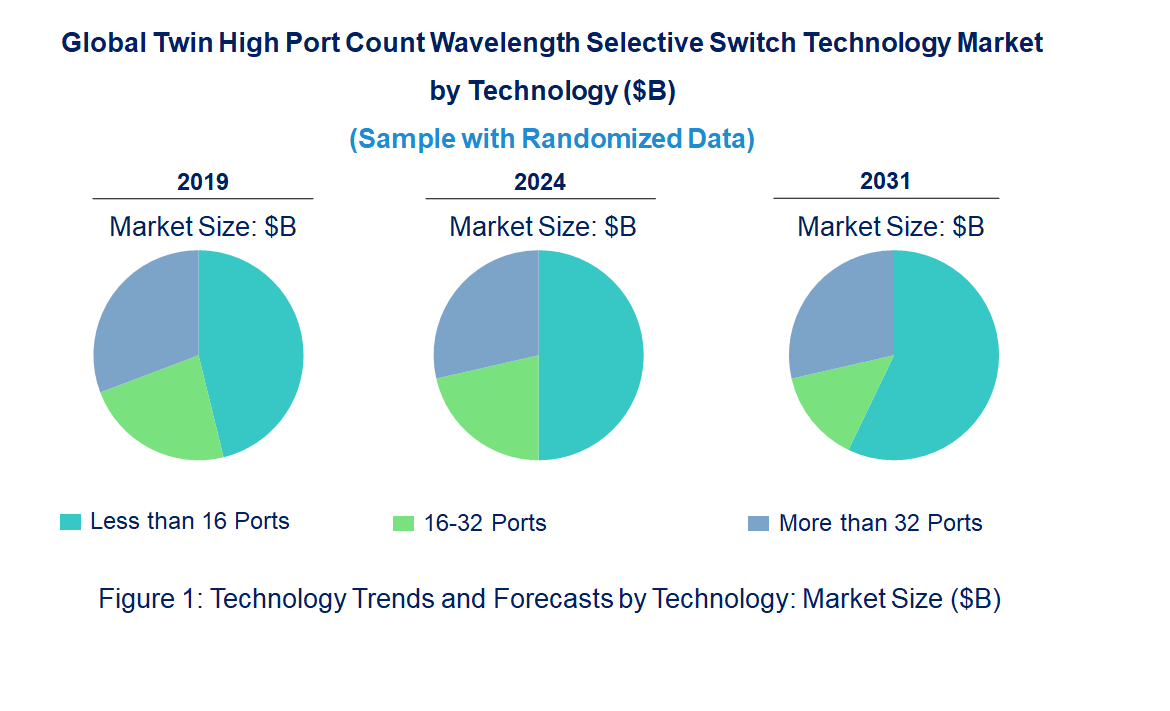
![Twin High Port Count Wavelength Selective Switch Market Trend and Forecast by Application [Value from 2019 to 2031]:](https://lucintel.com/images/Twin-High-Port-Count-Wavelength-Selective-Switch-Technology-Market-Segment.png "Twin High Port Count Wavelength Selective Switch Market Trend and Forecast by Application [Value from 2019 to 2031]:")
• In MEMS and LCOS Technologies: The shift from traditional mechanical wavelength selective switches to MEMS and LCOS technologies is one of the major trends. These optical switching solutions offer faster switching speeds, scalability, and low operational costs. Therefore, they are perfectly suited for high port-count switches in large optical networks.
• Integration of Software-Defined Networking (SDN): SDN is being integrated into wavelength selective switching systems, making them more flexible and easier to manage. This trend helps operators monitor and optimize network traffic in real-time, enabling dynamic routing and better network performance. This is crucial to adapt to the ever-increasing demand for flexible, high-capacity optical networks.
• Miniaturization and High-Port Count Integration: There is a growing demand for switches with higher port counts to accommodate increasing traffic in optical networks. This has led to the development of smaller, more compact systems that can handle large numbers of ports without compromising performance or efficiency. These high port-count switches enable better scalability in telecommunications and data center applications.
• Increased Focus on Energy Efficiency: Increasing attention is being given to the energy efficiency of wavelength-selective switches. As data centers and telecom networks expand, there is greater pressure to contain the power consumption of optical equipment. Energy-efficient elements are increasingly being developed, coupled with more power-conscious systems. This trend aligns with sustainability goals and reduces operational costs.
• Customization for Applications: The demand for highly customized wavelength-selective switches specific to applications, such as data centers, telecom, or enterprise networks, is growing. Custom designs that can accommodate different types of traffic, bandwidth requirements, and network conditions are becoming very popular. This trend supports optimized performance in diverse settings and specialized network configurations. These emerging trends from advanced technologies like MEMS and LCOS to the integration of SDN and energy-efficient designs are transforming the twin high port count wavelength selective switch market. These trends are creating more scalable, efficient, and flexible optical networks that can handle higher capacity and faster data transmission demands. As these trends evolve, they will shape the future of the optical networking industry, enabling more robust and adaptable solutions for the digital age.
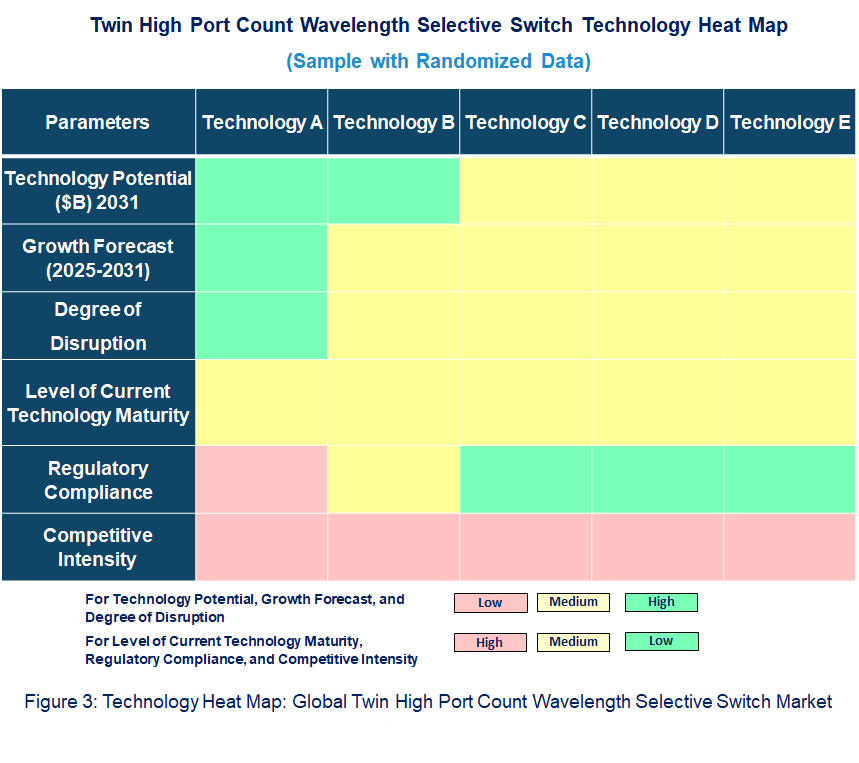
• Technology Potential: The potential of technologies such as MEMS and LCOS is tremendous. These technologies can provide faster switching, higher scalability, and lower operating costs and, therefore, are suitable for high port-count applications. The ability to handle large amounts of data without affecting performance presents opportunities for more advanced optical networks.
• Degree of Disruption: The shift from traditional mechanical wavelength selective switches to MEMS and LCOS represents a significant disruption. These newer technologies offer better performance, lower costs, and greater flexibility compared to existing solutions while pushing the boundaries of optical switching technology.
• Maturity Level of Current Technology: MEMS and LCOS technologies are mature and ready for commercial optical network deployment, with broad use in large data centers and telecommunications networks. However, further innovation is needed to achieve greater performance and meet future needs.
• Compliance with Regulations: As the demand for energy-efficient solutions increases, regulatory compliance related to environmental sustainability and energy consumption is critical. Manufacturers are increasingly focusing on designing solutions that adhere to international environmental standards, ensuring sustainability while maintaining high performance.
• Molex: Molex has stepped up its efforts in the twin high port count wavelength selective switch market by introducing next-generation MEMS-based switches for high performance, scalability, and reliability. Its switches are designed for large-scale optical networking, making them suitable for data centers and high-speed telecommunication networks. The switches feature higher speeds and greater flexibility in routing optical signals, thanks to the incorporated MEMS technology.
• Viavi Solutions: Viavi Solutions has expanded its portfolio with optical switching products that include advanced software-defined networking capabilities. These solutions are designed to enhance network flexibility, allowing for dynamic management of data traffic, thus improving the efficiency of optical networks. This development supports the demand for high-capacity and flexible optical systems in both telecommunications and enterprise applications.
• Lumentum: Lumentum has effectively utilized its expertise in optics and photonics to design high port-count wavelength-selective switching products. These products aim to serve the needs of telecom and data center operators, providing high efficiency with minimal operational costs. Lumentum's optical products are known for their robustness and ability to handle large data flows, facilitating the scaling of optical networks.
• NTT Electronics: NTT Electronics has focused on developing high-performance wavelength selective switches that combine leading-edge MEMS and Liquid Crystal on Silicon (LCOS) technologies. These innovations enable the company to offer highly flexible and scalable solutions suitable for modern optical communication systems, including large-scale telecom infrastructures and cloud-based data centers.
• InLC Technology: InLC Technology has developed low-loss, high-precision wavelength selective switches. The company combines MEMS and LCOS technologies to improve performance and scalability. These solutions are designed for high-density optical networks, ensuring reliable and efficient signal routing for data centers, telecom networks, and cloud service providers.
• Finisar: Finisar has introduced advanced solutions that combine wavelength selective switching with high-performance optical modules. These solutions are designed to optimize the performance of dense wavelength division multiplexing (DWDM) systems, providing telecom operators and data centers with more efficient and scalable network solutions. Finisar's switches aim to reduce costs and enhance overall performance in optical networks. These developments by key players are driving innovation in the twin high port count wavelength selective switch market, enabling more scalable, flexible, and efficient optical networks that can meet the growing demands for high-capacity data transmission.
• Technological Advancements: The rapid development of MEMS and LCOS technologies has improved the performance, speed, and scalability of wavelength selective switches. These improvements provide faster switching times, lower operational costs, and greater flexibility, all essential for large-scale optical networks. The increasing demand for these technologies meets the requirement for high port-count switches in optical systems.
• Increased Demand for High-Capacity Networks: The increased global data traffic, driven by cloud computing, video streaming, and big data applications, has made high-capacity optical networks highly in demand. Twin high port count wavelength selective switches are essential for optimizing the performance of DWDM systems, allowing them to scale with growing network needs.
• Toward Software-Defined Networking (SDN): Wavelength selective switches integrating software-defined networking are improving the flexibility of networks and giving operators the ability to dynamically manage data traffic. SDN enables the optimization of efficiency and performance in optical networks, making them more adaptable to support next-generation services like 5G and IoT applications. Challenges in the twin high port count wavelength selective switch market are:
• Miniaturization and Compact Design: The demand for more compact, space-saving solutions has driven the development of high port-count wavelength selective switches. These designs are dense, scalable, and more efficient without sacrificing performance. Compact systems are essential for applications in data centers, telecom infrastructures, and high-density optical networks, offering cost-effective solutions to manage large volumes of data.
• Compliance with Regulatory and Environmental Standards: As environmental sustainability becomes an even more significant focus, energy efficiency and environmental regulations will continue to be important. Manufacturers are adopting eco-friendly designs and energy-efficient components to meet these requirements, reduce operational costs, and contribute to global sustainability efforts. This trend encourages the development of green technologies in the wavelength-selective switch market. These drivers, including technological advancements, rising demand for high-capacity networks, the integration of SDN, miniaturization, and regulatory compliance, are significantly shaping the twin high port count wavelength selective switch market. Together, they enable more flexible, scalable, and efficient optical networks, making them better equipped to handle the growing data demands of the digital age.
• Molex
• Viavi Solutions
• Lumentum
• NTT Electronics
• InLC Technology
• Finisar
• Technology Readiness by Technology Type in the Twin High-Port Count Wavelength Selective Switch Market: In the twin high port count wavelength selective switch market, the technology maturity varies by port configuration. For fewer than 16 ports, the technology is well-established, with proven, reliable solutions in lower-capacity networks. The 16-32 port switches represent a well-established middle ground, offering advanced feature sets and scalability, but with ongoing innovation to meet growing demands. The most advanced are the 32-port or more switches, which are ready for commercial applications, as they drive high-scale optical networks. Competition levels are high, as software-defined networking (SDN) and other technologies can be integrated into industries requiring high capacity and reliability with strict regulatory requirements. Each port type is used in telecom, cloud services, and high-density infrastructures for optical network setups.
• Competitive Intensity and Regulatory Compliance of Different Technologies: The intensity of competition in the twin high port count wavelength selective switch market depends on the port count. Technologies with fewer than 16 ports are less competitive, as they are used in smaller applications. However, these technologies must still overcome challenges related to cost and performance efficiency. The 16-32 port range is highly competitive, as more players focus on offering optimized solutions for mid-sized networks. Technologies with more than 32 ports are the most competitive, as they support high-demand applications, such as cloud services and telecommunications, where regulatory compliance related to energy efficiency and environmental sustainability becomes a significant concern. Each technology must meet these standards to succeed.
• Disruption Potential of Different Technologies in the Twin High-Port Count Wavelength Selective Switch Market: The potential for disruption in the twin high port count wavelength selective switch market spans different port configurations. Technologies with fewer than 16 ports are usually limited to smaller-scale applications, where simplicity and cost-effectiveness are prioritized. In the 16-32 port range, there is sufficient scalability, but a balance between performance and capacity becomes important. Disruptive technologies are those with more than 32 ports, as they can handle vast amounts of data and are used in large networks, such as telecoms and data centers. These innovations enable fast switching speeds, lower operational costs, and greater scalability in high-density, high-traffic optical networks. Thus, they are crucial for transforming large infrastructure setups.
• Less Than 16 Ports
• 16-32 Ports
• More Than 32 Ports
• All Optical Network
• Add/Drop Multiplexer
• Others
• North America
• Europe
• Asia Pacific
• The Rest of the World
• Latest Developments and Innovations in the Twin High Port Count Wavelength Selective Switch Technologies
• Companies / Ecosystems
• Strategic Opportunities by Technology Type


Choose a license that fits your team. Instant PDF delivery.
Prices exclude taxes. Instant delivery. Custom licensing available on request.
Market Report · May 18, 2026
Market Report · May 18, 2026
Market Report · May 18, 2026
Trusted partner for strategic intelligence and business growth


Receive a complimentary market analysis tailored to your industry. Our analysts will identify key growth opportunities and competitive dynamics specific to your business.

Market size, growth rate, and key trend analysis for your specific sector.

Top competitor positioning and market share analysis.

Strategic recommendations backed by data-driven insights.
Get curated market intelligence and competitive moves straight to your inbox.
By subscribing, you agree to receive our monthly insights. Unsubscribe anytime.
Receive a complimentary market analysis tailored to your industry. Our analysts will identify key growth opportunities and competitive dynamics specific to your business.
Market size, growth rate, and key trend analysis for your specific sector.
Top competitor positioning and market share analysis.
Strategic recommendations backed by data-driven insights.
Get curated market intelligence, emerging trends, and competitive moves straight to your inbox each month.
By subscribing, you agree to receive our monthly insights. Unsubscribe anytime.
We'll send your sample report shortly.