
Market Report · May 18, 2026

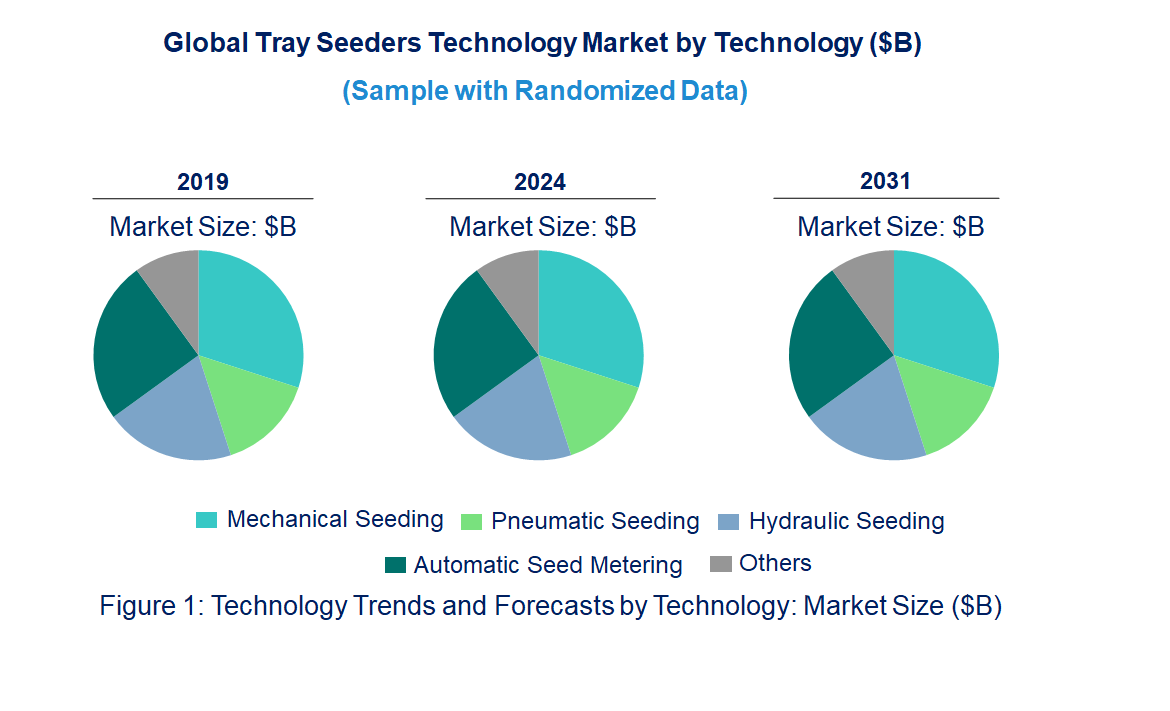
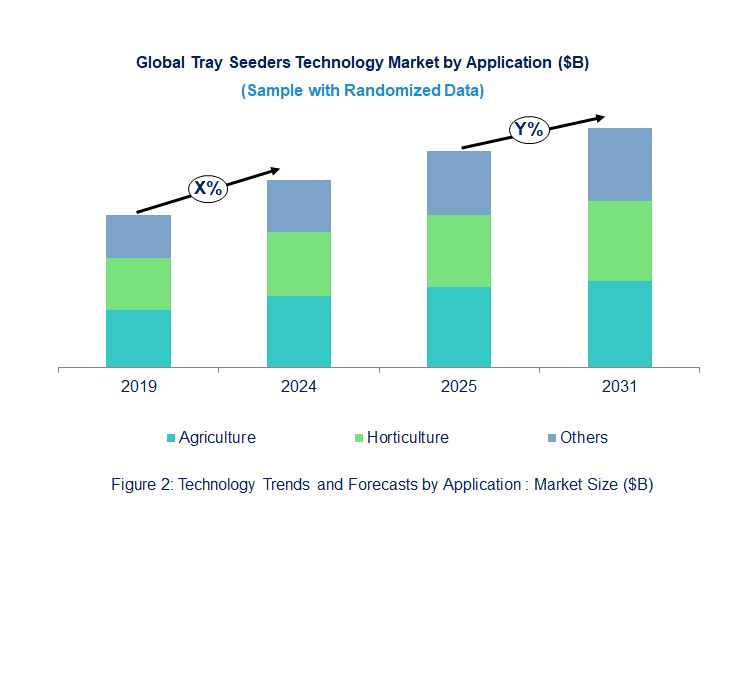
This market report covers trends, opportunities, and forecasts in the global tray seeders market to 2031 by technology (mechanical seeding, pneumatic seeding, hydraulic seeding, automatic seed metering, and others), application (agriculture, horticulture, and others), and region (North America, Europe, Asia Pacific, and the Rest of the World)
We'll send your sample report shortly.
• Automation and Precision Planting: The growing adoption of automatic seed metering and hydraulic systems enables more precise and efficient seeding, reducing labor costs and improving crop yield.
• Integration with Smart Technology: The integration of IoT and smart sensors into tray seeders allows for real-time monitoring and optimization of planting processes, making operations more efficient and data-driven.
• Energy-Efficient and Sustainable Solutions: There is an increasing focus on energy-efficient tray seeders, utilizing hydraulic and pneumatic systems that reduce fuel consumption and environmental impact.
• Customization for Specific Crops: Seeders are being increasingly customized for different types of crops, allowing for more specialized and efficient planting practices in horticulture and agriculture.
• Use of Robotics and Autonomous Seeders: Robotics technology is making its way into tray seeding machines, improving automation and reducing human intervention, especially in large-scale farming operations. These trends highlight the growing emphasis on automation, precision, and sustainability in tray seeders, shaping the market for more efficient and adaptable solutions in agriculture, horticulture, and beyond.
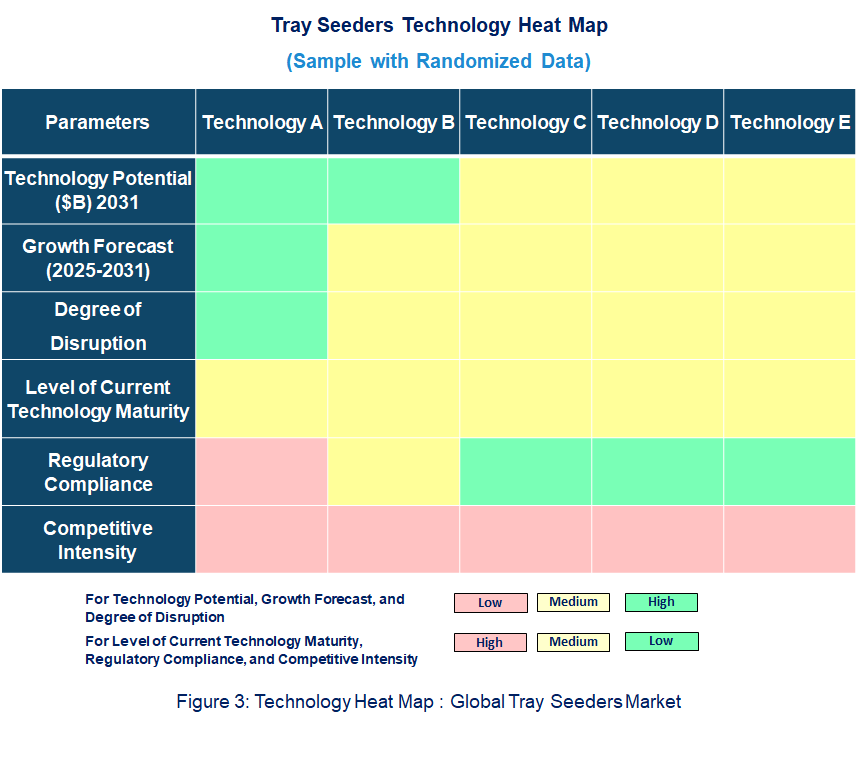
• Technology Potential: Tray seeders hold significant potential in improving crop planting efficiency and precision, especially with automated seed metering and hydraulic systems, leading to better yields and less waste.
• Degree of Disruption: Automation, especially with robotics and IoT integration, is disrupting traditional methods by reducing manual labor, increasing speed, and offering real-time data for optimization, transforming the way seeders operate.
• Level of Current Technology Maturity: The technology for tray seeders, particularly in pneumatic and hydraulic systems, is moderately mature, with innovations like automatic seed metering and robotics still advancing.
• Regulatory Compliance: Tray seeders are generally subject to agricultural machinery standards and regulations to ensure safety, environmental impact reduction, and operational efficiency, aligning with industry norms for sustainable farming practices.
• Demtec: Demtec introduced a new line of fully automated tray seeders with advanced sensor technology to improve seed placement accuracy. This innovation helps increase production efficiency in large-scale nurseries and greenhouses, offering better crop quality and minimizing waste.
• Bouldin&Lawson: Bouldin&Lawson launched an upgraded model of their tray seeders featuring customizable planting settings. These models allow growers to adjust seeding depth and spacing, providing greater flexibility for different crop types and improving seedling uniformity.
• BCC: BCC developed a high-speed tray seeder designed for multi-crop planting, enhancing versatility. This equipment reduces downtime and allows for faster seedling production, which is especially beneficial for large-scale operations looking to meet high demand.
• Visser Horti Systems: Visser Horti Systems introduced a semi-automatic tray seeder that integrates seamlessly with other horticultural equipment. This system optimizes workflows and ensures precise seeding, reducing labor costs and improving operational efficiency.
• HETO: HETO’s new tray seeders come equipped with an innovative air-assisted planting mechanism, which ensures even seed distribution across trays. This feature helps improve seed placement accuracy, leading to better plant growth and uniformity in greenhouses and nurseries.
• Koppert Machines: Koppert Machines unveiled a tray seeder that integrates precision planting with soil conditioning, improving seedling quality. The innovation reduces the risk of damage during planting, increasing survival rates and ensuring better crop yield consistency.
• VEFI: VEFI introduced a compact tray seeder with adjustable planting mechanisms to accommodate small-scale growers. Its efficiency in small-scale operations allows for more cost-effective and precise planting, making it ideal for diverse agricultural setups.
• Agrinomix: Agrinomix developed a series of tray seeders with integrated climate control systems to optimize seed germination. This new feature helps farmers ensure more consistent plant growth, particularly in challenging climate conditions.
• URBINATI: URBINATI launched a precision tray seeder equipped with automatic seed counting and spacing features. This technology reduces seed wastage and ensures uniform growth across all trays, contributing to higher-quality seedlings for commercial nurseries.
• Moirano: Moirano unveiled an energy-efficient tray seeder with enhanced precision and capacity for large operations. This development significantly boosts productivity, allowing growers to achieve faster turnaround times while maintaining high-quality seedling production.
• Increased Demand for Automation: Automation in seed planting significantly reduces labor costs and increases efficiency. The adoption of automated tray seeders by large-scale operations boosts productivity, providing better economic returns and reducing dependency on manual labor.
• Precision in Seed Placement: The rising need for consistent and uniform crop production is driving demand for precision tray seeders. These technologies help improve seedling quality, leading to better plant growth and higher yields, especially for high-value crops.
• Expansion of Greenhouse and Nursery Markets: The growth in commercial greenhouse and nursery farming requires efficient seeding systems to meet high production demands. Tray seeders with high capacity and flexibility are essential to this expansion, supporting the market’s growth. Challenges in the tray seeders market are:
• High Initial Investment: While automation offers long-term savings, the high upfront cost of advanced tray seeders can deter smaller-scale growers from adopting these technologies. This presents a challenge for companies aiming to cater to both large-scale and smaller-scale operations.
• Ongoing Technological Innovation: The constant need for new features and improvements in seeding technology can strain manufacturers to keep up with evolving market demands. Companies must balance innovation with cost-efficiency to remain competitive. The tray seeders market is propelled by significant drivers such as the increasing need for automation, precision, and efficiency in large-scale agricultural operations. Innovations in product features, such as adjustable mechanisms and integrated climate control, are enhancing the flexibility and scalability of these systems. However, high costs and the need for continuous technological innovation represent challenges that must be addressed to ensure widespread adoption across all scales of farming. These developments are setting the stage for continued growth in the market.
• Demtec
• Bouldin&Lawson
• Bcc
• Visser Horti Systems
• Heto
• Koppert Machines
• Technology Readiness by Technology Type for Tray Seeders Market: The readiness of technologies like mechanical seeding, pneumatic seeding, hydraulic seeding, and automatic seed metering in the Tray Seeders Market varies in its application and competitive standing. Mechanical seeding is well-established, offering cost-effective solutions but facing limitations in accuracy and speed, making it less competitive in large-scale operations. Pneumatic seeding technology is mature and widely used, offering high precision and efficiency, making it competitive in both small and large-scale farming. Hydraulic seeding is becoming more advanced, offering versatility and robust performance for varied seed types, but it is still evolving in terms of widespread adoption. Automatic seed metering technology is rapidly developing, with most advancements focusing on integrating sensors and software to optimize performance, making it highly competitive in terms of efficiency but requiring significant investment for adoption. Other technologies like sensor-based systems are emerging but still need refinement for broader application. Regulatory compliance is a critical aspect for hydraulic and pneumatic systems, especially in advanced markets where safety and environmental standards must be met. These technologies cater to various agricultural applications, ranging from small farms to large industrial operations, with different levels of adoption and regulatory scrutiny.
• Competitive Intensity and Regulatory Compliance: The competitive intensity in the Tray Seeders Market is growing as manufacturers are increasingly adopting new technologies such as pneumatic, hydraulic, and automatic seed metering systems to gain a competitive edge. Mechanical seeding remains cost-effective but is less advanced in terms of automation. Pneumatic and hydraulic systems are more sophisticated, allowing for greater precision and performance, creating a differentiation point for suppliers. Automatic seed metering systems are introducing higher levels of efficiency, but their integration with existing systems can be a challenge. Regulatory compliance is vital, especially for hydraulic and pneumatic systems that need to meet safety and environmental standards. As the market embraces automation, manufacturers must comply with stringent agricultural machinery standards to ensure safety, quality, and performance, particularly in regions with strong regulatory frameworks. These compliance challenges increase operational costs but also ensure the market delivers high-quality and safe products.
• Disruption Potential: The tray seeders market is experiencing disruption due to advancements in technologies such as mechanical seeding, pneumatic seeding, hydraulic seeding, and automatic seed metering. Mechanical seeding technology is evolving with improved precision and reduced labor costs, making it more efficient for small-scale applications. Pneumatic seeding offers greater accuracy and consistency in seed placement, especially for delicate seeds, and is becoming a preferred choice for large-scale operations. Hydraulic seeding is being refined to handle a broader range of seed types, increasing its versatility in various agricultural environments. Automatic seed metering systems are revolutionizing the market by enhancing planting efficiency and reducing seed wastage, driving better crop yield. Other emerging technologies, like sensor-based systems for real-time adjustments and data-driven analytics, are poised to further optimize seed placement and overall seeding processes. These technologies are shifting the market towards more automation, precision, and efficiency, making the process of seeding quicker and more cost-effective while also enhancing sustainability in agriculture.
• Mechanical Seeding
• Pneumatic Seeding
• Hydraulic Seeding
• Automatic Seed Metering
• Others
• Agriculture
• Horticulture
• Others
• North America
• Europe
• Asia Pacific
• The Rest of the World
• Latest Developments and Innovations in the Tray Seeders Technologies
• Companies / Ecosystems
• Strategic Opportunities by Technology Type


Choose a license that fits your team. Instant PDF delivery.
Prices exclude taxes. Instant delivery. Custom licensing available on request.
Market Report · May 18, 2026
Market Report · May 18, 2026
Market Report · May 18, 2026
Trusted partner for strategic intelligence and business growth


Receive a complimentary market analysis tailored to your industry. Our analysts will identify key growth opportunities and competitive dynamics specific to your business.

Market size, growth rate, and key trend analysis for your specific sector.

Top competitor positioning and market share analysis.

Strategic recommendations backed by data-driven insights.
Get curated market intelligence and competitive moves straight to your inbox.
By subscribing, you agree to receive our monthly insights. Unsubscribe anytime.
Receive a complimentary market analysis tailored to your industry. Our analysts will identify key growth opportunities and competitive dynamics specific to your business.
Market size, growth rate, and key trend analysis for your specific sector.
Top competitor positioning and market share analysis.
Strategic recommendations backed by data-driven insights.
Get curated market intelligence, emerging trends, and competitive moves straight to your inbox each month.
By subscribing, you agree to receive our monthly insights. Unsubscribe anytime.
We'll send your sample report shortly.